Hepper is reader-supported. When you buy via links on our site, we may earn an affiliate commission at no cost to you. Learn more.
Schipperke Dog Breed Info: Pictures, Personality & Facts
In this article
Breed Overview
Height:
Weight:
Lifespan:
Colors:
Suitable for:
Temperament:
Some dogs just have no idea how big they are. Great Danes are massive, but they think they’re lap dogs, and they’re just as likely to hide behind you when trouble strikes as they are to confront it head-on.
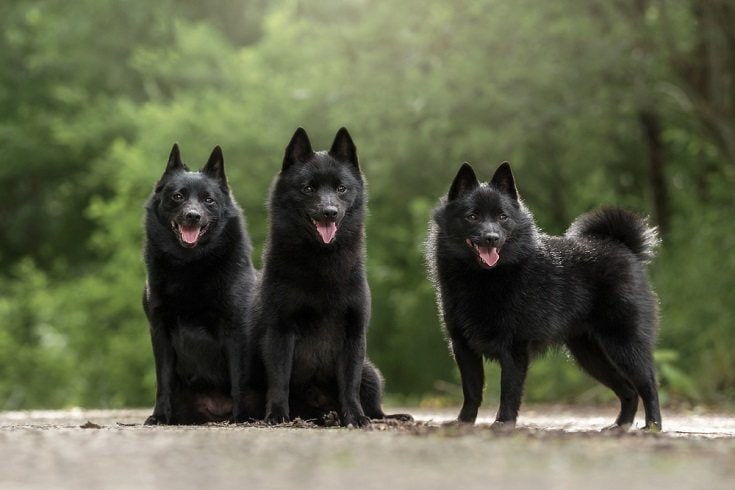
Schipperkes are at the opposite end of the spectrum. They're tiny, but they’re absolutely convinced they’re the most fearsome animals on the planet. They won’t back down from anything, which is admirable but often gets them into trouble.
The Schipperke isn’t terribly well-known, but they make fantastic companions. If you’d like to know more about Schipperkes, our guide below will fill you in on all the important details.

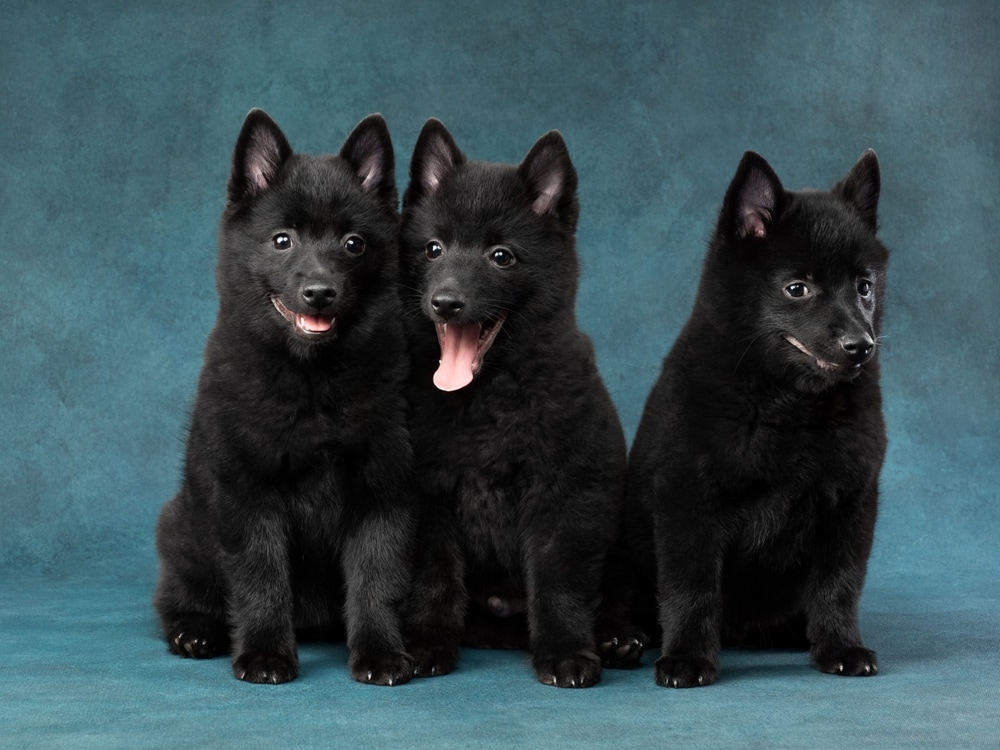
Schipperke Puppies
Schipperke Characteristics
What they lack in size, they make up for in spunk. They never stop running, playing, and yapping at everything they see. They need a lot of supervision, as they’ll get into anything they can get their paws on. Many Schipperke owners remedy this by carrying the dogs with them wherever they go, at least as long as they’re puppies.
Their spirited nature is in full bloom even as puppies, so don’t be surprised if they challenge you periodically. While it’s essential to establish yourself as the boss, you should also realize the dog will stand up to you now and then, no matter what you do. We say this not to discourage you from bringing home a Schipperke but rather to let you know what you’re getting yourself into.
Many owners buy Schipperkes because they’re adorable, but they don’t realize the challenge of raising them. That sets up a bad situation for the dogs and owners. As long as you know what to expect, you can have a grand time with a Schipperke, but if you’re expecting a dog that mindlessly does whatever you tell them to, you might be in for a rude awakening.
3 Little-Known Facts About the Schipperke
1. The Size and Shape of Their Tails Varies Widely
You’ll almost always see Schipperkes with short, stubby tails. Most breeders dock their tails at birth, at least in the United States and Canada. However, even in countries where docking is banned, you’ll see Schipperkes with naturally stumpy tails. The breed has a genetic mutation that causes a bobtail.
That doesn’t mean that their tails are of uniform shape or length. Some have longer tails, others have curled tails, and many more are in the middle. You won’t know what kind of tail your Schipperke will have until they grow up
2. Their Nickname Is “The Little Black Devil”
Schipperkes are many things, but reserved is not one of them. The little dogs are capable of causing big-time trouble, and they’re constantly in motion.
Many people have compared them to Tasmanian Devils, a comparison that’s apt both for their appearance and personalities. They’re curious, confident, and fearless.
3. They Used to Be Quite Popular With Barge Owners
In the 19th century, Schipperkes accompanied the crews on barges that traveled the Belgian canals. Owners liked having them on board because they were fantastic at killing rats and wonderful companions.
They don’t travel on barges much anymore, but they’re still great at hunting vermin and still fun to be around.

Temperament & Intelligence of the Schipperke 🧠
Schipperkes aren’t demure, obedient little dogs. They can be trained to follow orders, to be sure, but they have a strong opinion on how things should be done, and they’re not afraid to share that opinion with you. That’s not to say that they’re mean-spirited. They love to play, and they can spend an entire afternoon horsing around with you.
They’re wary of strangers, but you can mitigate that by socializing them as pups. They’ll always prefer the company of their family, however. Schipperkes are one of the smartest dog breeds on the planet, but more than that, they’re clever. They’re always figuring out ways to sidestep rules or start trouble. This makes them natural escape artists, so be careful about leaving them alone outside.
Their intelligence makes it easy for them to pick up on new commands, but their bullheadedness makes it unlikely they’ll follow them just because you say so. As a result, training can sometimes be a pain.
Are These Dogs Good for Families? 🏡
Schipperkes can make excellent family pets and especially adore children. Even better, their small stature makes them the perfect size for little ones. They aren’t huge and intimidating, nor will they accidentally knock your kids over while roughhousing.
You’ll need to involve the whole family in raising them since they get bored easily and demand constant attention. They can also do well with older owners and single people, but you have to be prepared to spend a big portion of your day exercising them. It would probably be best if they could accompany you wherever you go as well.
They’re small enough to do well in apartments, but again, you’ll need to get them outside where they can run around for at least an hour or so a day. Just don’t let them off-leash in an uncontained area, or you may never see them again.
Does This Breed Get Along with Other Pets? 🐶 😽
Given that they’re constantly in search of playmates who can keep up with them, Schipperkes usually views other dogs as friends rather than foes. They’ll play with dogs several times their size without backing down, seemingly on the assumption that they’re every bit as big as their counterparts.
However, Schipperkes can be prone to resource guarding, so be careful about leaving toys or food out. They may consider you their most valuable resource and challenge other dogs for your attention. They do well with cats if they’re raised with them. However, they have strong prey drives and may chase any animals smaller than they are. They’re probably not the best roommates for gerbils, ferrets, or rabbits.

Things to Know When Owning a Schipperke
Schipperkes are great dogs, but they’re not always easy to own. If you’re considering adding one to the family, you should know a few things about them first.
Food & Diet Requirements
Since Schipperkes are small dogs, they don't need large portions of food. However, you have to be careful not to overfeed them since they can become overweight and eventually obese. It also doesn’t take much to fatten them up.
We recommend feeding them high-protein food to fuel their energy all day. Avoid foods with ingredients like wheat, corn, or soy, as they are filled with empty calories without adding much nutrition.
Feed them as much as the kibble manufacturer recommends, and don’t let them free-feed. Be careful about going overboard with scraps and treats, too. Speaking of scraps and treats, you may need to hide them since Schipperkes are excellent at ferreting out contraband. However, you can take advantage of their natural scrounging instincts by hiding food around the house and letting them find it.
Some owners feed their pets wet food in addition to dry kibble. The wet food provides more moisture and keeps them hydrated.
Exercise 🐕
At a minimum, they’ll need an hour of moderate exercise daily, but they’ll take as much as you can give them. The good news is that because they’re so small, you may not have to work as hard to exercise them as you would a larger dog. A lengthy walk may be all you need to tucker them out, or you can throw a ball around a relatively small area.
It’s crucial to work their brains as much as their bodies. They love to play hide-and-seek, or you can give them a puzzle toy to keep them occupied. Regular obedience training should also be a part of your routine.
If you don’t drain their energy levels daily, they’ll use the leftover fuel to get into trouble. They can do well with agility training, and they have the intelligence and the energy for it. They’re also small enough to absorb the impact without doing too much damage to their skeletal system.
Training 🦮
Training a Schipperke is essential; it can also be quite difficult. They’re headstrong and opinionated and may have different ideas of what their training should entail. Successfully training them requires a firm and consistent hand, but you can’t be harsh or overbearing. They can be sensitive, so you need to use positive reinforcement over punishments.
If you have trouble training them, you can always consult a professional. Doing so is undoubtedly preferable to letting them run amok. Surprisingly, Schipperkes can make excellent guard dogs; however, they can also bark so much that they get you evicted. It’s essential to teach them only to bark when appropriate.
.0Socialization is also crucial. If you socialize them as puppies, they’ll be much more likely to accept other people and pets. Otherwise, you could have a temperamental, standoffish dog on your hands.
Grooming ✂️
While they’re not hypoallergenic, Schipperkes don’t shed much (with one exception) and require little grooming. They’re not prone to stinking either, so you should only bathe them if they become visibly dirty.
You’ll still need to brush them occasionally, but that’s as much to prevent matting as it is to keep your house clean. The exception to the shedding rule is when they “blow” their coats, which happens twice a year. This involves losing their undercoat, at which time they’ll do an inordinate amount of shedding.
Brushing their teeth regularly and clipping their nails as needed is also essential. You may be able to skimp on the latter if you let them play outdoors, as that will allow them to file their nails down naturally.
Schipperkes aren’t necessarily big fans of being groomed, so it’s important to start them off while they’re young.
Health Conditions ❤️
Schipperkes are one of the healthiest breeds, but that doesn’t mean they don’t have health issues. There are a few conditions you should be aware of.

Male vs Female
Males are bigger than females, but the difference is barely worth noting. It’s usually an inch or two and a couple of pounds. They’re similar in terms of temperament, too. However, females mature a bit more quickly, which may make them easier to train. Again, though, the difference is negligible.
Conclusion
Schipperkes are little dogs with outsized personalities. They are fun-loving and affectionate, but they can also be quite a handful when they want to be. They’re incredibly energetic, and training them can be difficult, as they’re incredibly smart and equally opinionated. As such, they may not be ideal pets for first-time owners.
If you have the energy and patience to put up with them, you’ll have a tiny pup that can fill up your life in a big way. Just don’t let them get confused about which of you is in charge.
See Also:
Italian Bichon (Bichon & Italian Greyhound Mix): Info, Pics, Traits
Mini Yorkshire Aussie (Yorkshire Terrier & Australian Shepherd Mix) Info, Pictures, Facts
Featured Image: Al_Er, Shutterstock
Get Hepper In Your Inbox


Pet care tips from our vets and experts, straight to your inbox.
You may opt-out at any time. View our Privacy Policy for more information.

Nicole is a lover of animals of all sizes but is especially fascinated with the feline variety. She’s the proud mom of Baby, a Burmese, and works every day so he can relax in the sunshine or by the fire. She’s always had a cat in her home and has spent countless days with others, observing behaviors and softening up even the grouchiest of the lot. Nicole wants to share her kitty expertise with you so you and your cat can live happy, healthy, and care-free.
Join the conversation
Ask a question, share your story, or send private feedback.