Hepper is reader-supported. When you buy via links on our site, we may earn an affiliate commission at no cost to you. Learn more.
12 Great Aquarium Stem Plants in 2026 - Reviews & Top Picks
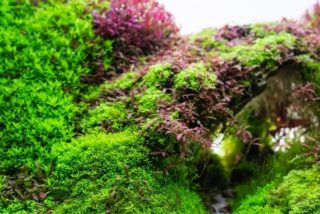
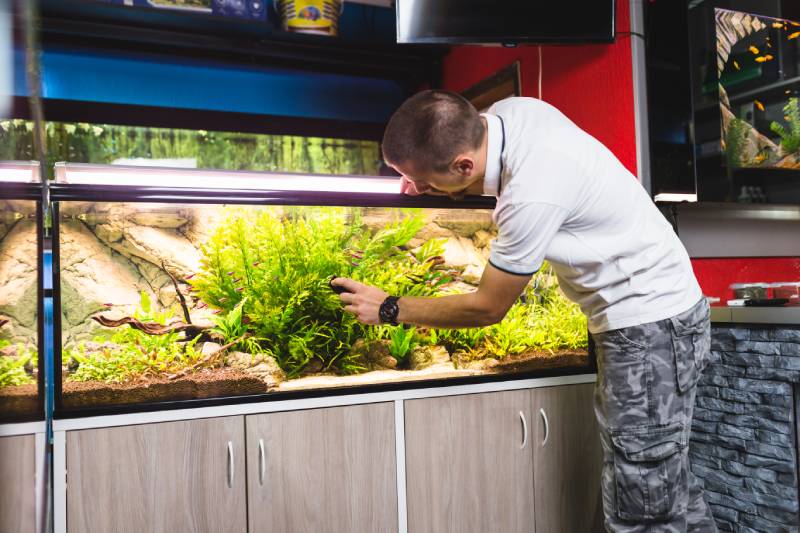
If you want to spruce up your aquarium but aren’t sure where to start, stem plants may be for you! Stem plants grow leaves outward from a central stem. This differs in comparison to ground cover plants or plants like ferns or swords that have one central stem for each leaf.
Stem plants have several benefits, including improving water quality by increasing dissolved oxygen and reducing toxins. They also create lovely hiding places for shrimp and small fish.
They come in foreground and background varieties, as well as in beautiful colors like shades of green, red, pink, and purple. Some stem plants will even produce flowers!
These reviews will help you find stem plants that are perfect for your tank and your level of experience with planted aquariums, even if you are a beginner!

A Quick Comparison of Our Favorites of 2026
| Rating | Image | Product | Details | |
|---|---|---|---|---|
 |
|
Ludwigia |
|
Check Price |
 |
|
Hornwort |
|
Check Price |
 |
|
Water Wisteria |
|
Check Price |
|
Golden Nesaea |
|
Check Price | |
|
Bacopa caroliniana |
|
Check Price |
The 12 Great Aquarium Stem Plants
1. Ludwigia
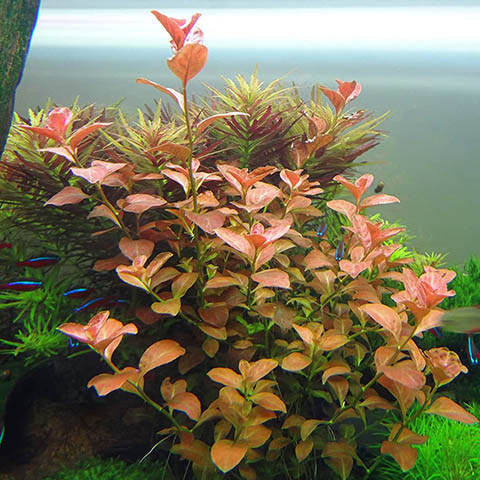
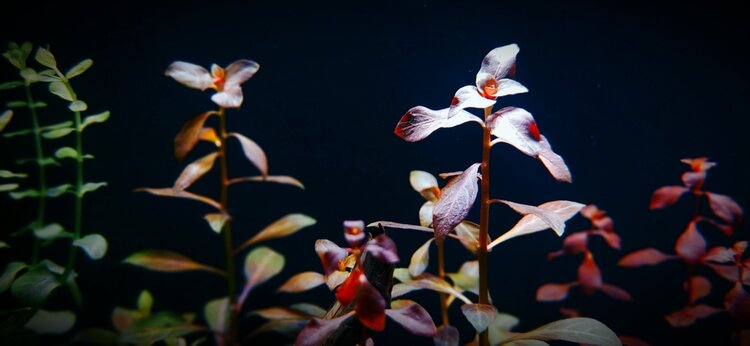
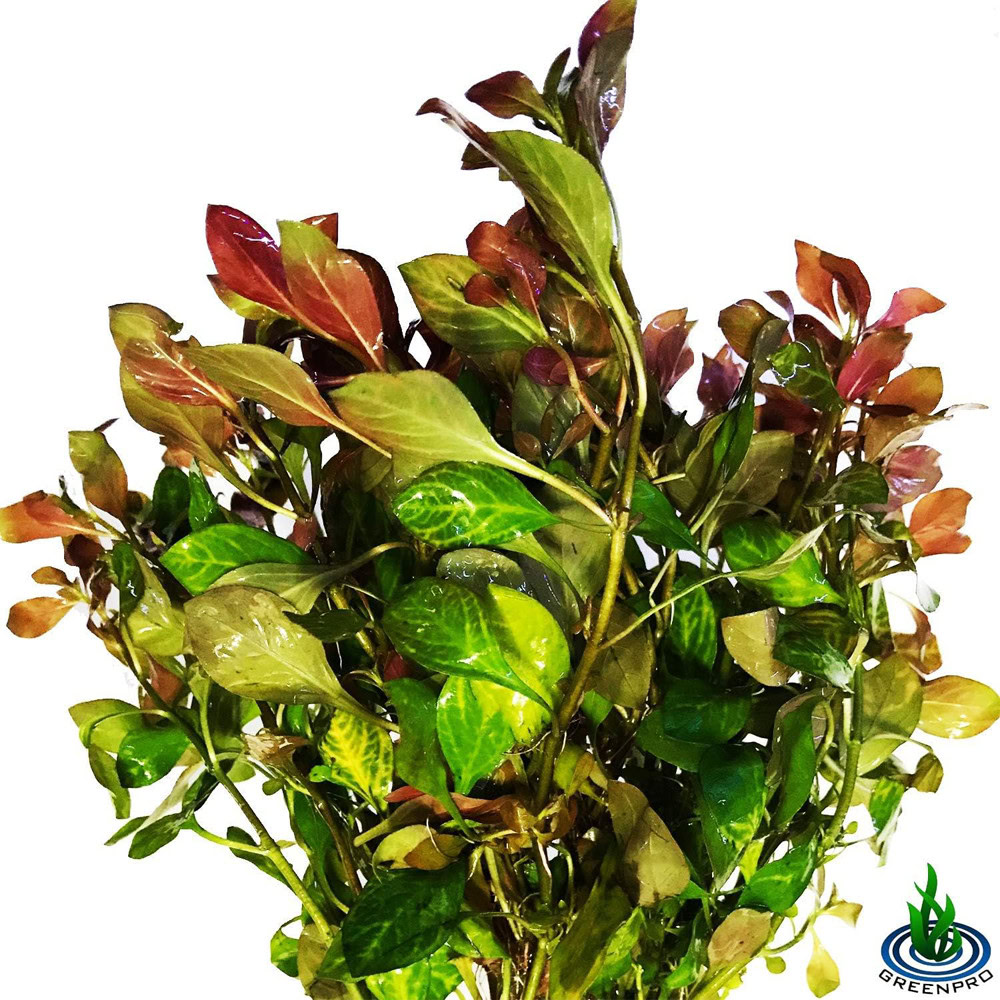
Ludwigia is one of the most popular and easy-to-find varieties of aquatic plants, and for good reason! It can survive low-light environments, but the more light Ludwigia receives, the more red or pink it will turn. In low light, it will remain green.
These plants grow best in a nutrient-rich substrate with iron and CO2 supplementation. This environment, combined with high lighting, will create a fast-growing plant that requires routine pruning to keep it from taking over the tank and blocking light to lower plants. It provides excellent protection for fry and shrimplets, and many fish enjoy swimming through its tall stalks.
Pros
- Colorful
- Fast-growing
- Protects fish and invertebrates
- Easy to acquire
- Can survive low lighting
Cons
- Can block light to smaller plants
- Needs nutrient-rich substrate and supplementation
- Color will fade in low to moderate-light environments
2. Hornwort
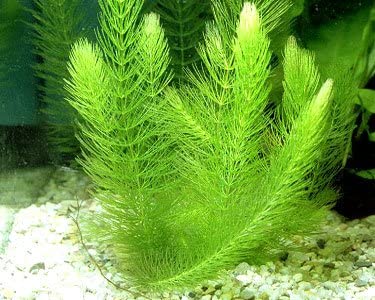
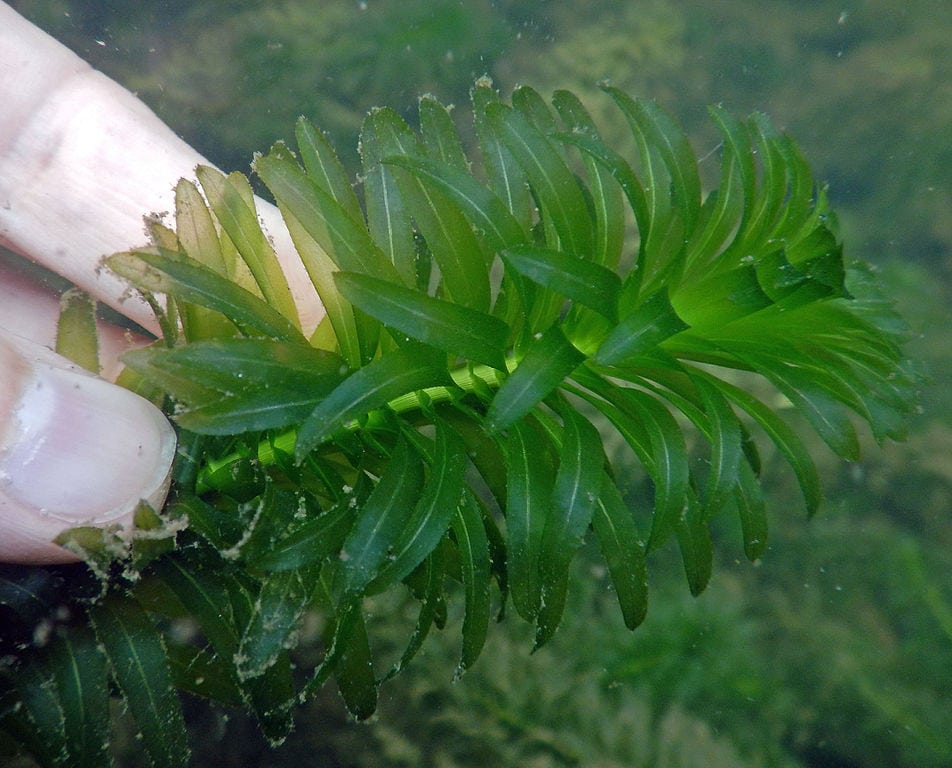
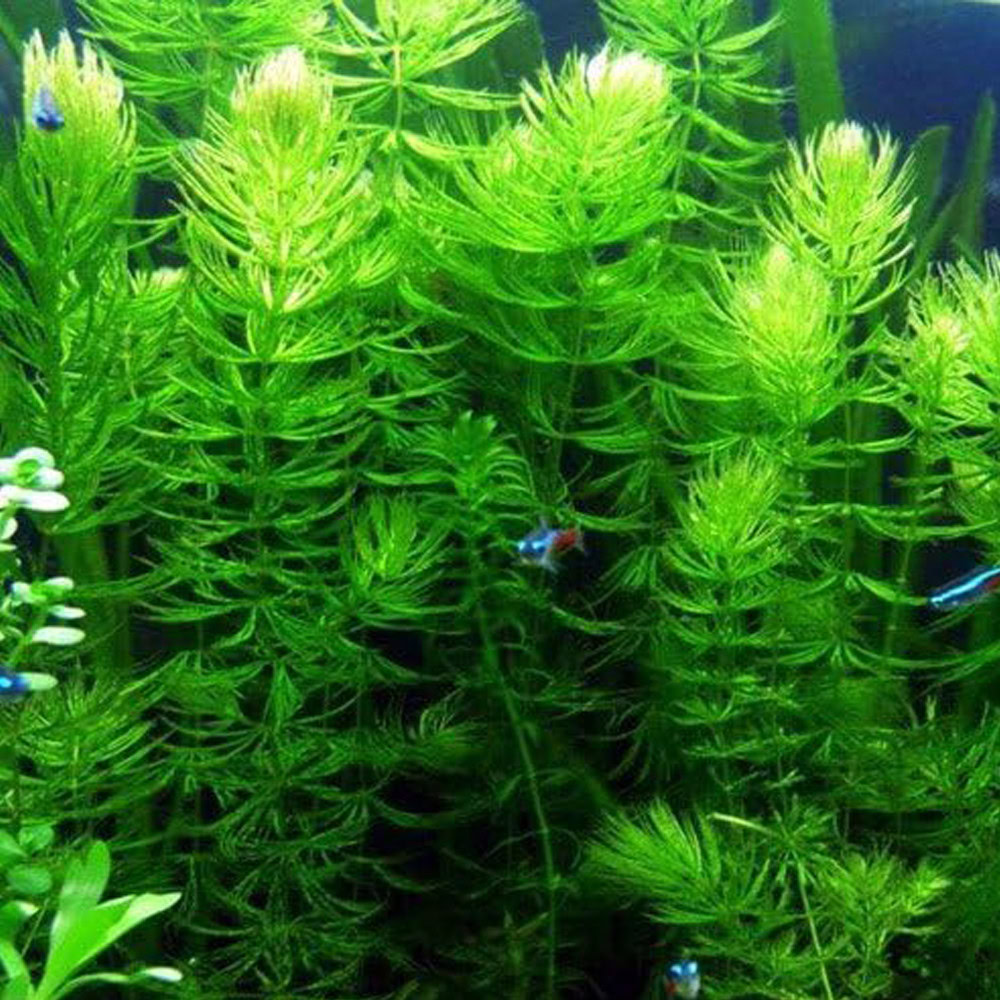
Hornwort is well-loved in the aquatics community for its ability to grow very quickly and its unpalatableness to many fish. Even if you have fish that power through the tough spines of Hornwort, it usually grows back rapidly enough that fish cannot consume all of it.
These plants are low-maintenance and exceedingly easy to grow. Hornwort can be planted in substrate or floated, and if you are lucky, it may even produce small flowers for you! They prefer moderate lighting but can survive in low light, and they will just grow more slowly.
Hornwort is one of the best plants for absorbing nitrates and nitrites from aquarium tanks, making it an excellent option for over-stocked or heavy bioload tanks.
Pros
- Very fast-growing
- Unpalatable to many fish
- Protects fish and invertebrates
- Produces flowers
- Can be floated or planted
- Does not require supplementation
- Efficient at improving water quality
Cons
- May become difficult to control
- Spiny leaves may be too rough for tender fry
- Grows best with moderate lighting
- Leaves can become messy
3. Water Wisteria
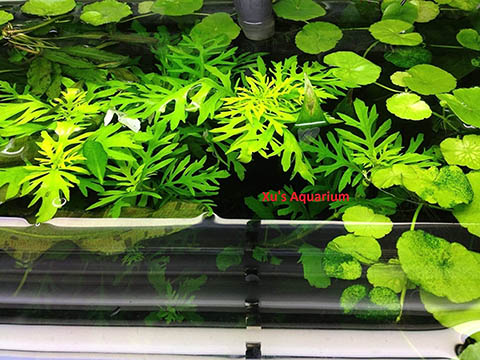
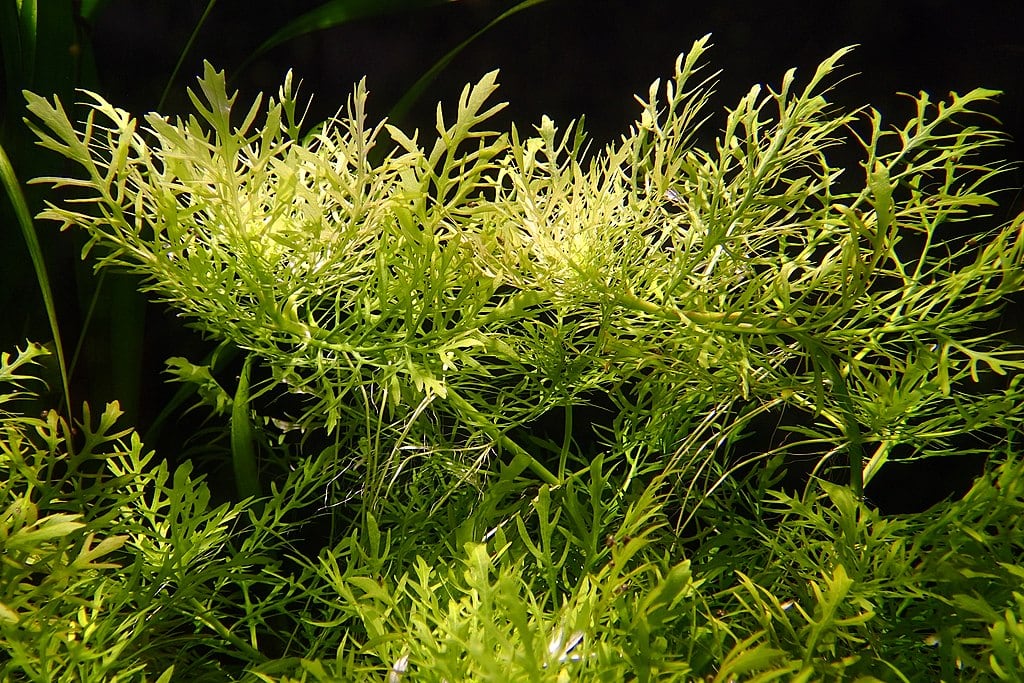
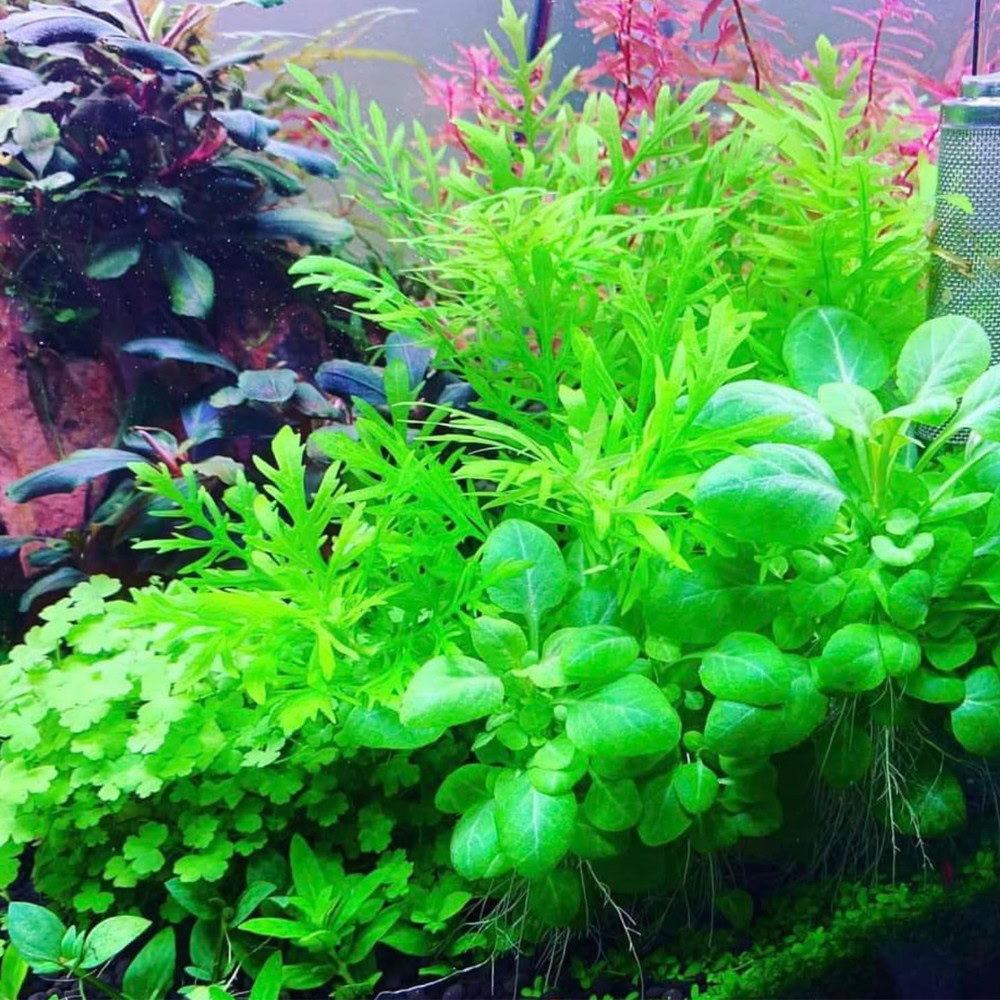
Water Wisteria is a nice low-maintenance stem plant that produces leaves based on heterophylly, and the shape of the leaves is dependent on the environment the plant is kept in. The leaves can appear rounded with jagged edges or more fern-like with multiple "fingers" per leaf.
These plants grow best with moderate lighting and will likely drop leaves in low light. They're great at absorbing nutrients from the water, so supplementation is not required for fast growth.
Water Wisteria can reach almost 2 feet, which works best in larger tanks. It's not recommended for tanks smaller than 10 to 20 gallons. The fast growth rate may require routine pruning to keep it in check.
Pros
- Fast-growing
- Heterophylly produces different leaf shapes
- Tall background plant
- Improves water quality
- Supplementation not required
Cons
- Moderate light requirement
- Can take over the tank if not kept in check
- In low-nutrient tanks, it will need supplementation
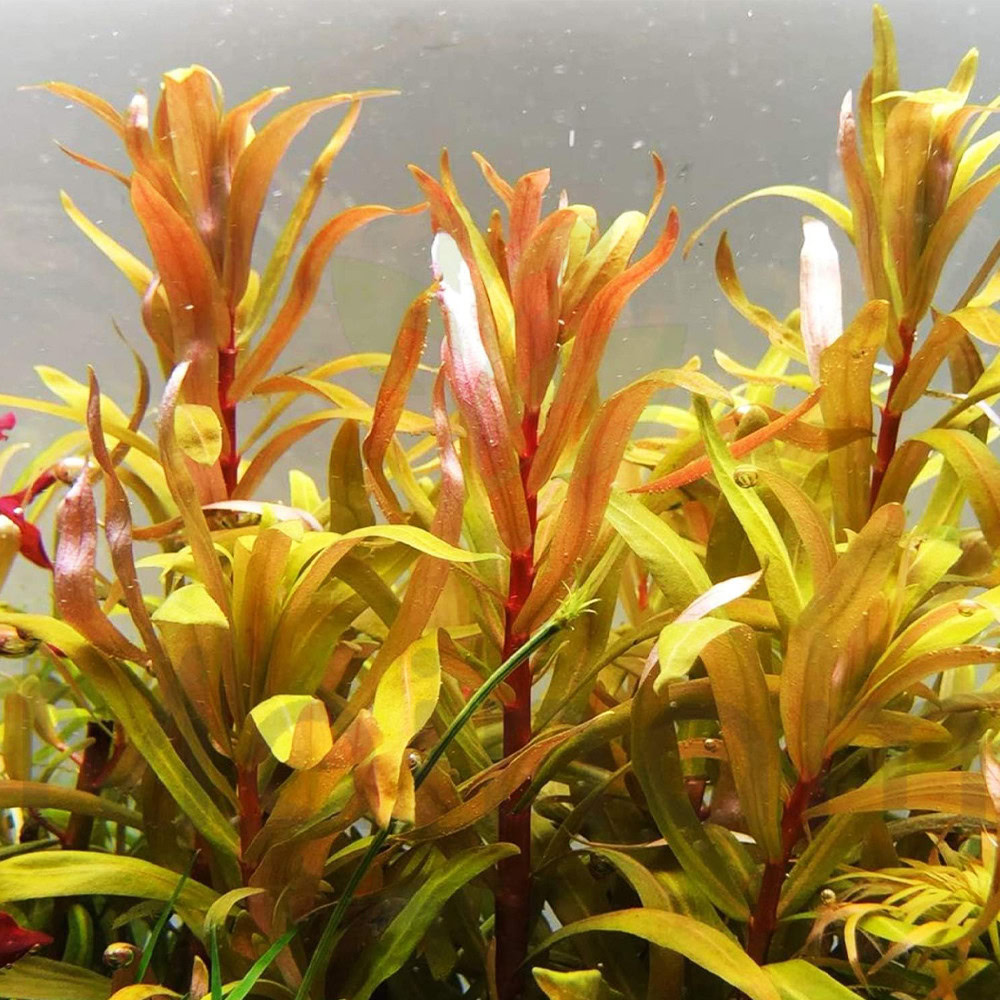
4. Golden Nesaea
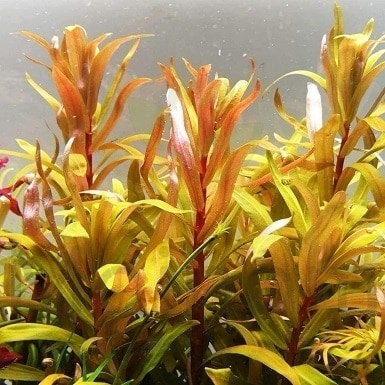
Golden Nesaea is a relatively rare aquatic plant in the US, but it is increasing in popularity due to its easy level of care and beautiful golden color. These plants can bring brilliant hues to your tank and will pop in tanks with a dark substrate.
They're fast-growth plants under moderate to high light and will absorb nutrients from the substrate and water. They do not require supplementation but will grow faster with it.
Fish enjoy swimming through the leafy forests Golden Nesaea plants create, and they are ideal plants for protecting fry. It reaches up to 12 inches in height, making it a good choice for medium to large tanks.
Pros
- Fast-growing
- Supplementation optional
- Protects to fish and invertebrates
- Bright, unique color
- Improves water quality
Cons
- May require pruning to keep in check
- Moderate light requirement
- Poor option for small tanks
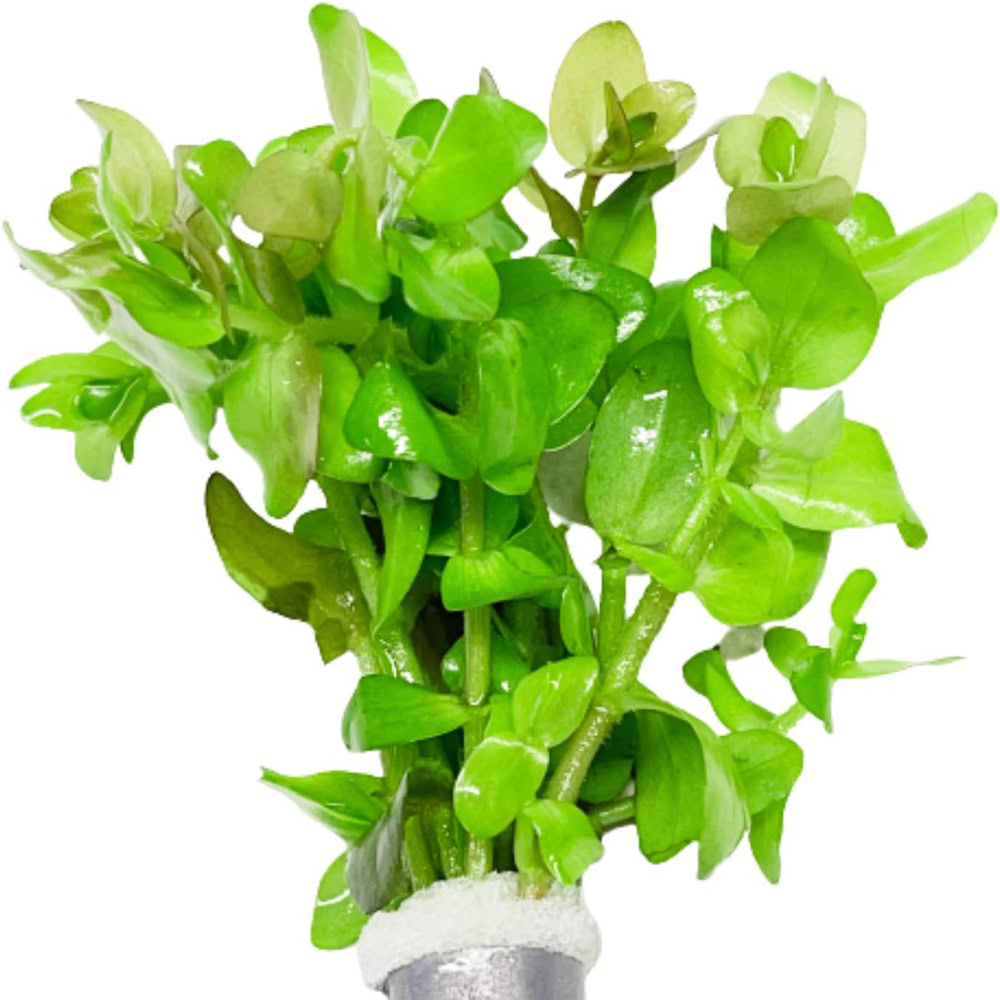
5. Bacopa caroliniana
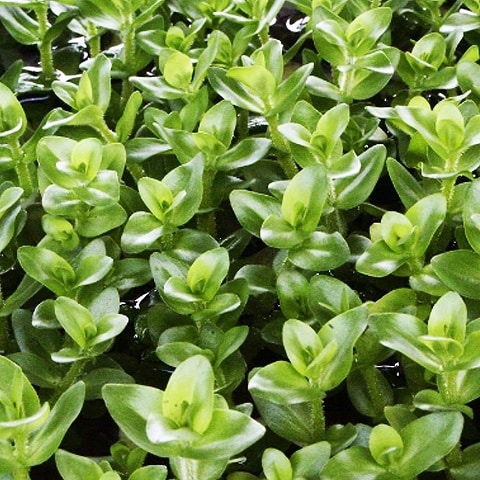
Bacopa caroliniana is a hardy plant that can grow submerged or emersed, making it a good stem plant for short or open-top tanks. It can produce lovely blue flowers above the waterline. It is also called Lemon or Mint Bacopa because the oval-shaped leaves emit a lemony or minty smell if damaged.
This is an easy-care variety of stem plant that grows best with moderate lighting but can survive low-light environments with adequate nutrients in the water or supplemented. It can get quite tall and bushy, so it will likely require routine trims, but it does make an excellent plant for fish to hide in.
Pros
- Fast-growing
- Flowering
- Grows submerged or emersed
- Can survive low light
- Does not require supplementation
- Protects to fish and invertebrates
Cons
- Grows best with moderate light
- Can become tall and bushy if not pruned
- Poor option for small tanks
6. Brazilian Pennywort
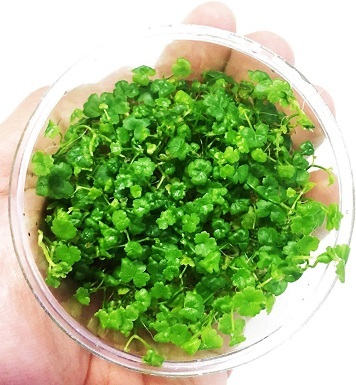
Brazilian Pennywort plants produce green, lily pad-shaped leaves. It proliferates under moderate lighting and reproduces readily, so just a couple of plants can fill your tank in a short period. It does not require supplementation but will grow rapidly with it.
It will produce small flowers above the waterline in a healthy environment. These plants can be a poor choice for small tanks due to their height, rate of growth, and willingness to spread.
Small fish, fry, and invertebrates will love the protection these plants offer, and other fish may enjoy snacking on the tender leaves. Brazilian Pennywort prefers to be planted in the substrate but can live as a floating plant.
Pros
- Fast-growing
- Can be planted or floated
- Protects fish and invertebrates
- Does not require supplementation
- Flowering
Cons
- Grows best with moderate light
- Require routine pruning
- A poor choice for small tanks
7. Cabomba/Fanwort
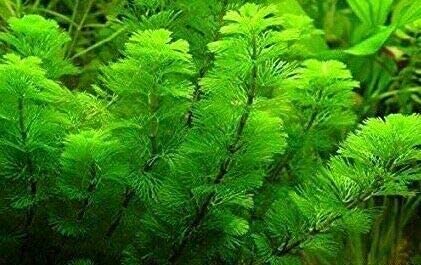
Fanwort is a lovely stem plant that is similar in appearance to Hornwort. It’s easy to tell the difference between the two plants because Fanwort has softer spines and a fluffier appearance.
These plants are an excellent choice for protecting fry and shrimplets, and the soft texture of the leaves will not be too rough for them. Some fish may enjoy eating Fanwort, but it will grow back rapidly, and it may be difficult for your fish to eat all of it before it grows back.
Fanwort prefers supplementation and moderate lighting for best growth but can live in low-light environments. Fanwort is highly invasive and is illegal to sell or own in California, Connecticut, Maine, New Hampshire, Washington, Wisconsin, and several other states.
Pros
- Perfect choice for fry and shrimplets
- Fast-growing
- Flowering
- Improves water quality
Cons
- Moderate light preferred
- Supplementation for best growth
- Extremely invasive and illegal in some states
8. Rotala rotundifolia
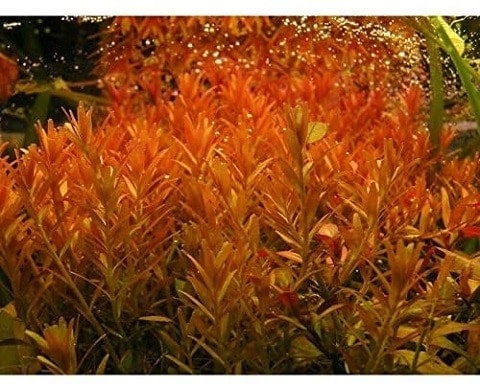
Rotala rotundifolia is a hardy, diverse stem plant that can be submerged or emersed. How it is grown will affect both the leaf shape and the plant's color, with submersed plants taking on dark green to red coloration and some varieties exhibiting pink.
These plants grow best in moderate lighting with supplementation, but supplementation can potentially be avoided if you have a high-nutrient tank. Rotalas are considered easy-care plants and are extremely popular in the aquatic trade.
The plants create great hiding places for fish, fry, and shrimplets but can create thick forests of plants if not maintained. Rotala rotundifolia are flowering plants that can add more color and interest to your tank.
Pros
- Fast-growing
- Excellent hiding places for fish and invertebrates
- Flowering
- Variable colors
Cons
- Can grow into thick bunches
- Moderate light requirement
- Supplementation is preferred
9. Rotala wallichii
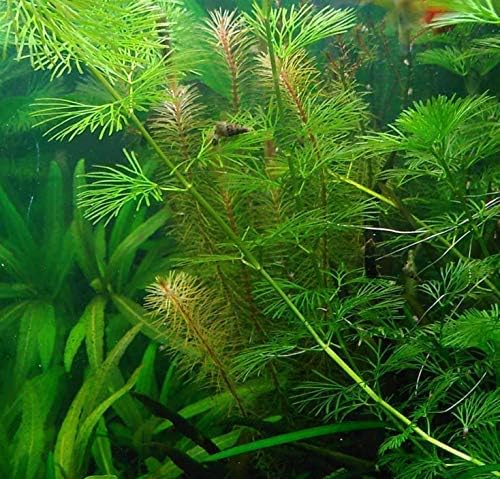
Rotala wallichii is a beautiful, somewhat rare plant. It makes a nice midground or background plant due to its height and the fullness each plant can achieve. These plants thrive with moderate to high lighting, CO2 supplementation, and nutrient supplementation.
In nature, Rotala wallichii spends time emersed and submerged, so providing this rotation to the plant may improve colors and growth over time. Without enough lighting, these plants may be green to red, but if you provide them with the lighting they prefer, you will be rewarded with beautiful red stems tipped with pink, and you may even have plants that develop purple coloration.
These plants are somewhat delicate, so they should be handled with care and are not a good fit for tanks with destructive fish like cichlids and goldfish.
Pros
- Flowering
- Colorful, unique appearance
- Lush and full with proper care
- Great plant for reducing nitrates
- Protects fish and invertebrates
Cons
- Moderate to high light requirement
- CO2 and nutrient supplements are needed
- Delicate and may be damaged by rough fish
- Prefers to spend time emersed and time submerged
10. Ammania gracilis
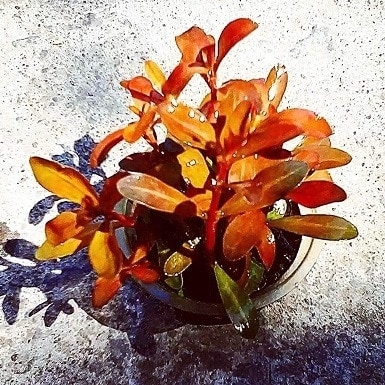
Ammania gracilis is a colorful stem plant addition perfect for midground and backgrounds of tanks. It will die without at least moderate lighting, but more light will bring out more color in the plant's crinkly leaves. Moderate lighting will usually result in green to rust-colored plants. High lighting will help the plants turn bronze-red or pink.
These plants require CO2 and iron supplementation to survive, and while they can be somewhat hardy once established, they are prone to melt at initial planting. They are easy to propagate, and once the plants get large, they can be pruned and the trimmings planted into new plants.
Pros
- Colorful, crinkly leaves
- Flowering
- Lush and full
- Easy to propagate
Cons
- Moderate to high light required
- Needs CO2 and nutrient supplementation
- May require routine pruning
11. Anacharis
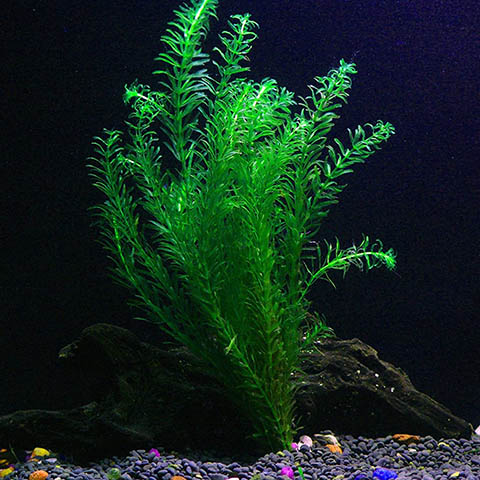
Anacharis can provide a bright green color in your tank while improving water quality. It’s a great oxygenator and readily consumes toxins from the water. They can survive with low lighting and do not require CO2 or nutrient supplementation. Moderate lighting will produce the best growth.
These plants get very tall and full, making them a great option for larger tanks. They provide excellent shelter to fish and invertebrates. They are fast-growing, so any fish attempting to eat them will likely not be able to kill the plants before they begin to regrow.
Anacharis plants are easy to find in pet and aquarium stores and are generally inexpensive. They are a great beginner plant.
Pros
- Improves water quality
- Provides shelter to fish and invertebrates
- Does not require supplementation
- Fast-growing
- Inexpensive and easy to acquire
- Great for beginners
Cons
- May require routine pruning
- Grow best with moderate light
12. Moneywort/Bacopa monnieri
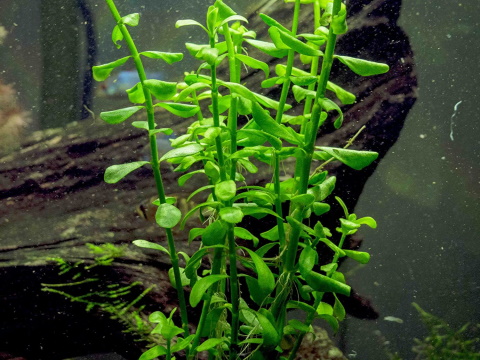
Moneywort is an excellent aquatic plant that is happiest when floated but can be planted in the substrate, but you may have to weigh it down to stay planted. It requires at least moderate lighting, so if you are growing Moneywort in a tall tank, you may need to provide high lighting for enough light to reach the plant.
Without adequate lighting and nutrients, Moneywort becomes thin and leggy. In low lighting, these plants will likely die, but if properly cared for, they can become full and healthy. Fish enjoy Moneywort plants in their environment, but they do not grow well in cool water and may not be a good fit if you have a cool-water tank like a goldfish tank.
Moneyworts are said to have Ayurvedic medicinal properties, but the FDA has advised caution in using them in this manner. It’s important to differentiate between Bacopa monnieri and Creeping Jenny, which is an invasive species that is illegal to own in many states and is also sometimes called Moneywort.
Pros
- Improves water quality
- Can be floated or planted
- Can be kept tall and thin or short and bushy
Cons
- Poor choice for cool-water tanks
- High light requirement
- CO2 and nutrient supplements strongly encouraged

Buyer's Guide: Choosing the Best Aquarium Stem Plants
Purchase plants from reputable sellers, and if purchasing in person, make sure to pick the healthiest-looking plants available. Even the best growers cannot guarantee snail-free plants, so it’s advised to quarantine all new plants before placing them in your main tank.
Different plants have different needs and require different levels of care, so choose plants that meet the needs of your tank and your lifestyle. Purchasing plants you can’t provide the proper care for will foul your tank water and cost you money in the long run.
Conclusion
Aquarium stem plants are such a beautiful addition to tanks and can bring a sense of security to the fish in your tank. They are an excellent option for fry nurseries and invertebrate hatcheries, especially those that share space with adult fish. With stem plants, you can take your tank to the next level, creating depth and interest for you and your aquatic pets. Use these reviews to help you select the perfect stem plants for your tank’s needs!
See also:
Featured Image Credit: BLUR LIFE 1975, Shutterstock
Get Hepper In Your Inbox


Pet care tips from our vets and experts, straight to your inbox.
You may opt-out at any time. View our Privacy Policy for more information.

Lindsey discovered her passion for fish keeping after a junior high school field trip to the Shedd Aquarium in Chicago. Prior to becoming Editor-in-Chief of It's a Fish Thing, Lindsey studied marine biology at the University of California-Santa Cruz. She loves goldfish, tetras, and mystery snails, and recently began experimenting with a saltwater aquarium.
Join the conversation
Ask a question, share your story, or send private feedback.