Hepper is reader-supported. When you buy via links on our site, we may earn an affiliate commission at no cost to you. Learn more.
Are Bearded Dragons Friendly? Facts & Care Tips
In this article
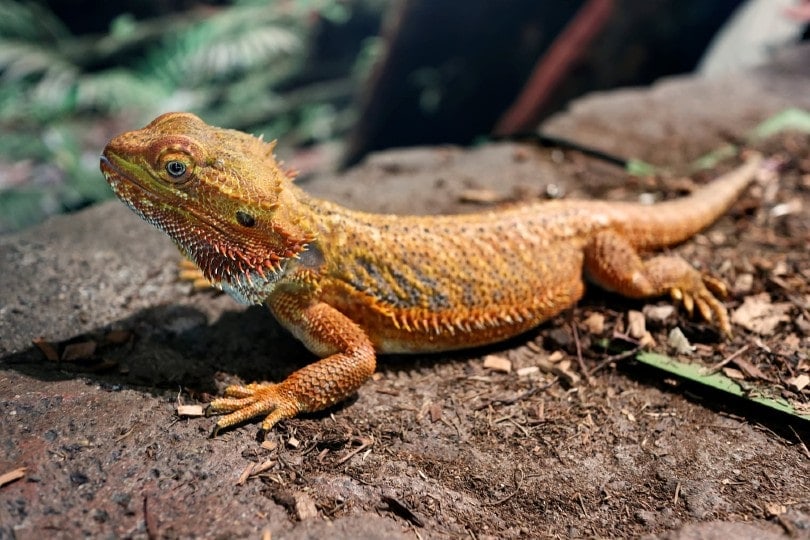
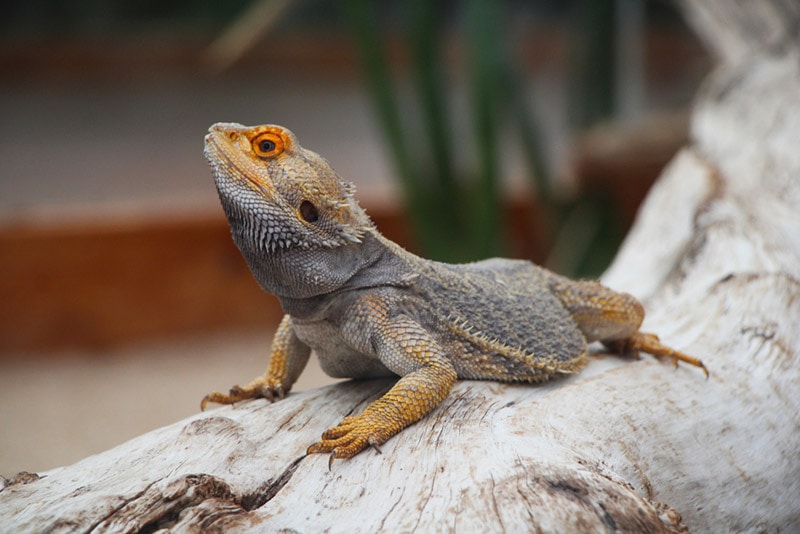
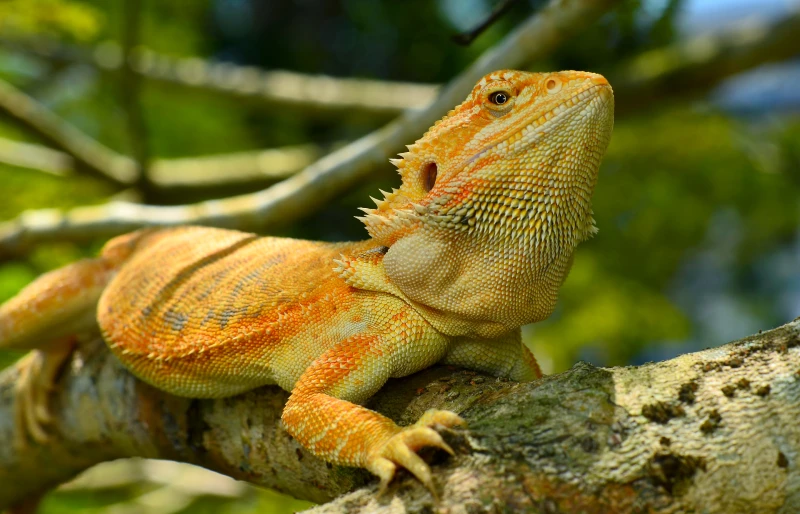
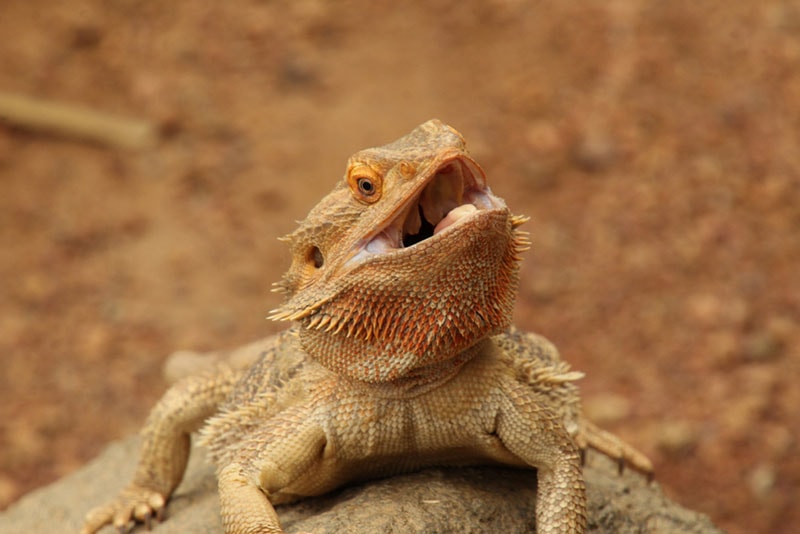
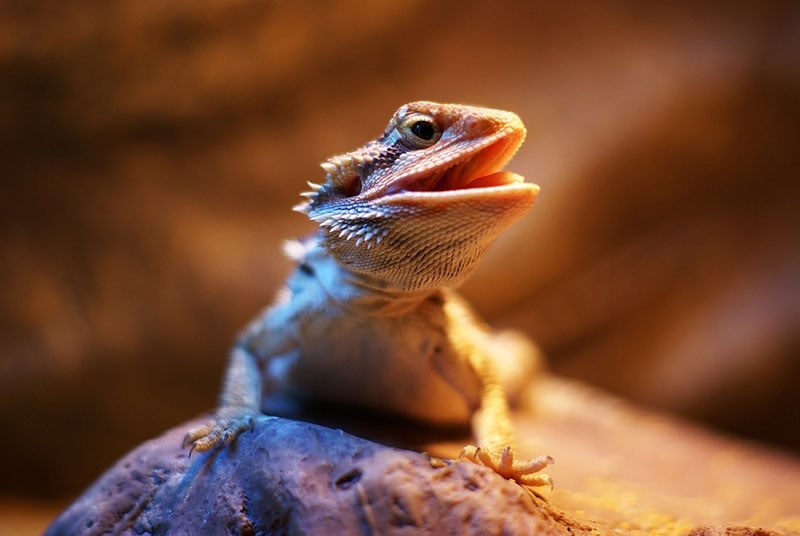
Bearded Dragons are undoubtedly one of the more popular reptiles to own as pets. They have unique features, such as a spiny pouch underneath the chin that turns black when threatened or attempting to attract a mate, and they have triangular-shaped heads. Color variations vary depending on the species (there are eight of them), and they are attractive lizards. However, a question often asked about beardies (as they’re affectionately called) is whether they are friendly. We can answer this question with a resounding yes!

Bearded Dragon Characteristics
Bearded Dragons are affectionate, friendly, docile, curious, animated, and easy to tame. The most popular beardie species is the Inland or Central Bearded Dragon (Pogona vitticeps) commonly brought up in captivity in the U.S. and Canada. This species traces back to the arid or semi-arid southeastern parts of Australia and is the most sought-after reptile to own as a pet.
Is It Safe to Kiss a Bearded Dragon?
We’ve established that Bearded Dragons are friendly and affectionate, but can you kiss your beardie? Unfortunately, you should refrain from kissing your beardie to avoid possible Salmonella poisoning, which can make you sick. Beardies can carry Salmonella in their droppings regardless of how healthy they look—this makes kissing and snuggling your beardie out of the question. To avoid Salmonella contamination, you should also wash your hands thoroughly after handling and feeding your beardie.
How Do You Bond with a Bearded Dragon?
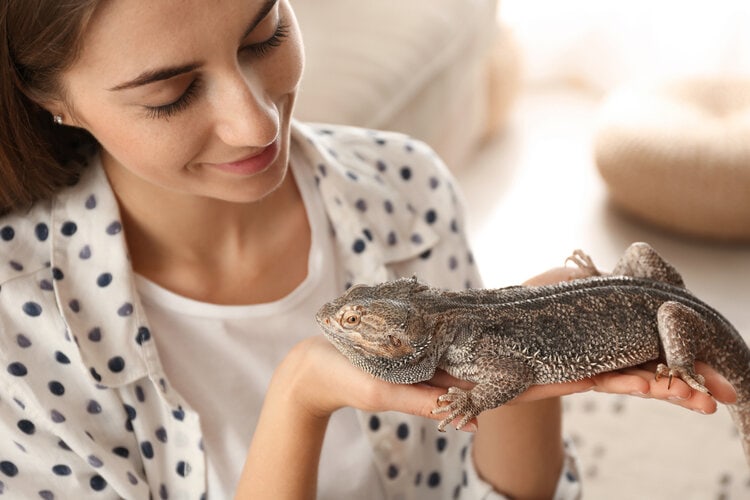
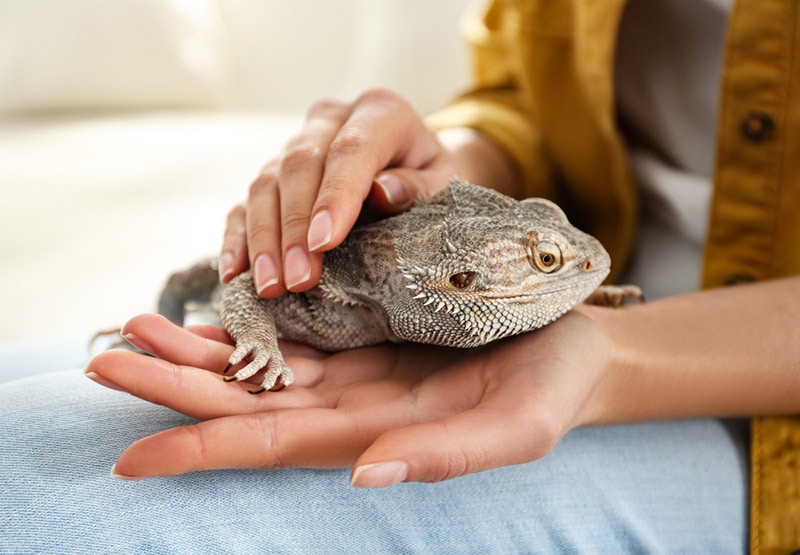
For starters, you must have patience with your beardie, but it is possible to form a bond. They are not like cats and dogs that bond quickly with humans, but it is not impossible to make it happen. Your beardie will likely be a little frightened of you at first, hiding in corners and fleeing when you get near. However, try spending at least half an hour with your beardie each day to establish trust.
Bear in mind it can take 3 to 4 months for your beardie to trust you, which is where patience comes into play on your end. Never force the issue; be gentle, quiet, and calm with no sudden movements.
When picking up your beardie to hold, be as gentle as possible. However, do not attempt to pick him up if he’s showing you his beard (the black spiny pouch underneath the chin). This means he is aggravated and may bite you.
Ensure you’re in his line of vision so he won’t be startled. Beardies cannot see straight ahead, and he may interpret you as a predator, so always avoid grabbing him from above.
Try feeding your Beardie by hand to establish trust. You can use tweezers when feeding insects. Again, do not attempt to hand-feed your beardie if his black spiny beard is puffed out under the chin.
How Do I Know If My Bearded Dragon Likes Me?
As we’ve mentioned, beardies are capable of forming human companionships, but it won’t be in the same way as with a dog or cat. Beardies have their own distinctive personalities, and your beardie may behave differently from others you’ve seen or met. However, this doesn’t mean you can’t form a bond.
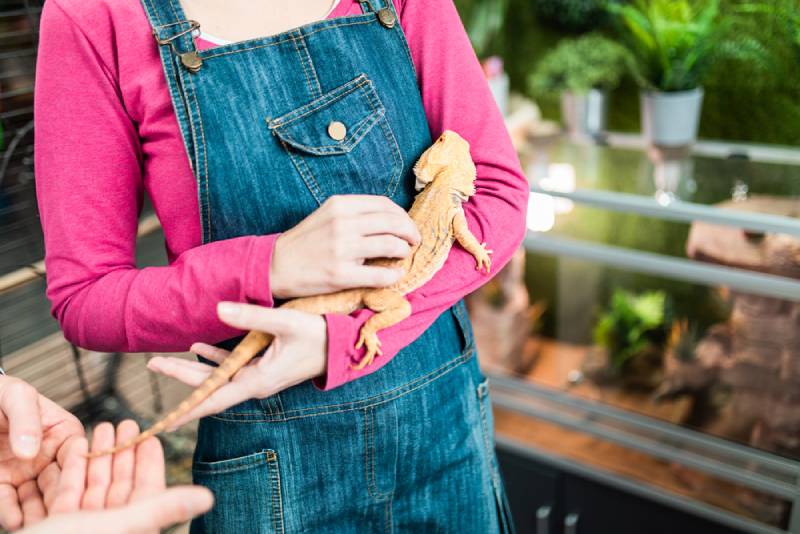
One way to tell if your beardie likes you is if he doesn’t flee and hide in his terrarium when you enter the room. Instead, he’ll show excitement when he sees you. Another way to tell if he likes you is he’ll seek you out when he’s nervous or frightened.
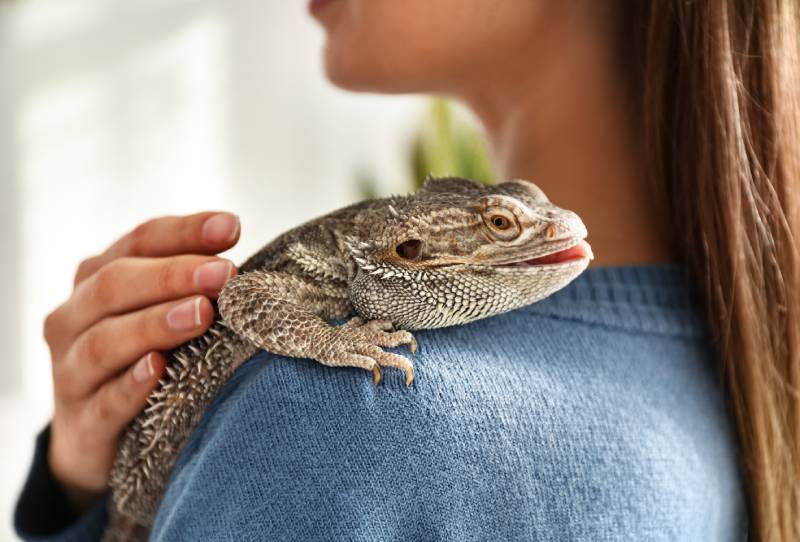
Other ways to tell if he likes you is if he’ll sit on your lap, comes willingly when reaching into the terrarium (even if you don’t have food), and falls asleep beside you or even on your lap. All of these signs show he’s content and trusts you.
The 3 Tips for Making Your Bearded Dragon Happy & Safe
Bearded Dragons are one of the easier reptiles to care for, but you must familiarize yourself with daily needs and the all-important tank setup.
1. Tank Size
First, your beardie will require a tank or terrarium. For a baby beardie, you can use a 40-gallon tank, but save up for a bigger tank down the road, as they can grow up to 2 feet long in adulthood, which is usually reached within 6 months. Once your beardie is an adult, a 120-gallon tank (4’ x 2’ x 2”) will be most desirable for your beardie.
You want your beardie to have plenty of room in his home and not be confined in a small space, but you can get away with a 50 to 75-gallon tank. Just remember you want your beardie to live in an apartment and not a jail cell, so to speak. Also, ensure the tank is well-ventilated with a secured lid but easy enough to get to your beardie if you need to handle him.
The material of the tank is also important, with most beardie owners opting for a glass and wood combo enclosure—where you live plays a role in the appropriate type of tank—you may need more of a wood enclosure if you live in a cold climate because wood is an excellent heat insulator.
2. Heating Source, Light, and Flooring
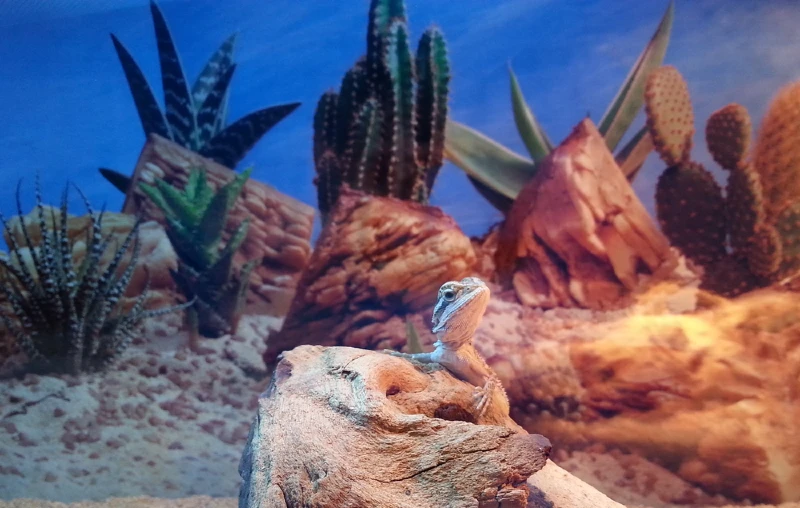
You’ll need a UVB light, thermometer, heating element, hygrometer, basking rock or log (logs), and flooring. The flooring should be reptile carpet or tile—avoid sand, pebbles, rocks, and unsafe substrate. Beardies love to bask in the heat (remember, they are from Australia's arid or semi-arid regions), which is essential for their overall happiness and well-being. They also love plants (live or fake) in their tank and a hammock.
The UVB light should be on for 12 hours each day, and the room and tank should be dark at night. Beardies cannot sleep well in light, so be sure to keep it dark and quiet at night. Most people purchase their beardies from a pet store, and you can buy starter kits. The sales associate can also help you with the setup and instruct you how to divide the tank for a cool area and a basking area, which beardies need.
3. Diet
You’ll need a food and water dish for your beardie. These lizards’ diets are not complex, but it’s important to know what a daily diet should consist of. Beardies love crickets, roaches, mealworms, and kingworms (this is where you’ll want to use tweezers).
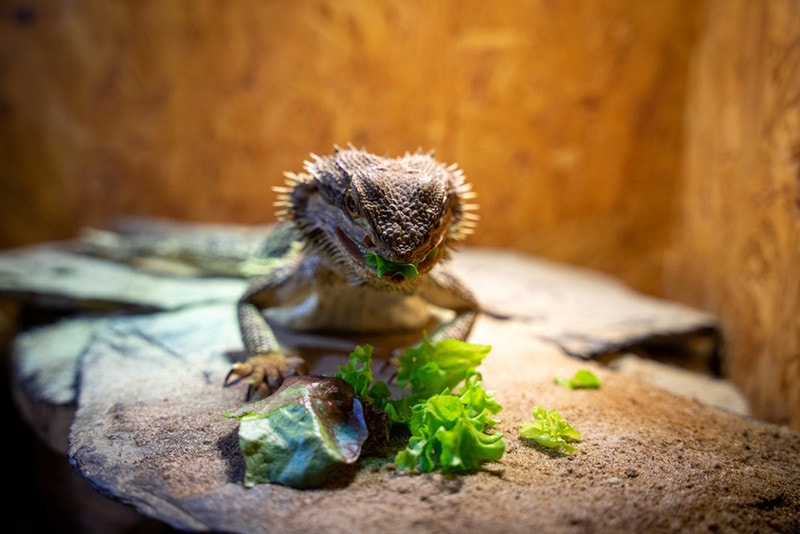
Other foods to feed are collard greens, watercress, turnip greens, dandelion, green beans, and alfalfa hay. You can also provide fruits, such as strawberries, raspberries, dates, and apricots, but do so sparingly.
They also dine on parsley, kale, pepper, and sweet potatoes. As a guideline, feed your adult beardie 50% plant-based material and 50% insect material daily. Young beardies may eat once or twice a day, while adults may only eat every 24–72 hours.
Final Thoughts
Bearded Dragons are friendly, affectionate, docile, and curious. They make excellent pets that are not too hard to care for; however, you must learn all you can regarding their eating habits and tank setup. Forming bonds with them is possible, but you must acquire patience. In the end, if you are contemplating a Bearded Dragon as a pet, we say go for it!
Related Reads:
Sources
Featured Image Credit: Incy, Pixabay
Get Hepper In Your Inbox


Pet care tips from our vets and experts, straight to your inbox.
You may opt-out at any time. View our Privacy Policy for more information.

Rachel Giordano is a writer and musician out of Pensacola, Florida, living there with her partner and their two dogs, Aero, a Border Collie/Sheltie mix, and Sophie, a Boston Terrier. Rachel has a Bachelor of Arts degree in communication and enjoys writing about all types of animals. When Rachel’s not dedicating her time to writing about animals, she enjoys writing thriller/suspense novels. A writer by day and a musician by night, she's passionate about educating the public about the requirements and needs of all types of animals.
Join the conversation
Ask a question, share your story, or send private feedback.