Hepper is reader-supported. When you buy via links on our site, we may earn an affiliate commission at no cost to you. Learn more.
Are Bengal Cats Aggressive or Dangerous? Vet-Reviewed Facts & FAQ


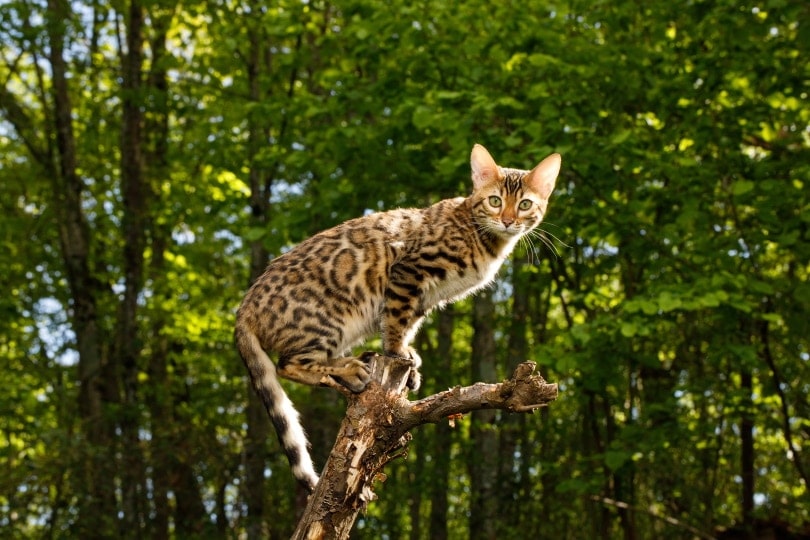
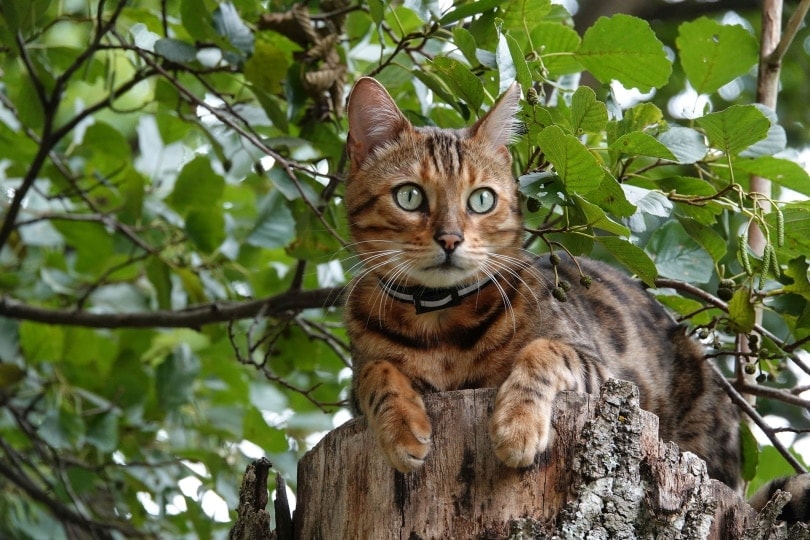
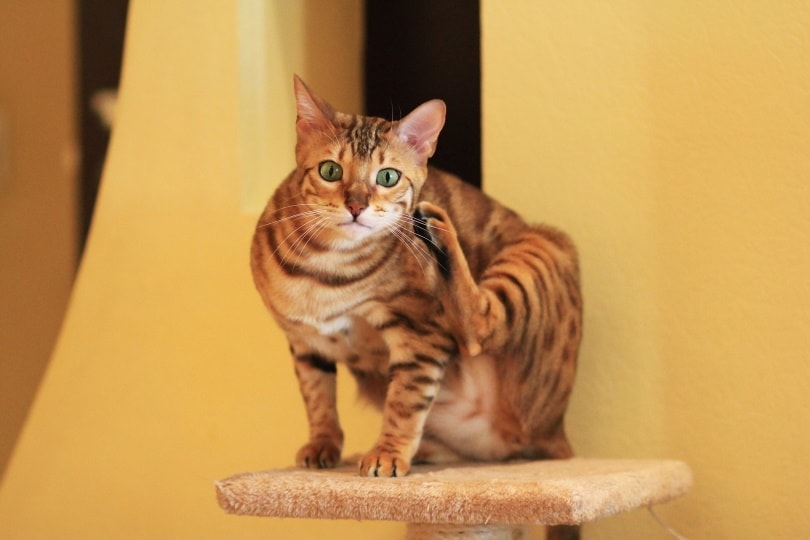
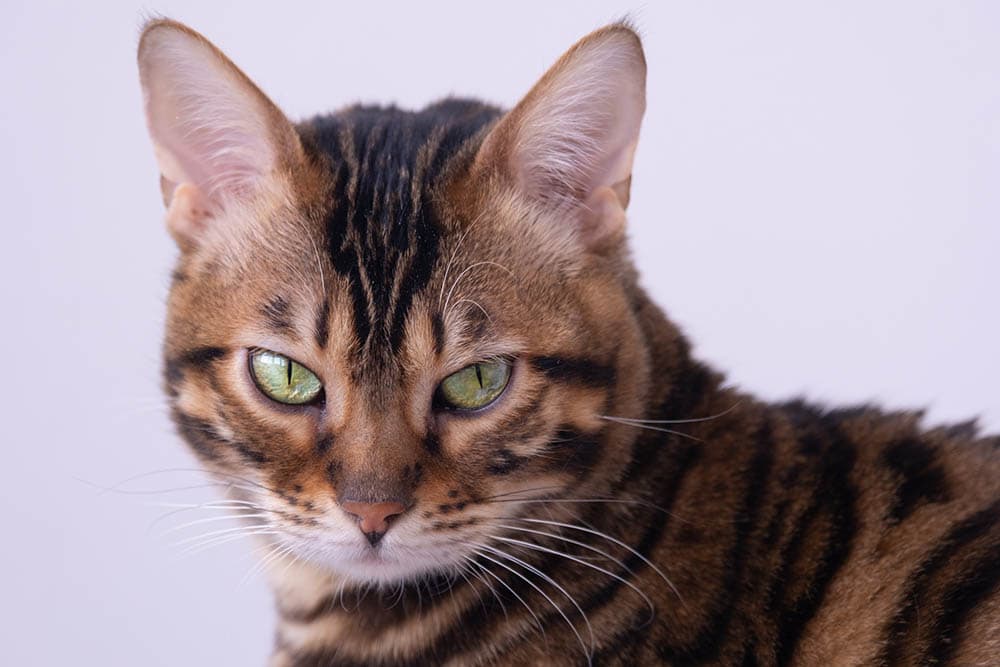
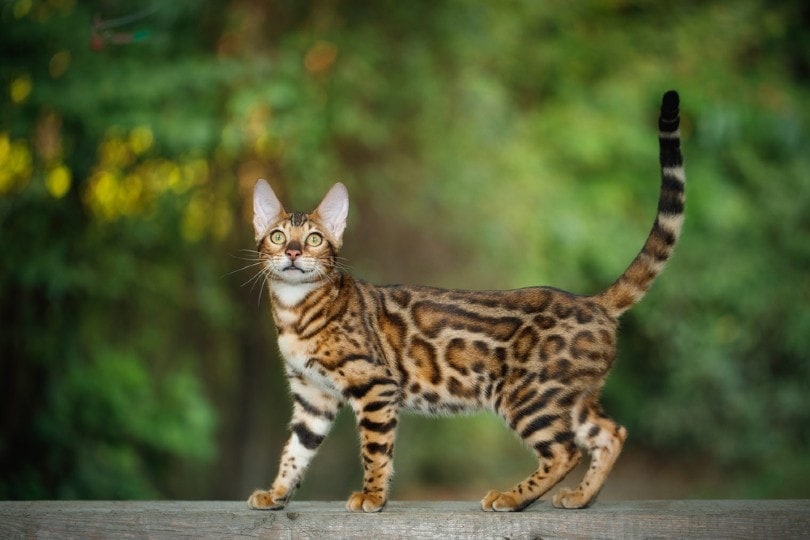
Bengal cats appeal to cat owners because they resemble a wild cat in a manageable package. With their spotted and striped coats, athleticism, and size, these cats may have a reputation for being aggressive or dangerous like their wild counterparts.
This is simply not the case, however. Bengal cats are no more aggressive or dangerous than any other breed. That said, cats all have different personality traits, and it’s possible that one individual may be unusually aggressive.

Bengal Cat Aggression
According to a survey among Bengal cat owners, over 16% of Bengals showed aggression toward other animals, such as dogs or other cats in the household. This is not uncommon among cats, however.
As far as aggression toward humans, there hasn’t been any documentation to indicate that these cats are aggressive or dangerous to their human companions. Because of their lineage with the wild Asiatic Leopard, these cats have strict breed standards to limit aggression and favor good temperaments.
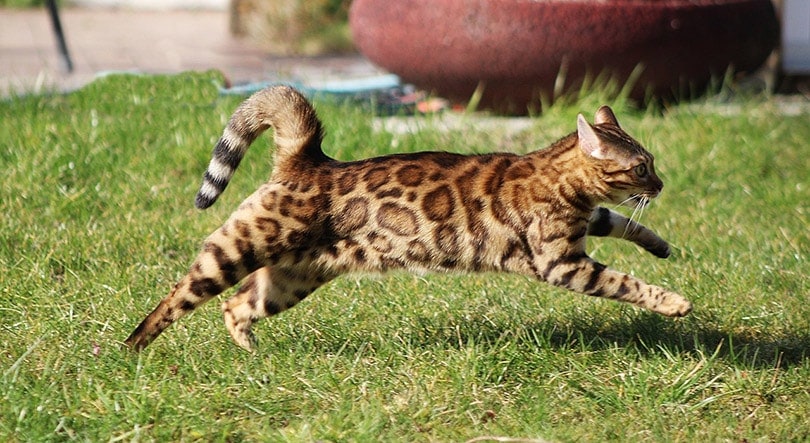
Bengal cats are fully domesticated, but they are large cats with teeth and claws. If they’re not raised, trained, or socialized properly, they can become dangerous, but that could be said of virtually any other domesticated animal.
Signs of Aggression in Cats
Aggression is the second most common cat problem seen by animal behaviorists. Cat aggression is often seen as less serious than dog aggression simply because cats don’t do as much damage as dogs if they attack, but they can cause significant injury with their teeth and claws.
When cats become aggressive, it’s due to an underlying medical or behavioral cause that must be corrected. Different causes have different approaches to fixing them.
Cat aggression can be offensive or defensive. An offensive cat tries to be intimidating, while a defensive cat will adopt a self-protective posture and may try to appear less threatening.
Offensive cat postures include:
- A stiff upright stance
- Stiff rear legs with the rear end raised and back sloped downward
- A stiff tail that’s lowered or held down to the ground
- Direct, unwavering stares
- Upright ears with the backs rotated forward
- Hackles up, including the tail
- Constricted pupils
- Directly facing opponent
- Growling or howling
Defensive postures may include:
- Crouching
- Tail curving around the body
- Head and tail tucked in
- Hackles up
- Eyes wide open with pupils dilated
- Ears flattened sideways or backward
- Whiskers retracted
- Turned sideways toward the opponent
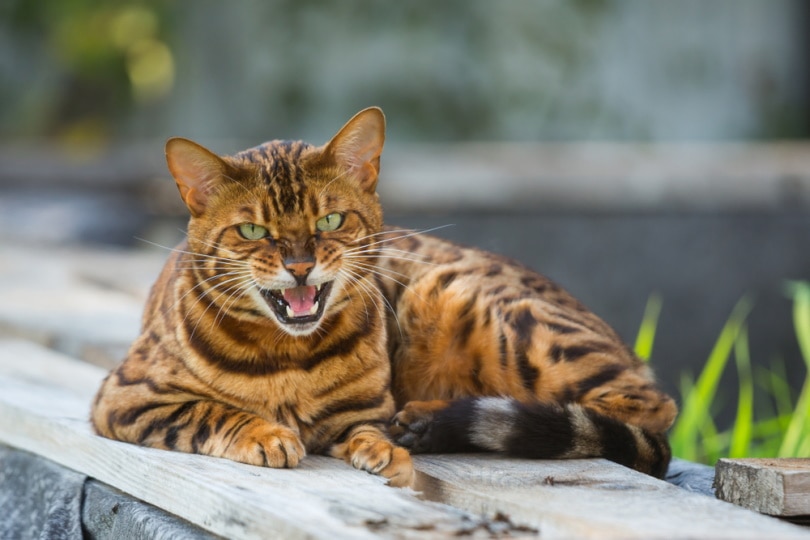
- Open-mouthed hissing
- Quick strikes with front paws
Overt aggression may include:
- Biting
- Fighting
- Swatting with paws
- Growling
- Shrieking
- Scratching
- Teeth and claws exposed to fight

Causes of Aggression
Cats may have many causes of aggression, including: box_color="#BC4B52" radius="0"]
- Inter-cat aggression: This aggression occurs between unneutered males who challenge each other to territory and mates. This may also occur between same-sex or mixed-sex housemates that are having conflict over territory, resources, or simple personality differences.
- Fearful aggression: This aggression occurs when a cat feels threatened and escalates if the cat can’t escape. This could be caused by a person, animal, object, or sound.
- Territorial aggression: Cats may become territorial and lash out at cats, dogs, or people who invade their territory. This can escalate to overt aggression, patrolling, or marking. Territorial behaviors may occur from new pets, major changes in the home, or roaming cats in the neighborhood.
- Redirected aggression: This aggression is when a cat takes its aggression out on something other than the direct cause. For example, redirected aggression may occur if the cat is mad at a cat that’s outside that it can’t access, so it lashes out at the dog or person in the house.
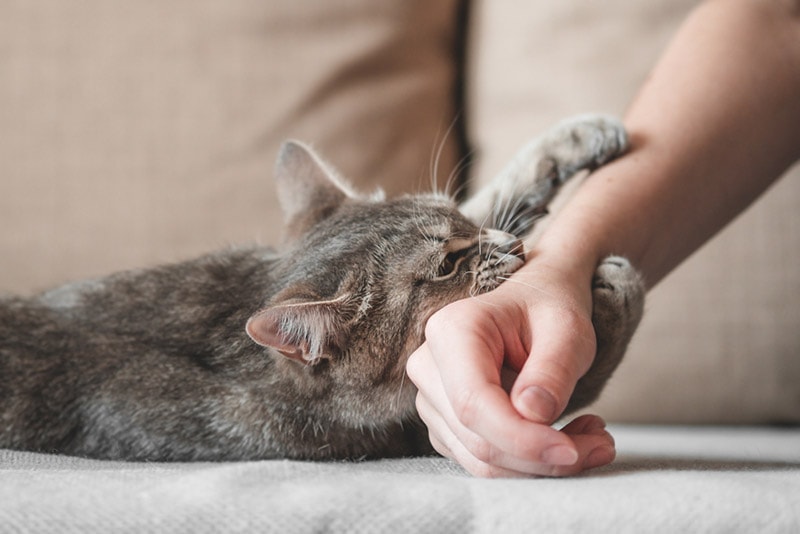
- Petting-induced aggression: This type of aggression occurs when the cat doesn’t want to be petted and feels irritated, so it lashes out by biting or scratching.
- Pain-induced aggression: This type of aggression arises from pain or discomfort somewhere in the body that makes the cat irritable, such as dental pain or arthritis. This can be corrected with a veterinary exam to determine the cause.
- Idiopathic aggression: This type of aggression has no underlying cause that can be explained through veterinary exams, triggers, or past history. This can be extremely dangerous since it arises out of nowhere and can affect the safety of the cat and the household.
Regardless of the type of aggression you’re dealing with, it’s imperative to work with your vet to determine possible underlying causes like pain, endocrine imbalances, cognitive dysfunction, or neurological disorders. Medication or other interventions may be appropriate for your cat.
If the veterinary exam reveals nothing medical causing aggression, an animal behaviorist can be useful in determining the cause and helping you modify your cat’s behavior to make your home safer.
Conclusion
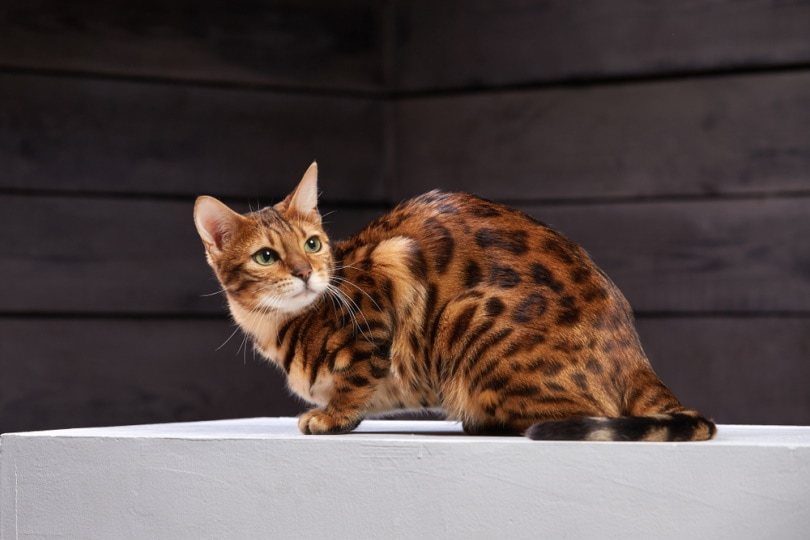
Bengal cats may look like wild jungle cats but they’re fully domesticated like any other breed of cat. These cats aren’t particularly aggressive or dangerous as a breed, though any cat can develop aggression issues from various causes. The best way to address aggression is by working with your vet and an animal behaviorist to determine the underlying cause.
Sources
Featured Image Credit: Seregraff, Shutterstock
Get Hepper In Your Inbox


Pet care tips from our vets and experts, straight to your inbox.
You may opt-out at any time. View our Privacy Policy for more information.
Nicole is a lover of animals of all sizes but is especially fascinated with the feline variety. She’s the proud mom of Baby, a Burmese, and works every day so he can relax in the sunshine or by the fire. She’s always had a cat in her home and has spent countless days with others, observing behaviors and softening up even the grouchiest of the lot. Nicole wants to share her kitty expertise with you so you and your cat can live happy, healthy, and care-free.
Join the conversation
Ask a question, share your story, or send private feedback.