Hepper blog

Search our database of over 9,984 posts with up-to-date information from our experts and veterinarians.

Hepper is reader-supported. When you buy via links on our site, we may earn an affiliate commission at no cost to you. Learn more.

Cat Neutering Procedure: Vet-Reviewed Risks & Possible Complications

By Nicole Cosgrove · Reviewed & fact-checked by Dr. Paola CuevasVet Approved
Dr. Paola Cuevas
Reviewed & Fact-Checked byDr. Paola CuevasMVZ (Veterinarian)
Paola Cuevas is a veterinarian and animal behaviorist, with over 18 years of experience working with a variety of species. Her passion is animal welfare and focuses on the importance of preventive medicine. Paola has skills in the fields of nutrition, microscopy, clinical pathology, diagnostic imaging, and endoscopy as well as extensive experience in animal training through positive reinforcement. As our in-house veterinarian, Paola is very happy to share her knowledge and experience with our readers and hopes to be helpful with any issue presented by your non-human family members.View authorThe information is current and up-to-date in accordance with the latest veterinarian research. Read about our vets
Share
Ask us a question in the comments
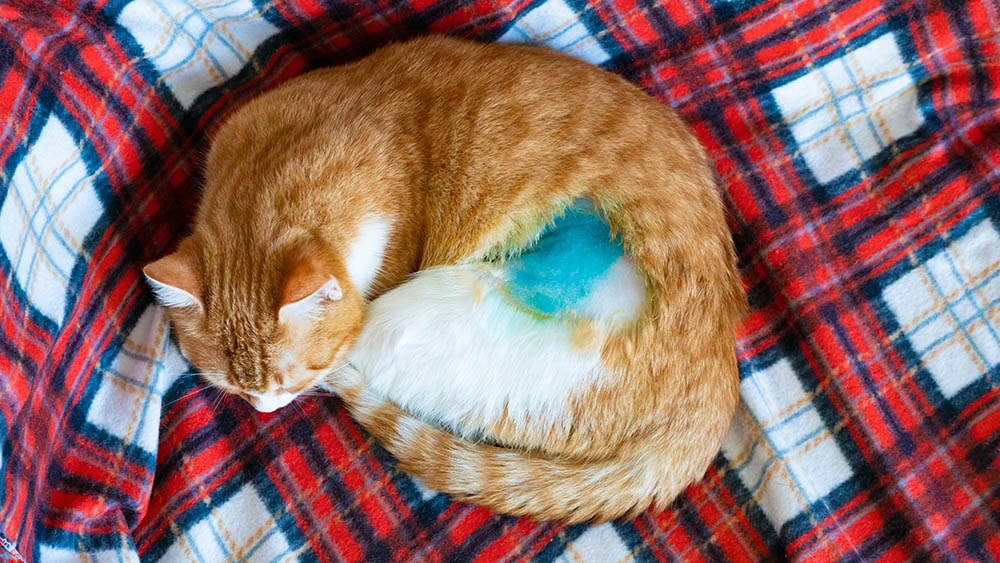
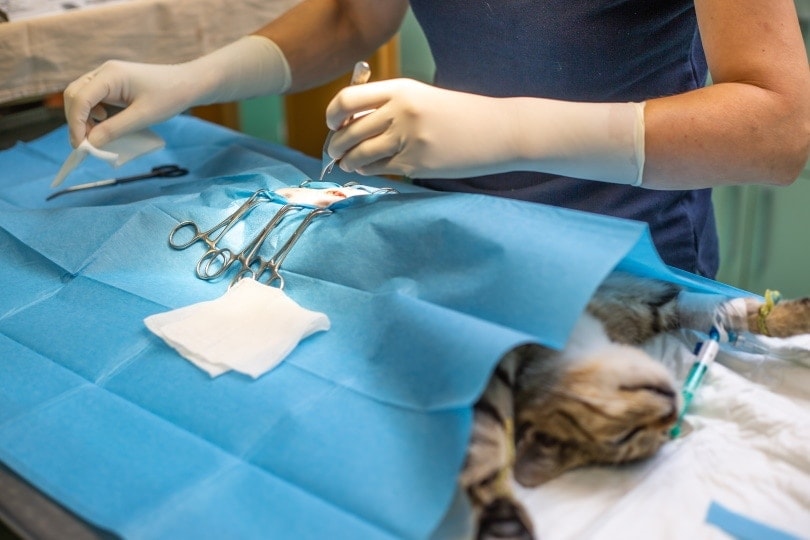
cat after spaying

Neutering your cat has many benefits, namely, helping pet overpopulation—homeless cats and pet overpopulation are massive problems in the United States and around the world, and neutering your male will help prevent him from breeding with any females in the area and having unwanted litters. There are also several other benefits, though, including a calmer, more docile cat, and he will no longer feel the need to go out in search of females in heat, reducing the risk of getting lost or injured.

In this article, we’ll look at how the neutering process works, what to expect, and what recovery will look like for your feline. Let’s get started!

How Old Should Your Cat Be to Get Neutered?

In general, most vets recommend neutering a male cat around 5 months old, around the same time as females are spayed. This is because both males and females can reach sexual maturity at roughly 6 months old, at which point they can reproduce. Breeding at such an early age is potentially dangerous for cats, so prevention from this as early as possible is the best course of action.

Also, a younger cat can handle and recover from the surgery much faster than an adult or senior. While neutering is a fairly simple surgery—certainly simpler and less invasive than spaying—the quicker you male can get back to normal, the better.
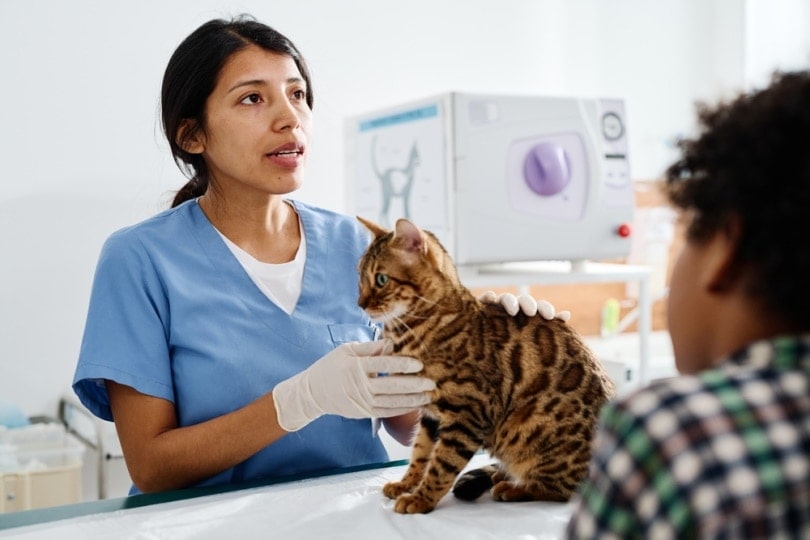
vet checking bengal cat
Image Credit: Pressmaster, Shutterstock

What Will Neutering Look Like?

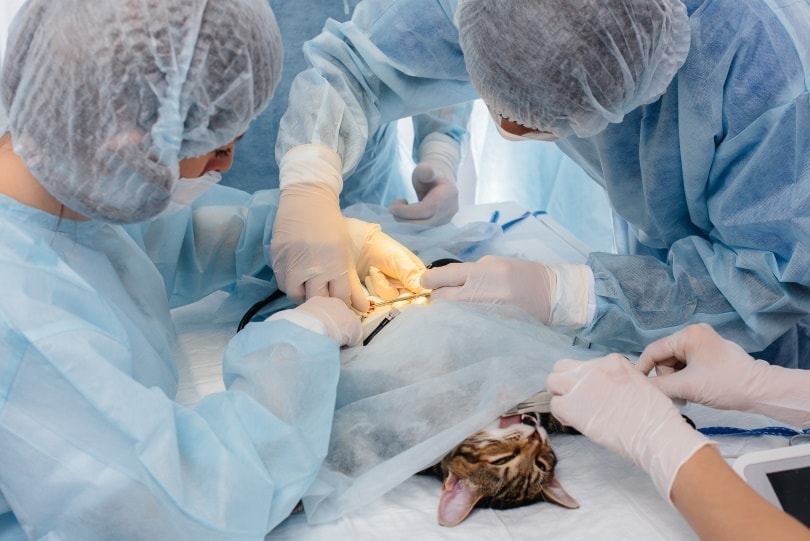
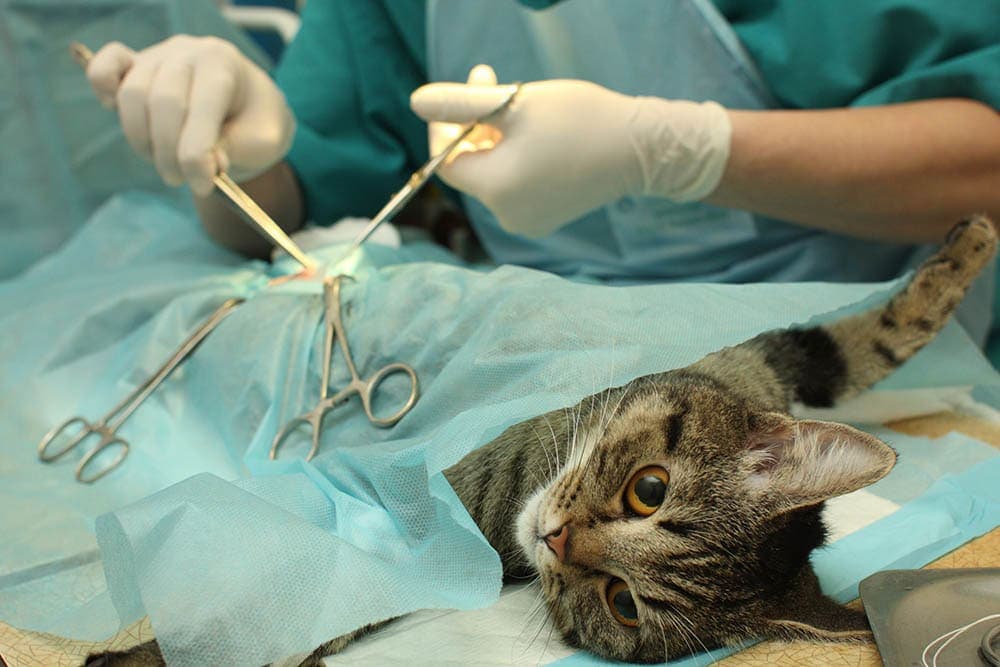
As with spaying, neutering is done under general anesthesia, with your cat fully asleep. Your vet will usually run blood tests to make sure anesthesia is safe for your cat, and then they are given a sedative. The anesthesia is then administered, after which his scrotum will be either plucked or shaved, and the skin cleaned with a sterile solution.

Neutering a cat is also referred to as castration, as both testicles are completely removed. This is done via very small incisions on the scrotum, through which the testicles are removed. The testicles are pulled through the scrotum, and each testicle is removed from the attachments with either a laser or scalpel. After making sure there is no bleeding, the vet then places the attachments back inside the scrotum, and the incisions are usually glued shut with surgical glue. Because the cuts are so small, the cut is often left open to heal on its own—stitches are often not necessary but are sometimes used.

With male cats, the surgery is simple and fast, and can be over within 2–5 minutes! Your cat will be able to come home the same day of the surgery, typically within an hour or two after the procedure once the vet has made sure he’s fine.

How Does Recovery Look?

Most cats feel minimal pain after the procedure and are given pain medication to manage any pain. They are usually back to their normal selves within 5–7 days, however, it’s important to control your cat’s activity carefully in the first few days after surgery. Excessive activity can cause swelling and even open up the incision, leaving it vulnerable to infection. Your vet will give you detailed post-surgical instructions which you must follow carefully.
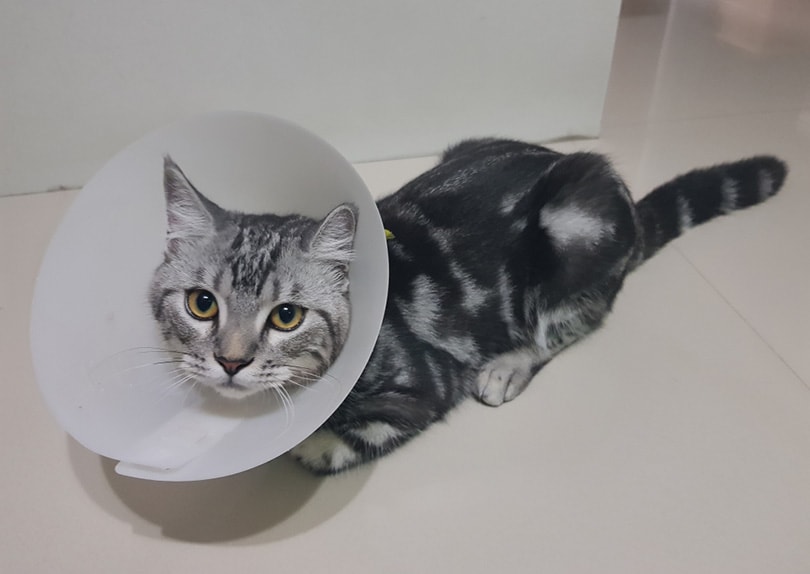
a cat after neutering with elizabeth collar
Image Credit: Koiee, Shutterstock

Risks and Possible Complications

Neutering is such a quick and simple surgery that complications are very rare. That said, there can be some post-surgical pain, and excessive bleeding is a risk, causing the scrotum to fill up with blood. In this case, it’s important to get your cat back to the vet as soon as possible. Anesthesia is always a risk, although blood tests before the surgery should prevent any complications.

Obesity is fairly common after neutering due to lower activity levels and decreased metabolism. You’ll need to monitor feeding carefully and make sure your cat gets sufficient exercise.

Conclusion

Neutering is a relatively quick and simple procedure, and most cats are back to normal within a week or so. Contrary to popular belief, neutering will not change your cat’s character in any way, although they may be slightly more docile and less energetic than before. Neutering is a safe procedure with very little risk involved, and the benefits far outweigh the risks.

See also:


Featured Image Credit: Sannikova Maria, Shutterstock

Get Hepper In Your Inbox

Pet care tips from our vets and experts, straight to your inbox.

List

Select all that apply.

You may opt-out at any time. View our Privacy Policy for more information.

Nicole Cosgrove
Authored by

Nicole Cosgrove

Join the conversation

Ask a question, share your story, or send private feedback.
Rate this post
Required to post. Only our editors see your rating.
Who should see this?

A human reviews every comment before it appears. Your email is never published.

Picked to go with this article

How Long Will It Take to Neuter a Cat? Vet-Approved Facts & Tips

How Long Will It Take to Neuter a Cat? Vet-Approved Facts & Tips

Having your cat neutered has lifelong benefits, such as making them calmer, stopping them from making home smell like pee, and reducing the risk of cancer and…

Nicole Cosgrove
By Nicole Cosgrove ·
When to Neuter a Cat? Vet-Reviewed Facts & FAQ

When to Neuter a Cat? Vet-Reviewed Facts & FAQ

Owning a cat means lots of love, affection, and playtime. But it’s also a lot of responsibility and care involved for ensuring your cat is happy and in good he…

Kathryn Copeland
By Kathryn Copeland ·
How Long Do Cats Take to Recover From Neutering? Our Vet Explains

How Long Do Cats Take to Recover From Neutering? Our Vet Explains

Neutering is the removal of a male cat's testicles. This procedure is most commonly completed in young, healthy cats to help prevent spraying and help decrease…

Dr. Kim Podlecki
By Dr. Kim Podlecki ·
Cat Spaying Procedure: Vet-Reviewed Facts & Risks

Cat Spaying Procedure: Vet-Reviewed Facts & Risks

Spaying, sometimes also known as desexing, is the process of removing the reproductive organs of a female cat. This procedure will stop her from producing eggs…

Nicole Cosgrove
By Nicole Cosgrove ·

Keep reading

More stories you might like

How Do Vets Spay Cats: Learning From The Experts (Vet Answer)

Neutering cats is one of the most common surgical procedures that small animal veterinarians perform. For female animals, neutering is often referred to as “sp…

Dr. Greg Steele
By Dr. Greg Steele ·
How Do Vets Spay Cats: Learning From The Experts (Vet Answer)

Will Neutering a Cat Calm Him Down? Vet Reviewed Pros & Cons

If you have a male cat, getting them fixed in a timely fashion is super important. Males can exhibit some territorial aggression and marking behavior. Plus, th…

Ashley Bates
By Ashley Bates ·
Will Neutering a Cat Calm Him Down? Vet Reviewed Pros & Cons

Are Male Cats More Affectionate After Neutering? 3 Vet-Reviewed Potential Benefits

The pros and cons of neutering your cat are widely debated. While some people think that you should always neuter your pet, others believe that it is inhumane.…

Nicole Cosgrove
By Nicole Cosgrove ·
Are Male Cats More Affectionate After Neutering? 3 Vet-Reviewed Potential Benefits

Neutered vs Unneutered Male Cat: Pictures, Vet-Approved Differences & Identification

When you decide to bring home a new pet cat, one of the first choices is whether to get a male or female kitty. If you decide on a male, you’ll then need to de…

Rachel Giordano
By Rachel Giordano ·
Neutered vs Unneutered Male Cat: Pictures, Vet-Approved Differences & Identification

What Happens If You Neuter a Cat Too Early? 3 Problems Caused

There are several myths and rumors surrounding getting your cat neutered, and even more regarding neutering them early. So, what exactly does it mean when a ca…

Kerry-Ann Kerr
By Kerry-Ann Kerr ·
What Happens If You Neuter a Cat Too Early? 3 Problems Caused

How to Help Your Cat Recover From Spaying or Neutering: 5 Vet-Approved Tips

As cat parents, we want to do all that we can to keep our cats safe, happy, and healthy throughout their entire lives. Having our cats spayed or neutered is on…

Rachael Gerkensmeyer
By Rachael Gerkensmeyer ·
How to Help Your Cat Recover From Spaying or Neutering: 5 Vet-Approved Tips

How to Tell if a Cat Is Neutered: 8 Vet-Reviewed Signs to Look for

Whether you’re just curious or you took in a stray cat and you’re not sure if he is neutered or not, there are a few behavioral and physical elements that you…

Kathryn Copeland
By Kathryn Copeland ·
How to Tell if a Cat Is Neutered: 8 Vet-Reviewed Signs to Look for

Can Cats Eat & Drink Before Getting Spayed or Neutered? Vet-Approved Info & Recommendations

Spaying or neutering your cat is a safe, simple procedure. However, as a pet parent, you probably have quite a few questions. You might even wonder if your cat…

Patricia Dickson
By Patricia Dickson ·
Can Cats Eat & Drink Before Getting Spayed or Neutered? Vet-Approved Info & Recommendations