Hepper is reader-supported. When you buy via links on our site, we may earn an affiliate commission at no cost to you. Learn more.
Are Poodles Aggressive? Vet-Reviewed Facts & Tips


In this article
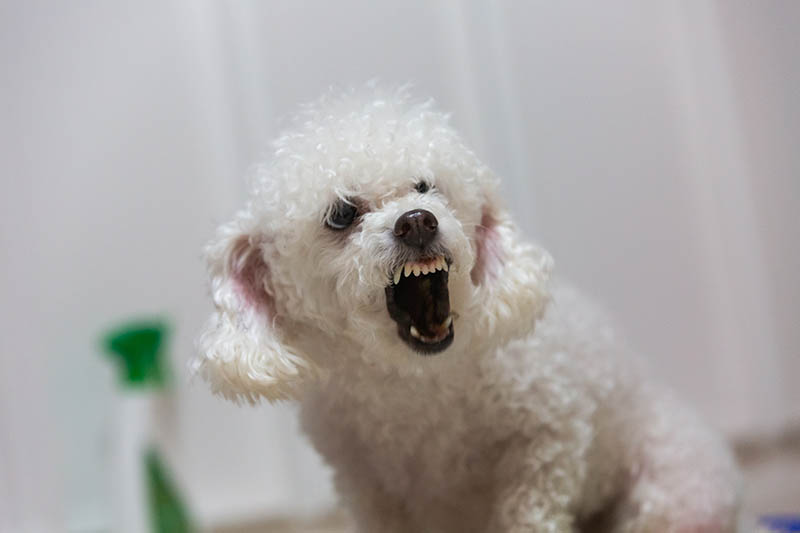
Some dog breeds seem more aggressive than others. If you are looking for more information regarding a Poodle or you already have one and are concerned with current behavior, you might wonder if the breed is inherently aggressive. We can calm you down by saying, that poodles are not thought of as aggressive by nature.
However, several factors play into aggression in dogs. We will go over what to look for and potential reasons for said aggression.

Poodles Are Not Inherently Aggressive
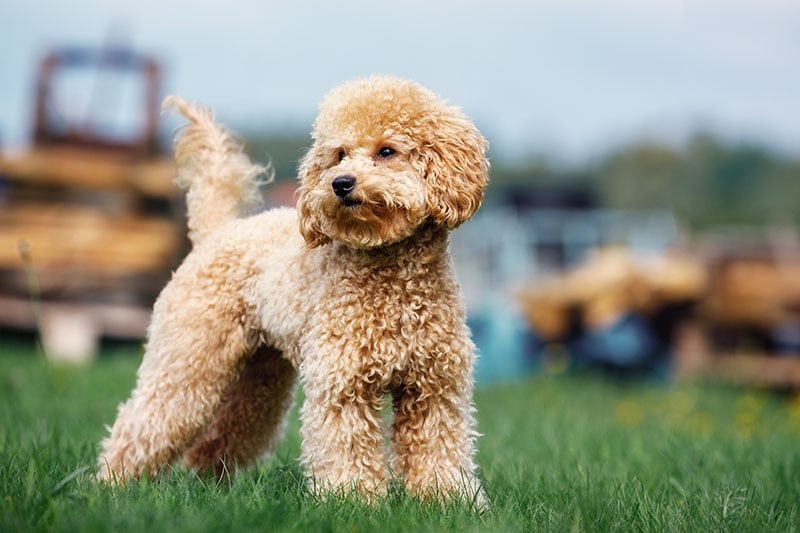
Every dog has the potential to have certain personality quirks due to several factors. Personality is affected by genetics, environment, and experiences. As a breed, poodles are not thought of as aggressive by nature. From toy to standard poodle, these brilliant dogs tend to keep a very level-headed and friendly demeanor.
For the most part, poodles are wonderful companions with various age groups and living situations. It is very common for families to choose a poodle because they are awesome candidates for growing families, single households, and multi-pet situations.
Poodles are known to be one of the most intelligent dog breeds in the world. They have a very keen sense of their surroundings, react well to training, and generally stay cheerful and loyal. However some individuals are aggressive in various situations, as is possible with any animal.
Can Poodles Suddenly Become Aggressive?
Any dog can have a change in behavior, but there is always an underlying reason. Even if it doesn't seem obvious at first, you can probably put two and two together. Don't be afraid to schedule an appointment with a dog behavioral specialist and veterinarian if you have a dog with challenging behaviors.
Ruling out any health issues associated with aggression is a great first plan of action. If your vet rules that there is no condition causing the aggression, you can start to look at environmental factors that could contribute.
What Contributes to Aggressiveness in Dogs
Aggressiveness in dogs has several triggers. These are unique and individual to the poodle in question. But here are a few reasons that can contribute to aggressiveness or unwanted behavior.
Genetics
If some parents are aloof, don't like children, or are standoffish in general, genetics might make puppies have a similar temperament. That is why it is so important to meet the parents when you're purchasing your family dog.
It gives you a good indication of what to expect when that puppy is older. If you are adopting from a rescue or shelter, most dogs would have developed enough of their personality to get a good idea by spending time with them. However, puppies may not show these signs until they reach maturity.
Meeting parents ensures a solid lineage with a favorable temperament. If you ever encounter a breeder that doesn't show the parents or keeps the pups in a less than sanitary living space--steer clear. Bad breeding practices are likely to occur and never work in the pup's favor. Beware of puppy farms.
Environment
The environment can affect behavior. Typically, aggression stemming from environmental factors is usually from fear due to fight and flight responses. If your poodle receives a lot of overstimulation or is afraid of family members or other pets, it can translate into aggressive behaviors. Children, barking dog neighbors, mail delivery, trash trucks, all kinds of things can trigger an aggressive behavior response.
If your dog is in territorial mode, it can cause some severe aggression problems. Also, a power struggle in the household between your poodle and another pet could lead to territorial aggression. The same could be said for a neighbor dog across the fence or strange dogs in general.
These behaviors can come out even when it doesn't warrant a response. This type of anxiety usually requires a lifestyle switch and possibly medication to soothe your dog's symptoms.
Health
If your dog develops health issues, it can contribute to aggressiveness due to pain or a change in brain activity. If your dog has always been calm, cool, and collected and suddenly seems agitated and even nippy, you might need to get them to the vet.
Sudden changes in behavior like this are not normal and should be dealt with promptly. If it's health-related, it generally relates to a change in brain function or pain in the body. This is especially true if your dog gets aggressive when touching certain body parts.
If you notice any sensitivity, it is best to get them to the veterinarian for a complete evaluation. With a combination of blood tests, X-rays, and any other necessary procedure, your vet can get to the bottom of what's causing your poodle to react this way.
Here are a couple of potential health issues that can contribute to aggressiveness:
- Arthritis
- Epilepsy
- False pregnancy
- Poor eyesight or hearing
- Rabies
Age
As your dog progresses in age, several factors could play into the development of aggressiveness. One of the primary causes is pain. If your dog develops arthritis or another health issue as they age, it could result in the fear of being touched, which could cause them to essentially lash out.
Also, some dogs start to have vision issues later in life, which can cause frightened reactions resulting in aggression. So, dogs with glaucoma or other vision-related health issues can suddenly become aggressive as they lose a visual of their reality.
Hearing plays a vital role in your dog's senses. If your poodle can't hear as well as they used to, they might startle easily and become aggressive as a response.
Punishments
Negative experiences and punishment can absolutely cause aggression in your poodle. Punishment can take on many forms. It can be verbal, physical, or a combination of both. Using physical force as a discipline method is not recommended, it has no place in training, and some can be especially sensitive to this type of behavior.
If you find yourself yelling at your dog a lot or being extra rough with them, this can contribute to aggression if they feel threatened.
Find a behavior specialist who will teach you how to use positive reinforcement as a discipline and training method rather than any negative connotations or brute force. Reward desired behavior.
Food/Toy Aggression
Puppies learn many things when they are small and with their littermates. If your puppy is taken too early from their litter mates, missing out on some crucial developmental stages can lead to eventual problems.
You might notice that your poodle will guard their food bowl or become very possessive with toys, which can lead to attacking. They can be possessive only with other dogs, or they might even be aggressive towards people.
This is a very primal response where your pet feels like they would be directly deprived if something is taken from them. While this is a natural ingrained response, it can be a real problem in certain households. Luckily, you can definitely work with animals on this issue.
Prey Drive
It could be that you are mistaking aggression for prey drives. If you have smaller dogs, cats, or other animals in the home, it might trigger your poodle insanely. Poodles are not notorious for being incredibly prey driven, but that isn't always the case.
Prey drive is a little different than aggression because it is a hunting response that is naturally programmed into your dog's brain. When they see a smaller animal, it sometimes sparks the urge to want to chase, play, or even kill the target. Offering plenty of play opportunities where this behavior can be indulged is key and a behaviorist can advise on how to do this.

How to Handle Aggression
Before anything else, it is best to get to the bottom of the aggression. To rule out any major health concerns, it's best to use your vet as an immediate point of contact. There are many trainers and behaviorists out there but not all have the skill and training to work with aggression. Check their qualifications carefully.
If your vet examines your poodle and you two cannot come up with any environmental or health reason why your dog is reacting and responding with aggression, it might be best to look at behavioral training.
Working with a behavioral specialist can help put things into perspective from a place of specific education. Not all aggression stems from a particular behavioral issue, but if you and your vet determine that that is the cause, it is always an excellent avenue to consider.
Whether you're just seeking advice or want to enroll your pet in actual behavioral training, you have a wide selection in nearly every state. There are tons of professionals on hand to help you at every turn. You can ask friends, family, or your trusted veterinarian if you want a good recommendation.
Depending on where you fall on the globe, you might have to do some traveling or even try remote learning if you have limited options available in your area.
Lack of Answers
If you have ruled out behavioral, environmental, age-related, and other health reasons for potential aggression, unfortunately, there isn't always a definitive answer. For a small percentage of dogs, the aggression displayed cannot be pinned down to a specific cause.
Aggression can develop suddenly or be a slow transforming issue. The best thing you can do is take it in stride and deal with the situation as any professional recommends.
Conclusion
If your poodle is showing aggression, hopefully, this article gave you an excellent foundation of knowledge. But do not be afraid to seek help for whatever it might be. You will have to go through a series of tasks to uncover the underlying issue if it's not apparently obvious.
The more help you get for your poodle, the better the behavior can be in the long run. But know that it is not common for poodles, as a breed, to show any aggression due to breed standards alone.
Sources
https://vcahospitals.com/know-your-pet/dog-behavior-problems-aggression-diagnosis-and-overview
https://www.science.org/doi/10.1126/science.abk0639 (genetic basis of personality)
https://www.dacvb.org/page/About (list of behavior vets)
http://corecaab.org (behaviorists)
Featured Image Credit: KoreaKHW, Shutterstock
Get Hepper In Your Inbox


Pet care tips from our vets and experts, straight to your inbox.
You may opt-out at any time. View our Privacy Policy for more information.
Ashley Bates, a freelance writer with a passion for pets, is currently studying animal therapy. She is a mother to four children and 23 pets, both furry and feathery. Ashley actively volunteers at local shelters, advocates for animal welfare, and rescues animals in distress. Her mission is to promote awareness, education, and entertainment about pets to help prevent animal homelessness. She specializes in the care and well-being of dogs and cats.
Join the conversation
Ask a question, share your story, or send private feedback.