Hepper is reader-supported. When you buy via links on our site, we may earn an affiliate commission at no cost to you. Learn more.
11 Alaskan Malamute Colors & Patterns (With Pictures)
In this article
The robust sled dog known as the Alaskan Malamute is famed for their stamina and strength. They also have a remarkable, thick coat that comes in various colors. Some visualize a huge wolf with gray and white fur when they think of Alaskan Malamutes. While this depiction is not false, the large dogs can have a spectrum of coat colors and patterns that deviate significantly from the norm.
The American Kennel Club (AKC) has established acceptable breed coat colors, but differentiating between the real color classifications may be challenging if you're not familiar with the breed. In this article, we'll look at the breed's standard colors and colors that are rare, unique, and not considered official.

Alaskan Malamute Marking Guide
Due to their distinctive facial markings, Alaskan Malamutes can be easily distinguished from one another. Their marks can range from dark to lighter tones, or occasionally their markings can be barely discernible.
You’ll notice the following descriptions in some of the color descriptions:
| Color Markings | Description |
| Cap: | The cap is the area of the center point of the head that extends to the forehead and covers the ears as well. |
| Bar: | It is the dark or fading area that runs from the cap to the nose. |
| Blaze: | This white mark extends from the forehead to the center of the back cap. |
| Star: | This is the mark of a white forehead around the parts of the cap. |
| Eyeshadow: | It refers to the black areas next to, below, or between the eyes. The eyeshadow may be dark, but with time, it sometimes fades. |
| Goggles: | This is the dark shaded area that encircles the eyes and extends sideways to the cap. |
| Full Mask: | Bar, cap, and goggles are combined, creating a full mask. |
| Closed Face: | This is the excessively dark hue that hides the dog's markings, bar, cap, or goggles. |
| Open Face: | This is the name for a face that is entirely white, except for the cap, and that doesn't have a hue on its eyeshadow. |
| Full Collar: | The white band that encircles the neck. |
| Withers Spot: | This refers to the asymmetrical white dot portions at the nape. |
| Eagle: | The eagle is shown by the two darker bands that run the length of the chest without meeting in the middle. |
| Necklace: | The dark band that encircles the dog's chest |
The 11 Alaskan Malamute Colors & Patterns
1. White
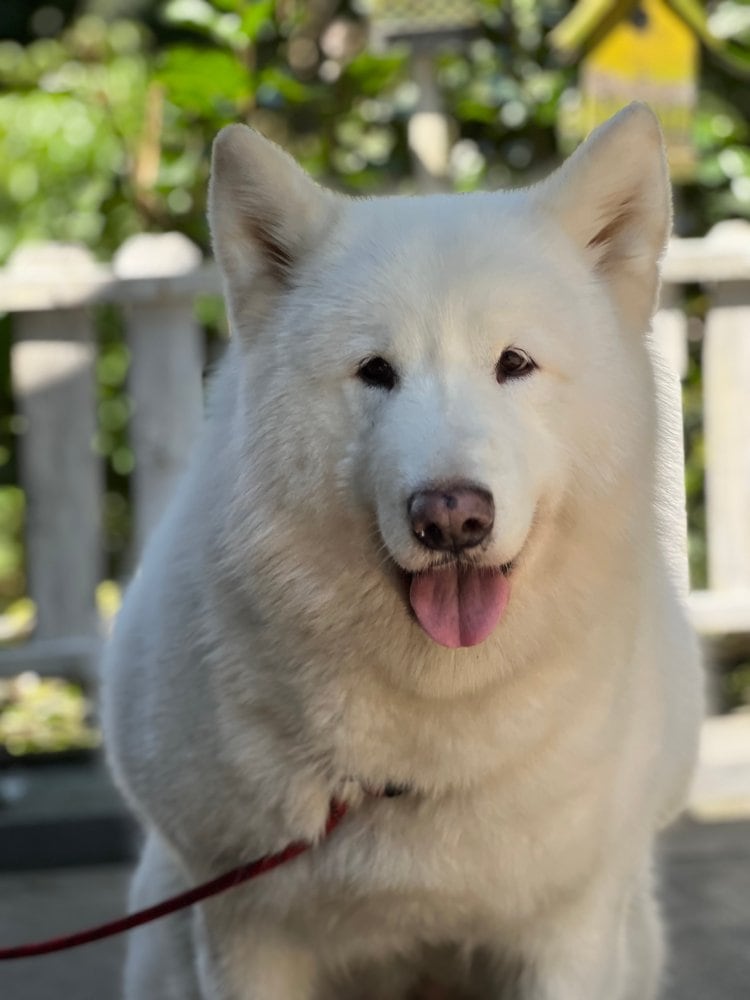
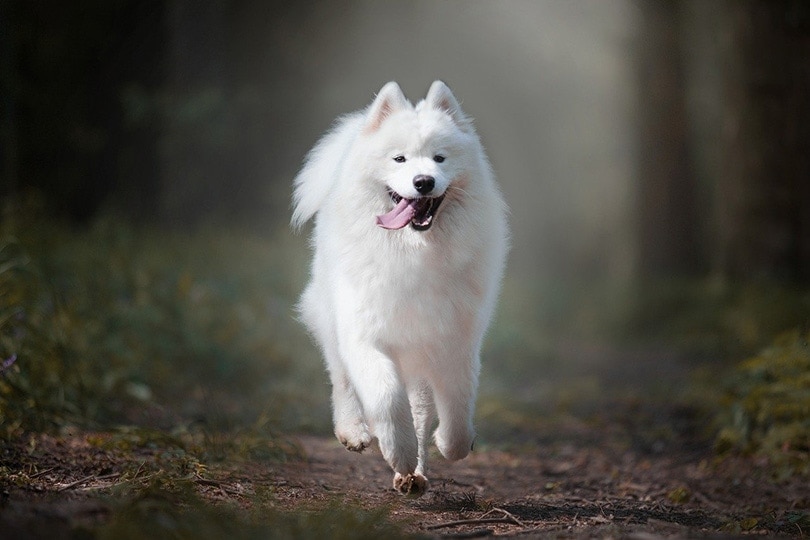
An Alaskan Malamute with an entirely white coat is unusual and frequently resembles a Samoyed. All-white is the only solid color that is permitted as standard. On the underside of the body, the feet, the legs, and some of the patterns on the face, white is always the predominant color.
The gorgeous white or cream-colored coat can only be produced if the dog is born without black coloring. A recessive red and white pheomelanin intensity that prevents the coat from forming eumelanin and turning to a darker color causes this coloring.
A solid white undercoat, guard hairs, ear lacing, cap, and stripes on the back are what classify an all-white Alaskan Malamute. However, they can also be cream-colored or pale yellow. Another distinguishing feature is a pinkish-black nose. Although pure white Alaskan Malamutes appear quite pale, their coats contain pheomelanin, which has only been selectively bred to appear white or off-white.
As a result, none of these dogs are at risk for developing hearing loss or blue eyes, which would not be unusual in completely non-pigmented white dogs due to a lack of pigment. Alaskan Malamute puppies are often white or cream, while the adults are white or cream with biscuit hues on the topline and ears.
2. Gray and White
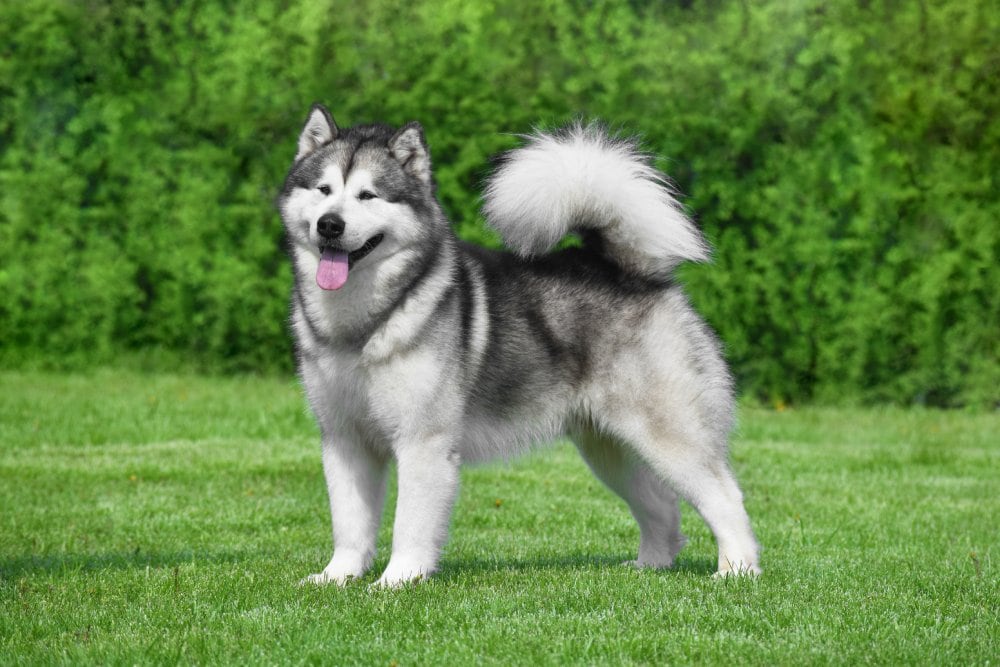
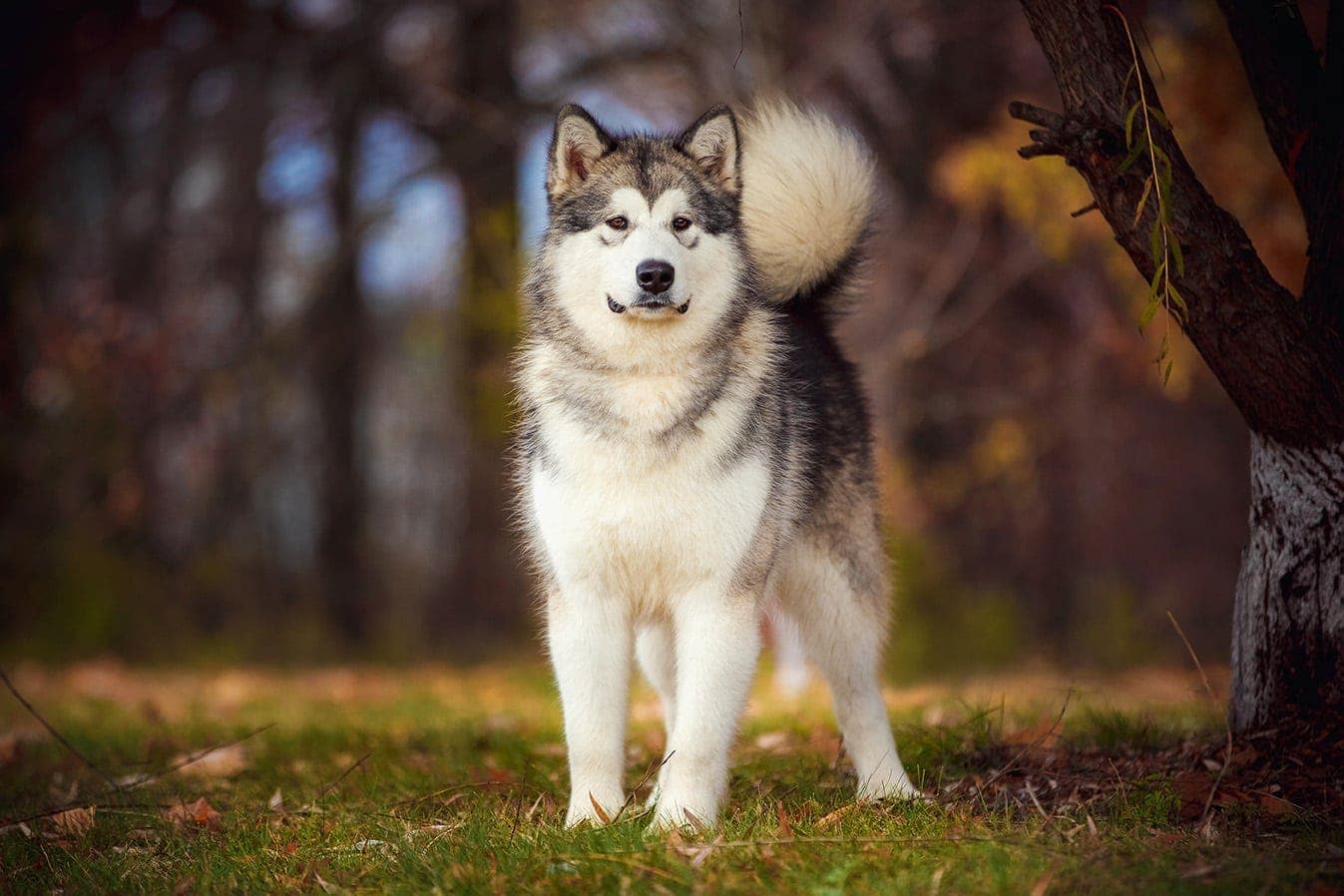
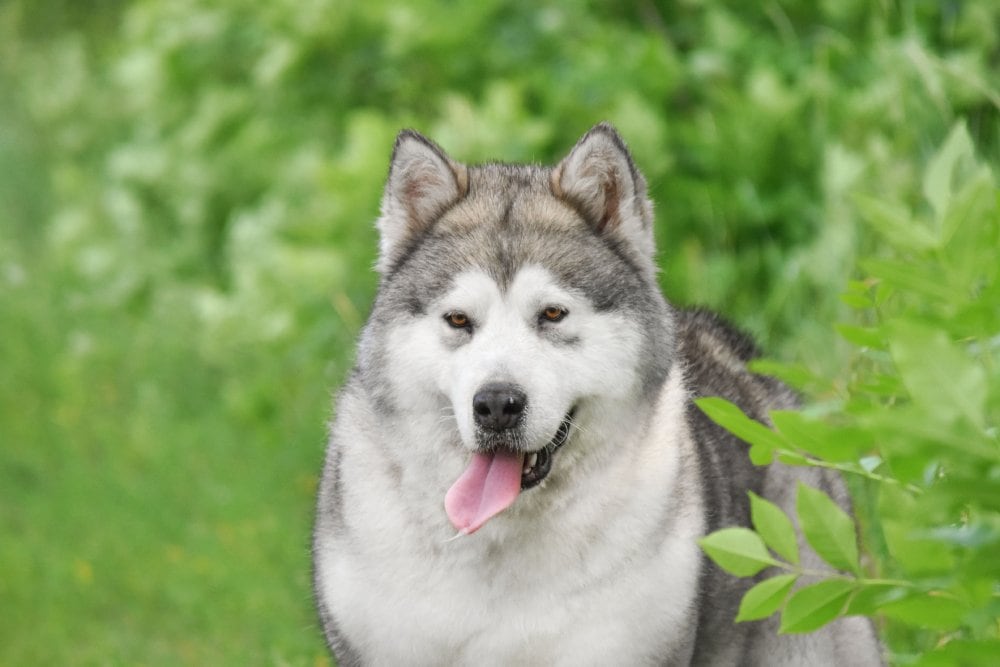
One of the most popular coat colors of the Alaskan Malamute is gray and white, which is remarkably similar to the Husky. The name "gray & white" for the Alaskan Malamute would be more appropriately referred to as agouti domino. In the agouti pattern, domino decreases the amount of eumelanin and increases the amount of pheomelanin.
Compared to agouti & white, agouti domino typically produces an overall grizzled appearance with fewer dark-pigmented regions. The area of the dog's saddle usually retains the most black pigment.
Puppies that are gray and white usually have a banded coat with a black stripe down the back and a white face with a mask and thick white eyebrows. Adults have a white face and a visibly banded coat, occasionally with masking or other patterns. A pink stripe runs down the nose of some, but not all, domino-expressing Alaskan Malamutes.
3. Black and White
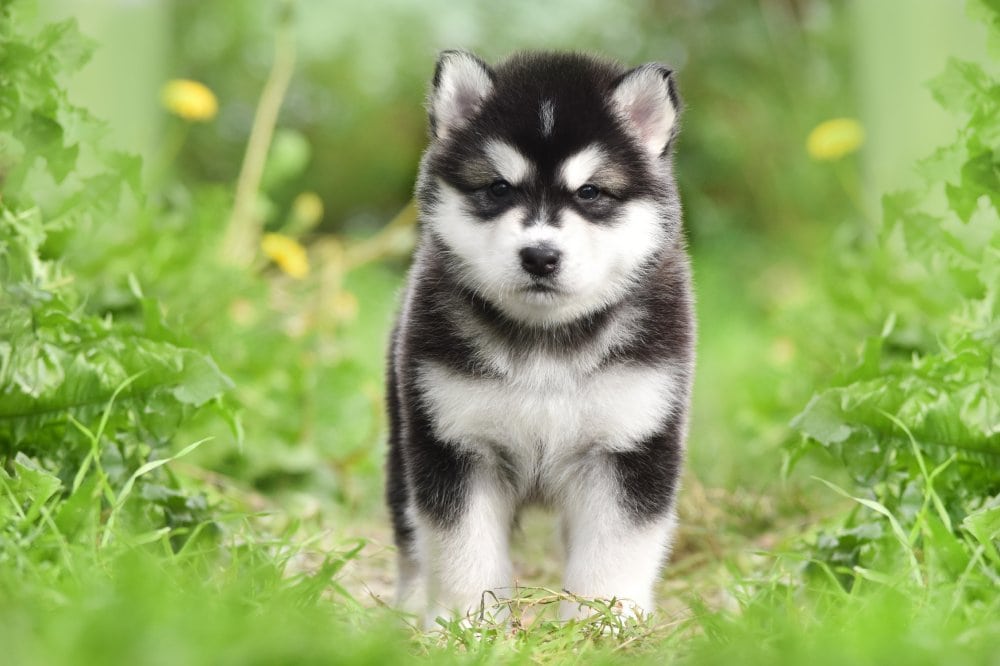
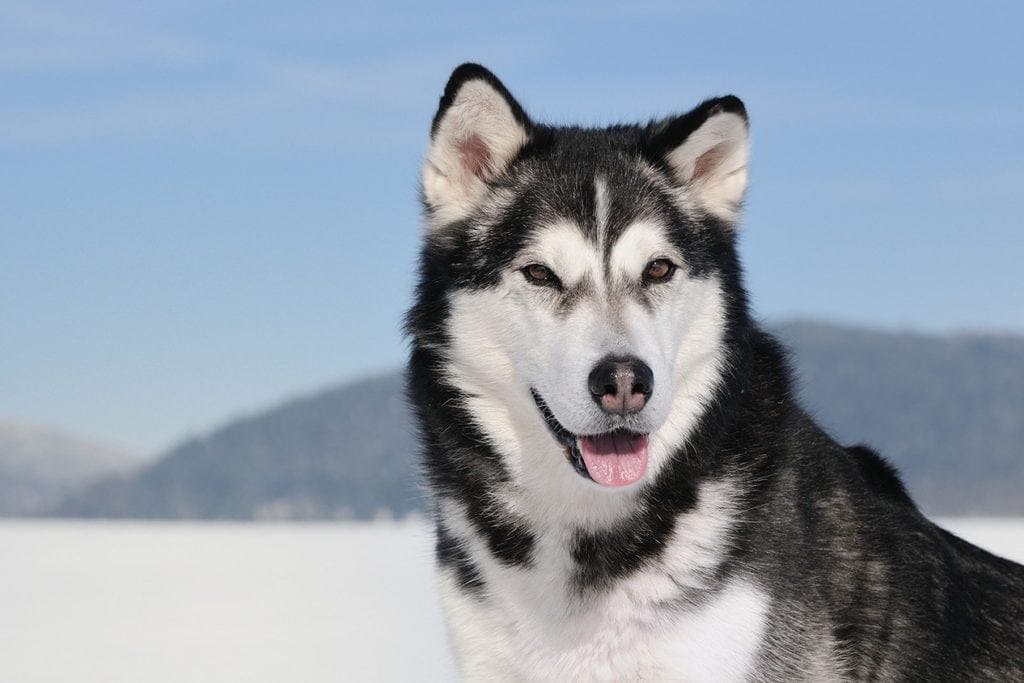
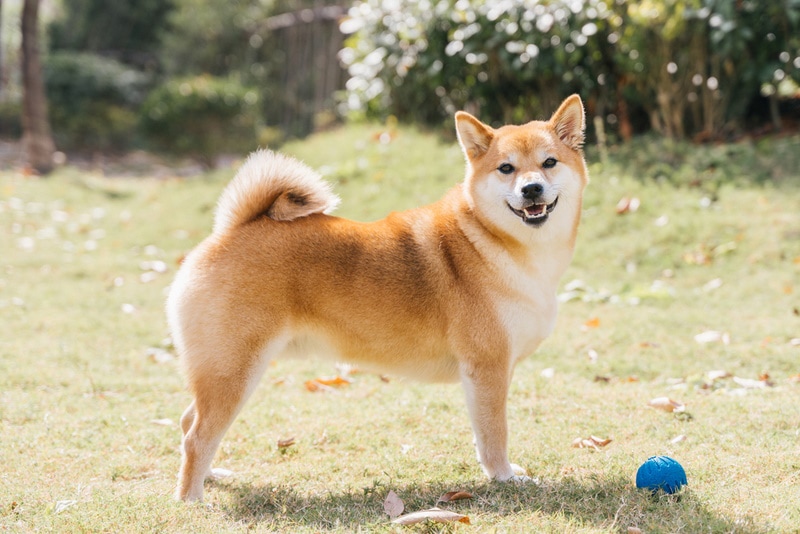
A more popular coat color for Alaskan Malamutes is black and white. These dogs would resemble white and black Shiba Inus if not for their size. A black-and-white Alaskan Malamute lacks the northern domino gene but has a black-based tan point pattern. They typically have points with extremely light pheomelanin.
A black nose bar, full black eye markings, and black masking are defining characteristics of the black and white Alaskan, and the features are frequently absent from other coat types.
The black and white coat type also features black guard hairs on the back and an undercoat that is either black or dark gray. Puppies often display a black coat with a solid face and small cream or white eyebrows.
4. Silver and White
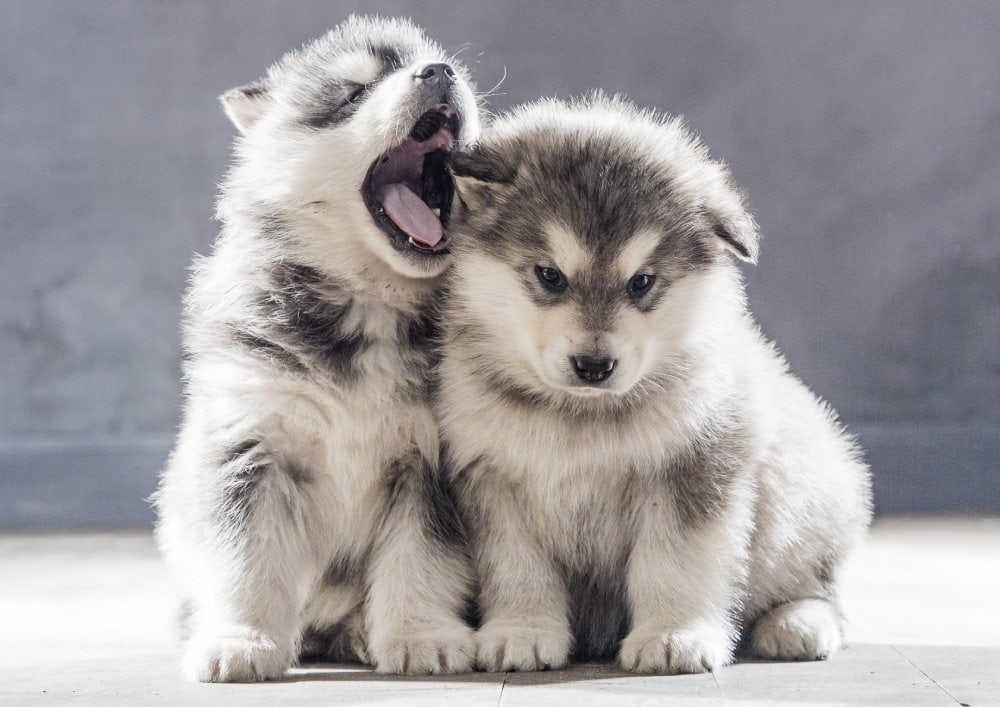
The Alaskan Malamute breed-specific term "silver & white" refers to dogs with white undercoats, sparse black tipping, and light gray guard hairs. Many people mistake it for the agouti domino, but genetically speaking, it is distinct. A shaded sable is the pattern used to create the "true" silver and white coat.
At birth, silver and white puppies seem virtually white or have a very light buff color. They frequently have an "open-faced" appearance and lack any facial black masking, but some may have touches of black eye shadow. T
Their guard hairs have very little black tipping and are a very light gray color. Adults are very pale silver with a white undercoat, a white hair base, and black hair tips around the head, chest, back, or tail. Their facial markings often fade to white, with a silvery cap and little gray eye shadow mark.
5. Agouti and White
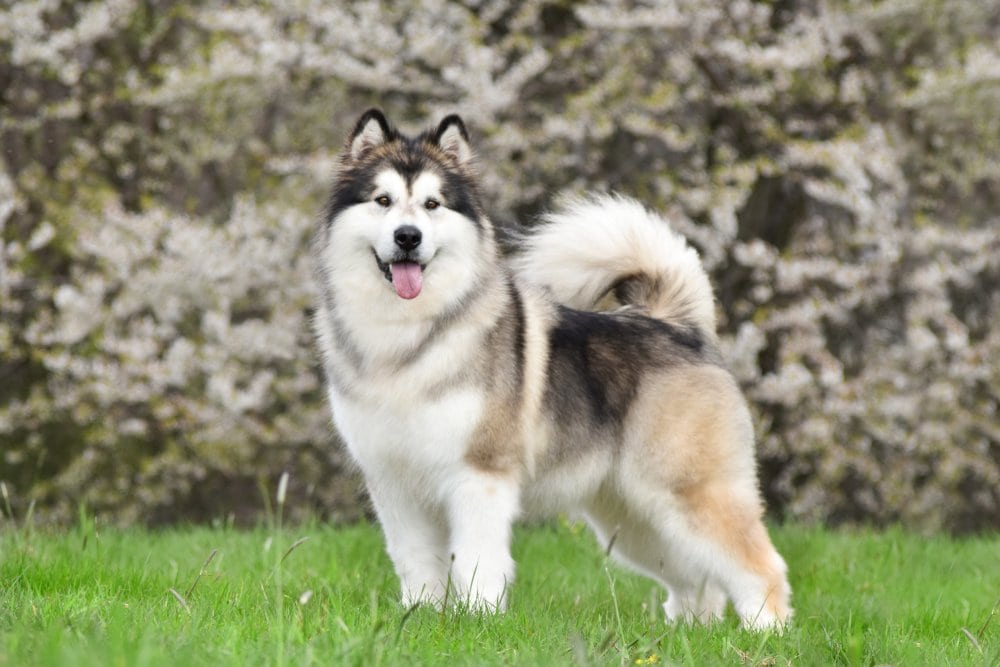
One of the most uncommon coat colors for Alaskan Malamutes is the Agouti and white. It is a black-based agouti pattern, but no northern domino allele can be seen. They have a muddy-colored coat, which includes a black mask, making it appear dark, which often gets them confused with gray and white coats.
The muddy shade changes as the dog matures, making it more difficult to tell them apart.
Agouti and white Alaskan Malamutes often have very pale cream or off-white pheomelanin. Their distinguishing characteristics include a masked face with a sooty appearance, sparse cream eyebrows, and significant banding.
At birth, many agouti pups have almost no white and are black or dark gray. With time, they develop more white marks. The agouti pattern can have tan point carriers and recessive black carriers, which is a notable differentiation.
6. Seal and White
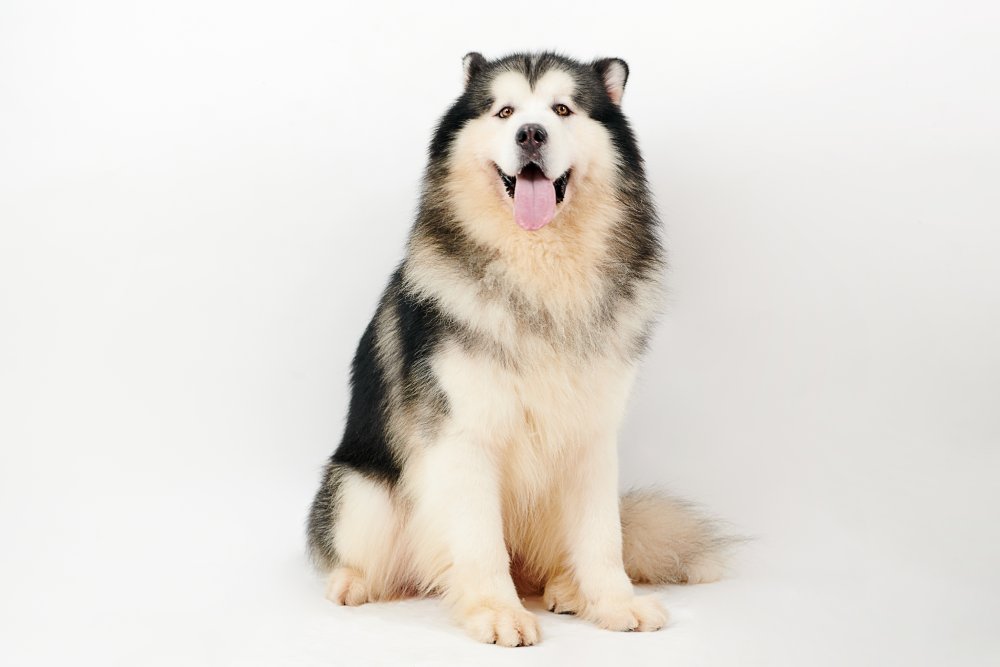
Seal & White is the breed-specific term for tan point domino in Alaskan Malamute colors. Some darker seal & white Malamutes appear from a distance to have a black and white pattern, but at birth, seal and whites should already have big white eyebrows. They are also missing the black masking pattern.
Genetically, the seal and white coat type combine black and tan patterns and black-based coats. The primary distinction is that the northern domino modifies how much eumelanin the coat produces, which causes a pattern shift.
The black and tan pattern is instead produced when pheomelanin levels rise. As Domino can add silver hair banding, seal and white dogs have black or black-tipped guard hairs. Overall, the pale white or cream undercoat of seal and white is one of the most prominent indicators.
In general, seal appears much paler than black and lacks the clearly defined black masking pattern of black and white coats.
7. Red and White
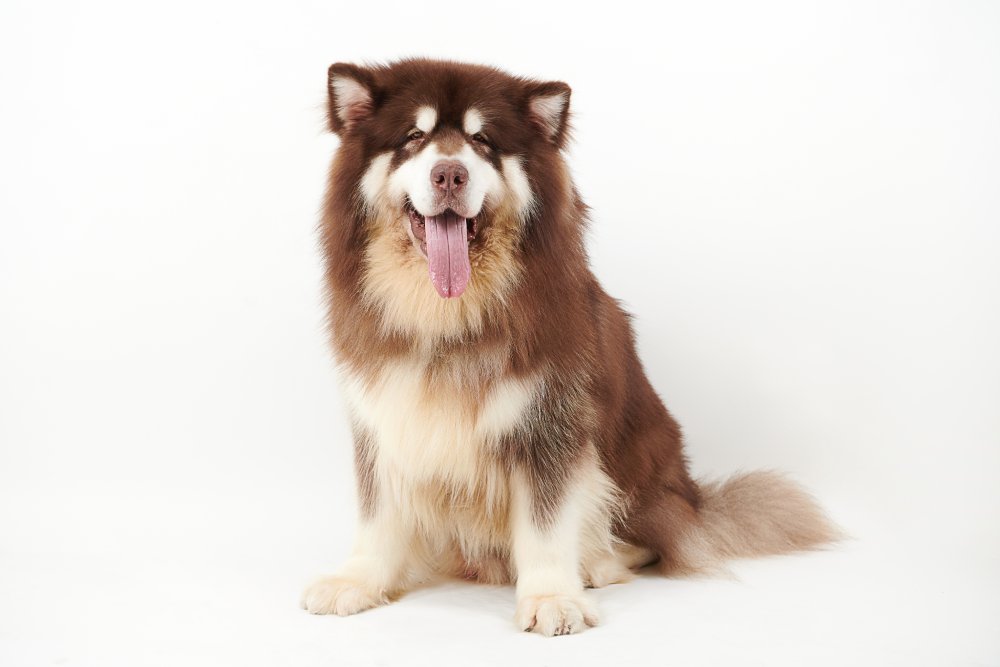
A red and white coat is typically a rare color combination; however, Alaskan Malamutes are likelier to have the coat than other breeds. The coat can have a wide range of reddish tones, including orange, brown, red, and mahogany, but they all often have a white or cream undercoat with a reddish top.
Only Alaskan Malamutes that lack any black pigmentation can have this type of coat coloring. The formerly black pigment will now all be brown, including brown lips, eye rims, and a brown nose.
This is caused by brown eumelanin, which has a recognizable chocolate or liver coloring. Red pheomelanin is another component of the coloring that contributes to the red hue.
8. Blue and White
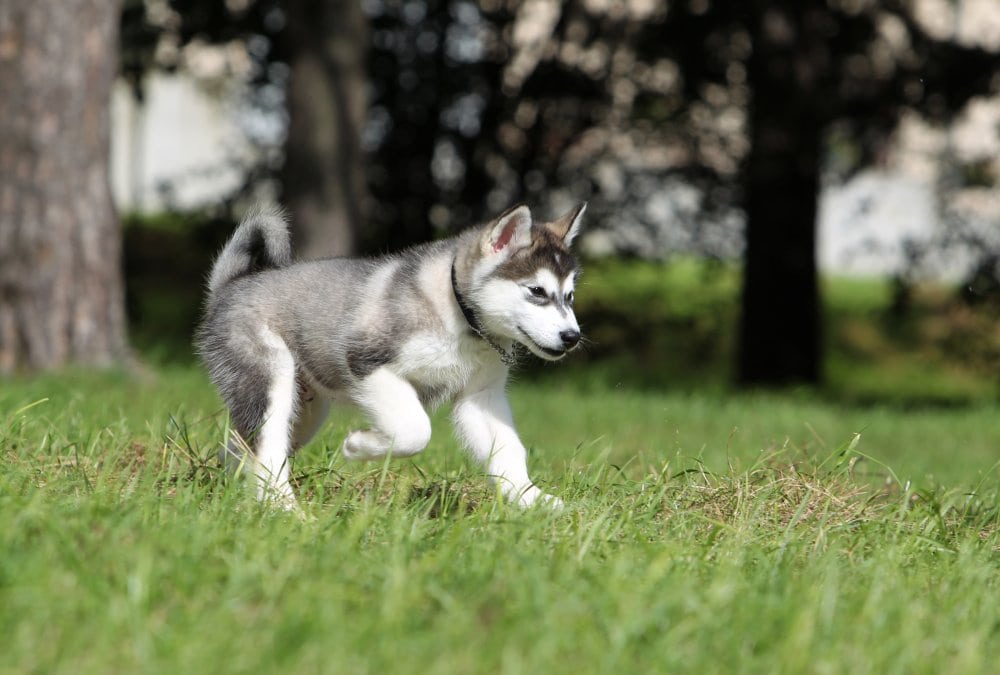
Diluted black eumelanin is called blue in the blue and white coat. In Alaskan Malamutes, however, the characteristic is rare. While the blue in the coat isn’t “blue”, it has a particular hue that is similar to gray and white huskies, but with a very slight difference.
Their coat typically has gray attributes, blue hair bands or tips, and gray skin pigmentation around the nose, lips, and eyes. The breed standard disregards this and stipulates that all dogs, except for those with brown bases, must have black noses.
However, since blue Alaskan Malamutes cannot create black pigment, they are not an official color.
9. Sable and White
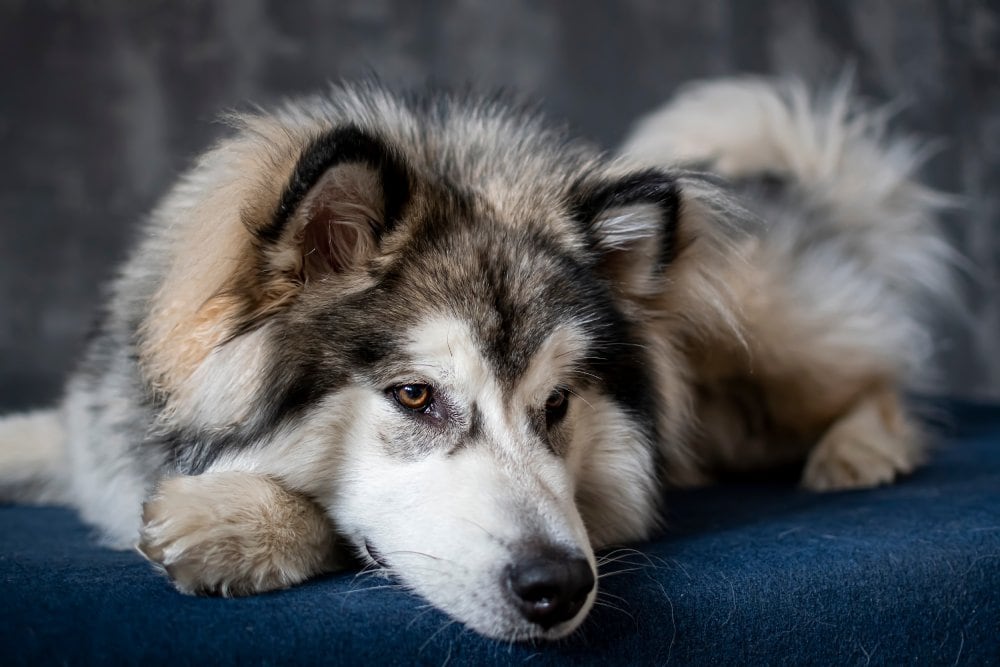
Theoretically, any of the hues other than all white are regarded as sable if they have a richer pheomelanin intensity, which will be more pronounced with red, orange, or peach undertones. A deeper look at the genetics of sable coats reveals that they possess rich pheomelanin, which produces a vivid color.
Sable is a coat pattern, but the coloring can differ significantly depending on the parent dogs. For instance, a sable may be a white and gray dog with red pheomelanin. However, a white dog with red markings and a seal coat is still a sable.
The sable and white coats are more common and often desired by Alaskan Malamute owners. Their coat's white or light portions seem red, orange, or peach, and their fur has a traditional gray or seal pattern. The distinctive reddish coloring covers the entire colored portion of the coat, including the undercoat, and frequently spreads to the face and legs.
10. Black
Any breed of dog can have non-standard colors. While some breeders abstain from breeding them, others do so for various reasons despite their unfavorable reputation. An all-black coat, is rare in Alaskan Malamutes.
Recessive alleles can accidentally produce the black hue, but recessive characteristics can only be shown in dogs who have a copy from each parent. However, dogs with single copies can carry them for several generations. However, breeding a black Alaskan Malamute is unlikely because even recessive black dogs rarely give birth to puppies with solid black coats.
11. Lilac
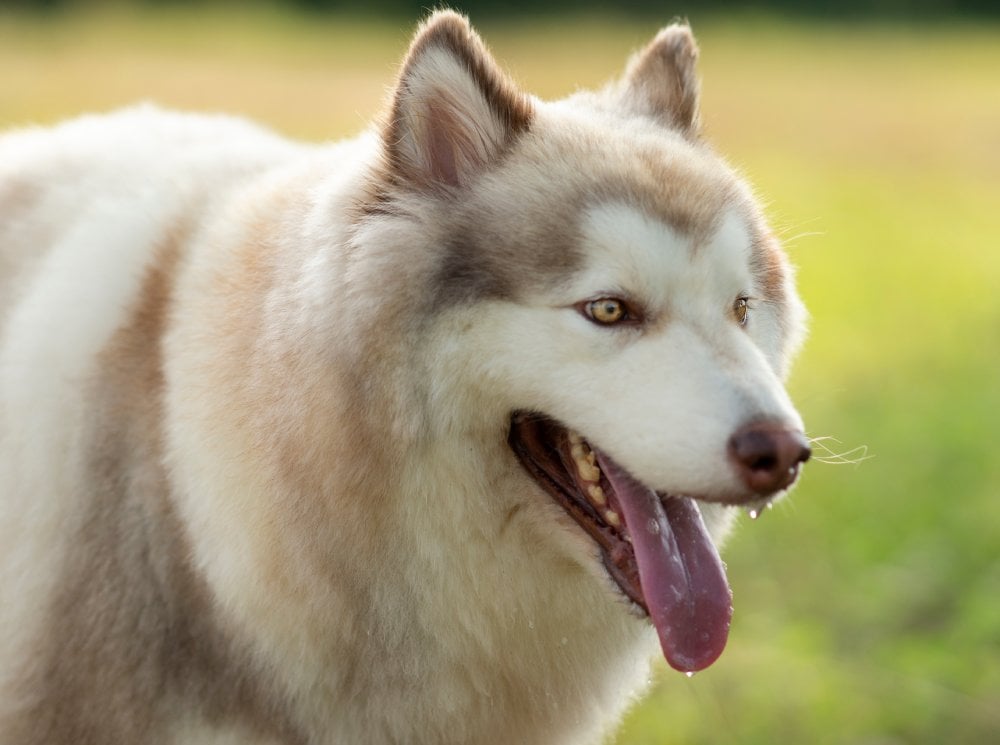
Another uncommon coat color for Alaskan Malamutes is lilac. When a dog is crossed with brown and black eumelanin that has been diluted, the result is that the coat will appear taupe or beige in color, referred to as lilac.
The pigment in their skin, lips, nose, and eye rims will also be altered and turn a paler, greyer shade of brown. The lilac coat type can be developed with various coat patterns; therefore, it can also have a unique appearance. Possible patterns include "seal lilac," "lilac agouti," "lilac & white," "light lilac," "dark lilac," or "lilac gray."
Conclusion
Although Alaskan Malamutes are often depicted with white and gray coats, this list of coat colors shows that Alaskan Malamute coat colors can vary greatly, from all white to gray, black, red, blue, and even lilac. While some are very rare and sought after, it is essential to realize that their coat color should not be their defining characteristic since they’re loyal pets and affectionate companions.
Also see:
Sources
Featured Image Credit: Hanna Borysenko, Shutterstock
Get Hepper In Your Inbox


Pet care tips from our vets and experts, straight to your inbox.
You may opt-out at any time. View our Privacy Policy for more information.

Nicole is a lover of animals of all sizes but is especially fascinated with the feline variety. She’s the proud mom of Baby, a Burmese, and works every day so he can relax in the sunshine or by the fire. She’s always had a cat in her home and has spent countless days with others, observing behaviors and softening up even the grouchiest of the lot. Nicole wants to share her kitty expertise with you so you and your cat can live happy, healthy, and care-free.
Join the conversation
Ask a question, share your story, or send private feedback.