Hepper is reader-supported. When you buy via links on our site, we may earn an affiliate commission at no cost to you. Learn more.
Are Quaker Parrots Loud? Sounds & What They Mean (Vet-Verified Info With Videos)


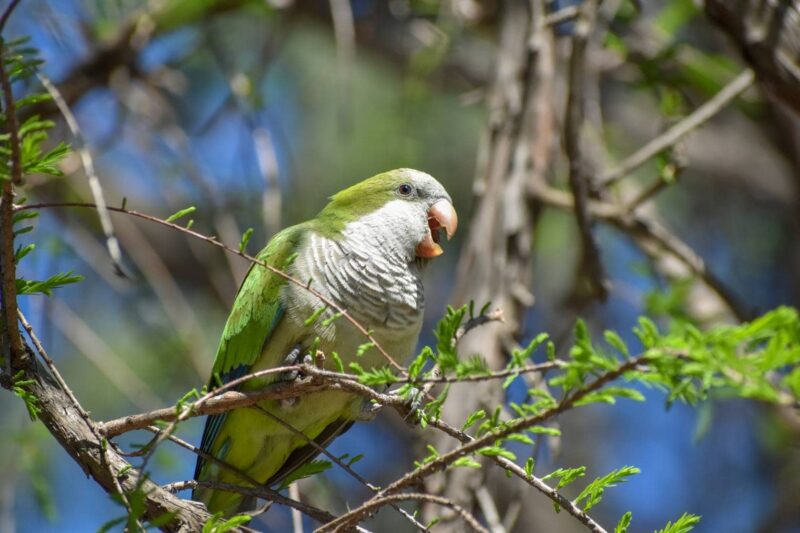
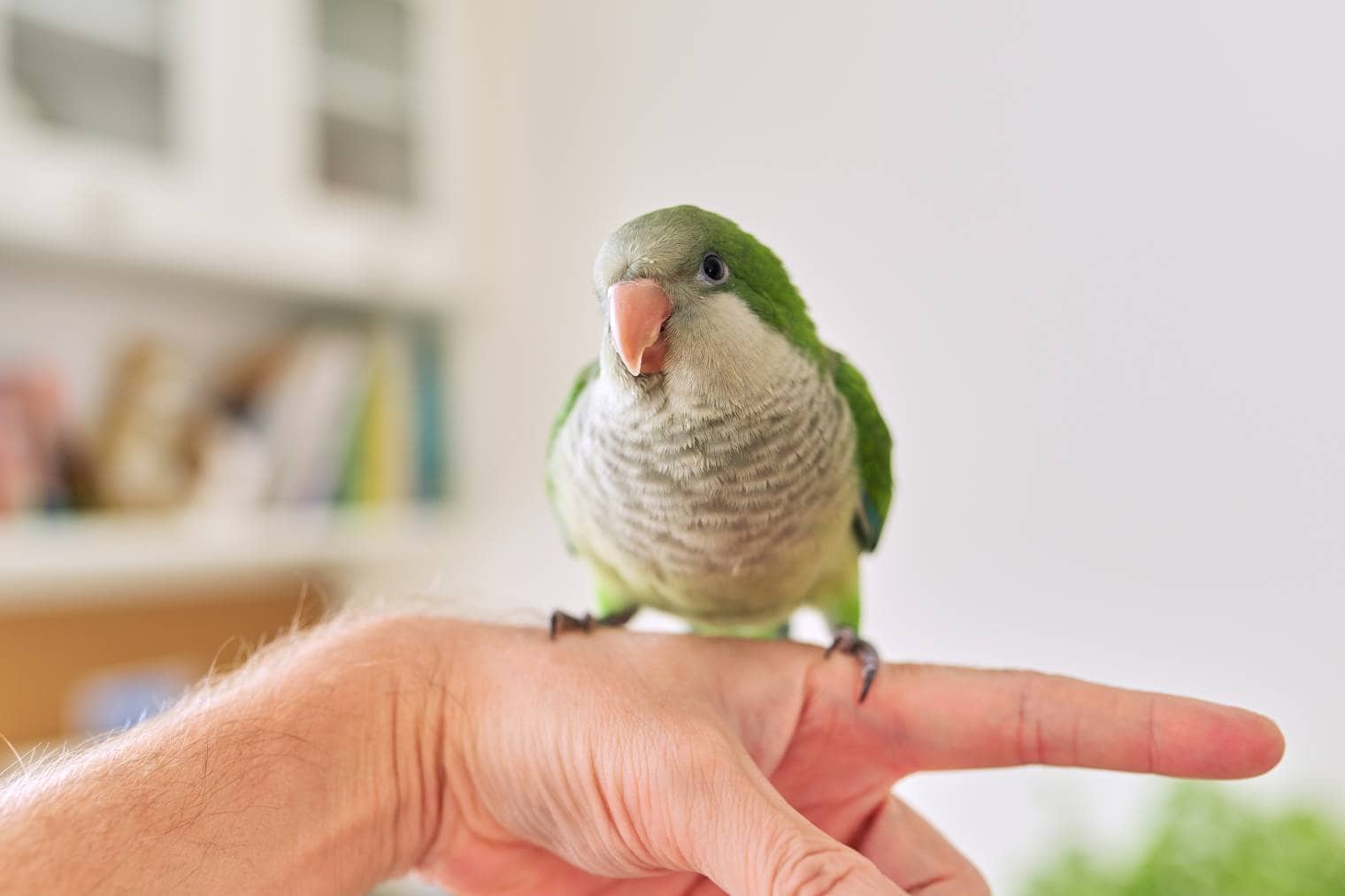
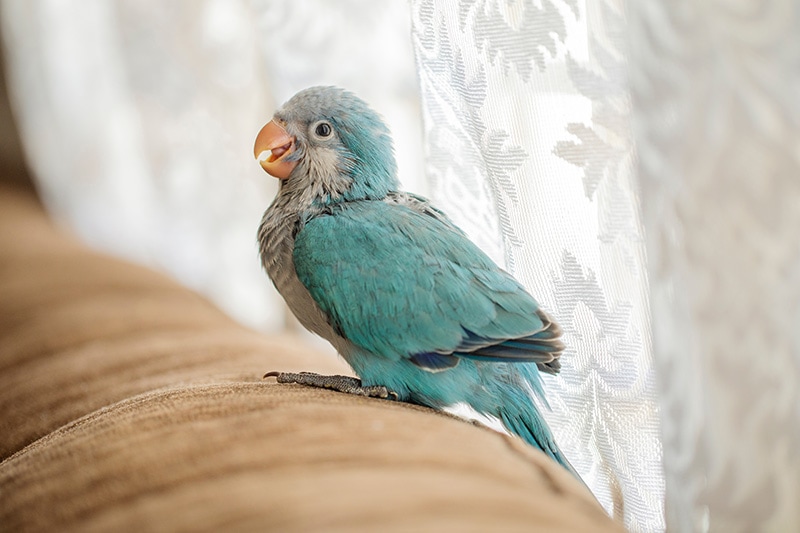
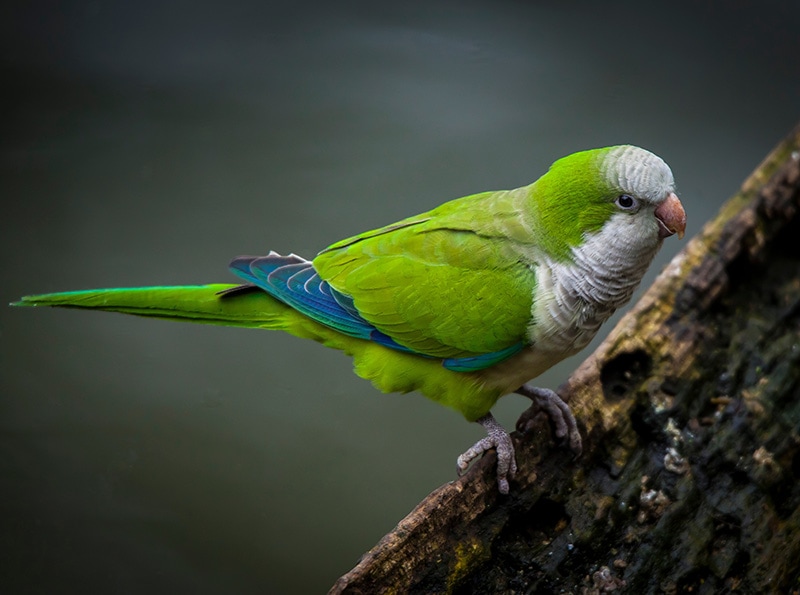
Quaker parrots (Myiopsitta monachus) may not be as brightly colored as many other parrots, but their personality and character more than make up for that. Quaker parrots are interesting in that there are three subspecies of this parrot. M. m. monachus is the most common subspecies, and also the one most frequently seen as pets. They are also one of just two species of parrots that build stick nests.
Quaker parrots are loud and noisy, a trait shared with other parrots. Their natural sound is a sharp squawk of sorts. As pets, they’ve got the tendency to make other sounds as well; these are usually sounds that they pick up on or sounds that they’ve learned to repeat in order to get their owner’s attention. Here is what you should know about the sounds that Quaker parrots make and what they mean.

Wild Quaker Parrot Sounds
Wild Quaker parrots elicit a sharp squawk of sorts. Their calls are often described as annoying and piercing. They do serve an important purpose though; being able to hear flockmates through the other various sounds around them is very important for parrots.
They also have the ability to produce other sounds, which are often a mixture of various vocal calls. The following video highlights some of their vocal repertoire.
The 10 Quaker Parrot Sounds
As pets, Quaker parrots have been documented producing other sounds, and they also have the ability to produce some sounds which other species of pet parrots also produce. The following section explores some of these sounds.
A Note From Our Veterinarian
1. Clicking of the Tongue
A Quaker parrot can create suction with their tongue and beak, which results in a clicking noise. The noise sounds much like a human’s clicking tongue. Some parrot types, such as the cockatiel, click their tongues more often than the Quaker parrot. However, owners are sure to hear the noise occasionally throughout a given week.
The reason that Quaker parrots click their tongue is to display their contentment or to indicate that they want attention from their human companions. It is a generally happy sound that should be comforting to owners. Sometimes a Quaker parrot will click their tongue just to mimic their human companions.
2. Clicking of the Beak
Unlike tongue clicking, which usually means contentment, a clicking of the beak can mean a variety of different things. A Quaker parrot could click their beak as part of their regular communication, they may be doing it to get attention, or they might be warning against a perceived threat.
One big reason that a Quaker parrot might click their beak is to protect their territory. These birds tend to be extremely territorial in the wild. It is always a good idea to open the habitat door and let these birds emerge on their own terms when it is time to come out. Otherwise, beak clicking might commence.
3. Purring
A sound that is familiar among many different species of animal, purring, is also common among Quaker parrots. These birds purr for the same reason that cats do, which is to show their comfort, contentment, and security. The purring sounds like a cat's purr too! Some Quaker parrots will only start purring when something that they're enjoying, like a scratching session, is coming to an end. It is a sign that they want the experience to continue!
4. Growling
Believe it or not, Quaker parrots can growl like dogs and cats, and they do it for the same reasons. When a Quaker parrot is growling, it is their way of communicating a warning. A bird that’s growling is telling a person or other animal to back off or to stop taking actions that make them feel threatened.
The noise is usually quiet, so if a great deal of commotion is going on in the space, it can be overlooked and result in the aggression of the animal. If a Quaker parrot gets extra stressed out or agitated, the sound could be more like a loud warble, which is sure to get the attention of anyone nearby.
5. Shrieking/Screaming
Depending on who you talk to, this noise might sound like either a shriek or a scream. In essence, it’s a high-pitched sound that is meant to get attention or to gain boredom relief. That said, it’s important to not provide your bird with too much attention when the shrieking/screaming happens because it can teach them to do it whenever they want, even if they’ve had attention all day.
Sometimes, though, they shriek/scream just because they feel like it. If a Quaker parrot gets plenty of attention but uses shrieking/screaming to maintain that attention, it’s a good idea to walk away whenever the noise happens and ignore the behavior. If the noise is happening because of boredom and/or a lack of interaction with companions, it likely means their needs are not being met and changes need to happen.
6. Grinding of the Beak
When a Quaker parrot grinds their beak, it usually sounds like chalk scraping against the sidewalk, gravel being moved around, or marbles being gently rolled around in a glass. It’s a quiet noise that happens when a bird is happy and engaged with their companions. Most notably, you will hear these birds grind their beaks when they are cuddling or feeling relaxed while being handled.
7. Whistling
Quaker parrot whistling sounds just like you would expect whistling to sound like. That shouldn't be surprising, as we have all heard birds whistling, whether in the backyard, in the park, or in a busy city. Quaker parrots whistle to communicate and express their general happiness and upbeat mood. If a Quaker parrot is whistling, it is safe to assume that they are content.
8. Squawking
To some people, Quaker parrots sound like crickets when they squawk. Their squawking is deep throated and quieter than the type of squawking that comes out of larger parrot species. These parrots tend to squawk when they get bored or agitated for some reason.
However, it’s important to keep in mind that squawking can happen for many other reasons, such as excitement and anticipation. For instance, a Quaker parrot might squawk when their human companion brings them a new toy.
9. Laughing
Laughing coming from a Quaker parrot is interesting, since we humans make the sound when we feel happy and amused. However, parrots don’t naturally laugh. Instead, they learn to mimic the laughing that they hear their human companions display while spending time with and around them.
Quaker parrots are great at mimicking basic human sounds, including laughter. Although these parrots may sound like they are laughing, they don’t feel any actual emotions behind the noise. They tend to “laugh” only when humans are around, in an attempt to be pleasing.
10. Singing
Quaker parrots are quite cute when they sing, though they may not come across as musically inclined or melodic as some other birds. They can “bop” and follow along with their human companions to help create “music.” Doodling, tweeting, squeaking, and even shrilling may all be incorporated into a Quaker parrot’s singing routine. It all depends on their mood, their inspiration, and their experience with the activity.
Conclusion
Quaker parrots can make several different sounds. Some are natural, while others are learned from the environment. They are quite good at mimicking humans, so they are capable of making a multitude of different noises. That said, knowing what these sounds mean does sometimes require knowing your parrot as an individual and understanding their personality as well.
Featured Image Credit: Light and Vision, Shutterstock
Get Hepper In Your Inbox


Pet care tips from our vets and experts, straight to your inbox.
You may opt-out at any time. View our Privacy Policy for more information.
Rachael has been a freelance writer since 2000, in which time she has had an opportunity to research and write about many different topics while working to master the art of fusing high-quality content with effective content marketing strategies. She lives off the grid in Hawaii with her husband, her garden, and her rescue animals including 5 dogs, a cat, a goat, and dozens of chickens. She is an artist at heart and loves to read, paint, and make jewelry in her spare time. As a vegan, Rachael is obsessed with helping animals in need both in her community and anywhere in the world where she feels she can make a difference. Animals also happen to be her favorite topic to write about!
Join the conversation
Ask a question, share your story, or send private feedback.