Hepper is reader-supported. When you buy via links on our site, we may earn an affiliate commission at no cost to you. Learn more.
9 Parakeet Sounds & Their Meanings (With Audio)
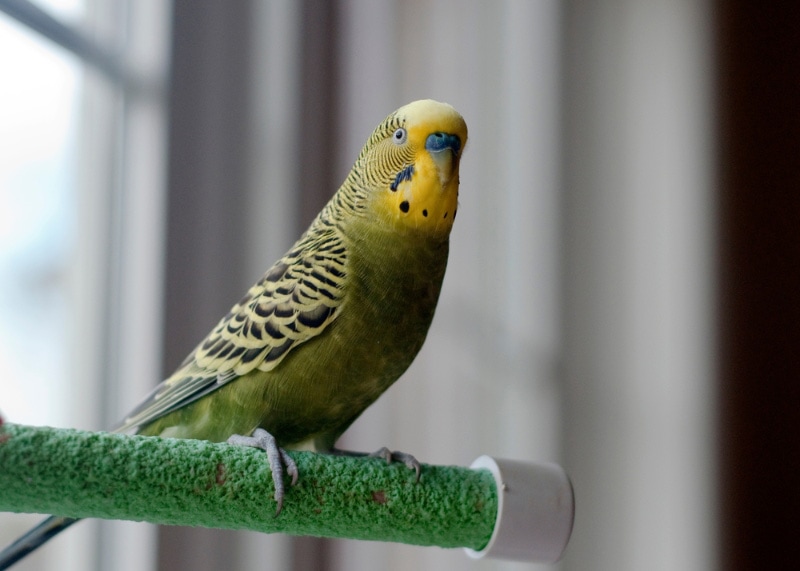
With their knack for mimicking human speech, parakeets know how to get their message across. When they’re not repeating words, these chatty birds are vocalizing in countless other ways, and it’s in these seemingly random chirps, whistles, and tweets that they do their real communicating.
Ever wonder what your parakeet is actually talking about? Boost your communication skills today by reading up on these nine parakeet sounds and their meanings.

The 9 Parakeet Sounds & Their Meanings
1. Sharp Chirps
| Meaning: | Contentment |
The most common noise from your parakeet sounds like the rapid squeaking of a finger against glass. You’ll hear these general upbeat and sharp chirps when they’re happy.
Parakeets need to make noise, and when there’s nothing left to say, these frequent vocalizations serve as simple reminders to cage mates and family members that they’re present and happy. If your bird’s movements are otherwise calm and their feathers fluffed up, you can rest assured your bird is comfy.
2. Loud Chirrups
| Meaning: | Agitation, unhappiness |
Louder and repeated chirrups mean your parakeet is starting to feel agitated, possibly alerted to something amiss in the environment. They might be hungry, or an outside threat may have appeared. A short, direct whistle is often a contact call the parakeet uses to grab another bird’s attention.
3. Squawking
| Meaning: | Irritation, fear, anger |
Parakeets typically reserve squawking for distress. They may feel frightened or threatened, vocalizing loudly to let encroachers know they’re there and intolerant of anyone in their territory.
They may also be injured. Sometimes, the environment can be overstimulating, causing them to vocalize louder than usual.
If the squawking follows a progressively louder series of chirps, your bird may be bored and trying to grab your attention since its previous attempts failed. It might be something as simple as needing their water dish filled.
Context and physical cues can help you determine the meaning behind the squawking. Mating time inspires hormone-fueled excitement and agitation, resulting in a seasonal cacophony.
If your bird closes their feathers tight to the body, they’re likely afraid or anxious. They may also spread their wings out to display discomfort. Speaking softly, covering the cage, and assessing the environment for stressors will help your bird calm down.
4. Screaming
| Meaning: | Fear, pain, agitation |
A high-pitched scream or squeal has the same basic meaning as a squawk. Your bird may be hurt, hear a loud noise, or see a cat at the window. They’re sounding the alarm to tell you they need comfort and care.
5. Combination Sounds or Singing
| Meaning: | General happiness |
Parakeets often emit a complex array of squeaks, croaks, whistles, and other unique noises. They may even throw in human words they might know. You might find this a common occurrence even when there aren’t any particular stimuli to which they’re responding.
In many instances, they’ll use sing-songy voices to let those around them know they’re happy, perky, and healthy, often enticing other parakeets to join in.
6. Beak Grinding
| Meaning: | Safe and sound, getting sleepy |
Beak grinding is a scratchy noise that parakeets make by rubbing the top and bottom halves of their beak together. Parakeets do this when they’re calm, content, and settled, often before dozing off.
7. Chattering
| Meaning: | Relaxation, contentment |
Chattering is similar to the arrangements of the combo sounds your happy and energetic parakeet might create. But it’s usually more reserved. Your bird may sound like they’re talking to themselves, practicing new vocabulary, or working on a song. No matter the content, these gentle vocalizations indicate a relaxed and happy parakeet.
8. Warbling
| Meaning: | Wooing, contentment |
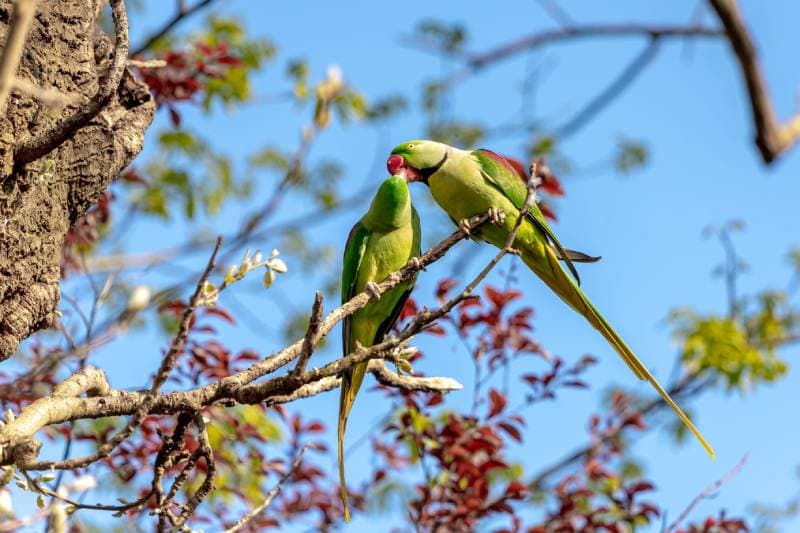
Behaviors can shift in mid–late spring as the breeding season arrives, bringing a few unique vocalizations. A male uses a bubbling warble to attract attention.
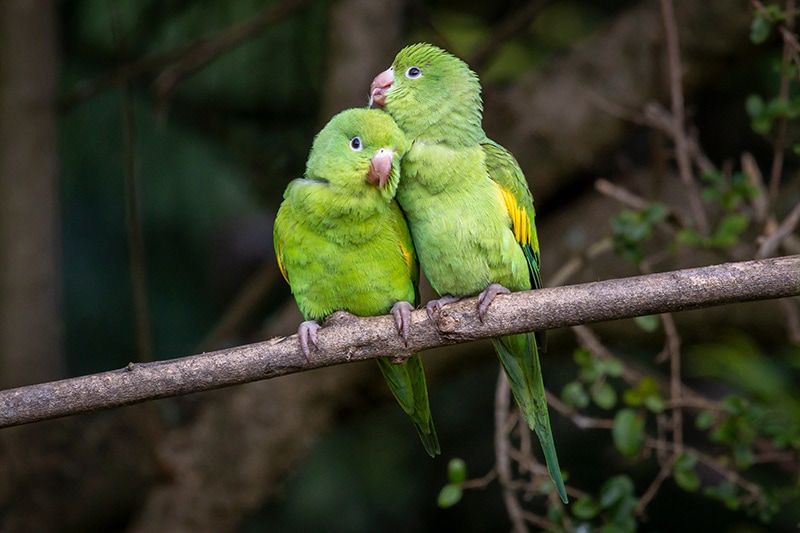
You’ll hear this while he feeds or preens the hen, cozies up next to her on the perch, and taps his beak against hers in what looks like budgie kisses, all serving as signs that it’s time to give your birds some privacy.
9. Chiding
| Meaning: | Territorial warning |
Parakeets are highly social, but even they need some space. When one of their fellow cage dwellers gets a little too close, they may emit a harsh hiss to let them know to separate.
Interpreting Sounds with Body Language
Chattering, chiding, and chirping can all sound similar and challenging to interpret, so you’ll often have to look at the parakeet’s body language to understand their feelings.
Budgies use numerous nonverbal signs as their primary form of communication. Some of the more common signs to check for alongside their sounds include:
- Tail bobbing: An up-and-down motion of the tail might mean your parakeet is ill
- Head bowing or bobbing: Your bird is trying to grab someone’s attention
- Rapid wing flapping: Something is annoying or angering your bird
- Panting: Parakeets open their mouth to cool down or decrease their stress
- Wings slightly open: With panting, parakeets open their wings slightly to help themselves cool down
- Standing on one leg: Your parakeet is relaxed, possibly bored, or about to go to sleep (may accompany beak grinding)
- Pupil dilation: Eye-pinning occurs when your parakeet is excited, scared, or on the alert
- Tail fanning: Like eye dilation, tail fanning indicates arousal either in an aggressive or happily energized way
- Feather fluffing and shaking: Your parakeet might be trying to eject dirt or water after preening
- Stretching: Parakeets stretch their legs occasionally to relieve stress and loosen their muscles
Parakeets pair dozens of unique sounds with even more nonverbal signs to tell us how they feel and what they need. Spending time with your parakeet while paying attention to their vocalizations and movements is the best way to understand them and strengthen your bond.
Final Thoughts
Parakeets learn our language, so it’s only appropriate that we learn to speak theirs. After all, these casual conversationalists have a lot to say in more ways than we may realize! Now that you know the meanings behind the various parakeet sounds, you and your pet birds can enjoy better communication and a happier relationship because of it.
Related Reads:
Featured Photo Credit: UniqSnaps, Shutterstock
Get Hepper In Your Inbox


Pet care tips from our vets and experts, straight to your inbox.
You may opt-out at any time. View our Privacy Policy for more information.

Nicole is a lover of animals of all sizes but is especially fascinated with the feline variety. She’s the proud mom of Baby, a Burmese, and works every day so he can relax in the sunshine or by the fire. She’s always had a cat in her home and has spent countless days with others, observing behaviors and softening up even the grouchiest of the lot. Nicole wants to share her kitty expertise with you so you and your cat can live happy, healthy, and care-free.
Join the conversation
Ask a question, share your story, or send private feedback.