Hepper is reader-supported. When you buy via links on our site, we may earn an affiliate commission at no cost to you. Learn more.
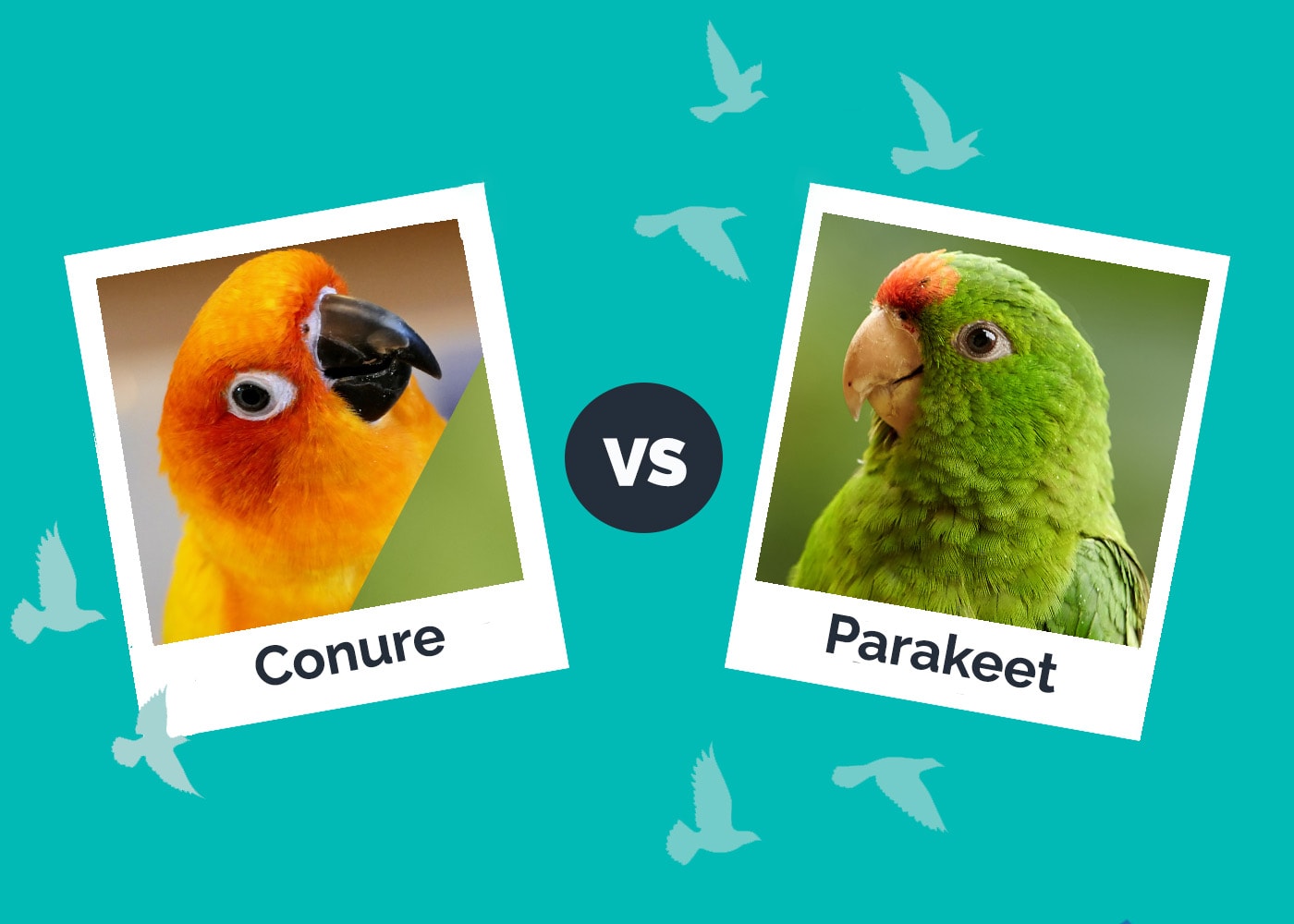
Quaker Parrot vs Conure: The Main Differences (With Pictures)
In this article
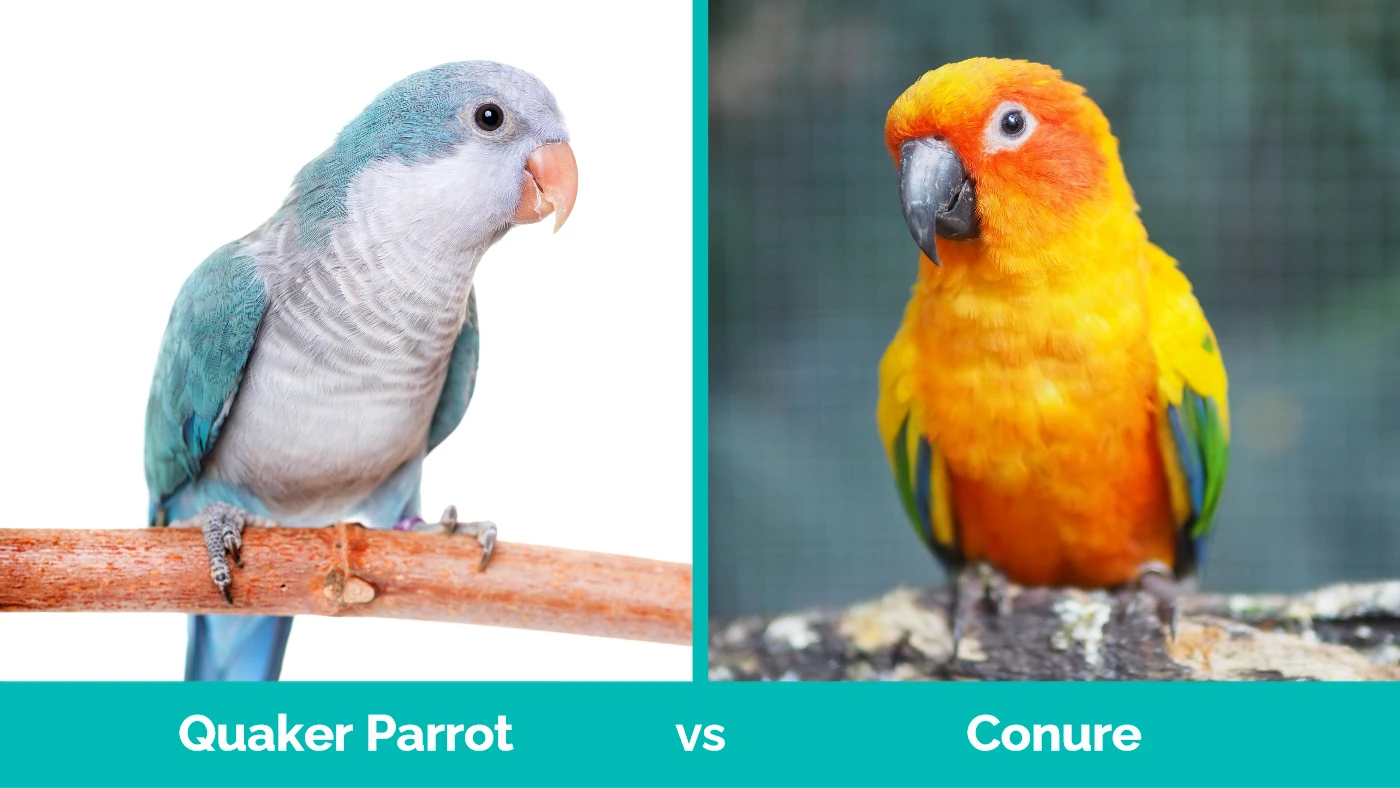
Quakers and Conures are two of the best parrot species to keep as pets. They have a lot of similarities, but some key differences separate them from one another. Though they can be similar in size, their appearance will vary depending on which type of conure or quaker you adopt. There are over 100 species and subspecies of conures and just one kind of Quaker.
If you are unsure which species will be best for you and your lifestyle, you've come to the right place. Read on to learn more about both birds' personalities, behavior, speech, and health so you can decide which is best for your family.

Visual Differences
At a Glance

Quaker Parrot Overview
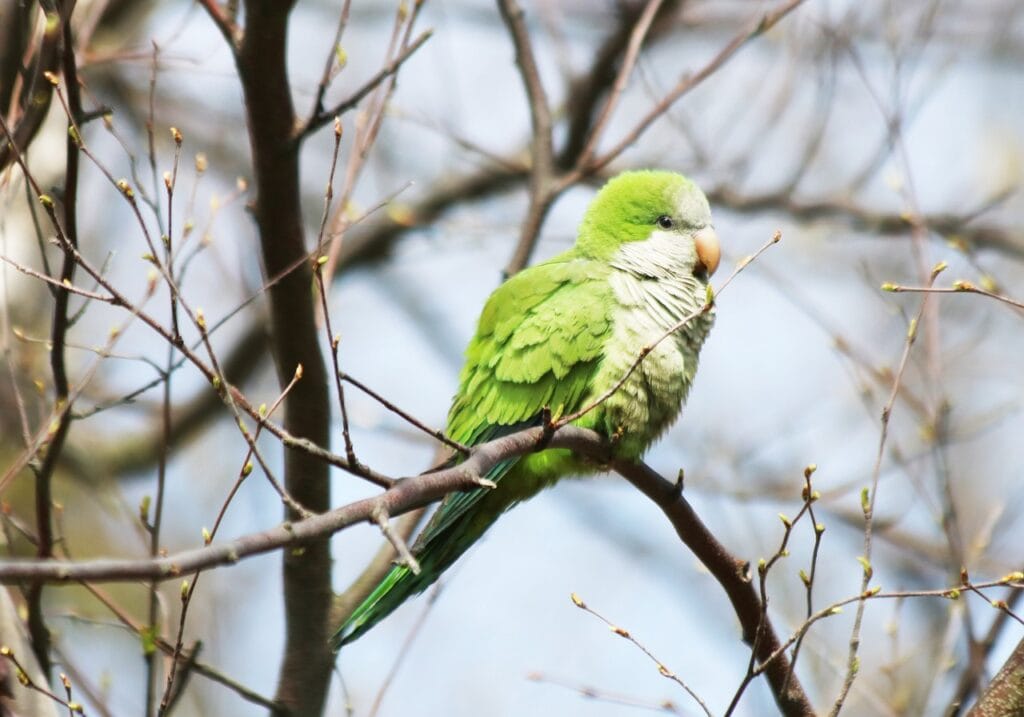
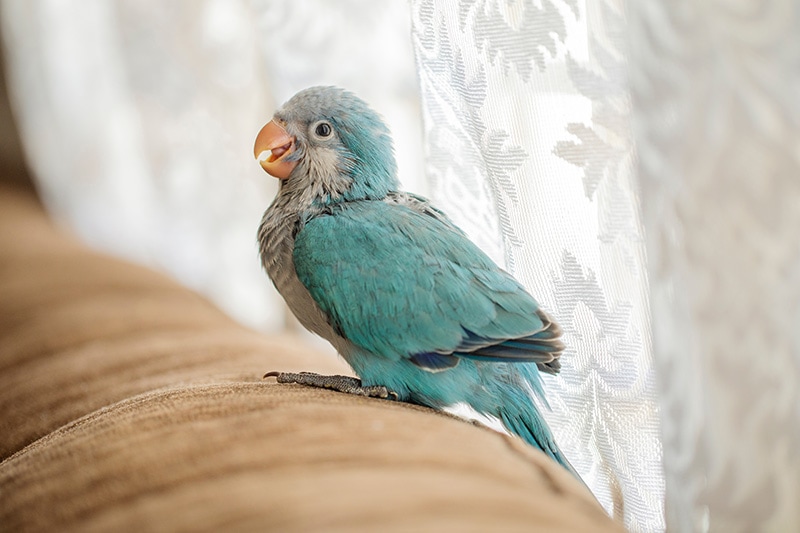
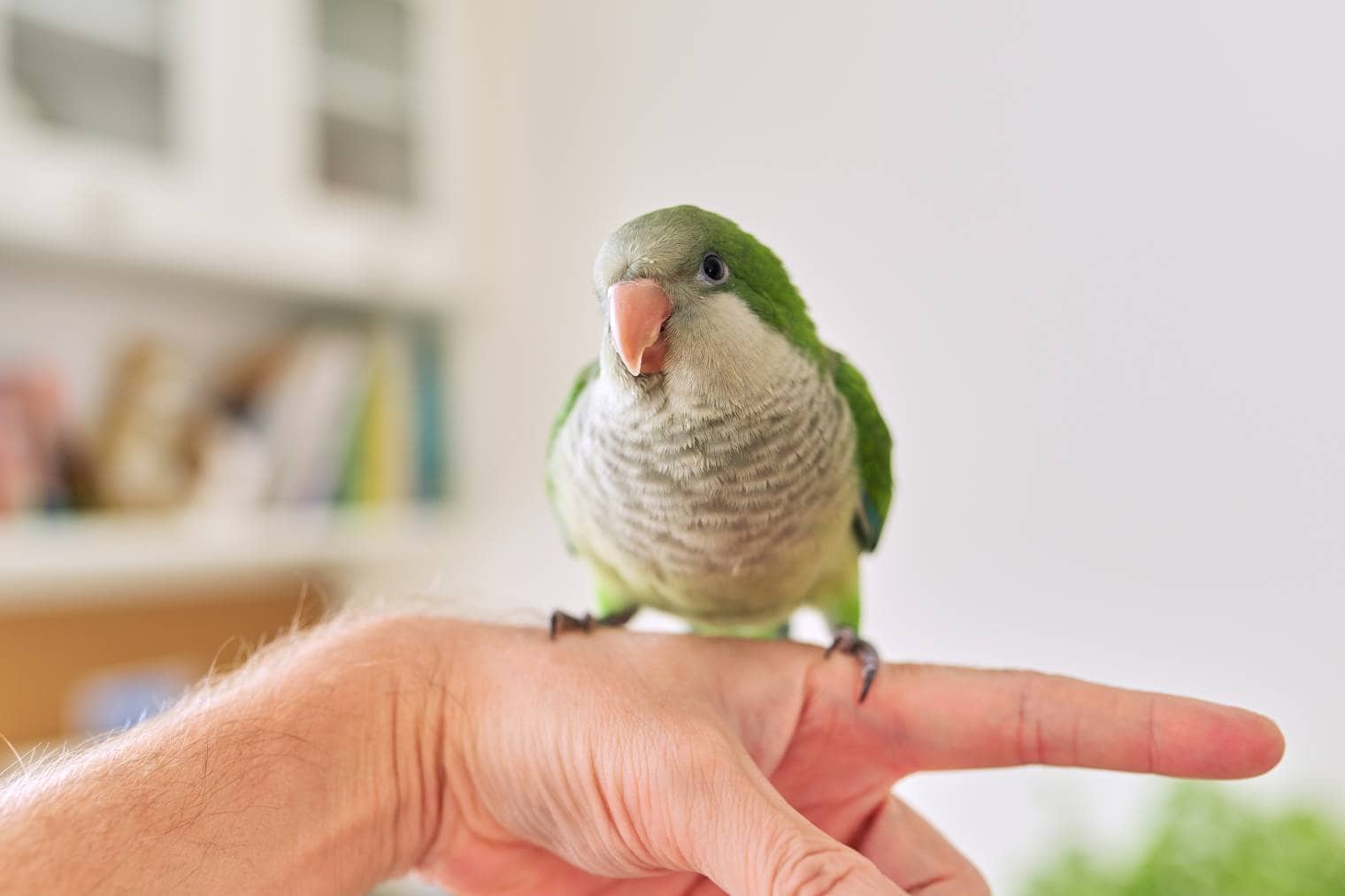
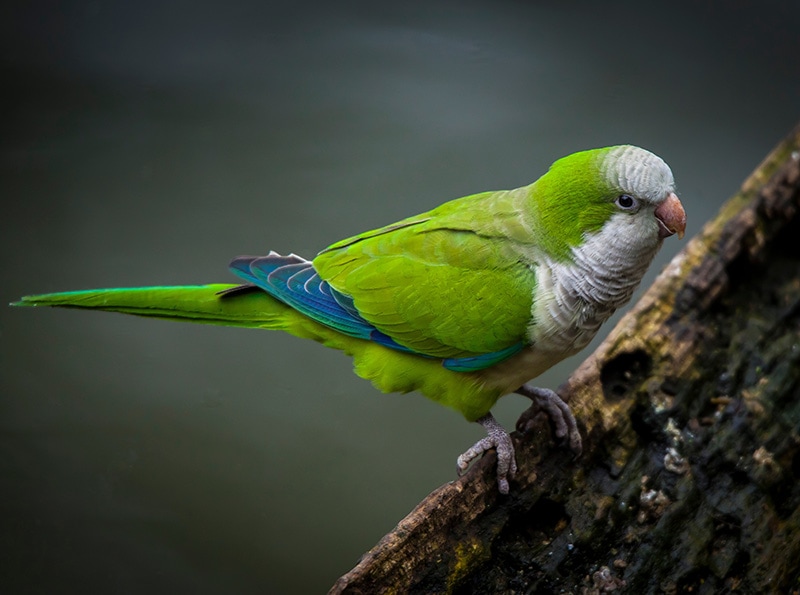
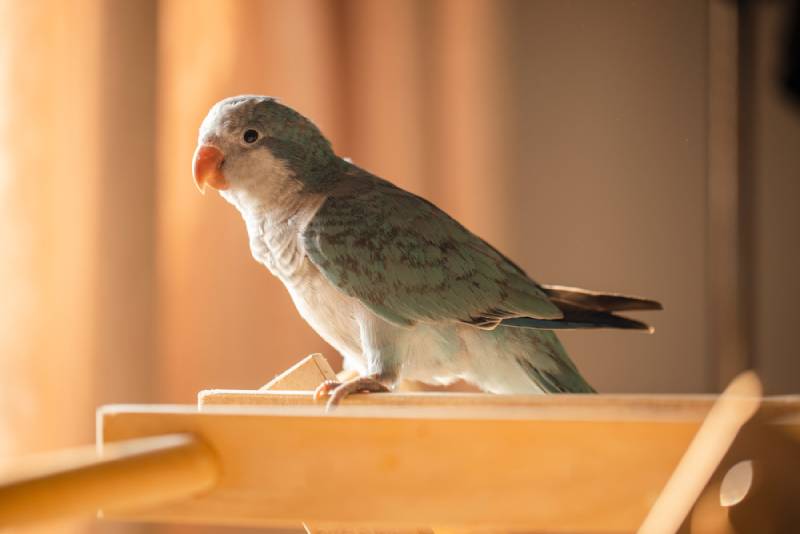
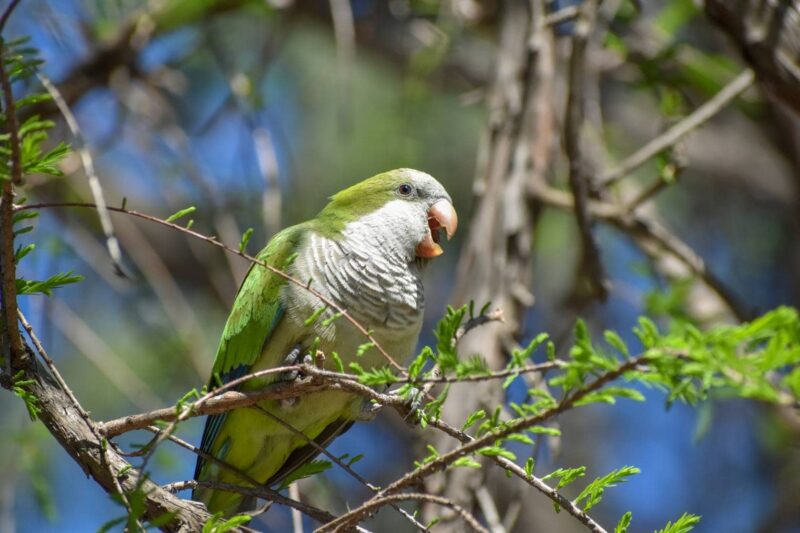
Quaker parrots, also known as the monk parakeet, are small, bright-green parrots that originated in temperate to subtropical areas in South America. However, some self-sustaining feral colonies occur naturally in places with similar climates throughout Europe and North America. These wild populations tend to be invasive as they can harm crops and native species.
Personality
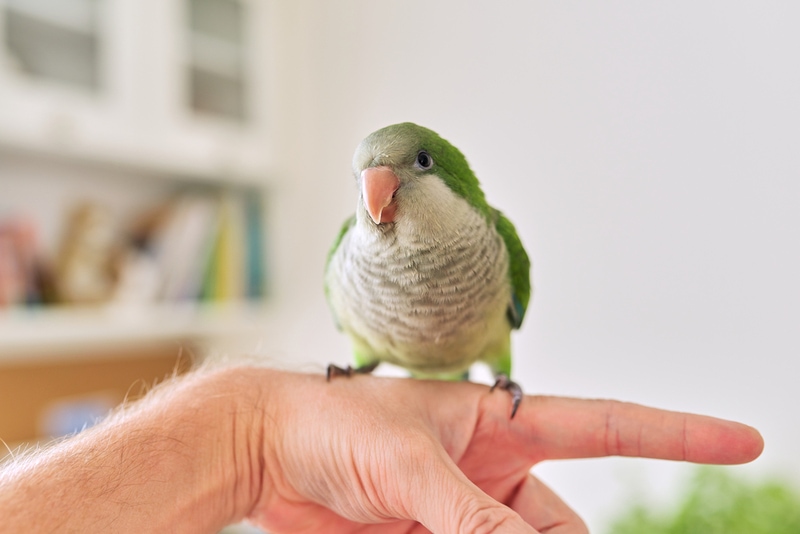
The Quaker parrot is a highly intelligent and social bird. When kept as pets, they can develop vocabularies consisting of single words and phrases. These confident birds may be small, but they have huge personalities. They're bold, outgoing, and often chatter, which is part of why they're becoming such a popular companion bird.
Quakers tend to bond closely with one human family member and can become territorial if they believe their territory is being infringed upon. They can be nippy in and around their cages but are often docile outside their cage.
They need daily human interaction and plenty of outside-the-cage time to stay happy and healthy. They do best in environments where they're treated as part of the family and included in everyday activities. Quakers not given enough attention can exhibit undesirable and destructive behaviors.
Speech & Sound
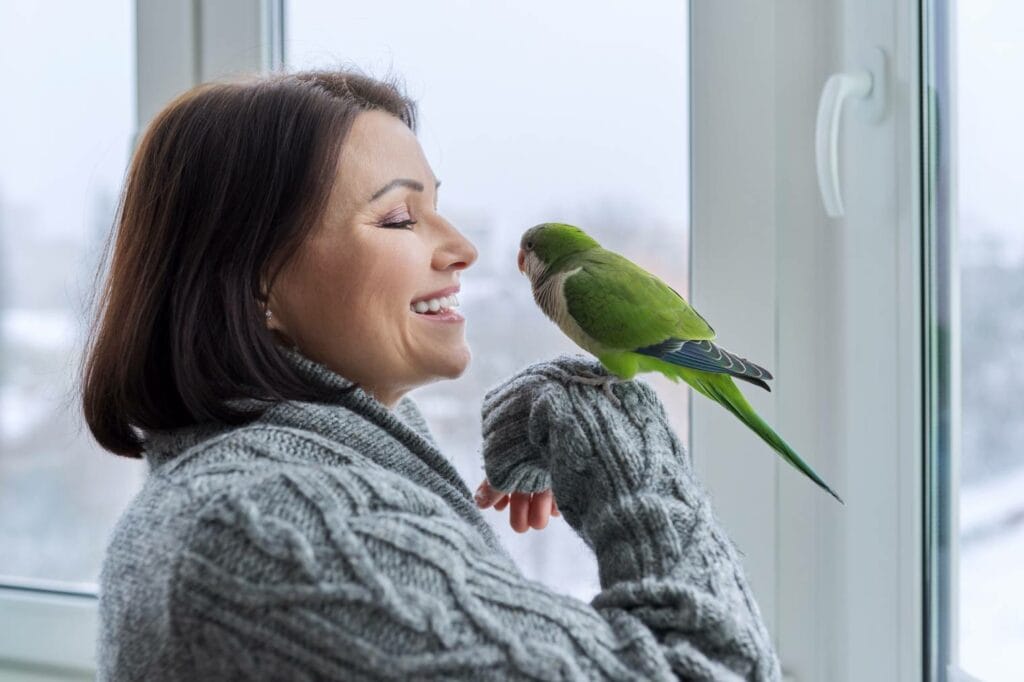
Quakers may be small, but they are noisy little things. They're fantastic talkers and have the intelligence to learn many words and phrases, especially if they're kept in a single-bird household and if spoken to from a young age. Quakers who are talked to often during the hand-raising stage of their development can start using words when they're as young as three months.
Not only can Quakers learn words and phrases, but they're fantastic at mimicking, too. They'll pick up on all sorts of sounds in their environments, including doorbells, ringtones, and bodily sounds like burping, coughing, and, embarrassingly enough, farting.
Quakers do have the capacity to be loud, but they're one of the quieter parrot species. They aren't as prone to screeching as conures.
Health & Care
The most common health issues encountered with Quakers are feather-destructive behaviors and fatty liver disease. Proper nutrition is essential, as good health depends on how your Quaker is fed. Diets high in seeds are problematic as they're high in fat and deficient in nutrients. Quakers should be provided a commercially formulated pellet diet to meet their nutritional needs.
Suitable For:
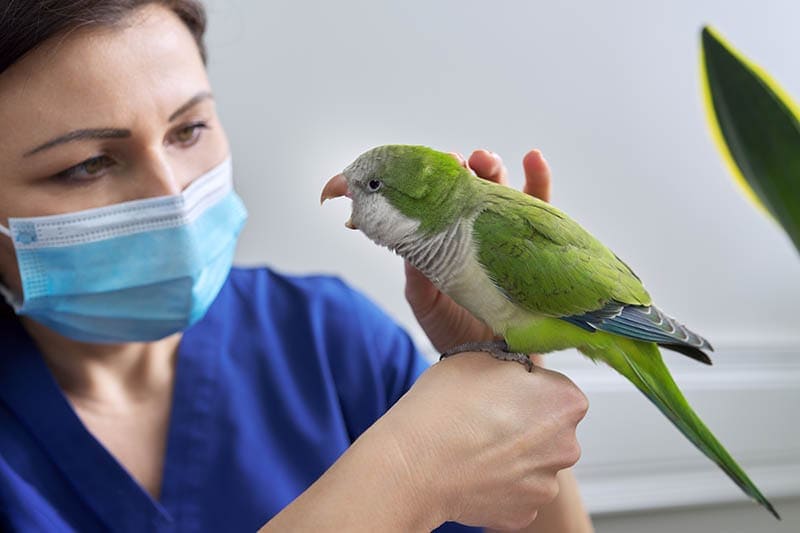
Quakers are a popular bird for their charming and funny personalities. Their ability to learn phrases and mimic human speech makes them highly desirable. They make fascinating pets for families looking to adopt a loving and entertaining bird, though they tend to favor one person. Proper socialization from a young age is key to preventing unwanted behaviors and nippiness.
Note: Quakers are illegal to own in several U.S. states as they are viewed as agricultural threats. You should research the laws in your state to determine whether it's even legal for you to adopt one in your area.1
Conure Overview
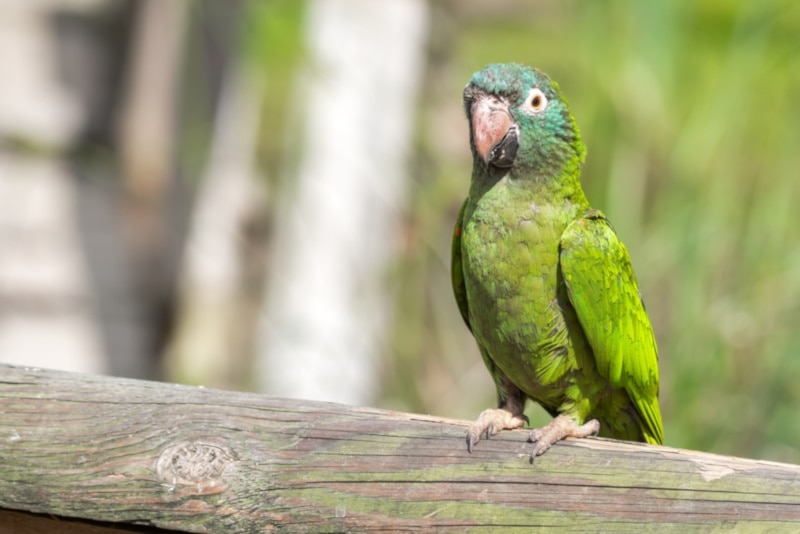
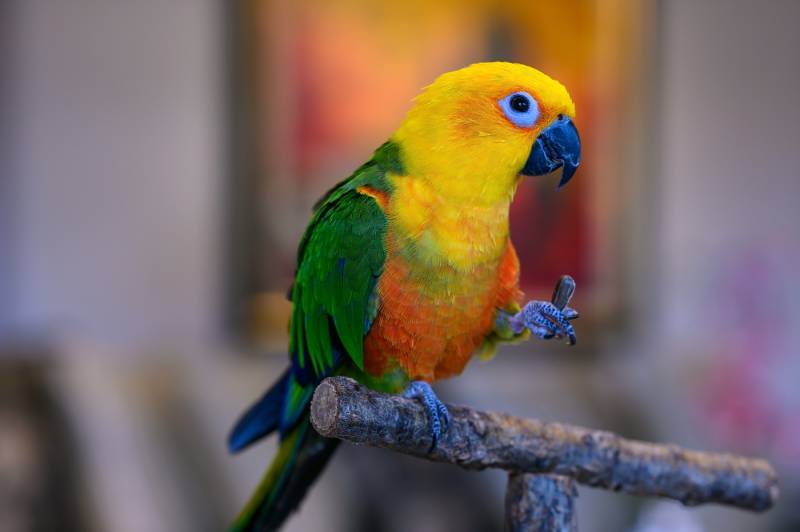
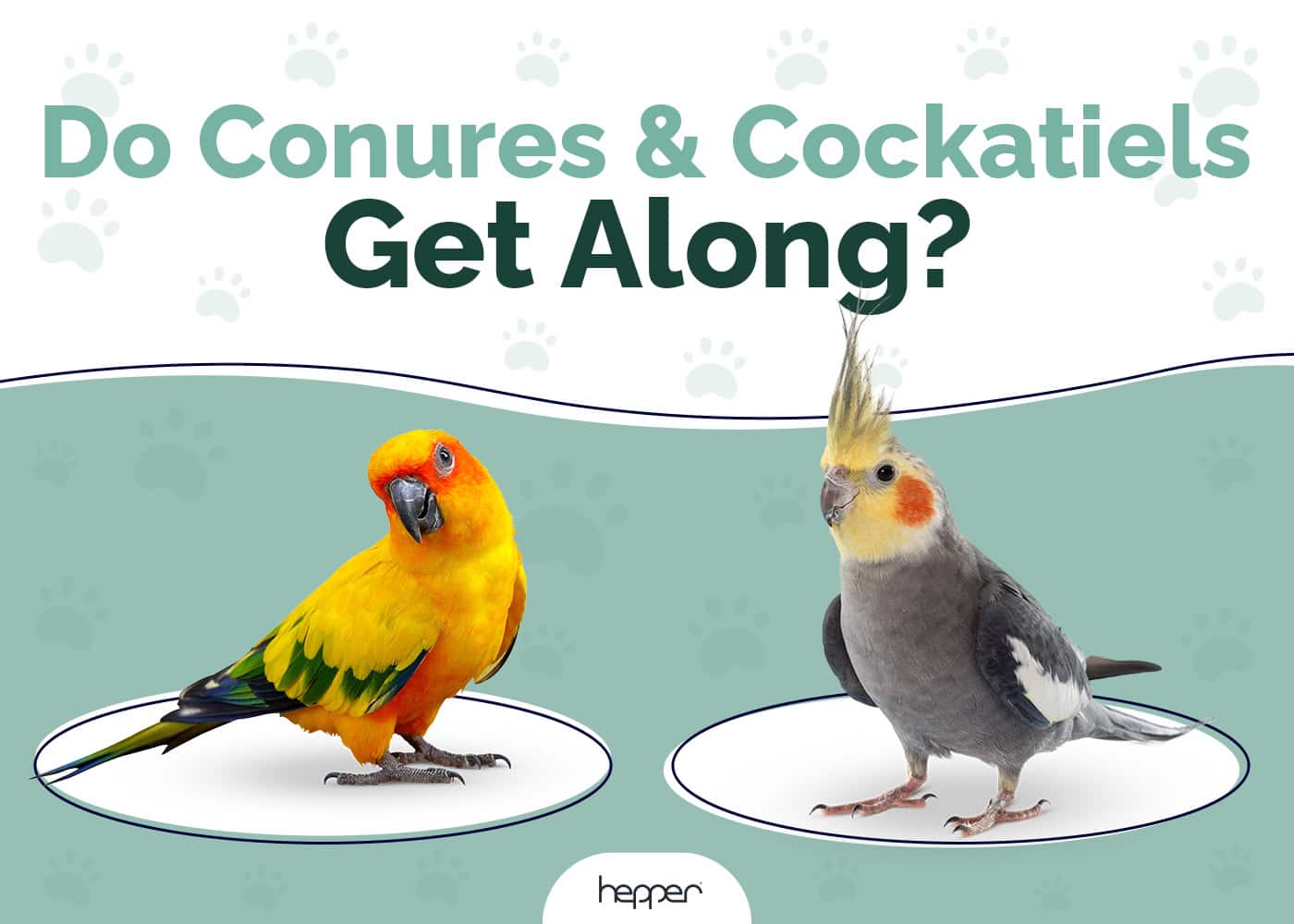
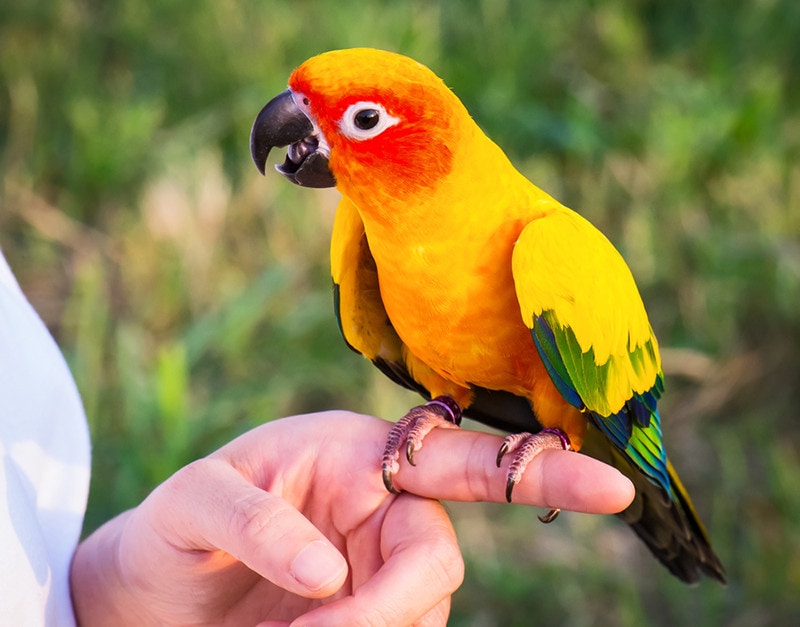
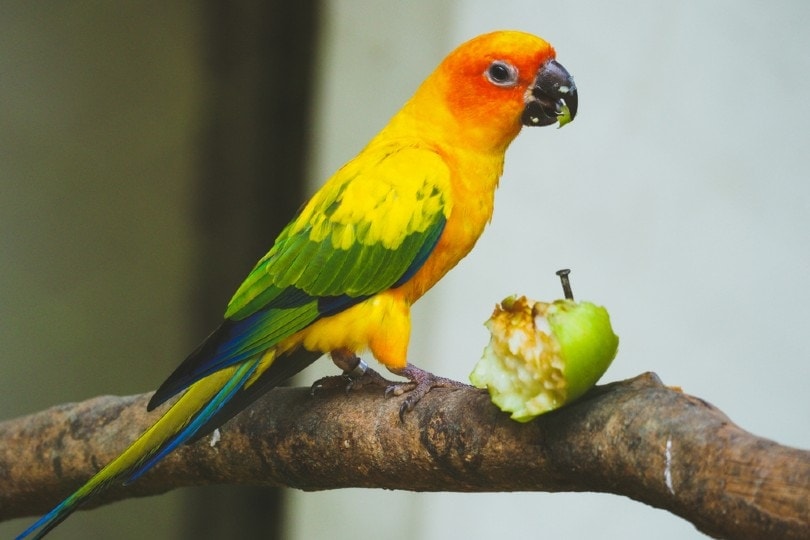
Conures are a loosely defined group of small to medium-sized parrots or parakeets that come in various beautiful, bright colors. All conure species are found in Central and South America, except the now-extinct Carolina conure, native to several U.S. states. Conures can vary in size and weight depending on which type you adopt. The smallest, the painted conure, is approximately nine inches long, while the largest, the Patagonian conure, can be up to 18 inches long.
Personality
Conures are prized for their playful attitude and curiosity. Like Quakers, they love to be where the household activity is happening and be included in the everyday goings on in the home. Conures are generally curious, bold, and busy birds that require plenty of enrichment toys to stay happy and occupied. They are snugglers, with some going as far as cuddling into their owner's shirts to poke their heads out of the collar. These fun birds can learn to dance and even mimic the movement of their humans. They are intelligent and can be trained to perform tricks on cue if given the right motivation (read: treat).
Unlike some parrot species, conures are less likely to form strong bonds with just one of their humans. They'll get along with many family members if they're properly socialized. Additionally, socialization is important to keep biting to a minimum. Conures typically bite more than other parrot species, but it can be controllable if you teach them correctly from a young age.
Speech & Sound
Conures are known for their signature sound—an extremely high-pitched screech that will leave your ears ringing. They'll emit this ear-splitting sound when excited, startled, or bored. Many well-meaning owners will reinforce their conure's screech by racing to their cage or giving their bird attention when they hear that sound. This should be avoided as it teaches your pet that it gets attention when it screeches, encouraging it to continue making the sound.
Conures can talk, though their vocabularies are nowhere as extensive as Quakers or other species. They can learn a few words and short phrases.
Health & Care
Like Quakers, conures can be prone to feather picking. This is often the result of boredom or lack of proper physical and mental stimulation. Ensure you're providing plenty of opportunities for play and outside-of-the-cage time to prevent this destructive behavior.
Malnutrition is another common condition seen in conures, most often due to vitamin A or D deficiencies. Luckily, this can be avoided by providing a species-appropriate diet consisting of high-quality pellets designed specifically for conures and fresh fruits and vegetables.
Suitable For:
Conures are suitable for families looking for a sweet and affectionate bird. They are pretty easygoing and playful but can be nippy if they're not socialized properly. They love being part of a family and will generally bond with multiple people in the home.
Which Breed Is Right for You?
Quakers and conures are alike in many ways. Both have similar care and diet requirements and are around the same size, though that depends entirely on the type of conure you have in mind. They're both beautiful and can make fantastic companions as they thrive on social contact and love nothing more than spending time with their humans.
Determining which species is best for you requires you to decide what qualities are important to you.
Do you want a bird that'll learn to say many phrases? You might consider a Quaker over a conure as they are better at learning speech patterns. Conures can learn to talk, but their speech pattern is much more bird-like. With a Quaker, you might be shocked at how well it can reproduce a human voice. With a conure, you'll know you're listening to a bird.
You'll need to consider your living situation. Both species can be super sweet, though Quakers may be more territorial than conures. If you have other pets or children in the home who aren't yet old enough to understand boundaries, this could be a problem. Both species can be loud, so that's something to remember if you live in an apartment or have roommates.
Another consideration is space. Conures can be quite a bit larger if you're opting for one of the bigger types, like the Patagonian conure.
The bottom line is that both species can make fantastic pets. The best one will depend on what personality traits are important for you and what your current living situation is like.
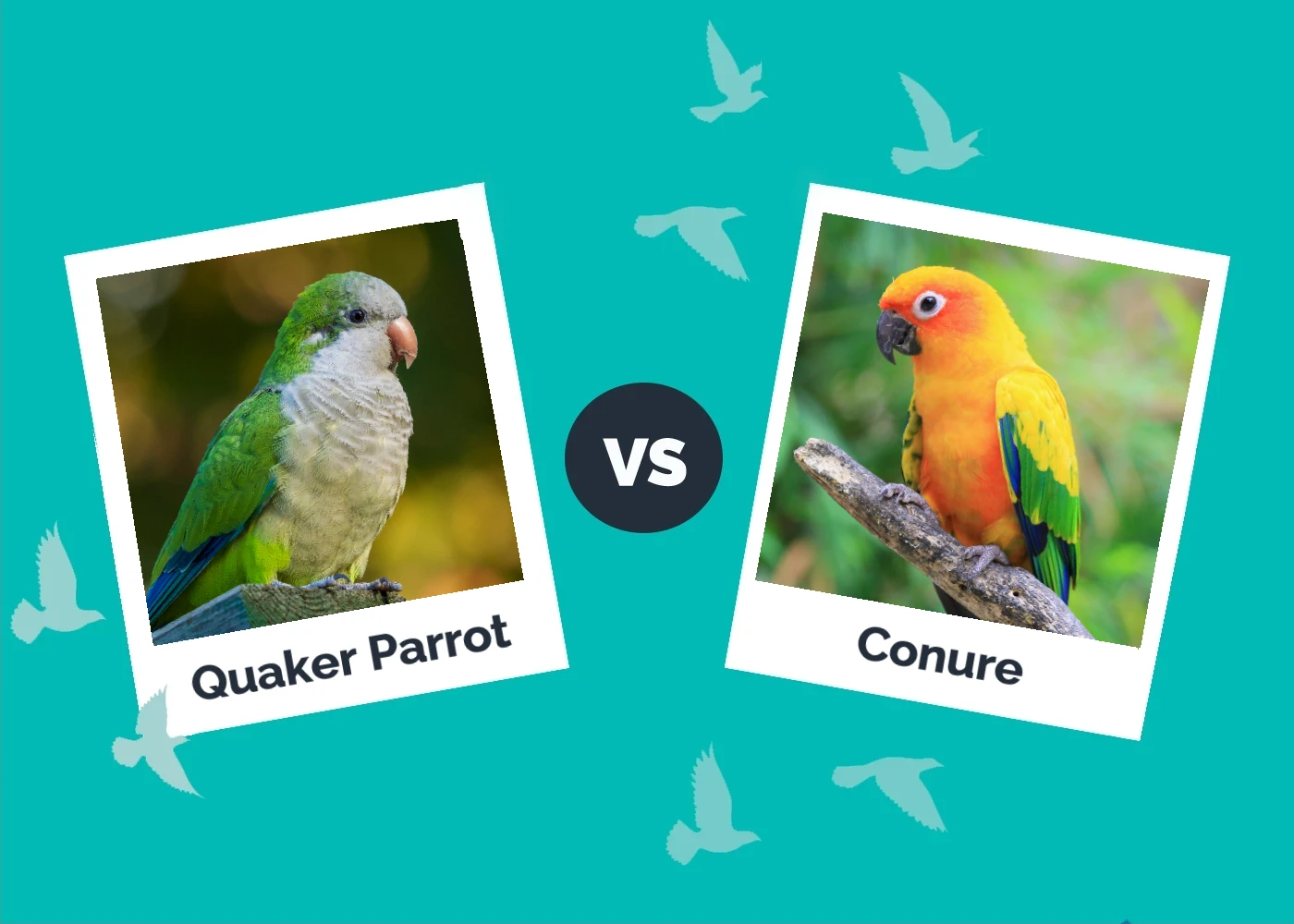
Featured Image Credit: Left - pabloavanzini, Shutterstock | Right - Rutpratheep Nilpechr, Pexels
Get Hepper In Your Inbox


Pet care tips from our vets and experts, straight to your inbox.
You may opt-out at any time. View our Privacy Policy for more information.

Chantelle's life revolves around two passions: writing and animals. Raised on the prairies of Canada amidst a menagerie of pets, she now lives with five cats, two guinea pigs, and a bearded dragon. Together with her husband and child, Chantelle delights in being an exemplary animal parent, going as far as installing wall-mounted cat shelves to give their cats an indoor playground. When she's not cozying up with her cats or snapping their amusing antics, she enjoys venturing into the Rocky Mountains, binge-watching her favorite Netflix shows, and indulging in spontaneous reading adventures.
Join the conversation
Ask a question, share your story, or send private feedback.