Hepper is reader-supported. When you buy via links on our site, we may earn an affiliate commission at no cost to you. Learn more.
Are Weimaraners Hypoallergenic? Vet-Approved Tips & FAQ



In this article
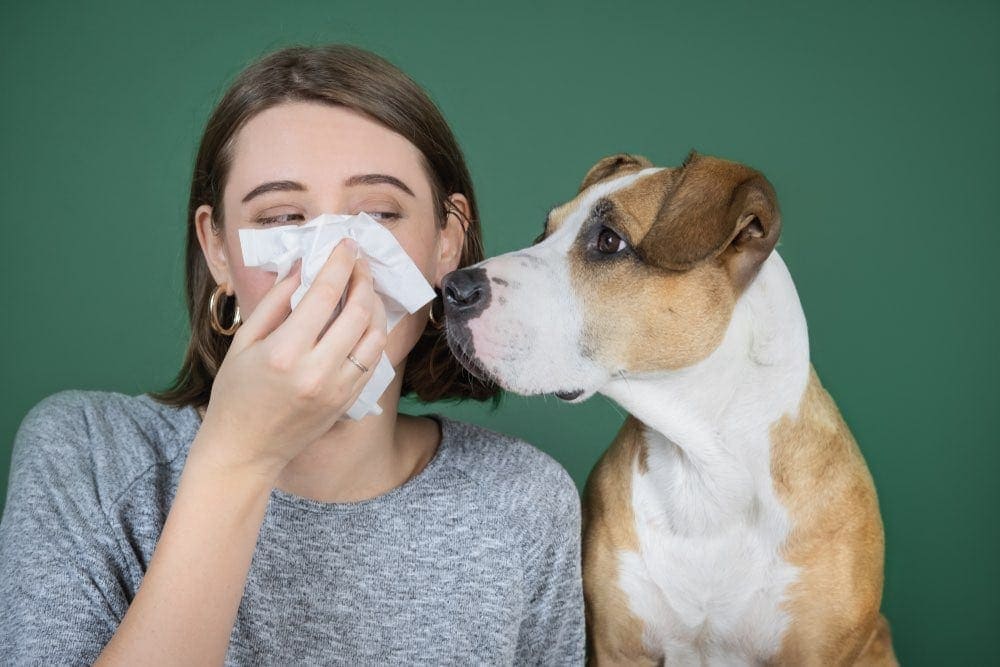
If you suffer from pet allergies and are looking to get a dog, one of the first questions you want answered is whether that breed is hypoallergenic. Unfortunately, a Weimaraner is not considered a hypoallergenic breed. Also, there is no such thing as a hypoallergenic dog.
If you already have a Weimaraner or you’re going to get one, anyway, there are a few things you can do to try and manage your pet allergies.

How Much Do Weimaraners Shed?
Now that you know a Weimaraner is not a hypoallergenic dog, the next thing you’ll want to figure out is how much they shed. Weimaraners are moderate shedders, meaning some other dog breeds will shed more, but you’re also not going to have a hair-free home with a Weimaraner.
Making matters worse for those with pet allergies is that a Weimaraner’s fur is short. This makes it easier to kick up during regular everyday activities and irritates your allergies.

What Causes Pet Allergies?
If you’re suffering from pet allergies, you need to get to the bottom of what’s causing them. All dogs release proteins that are harmless unless you are allergic to them. These are called allergens and are named following a standard structure. In dogs, the most studied ones are Can f1 and Can f2, but there are more. They are found in saliva, dander, and urine and are carried on hair and dander. Some people will have an allergic reaction when a dog licks them, but most of the time, dog allergies are triggered by shed fur and dead skin cells. These can float in the air or settle on a sofa, causing an allergic reaction before you even touch the dog. Every breed of dog produces allergens, which is why there are no hypoallergenic dogs.

The 5 Ways to Help With Pet Allergies
If you’re struggling with pet allergies, there are a few different things you can do to try to give your sinuses a break. Below, we’ve highlighted five of the most helpful tips we know of to help you manage your pet allergies.
1. Create a Pet-Free Zone
If you suffer from pet allergies and live with a pet, your body needs time to reset. When you’re sleeping is one of the best times for this since it’ll give you hours every single day, and you’re not missing time with your pet while you’re sleeping.
Keeping your pet out of your room can serve as a safe haven for you and let your body reset a bit before you’re around your pet again.

2. Vacuum Frequently
The main cause of pet allergies are the allergens carried around your home by hair and dander. While you’ll never be able to pick all of them up all the time, if you can consistently vacuum—at least once a week—with a vacuum cleaner equipped with a HEPA filter, there will be fewer of them. You should avoid “dry” cleaning with brooms or feather dusters because these may aerosolize pet allergens, making the problem worse.
3. Brush, Comb, and Bathe Regularly
If you can get the loose hairs off your pet before they fall off around your home, it’s less hair you need to worry about. Brushing and combing your pup each day will go a long way in helping with this. Remember to use a disposable face mask or get a non-allergic person to do this task for you.
You’ll also want to stick with a regular bathing routine, but you can’t overdo it, since baths can strip away essential oils and nutrients from your pet’s skin. A bath about once or twice a month should be beneficial, but ensure that you’re using a high-quality shampoo that won’t irritate your pet’s skin in the process.
4. Use an Allergen-Capturing Air Filter
This is one of the best ways to help you control pet allergies in your home. If you put an allergen-capturing air filter in each room that your pet goes into or the one that they spend the most time in, it can pick up the hairs and dander before you have a chance to breathe them in.
Allergen-capturing air filters won’t completely eliminate pet allergies, but they’ll help make them far more manageable. But to get the most out of them, you’ll need an allergen-capturing air filter for each room that your pet is allowed into, and that can get expensive.
5. Seek Medical Help
If you’re thinking about bringing a pet into your home and you suffer from pet allergies, we highly recommend reaching out to your doctor. They’ll be able to let you know if it’s a good idea, prescribe medications if you need them, and give you other useful tips that pertain directly to your situation.


Final Thoughts
While a Weimaraner isn’t a hypoallergenic dog, if you suffer from pet allergies and want one, you don’t need to write them off just yet. Reach out to your doctor and see what they recommend, but keep in mind that you might need to follow all our tips above and take an allergy medication to get everything under control.
Sources
Featured Image Credit: Dmitry Veryovkin, Shutterstock
Get Hepper In Your Inbox


Pet care tips from our vets and experts, straight to your inbox.
You may opt-out at any time. View our Privacy Policy for more information.
Adam, a dedicated freelance writer and animal advocate, has a long history of rescuing animals and creating compelling written content. For over ten years, he has worked as a freelance writer, and his passion for rescuing animals extends even further back. Adam is also a proud father of three, always ready for a challenge and eager to embark on new adventures.
Join the conversation
Ask a question, share your story, or send private feedback.