Hepper is reader-supported. When you buy via links on our site, we may earn an affiliate commission at no cost to you. Learn more.
At What Age Can You Give a Puppy a Bath? Vet Approved Facts & FAQ


In this article
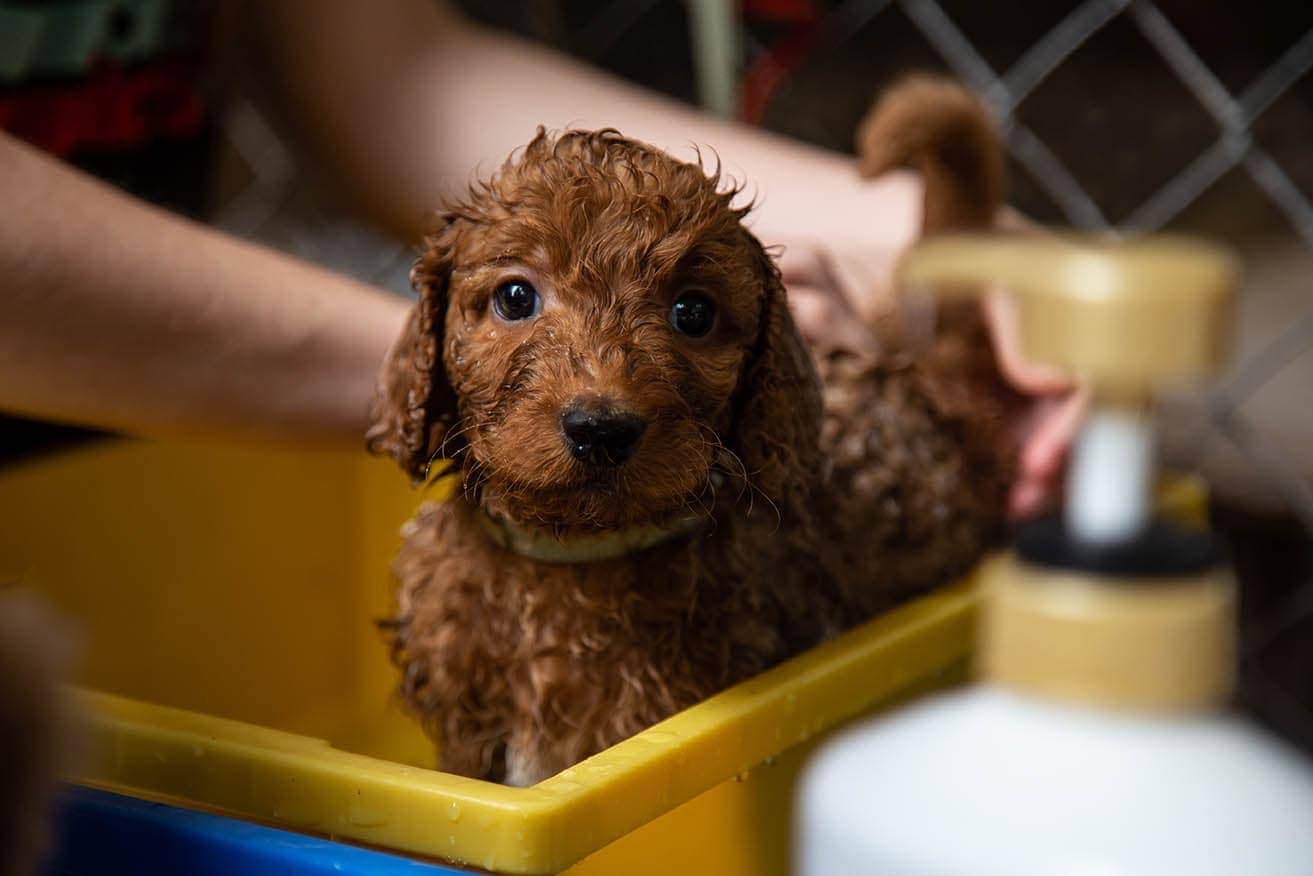
Bathing your dog might not be the most fun or exciting part of being a dog owner, but it is not a duty you can shirk either. There is no clear-cut answer to when a puppy should get their first bath. The best answer we can give is “If they need it, they can be bathed.” Generally, avoid bathing in the first 7–8 weeks of age.
There are a few different factors that influence when your puppy should get their first bath. Let us strap in and look at those factors.

Top 3 Factors to Consider When Giving a Puppy a Bath
1. Breed
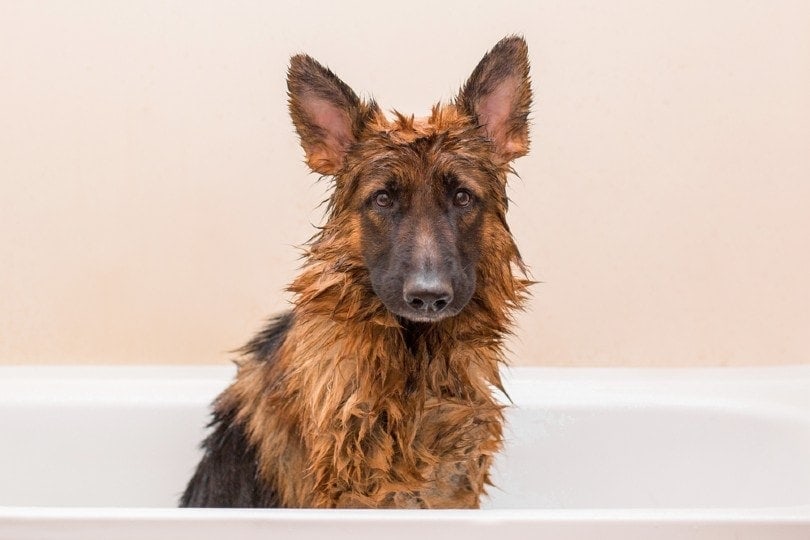
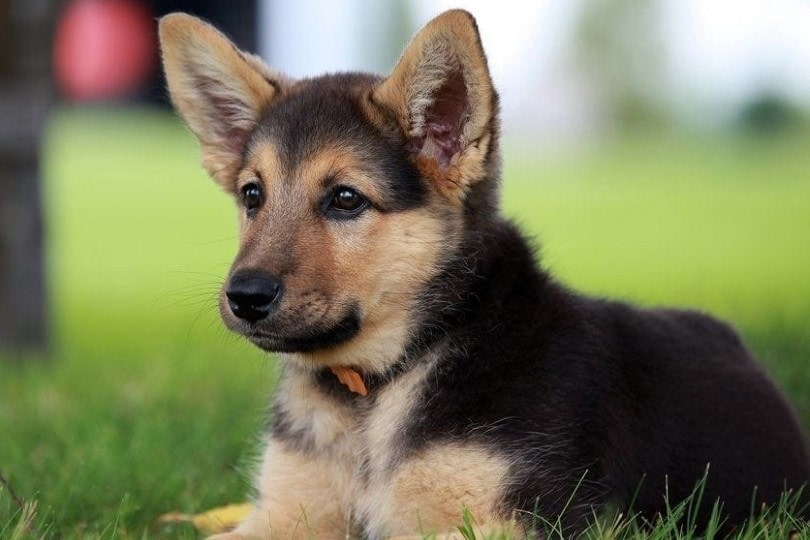
Not all breeds have the same care needs. Long-haired breeds need to be groomed by their owners more regularly than short-haired breeds and undercoated dogs have special grooming needs, too. If you have a dog with more intensive grooming needs, like a German Shepherd or a Husky, you may find that you need to bathe them sooner than you might expect.
2. Age
For a period at the beginning of their lives, the mother dog maintains the puppies’ cleanliness. As they get older, the maintenance falls on the owners. When most puppies go home, they’re at least 8 weeks old which is around the time that veterinarians recommend you start bathing your puppy. But realistically, the first bath will happen “whenever the puppy needs it.”
In the first few weeks of life, puppies can’t regulate their temperature well and will easily get too cold after a bath. If they need cleaning during this time wipes may be a better choice.
Puppies get into all sorts of trouble when they are young and may end up getting their first bath before they even go to their forever home just to clean up after their own antics. Mud, poop, food!
3. Activity and Housing
You also must factor in what type of activity and housing your pup has. Kenneled dogs or those with a lot of access to the outside are more likely to get muddy and dirty and need bathing more regularly. Lazy pups lounging around the house are less likely to need a regular wash.
Taking these factors into account you can judge when your puppy would need to be bathed for the first time. It is important to remember that puppies are still young, and everything around them is changing fast since coming home with you. So, be compassionate if your puppy is nervous about getting bathed. Still, getting them in the bath as soon as you can will help them learn to tolerate it better as they get older.
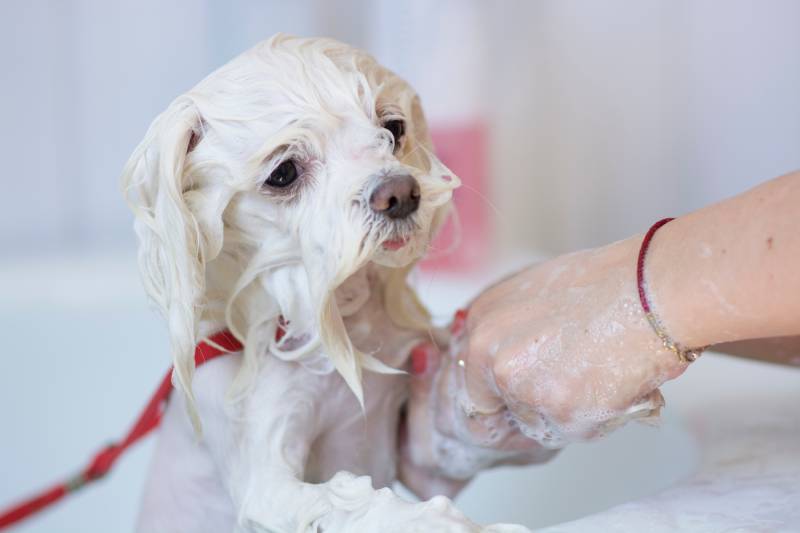
In general, if your puppy is dirty or smelly they can have a bath. Before the age of 7 weeks, it would be better to use wipes or just spot wash if needed to avoid them getting too cold.

Why You Should Bathe Your Dog Young
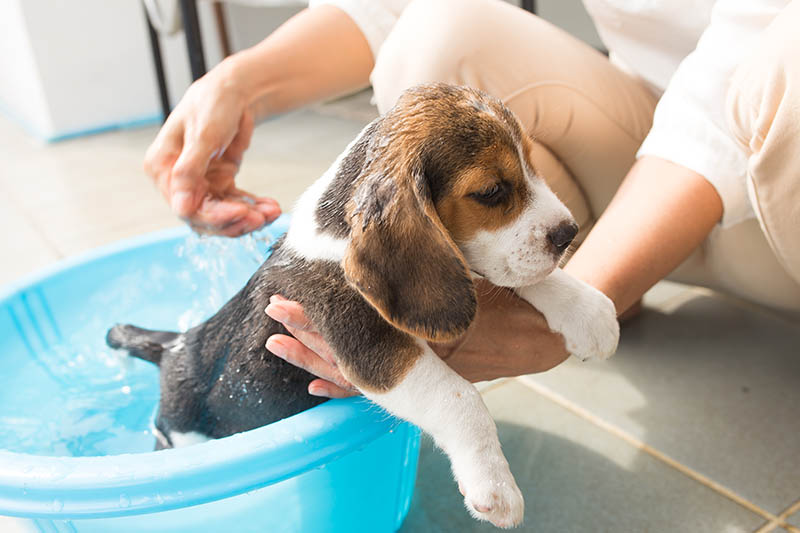
Many dog parents have dogs who are frightened of being bathed because they did not properly acclimatize the dog to bathe young. Dogs have a socialization period lasting until around 16 weeks. This is when they learn the most about their environment and what to expect from it. So if you want your dog to be comfortable around vacuum cleaners, old ladies wearing hats, or bathing, they need to learn about it in this time window.
So, you can help your dog get used to the bath by beginning the bathing process early but positively.
How to Desensitize Your Dog to Water
Baths should be a regular occurrence from the time your puppy first comes home, around monthly. The early baths you give your puppy should be less about shampoo and more about the water. The thing that is most scary to dogs about being bathed is the water and being restrained.
As a result, your dog fears bath time’s many unknowns, and once you get your dog over the hump of being afraid of water, they will be able to adapt more easily to being shampooed and washed. Start by getting your dog used to the feeling of being slightly wet by using a washrag or a sponge to massage some water into their skin and fur.
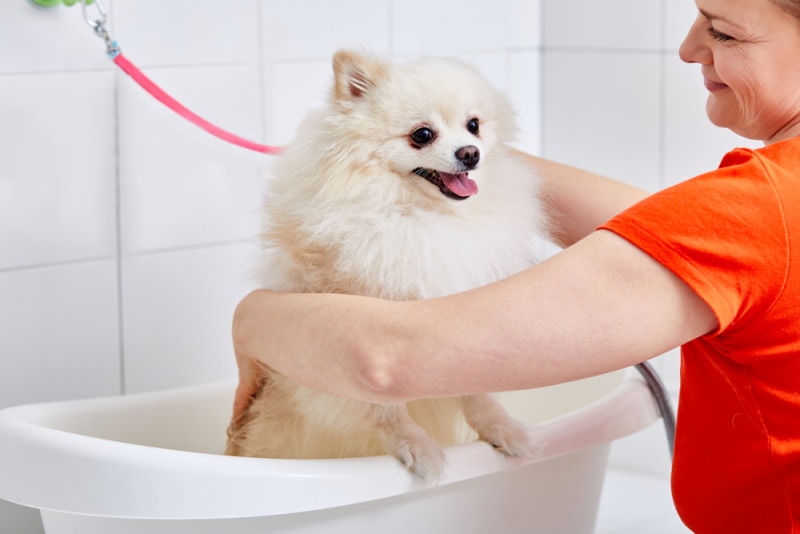
Once your dog is okay and starting to tolerate the water, get them in the tub with some water-safe toys and a little bit of water in the bottom of the tub. This will help them get used to the feeling of being wet without shocking them or scaring them. When they are relaxed and happy in the shallow water, start using a cup to pour some water over their back.
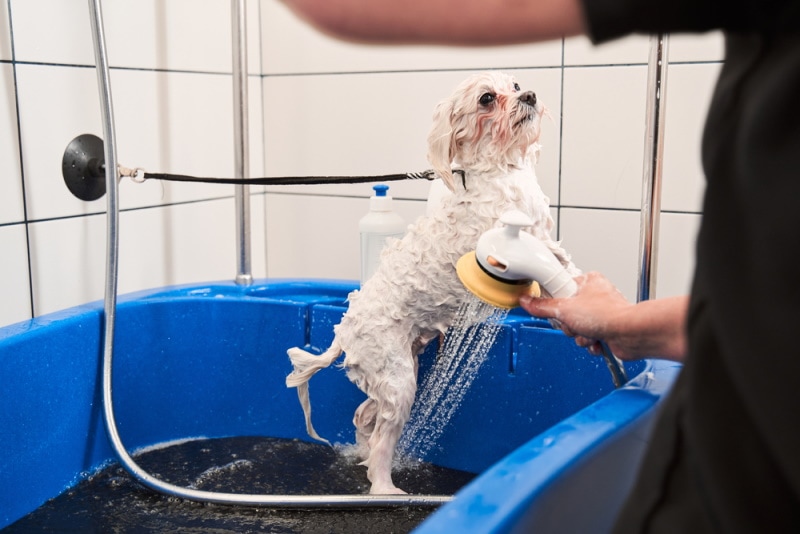
Slowly work them up to and graduate to getting sprayed with a shower nozzle. This will help you and any future dog groomers that you employ by getting your dog desensitized to water and being bathed. So, they will act more agreeable during bath time!
Remember that your dog will notice your emotions. So, if you feel stressed about giving your dog a bath, they will start to feel stressed about taking a bath and will build negative connections around bath time. Talk in a quiet and calm voice to show your dog that everything is safe, and they can feel secure even when they are in the bath.
When you are finished with the bath, remember to tell your dog that they did a good job and reward them to build more positive feelings and experiences surrounding bath time. If you are consistent with rewarding good behavior and building positive memories, your dog will be a professional bath-taker in no time!
Other Tips for a Successful First Bath
Final Thoughts
Unfortunately, there is no clear-cut answer to when a puppy should get their first bath but young puppies can’t keep themselves warm. It is just something that you and your puppy will have to experience together on your new roller coaster together. There are lots of steps you can take to make your dog’s baths more enjoyable for all participants.
Related Reads:
Featured Image Credit: Zachary Pigott, Shutterstock
Get Hepper In Your Inbox


Pet care tips from our vets and experts, straight to your inbox.
You may opt-out at any time. View our Privacy Policy for more information.
Luxifa is a freelance writer with a passion for animal science and technology. She loves to share the world of animal science with people to help them make informed decisions for themselves and their pets. Luxifa has worked in professional pet care for over six years and realised she could help change the world of pet care by bringing the information people needed to them in terms they could understand. Knowledge is power and she loves to help everyone become the most informed they can be.
Join the conversation
Ask a question, share your story, or send private feedback.