Hepper is reader-supported. When you buy via links on our site, we may earn an affiliate commission at no cost to you. Learn more.
7 Belgian Malinois Health Issues (Our Vet Discusses)

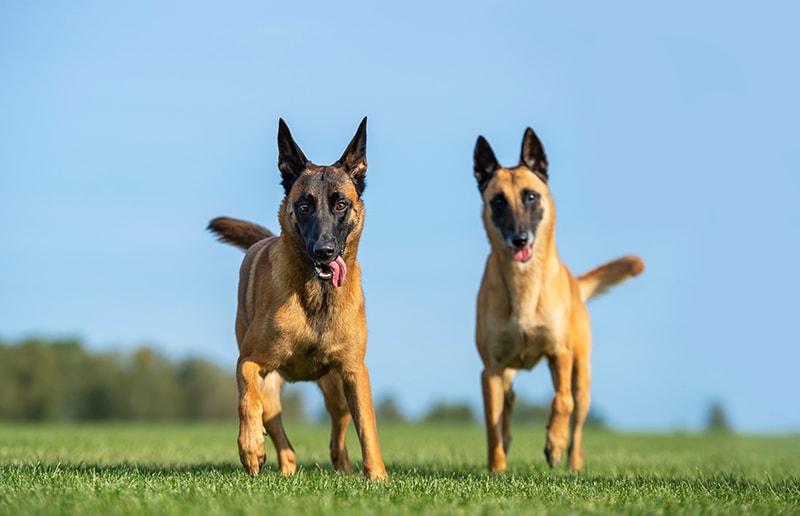
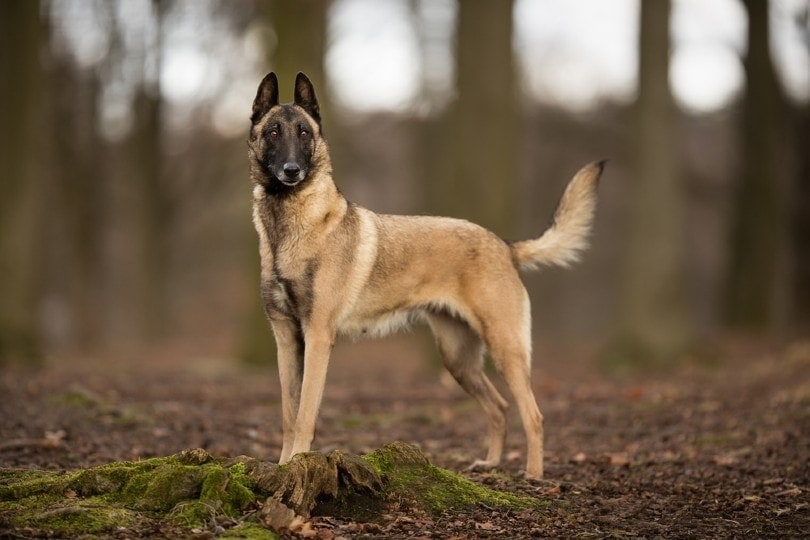
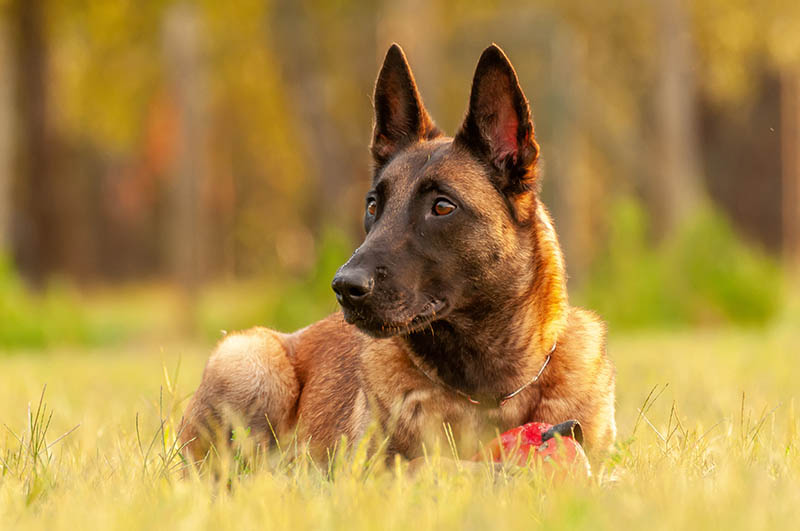
The Belgian Malinois is a generally healthy dog. However, certain breed-specific health problems may occur, such as hip or elbow dysplasia, eye diseases, gastric bloat, hemangiosarcoma, epilepsy, and thyroid gland dysfunctions. A responsible owner will take their dog regularly to the veterinarian to test them for various health problems, as some have a higher incidence.
However, the incidence of these conditions in the Belgian Malinois breed has been seriously reduced over the years due to carefully coordinated selections, which aim to maintain and perpetuate a state of health as best as possible in this intelligent dog. The life expectancy of the Belgian Malinois is 12–14 years.

The 7 Belgian Malinois Health Issues
1. Hip Dysplasia
The hip joint is a strong connection between the pelvis and the thigh. It consists of the femoral head and the hip socket or acetabulum. In hip dysplasia, due to incorrect development and consequent laxity of the joint, the femoral head does not align well within the socket and produces a certain degree of friction that causes the erosion of the cartilage, ongoing pain, and inflammation; normally, there is no degree of friction, and the rotation of the joint is done smoothly.
This condition is one of the most common orthopedic problems in dogs. It's a hereditary disorder, a trait passed over to the next generation, but environmental factors like improper nutrition and rapid weight gain can accentuate faster development and the early onset of clinical signs.1 The condition can be discovered around the age of 4–5 months, but is generally seen between 1–2 years.
Apart from the Belgian Malinois, other breeds prone to hip dysplasia are:2
Clinical Signs
Hip dysplasia causes pain that can manifest differently from dog to dog, depending on the degree of severity and the stage that the disease has reached. Regardless of breed, the clinical signs of hip dysplasia are as follows:
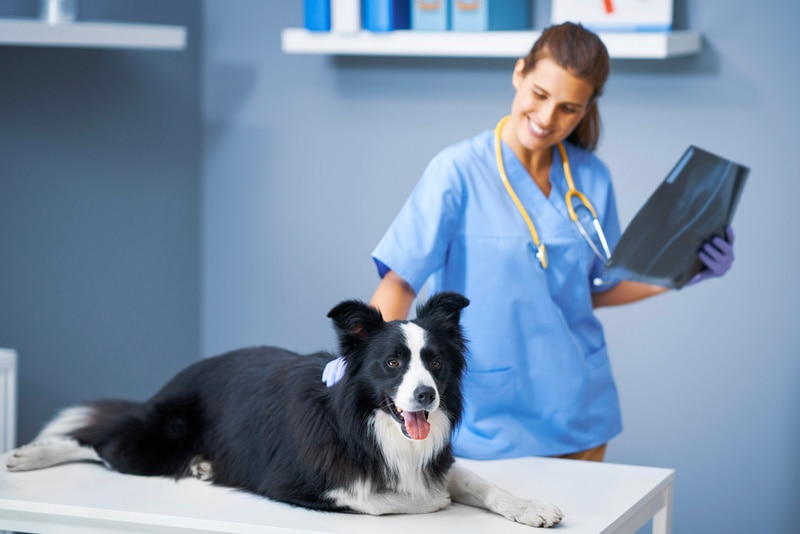
The diagnosis is based on the clinical signs and hip X-rays, and the treatment will depend on the severity of signs and degree of discomfort. Some dogs with advanced disease may be still coping quite well and will improve greatly with physiotherapy and pain relief, while others with less pronounced changes will be in a lot of pain and may even require surgical management.

2. Elbow Dysplasia
Elbow dysplasia is similar to hip dysplasia, the difference being that it occurs at the elbow joint. It is a hereditary degenerative disease that becomes disabling in some dogs, leading to pain, chronic inflammation, and restricting mobility.
Besides the Belgian Malinois, other breeds that are prone to elbow dysplasia are:3
Clinical Signs
The first signs of elbow dysplasia can occur early, from around 4–6 months of age. With time, the disease can evolve into osteoarthritis. Clinical signs of elbow dysplasia in young Belgian Malinois may include:
The diagnosis is based on the clinical signs and physical examination findings, elbow X-rays, CT scan, or arthroscopy, and the treatment can be conservative with pain killers and physio, or surgical in more severe cases.
3. Cataracts
Cataract in dogs is the opacification of the lens of the eye. This opacification varies and there are 4 different stages of cataract, depending on progression, from incipient, immature, mature, and hypermature.4 When the lens (located directly behind the iris) is clouded, it will prevent light from passing through to the retina, which can lead to vision loss.
According to some studies, incipient cataracts that involve up to 15% of the lens and cause no visual defects, are commonly observed in Belgian Malinois dogs, alongside other working dog breeds.
Clinical Signs
Cataracts can appear in young, adult, or older dogs. Clinical signs usually refer to the degree of visual impairment, and the underlying cause, as cataracts may be the primary inherited disease occurring earlier in life or caused by a secondary ailment such as diabetes, while some may occur spontaneously with old age. Dogs with less than 30% lens opacity may show mild or no clinical signs; many owners do not even realize that something has changed in their pets. Those with lens opacity over 60% may have difficulty seeing in dim light or suffer from vision loss. Dogs with lens opacity greater than 60% may show the following signs:
Many dogs adapt well to vision loss if it happens gradually, so it can be difficult for the owners to notice that something is wrong with their pet. The diagnosis is based on the clinical signs and the ophthalmological examination. The treatment is surgical (the cataract is removed).
4. Hemangiosarcoma
Hemangiosarcoma is a malignant tumor originating in the vascular endothelium. It occurs more often in Belgian Malinois dogs of middle or advanced age, but there are cases when it has occurred in 10-month-old dogs.5 Males seem slightly more prone than females.6
It is a disease with an insidious evolution, which means the clinical signs are hidden. Hemangiosarcoma usually occurs in the spleen. When the tumor grows too much, it breaks and causes hemorrhage. The internal bleeding caused by its rupture is usually severe, and this is when the owner typically notices changes in their dog's condition and takes them to the vet.
The primary tumor can occur in other organs and body areas than the spleen, such as:
Clinical Signs
Hemangiosarcoma can be dermal (skin) or visceral (internal). Clinical signs may include the following:
The diagnosis is based on clinical signs, blood work, X-rays and ultrasound, often followed by surgery for lump removal and histology of the mass. The treatment is mainly surgical (when the tumor can be reached). Survival after diagnosis of hemangiosarcoma greatly depends on the location of the tumor, progression of disease, treatment options, such as surgery and chemotherapy, and presence of metastasis. However, unfortunately only 10% of dogs survive one year from the time of diagnosis.7
5. Progressive Retinal Atrophy (PRA)
PRA is the name given to a series of hereditary degenerative diseases that progress to the stage of blindness.8 The condition consists of the degeneration/atrophy of the photoreceptors (cone cells for day vision and detecting colors, and rod cells for night vision and movement). In the first phase, your Belgian Malinois can lose their night vision as the rod cells are affected first. As the disease progresses, the cone cells are also affected.
The progression of the disease occurs simultaneously in both eyes. Definitive blindness may occur early in the inherited form of disease called retinal dysplasia, usually in puppies around two to three months of age. The late onset form that causes vision loss in adult dogs usually happens between 3–9 years of age. The condition often goes unnoticed by the owner, being generally discovered at an advanced stage. It is not painful and does not cause eye inflammation, tearing up, or other specific signs of eye diseases. Usually, the owner only realizes that there is something wrong with their dog when their pet almost goes blind; for example, they often bump their head into surrounding objects and get scared more easily, particularly at night.
The diagnosis is based on an ophthalmological examination. PRA unfortunately does not have an effective treatment. It’s important that your vet rules out other causes for blindness, some of which may be treated more successfully. Dogs with PRA should not be used for breeding, as this condition is inheritable.
6. Hypothyroidism
Belgian Malinois are prone to thyroid gland dysfunction. When your dog's thyroid gland does not produce enough T3 and T4 thyroid hormones, they develop hypothyroidism.9 This condition can occur in puppies if the condition is congenital, or more commonly in middle aged dogs.
Clinical Signs
The onset of clinical signs in middle aged dogs is generally slow and sometimes difficult to notice in the beginning. Some of the changes your pooch may exhibit are the following:
The diagnosis is based on blood and endocrine tests that evaluate the presence and amount of thyroid hormone in the body. The treatment consists of the administration of synthetic thyroid hormone.
7. Epilepsy
Epilepsy is an idiopathic brain disorder causing seizures, while the brain itself appears to be normal but functions abnormally and an underlying cause is not clear or identifiable.10 This is an inherited condition and genetic factors are believed to play a significant role.
Epilepsy as such occurs in younger dogs, leading to abnormal electrical brain activities, within a structurally normal brain, causing seizures, usually manifested by falling over, convulsions, shaking, paddling, uncontrolled chewing, involuntary urination or defecation, drooling, vocalizing, and other. Your dog will be unconscious and go through sudden, rapid changes in their behavior or movement during a seizure. In most cases, epilepsy is a disease that a dog and their owner will have to manage throughout their life, with the help of their vet and regular check ups.
Clinical Signs
Unfortunately, epileptic seizures are sometimes difficult to distinguish from other convulsive episodes that can occur in other conditions (for example, intoxications). Clinical signs may include:
Diagnosis is made by the veterinary neurologist based on the clinical signs and complementary tests. The treatment consists of the administration of anticonvulsant medication.

Conclusion
The Belgian Malinois is generally a healthy breed, but there are a few diseases to which they are more prone, such as elbow and hip dysplasia, PRA, hemangiosarcoma, epilepsy, and hypothyroidism. Knowing about the clinical signs of these conditions and noticing them in time will decrease the risk of complications. Unfortunately, some diseases have no cure, and it is important to speak to your vet about early diagnosis and available treatment options. However, the incidence of these conditions in this and other breeds can be reduced through responsible and carefully coordinated breeding selections.
Sources
Featured Image Credit: Eudyptula, Shutterstock
Get Hepper In Your Inbox


Pet care tips from our vets and experts, straight to your inbox.
You may opt-out at any time. View our Privacy Policy for more information.
Iulia Mihai is a veterinarian with more than 13 years of experience in pet pathology, laboratory, and cancer. She studied at the University of Agronomical Sciences and Veterinary Medicine of Bucharest, Romania Iulia earned a master’s degree in equine and pet pathology and studied epithelial cancer for her Ph.D. Dr. Mihai's passions for internal medicine and parasitology inspired her to volunteer at the faculty’s clinic in her third year of college. She has worked in a couple of veterinary clinics over the years as an internal medicine specialist, and loves to write and educate pet parents about pet nutrition, behavior, and diseases.
Iulia is a passionate veterinarian with a strong affinity for veterinary parasitology, internal medicine, and laboratory. She is excited to share her experience and knowledge with pet owners around the world through her writing and hopes to educate people on pet nutrition, diseases, and behavior.
Education
Iulia graduated from the University of Agronomical Sciences and Veterinary Medicine, Bucharest, Romania, in 2012 and has a Master’s degree in Small Animals and Equines Pathology and is certified in HAACP food safety system implementation. Iulia started her Ph.D. in epithelial cancer in dogs and cats in 2013. Her research is published in national and international veterinary journals.
Experience
Dr. Iulia has been a veterinarian for more than 14 years. She is experienced in animal pathology and laboratory and has experience with exotic animals, such as pet rats and ferrets. She also has skills in the field of clinical pathology, laboratory, microscopy, cancer, and imaging.
Join the conversation
Ask a question, share your story, or send private feedback.