Hepper is reader-supported. When you buy via links on our site, we may earn an affiliate commission at no cost to you. Learn more.
7 Common St. Bernard Health Issues: Our Vet Explains

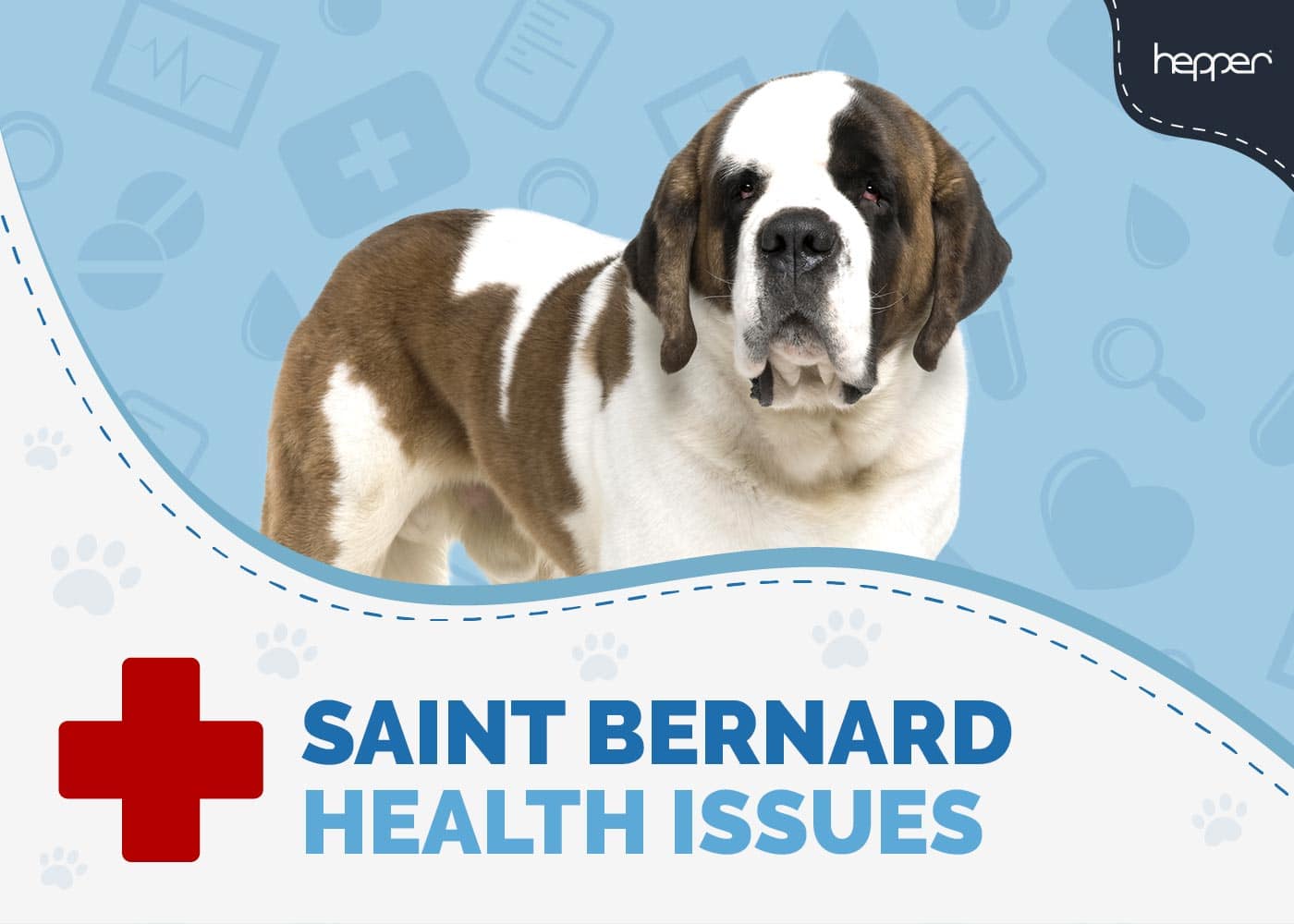
St. Bernards are charming gentle giants, known for their lovable, patient natures and large, imposing statures. With males weighing up to 80 kg, they certainly are not to be missed in a crowded room! However, aside from their slobber (St. Bernards are known to sometimes need bibs!) and their majestic size, there are several health issues to look out for, which makes it important to ensure that you get a puppy from a reputable breeder. A few of the conditions on this list, such as hip dysplasia and degenerative myelopathy, can be limited through appropriate testing before breeding.

The 7 St. Bernard Health Issues
1. Bloat and GDV
Large dogs with deep chests are at risk of bloat, which is a distended gaseous stomach that can twist, leading to the fatal condition, gastric dilatation-volvulus (GDV). There are certain risk factors for GDV, such as eating too quickly, exercising too soon after a meal, feeding only once daily, having a family history of GDV, or having a fearful and nervous temperament. Signs of GDV occur quickly and include:
- A bloated, distended abdomen
- Retching
- Restlessness and panting
- Collapse
Treatment for GDV is emergency surgery, where the stomach will be decompressed and untwisted. During the surgery, a procedure called a gastropexy is usually completed, where the stomach is tacked to the body wall, preventing it from twisting out of position again.
2. Hip Dysplasia
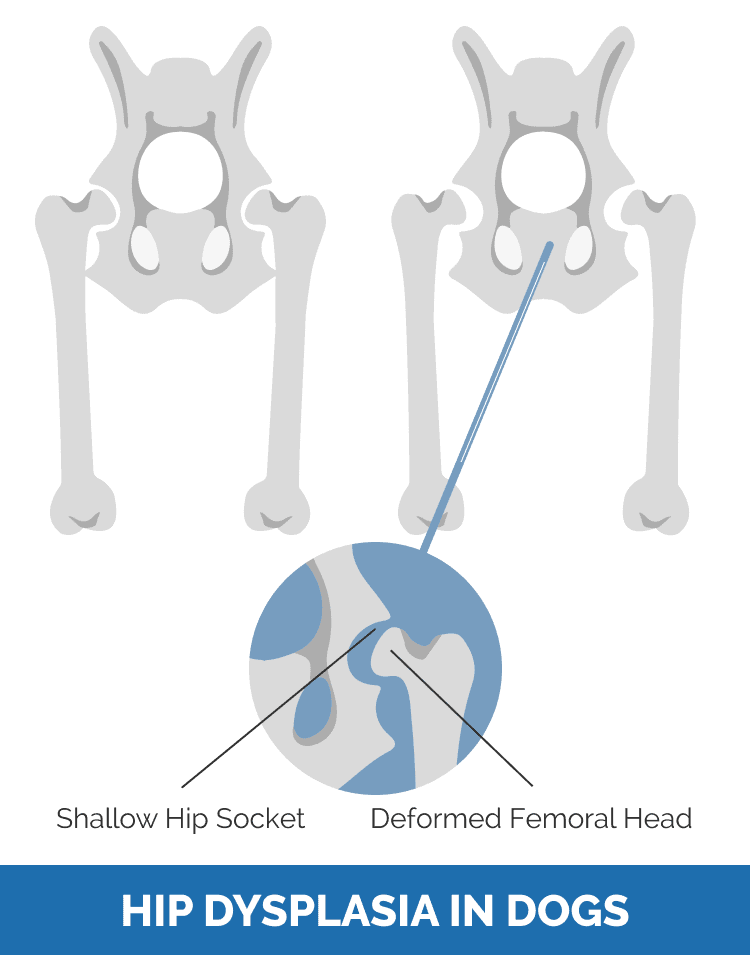
Many health issues in St. Bernards are associated with the anatomical features of the breed, as problems are compounded by their fast growth rate and heavy adult weights. Hip dysplasia is the biggest orthopedic problem, reported in up to 50% of St. Bernards. The hip joint is a ball-and-socket joint, where the ball of the femur (thigh bone) fits snugly into the socket of the pelvis. However, if the joints don’t grow uniformly in puppyhood, it results in shallow, loose hip joints that eventually lead to secondary arthritic change. It is a genetic disease that can result in the following clinical signs:
- Weakness in the hindlimbs
- Lameness
- Difficulty standing or jumping
- Reluctance to climb stairs
- “Bunny-hop” gait when running
- Abnormal sitting positions
3. Degenerative Myelopathy
Degenerative myelopathy is a genetic disease that involves the spinal cord, resulting in weakness and paralysis of the hindlimbs. It is said to not be a painful condition, but diagnosis can be challenging in the early stages because it can resemble arthritis, which many St. Bernards have because of hip dysplasia. Signs of degenerative myelopathy include:
- Knuckling of the hind paws
- Falling over easily
- Lack of control of the hindlimbs
- Difficulty getting up from the floor and going upstairs
Unfortunately, degenerative myelopathy is incurable. Over time, the clinical signs will continue to progress until the dog’s mobility is restricted and they are unable to control urination and defecation. It is important to keep in conversation with your vet about your pet’s quality of life.
4. Entropion
Eyelid problems can occur due to the excess skin on St. Bernard’s face and eyes, causing the eyelids to roll in toward the eye. This results in the skin and fur rubbing against the surface of the eye, resulting in irritation, pain, and ulceration. Treatment involves surgical correction of the eyelid, removing the excess skin so the eyelid sits normally. Untreated, it can be incredibly painful and lead to long-term damage to the cornea.
5. Osteosarcoma
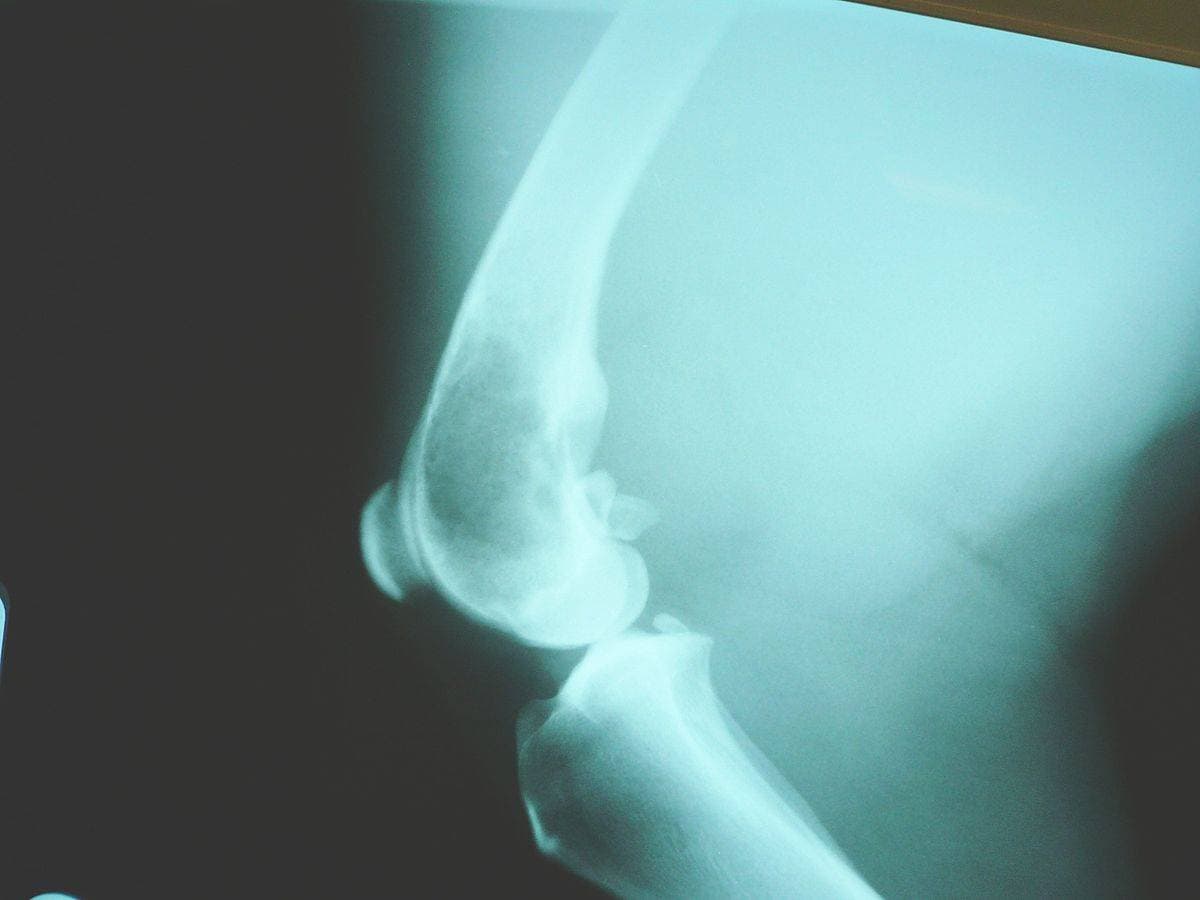
Osteosarcoma is a primary bone tumor that is more common in large and giant breed dogs, including St. Bernards. It is an aggressive and painful cancer, normally resulting in sudden lameness or swelling if it is located on one of the limbs. You may also find that your dog is lethargic and has a poor appetite.
Diagnosis is normally achieved on an X-ray. Due to the aggressive nature of osteosarcomas, in most cases, the tumor has spread by the time that it is diagnosed. Treatment often involves amputation of the affected limb. While this sounds alarming, most dogs do incredibly well after an amputation. Since the tumor is so painful, removing the affected limb enables them to enjoy the remainder of their life without the risk of the bone tumor site becoming so weak that it fractures. Chemotherapy and radiation can also be implemented by an oncologist to extend the dog’s life.
6. Lymphoma
Lymphoma is cancer of the lymphatic system, which involves the lymph nodes, lymphatic vessels, and lymphatic organs like the tonsils and spleen. It is unfortunately a relatively common cancer in dogs. Clinical signs include:
- Swollen lymph nodes
- Vomiting and diarrhea
- Weight loss
- Decreased appetite
Lymphoma can be treated with chemotherapy. Fortunately, dogs seem to tolerate chemotherapy better than humans, with far fewer side effects. The prognosis depends on the type of lymphoma that is diagnosed. Classically, a dog that only receives palliative care is expected to have a survival time of approximately 4–6 weeks, and those that receive chemotherapy can go into remission, with an average survival of 1 year. However, it is important to remember that all patients are different, and prognostic indicators are not final.
7. Dilated Cardiomyopathy
Dilated cardiomyopathy (DCM) is a common heart condition in large-breed dogs that results in weakened heart muscle and an enlarged heart. The result is a heart that doesn’t function optimally and ultimately leads to heart failure. Clinical signs of DCM usually include:
- Coughing
- Rapid or labored breathing
- Tiring on exercise
- Distended abdomen
- Lethargy
- Collapse
- Restlessness and discomfort
In 2018, the FDA made a link between grain-free diets and the development of DCM. It is now thought that the general presence of pulses (peas, lentils, chickpeas, etc.) can result in diet-associated DCM. However, more research needs to be done in this area to know for certain what the exact link is and how we can further prevent it.

Conclusion
Whilst this list is not exhaustive and there are many other medical maladies that a St. Bernard can acquire in their lifetime, these are the most common and important health issues that they can be afflicted by. It is always recommended to source a puppy from a good, well-informed breeder. If you have any concerns with your St. Bernard, whether they’re young, middle-aged, or old, seek advice from your veterinarian.
Sources
Featured Image Credit: Vlad Rudkov, Unsplash
Get Hepper In Your Inbox


Pet care tips from our vets and experts, straight to your inbox.
You may opt-out at any time. View our Privacy Policy for more information.
Meg is a veterinary surgeon and writer originally from Australia, who currently is living and working in Scotland with her family. She is a passionate advocate of preventative medicine, client education and believes medicine never has a one size fits all approach. When not practicing veterinary medicine, her happy place is out walking the hills with her baby daughter and over-excited Labrador, and writing.
Dr. Meg is from Australia and currently lives with her family in Scotland. When she's not working, you can find her taking her clan out on the hills, writing, and consuming books. She enjoys the variety of general practice and the feeling that there is always something new to learn. There is never a boring day behind the doors of a veterinary clinic!
Education
Meg graduated in 2015 from James Cook University, Australia.
Experience
Dr. Meg has been in practicing veterinary medicine for over seven years. Before traveling and working in the United Kingdom, she spent her formative years after graduating from university obtaining a wide variety of experience in rural Australia, with a focus on both small animal and equine medicine. She has developed a keen interest in client education, learning over the years that once the patient has had the surgery or the medicine to "fix" an issue, it is ultimately awareness that improves patient outcomes.
Join the conversation
Ask a question, share your story, or send private feedback.