Hepper is reader-supported. When you buy via links on our site, we may earn an affiliate commission at no cost to you. Learn more.
Belgian Malinois vs German Shepherd: What’s the Difference?
In this article
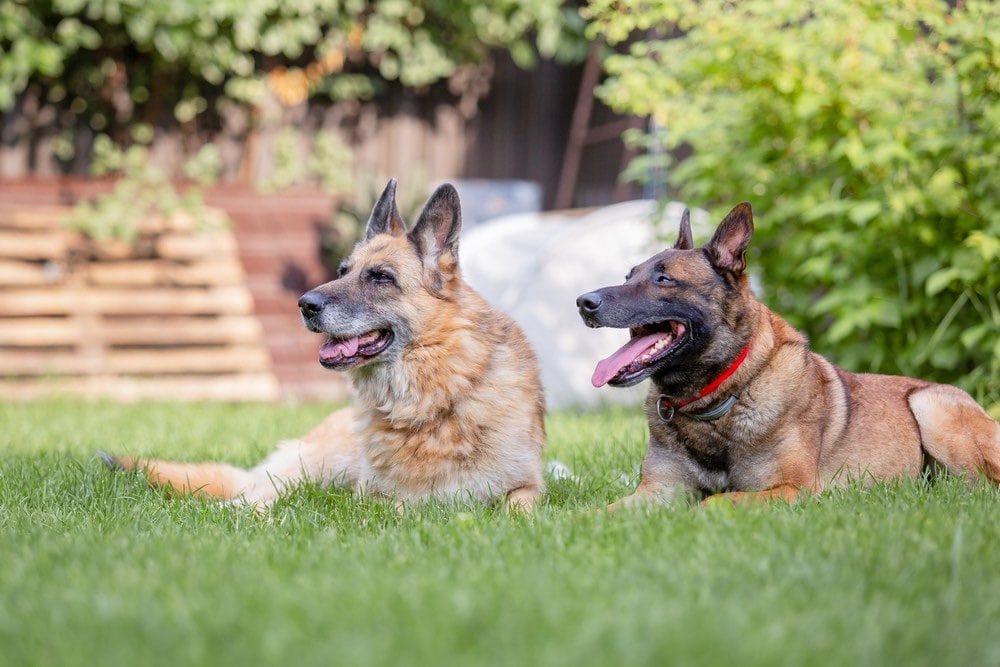
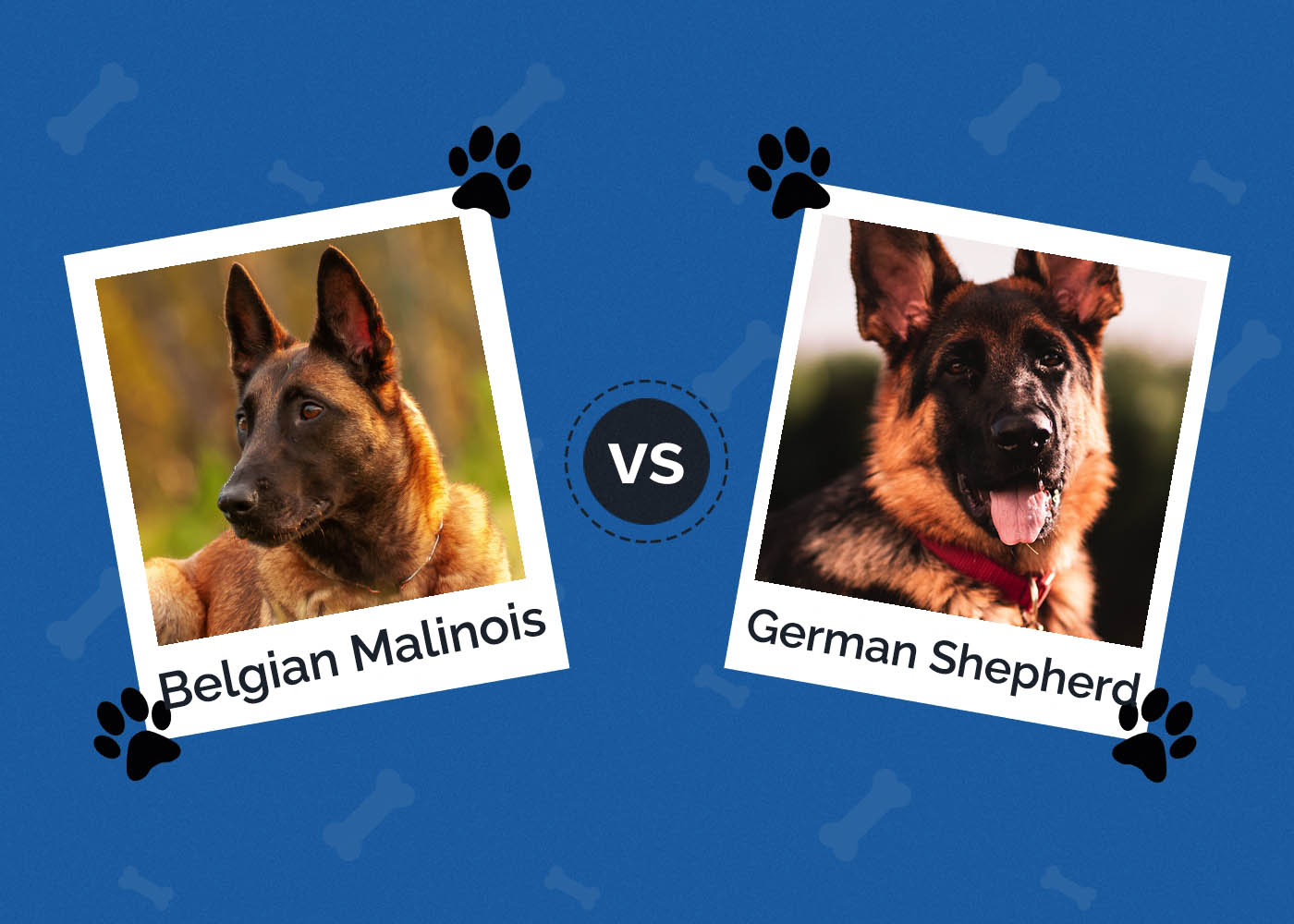
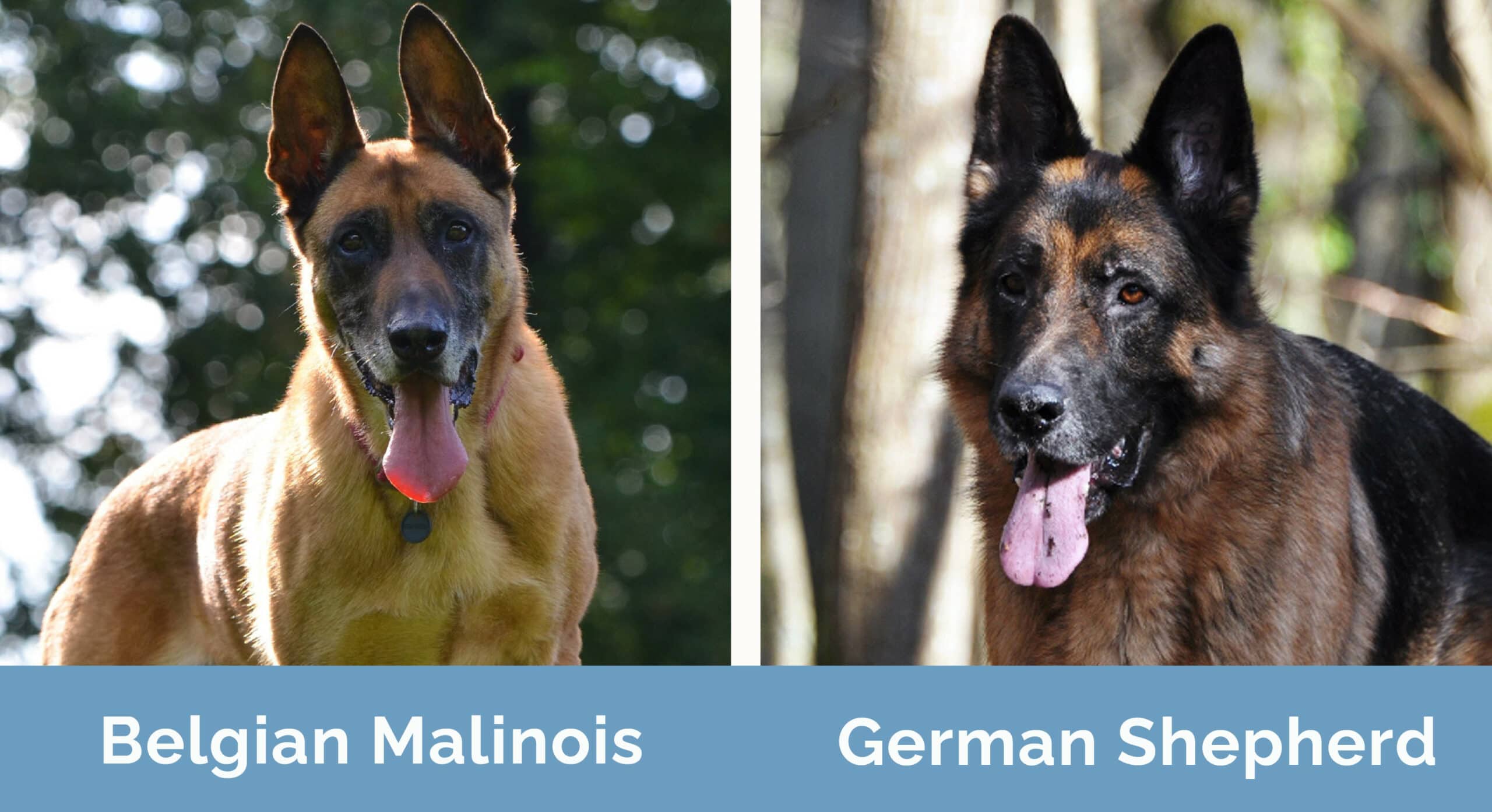
It can be hard to tell the Belgian Malinois and the German Shepherd apart. However, once you get them side by side, their size, coloration, and build differences become abundantly clear.
While it's important to highlight the differences between these two breeds, we can't argue against their similarities. For example, both originated as livestock guard dogs and are prevalent as working military and police dogs today. Each is also known for its intelligence and training aptitude.
So, what differentiates the Belgian Malinois from the German Shepherd and vice versa? When looking for a new dog, which is the better option?

Visual Differences
A Quick Overview - Belgian Malinois vs German Shepherd
As you can see, the Belgian Malinois and the German Shepherd have unique characteristics. Let's break it down.
Belgian Malinois
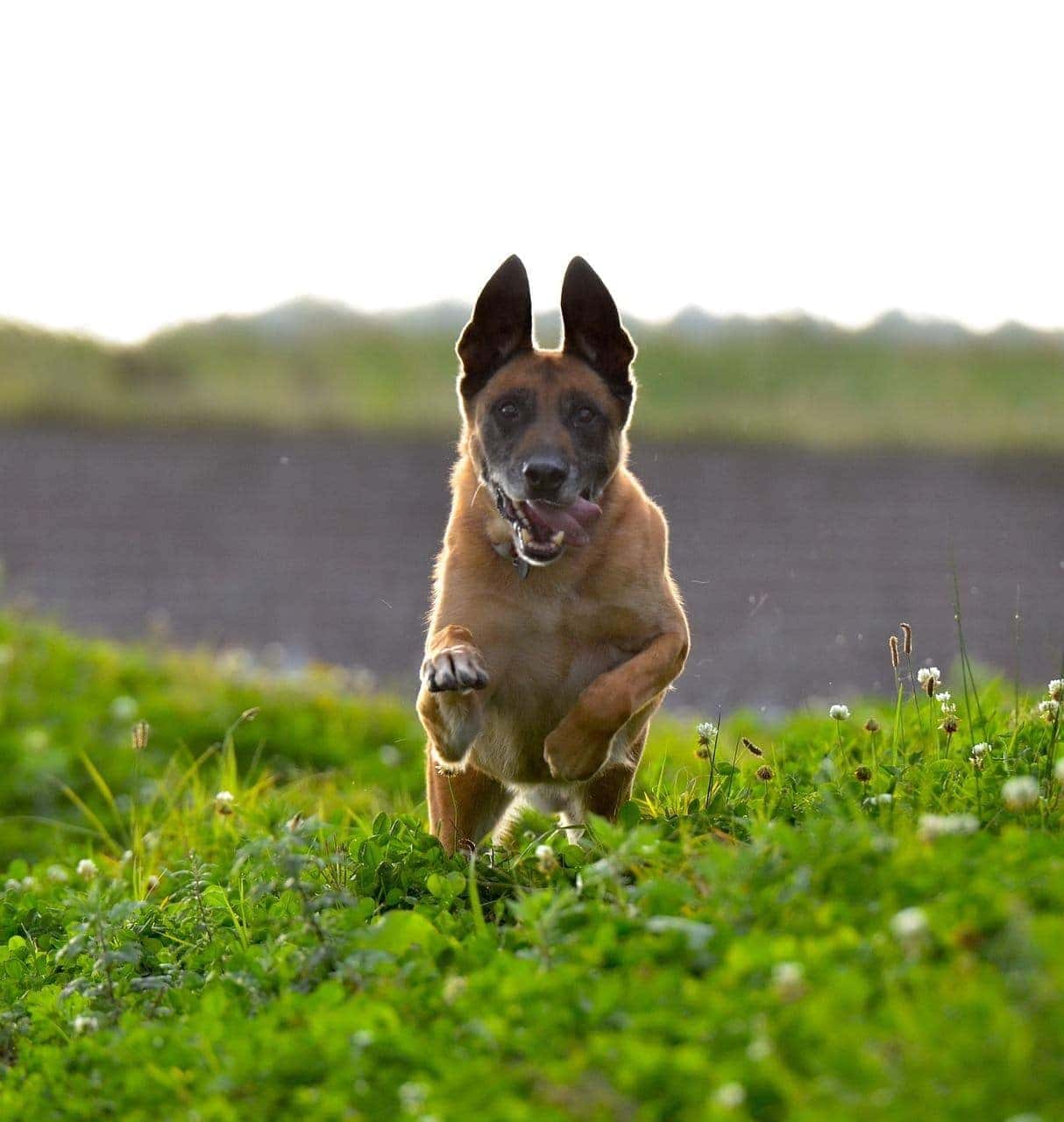
The Belgian Malinois, sometimes shortened to the Mal, is a hardworking breed with few equals. While some nations group the breed in with others as a Belgian Sheepdog, organizations like the American Kennel Club recognize them as their own breed.
According to most accounts, the Belgian Malinois emerged as an antithesis to companion dog breeds. While other dog breeders were creating fancy canines guaranteed to draw the eye of doting pet owners, Malinois breeders set out to create a working dog unmatched in stamina and focus. They succeeded, and the Mal is still acknowledged today as one of the hardest workers in the canine world.
Throughout the 1900s, the Belgian Malinois's U.S. popularity was stagnant. The breed was brought over around 1911, but the World Wars quickly ended European dog imports. In 2019, however, the Mal was thrust into the national spotlight when Conan, a working military dog, was honored for his bravery in Syria.
However, as the breed jumped to the top of many prospective dog owners' wishlists, many were left questioning if the Mal was suited for the average American household.
Physical appearance
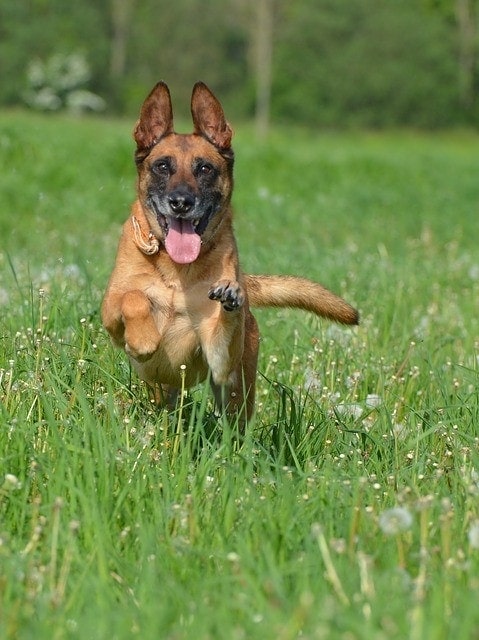
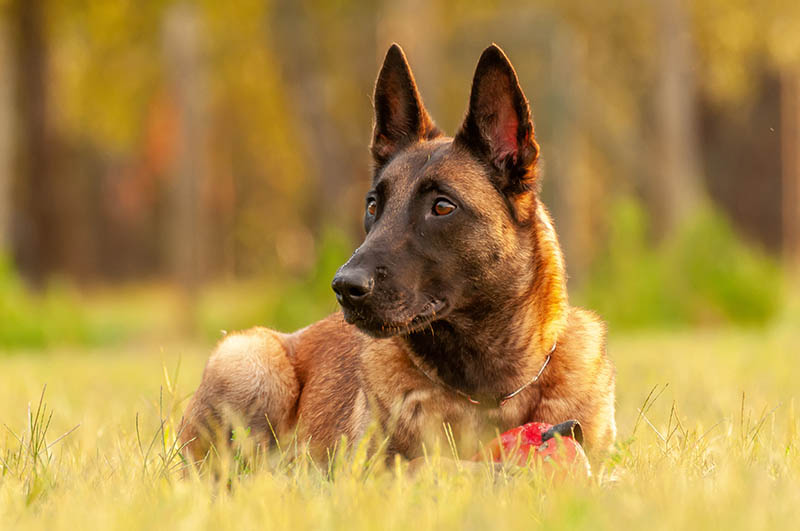
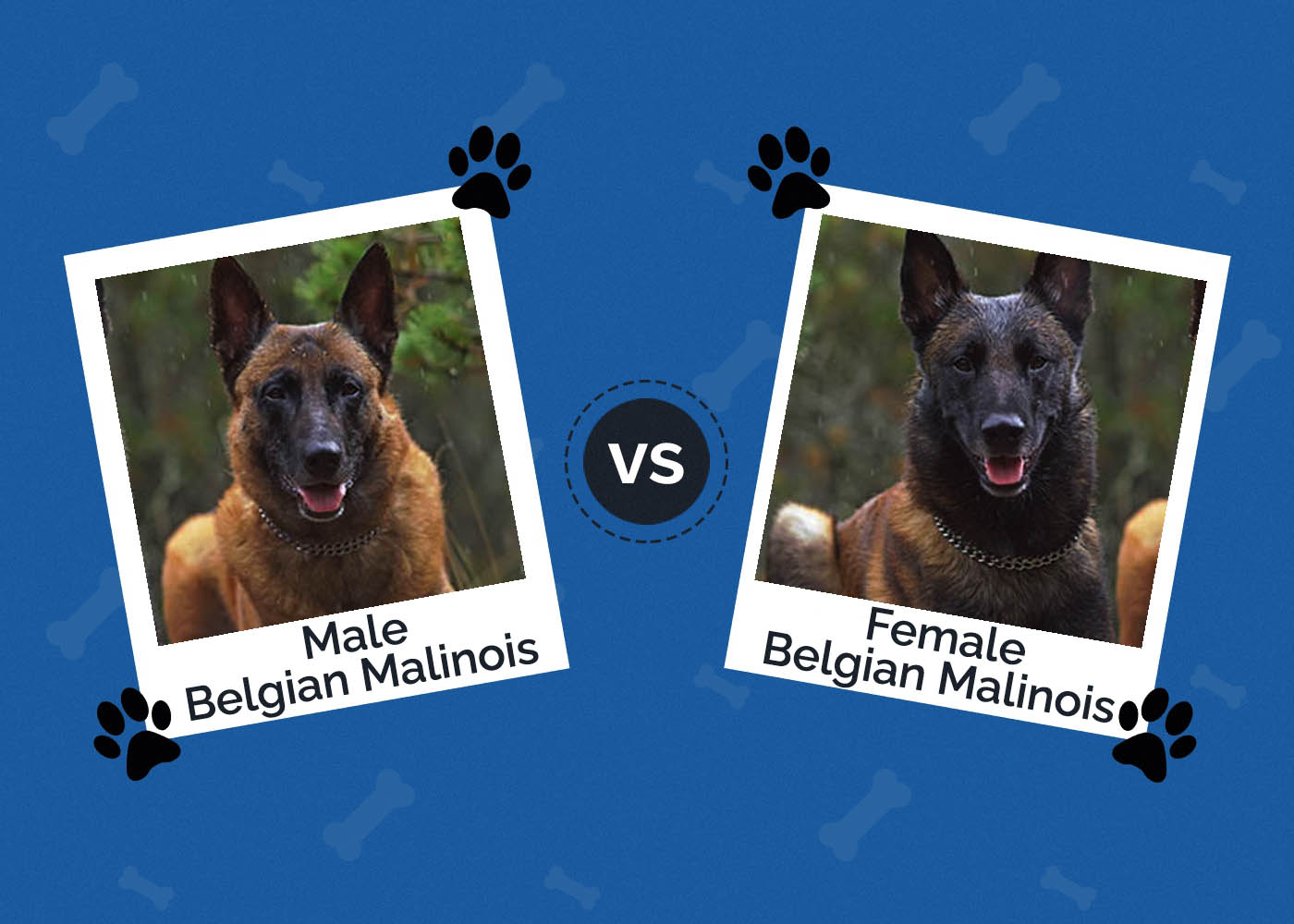
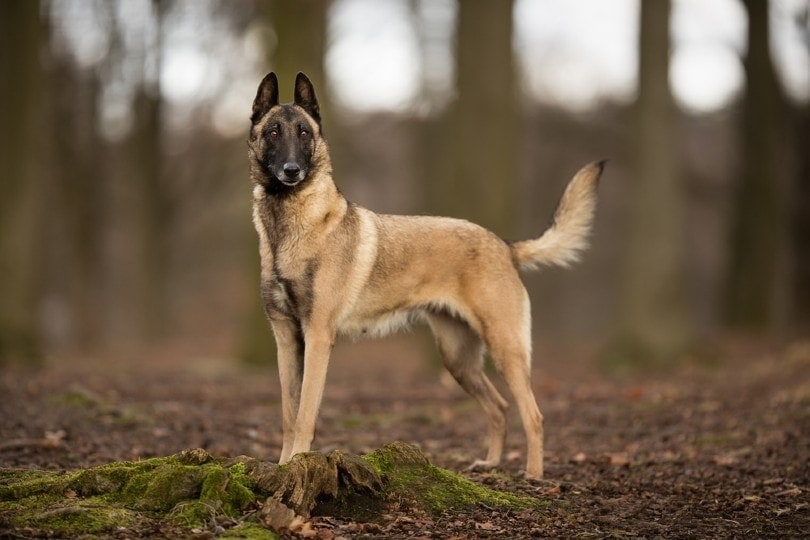
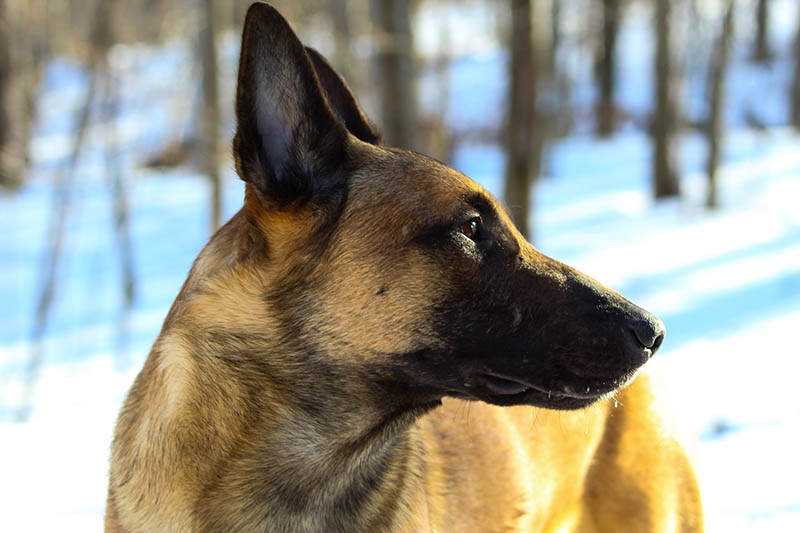
At first glance, the Belgian Malinois would pass as a German Shepherd—to an untrained eye, at least. The Mal has a square body equipped with plenty of lean muscle. The head is elongated, with a slightly pointed nose and upright ears. Their fur is short and dense, offering good protection from harsh weather.
Although the Belgian Malinois's body ranges in color from fawn to mahogany, their face is covered by a black "mask." They're a little smaller than the German Shepherd, with males coming in at about 24 to 26 inches at the shoulder and females measuring at 22 to 24 inches. Male Belgian Malinois can weigh up to 80 pounds. Females come in at about 40 to 60 pounds.
Temperament
The same traits that make the Belgian Malinois the ideal police or military dog also make them a poor fit for many households. The breed is remarkably intelligent but also bred for herding and guarding.
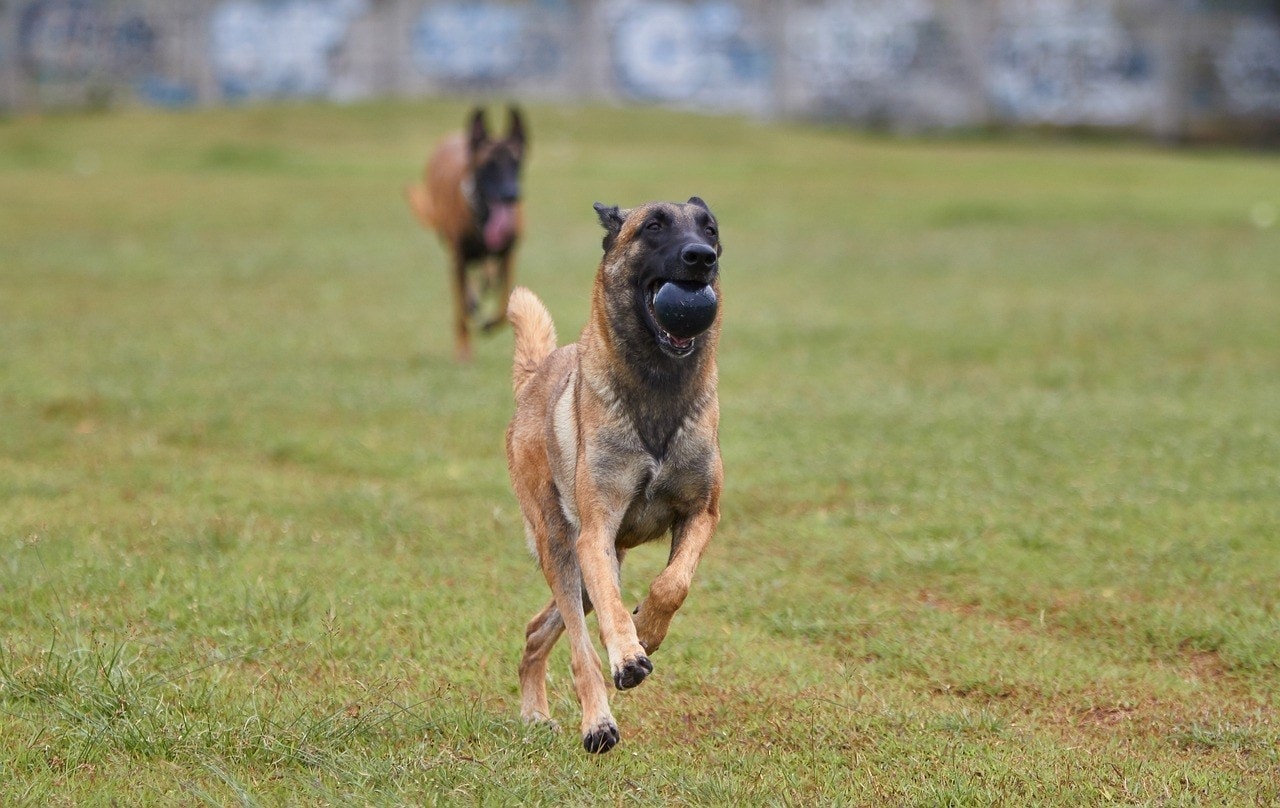
In other words, Mals have high prey drives and do not trust strangers. This is normal for any hard-wired herding breed, but the Belgian Malinois is a poor fit for homes with cats, small dogs, or children. Consistent socialization from puppyhood is also necessary to prevent aggression toward humans and other dogs in adulthood.
For the right owner, the Belgian Malinois makes an excellent companion. They're well-suited to working on a farm or focusing their energy on a canine sport. As long as the Mal has a confident trainer and an outlet for its energy, anything is possible for the brainy breed.
Health
On average, the Belgian Malinois has a lifespan of 10 to 14 years. They're generally healthy but are prone to common large-breed ailments like hip dysplasia, elbow dysplasia, and certain eye conditions.
As with any purebred dog, choosing a reliable, ethical breeder is crucial to ensuring good health and a workable temperament.
Grooming
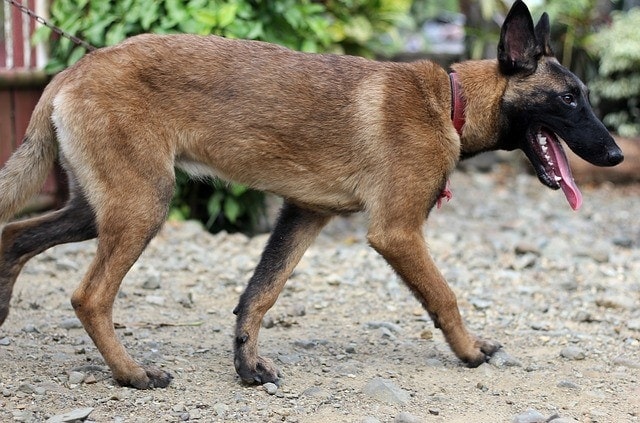
Because the Belgian Malinois has a short, water-repellant coat, their grooming needs are minimal. Brushing their coat once a week should suffice. Keep in mind that the Belgian Malinois is a biannual shedder. During the fall and spring, owners can expect to find plenty of loose clumps of fur.

German Shepherd
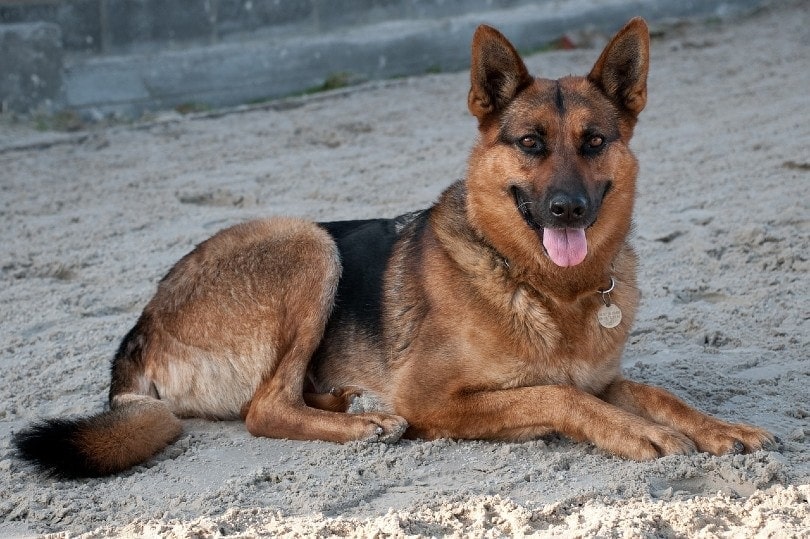
The German Shepherd is a collective of many German herding dogs developed before the 19th Century. While their predecessors varied from place to place, in many ways, the German Shepherd is a modern amalgamation of them all.
Toward the end of the 1800s, many breeders (the most famous of which was Captain Max von Stephanitz) fine-tuned the German Shepherd. Over several decades, the breeders created the first German Shepherd club and refined the breed to its modern iteration. At the time, the German Shepherd was almost exclusively used for herding and guarding livestock.
Like many German breeds, the German Shepherd gained notoriety in the United States in the early 1900s. As World War I and II came and went, however, anti-German propaganda hurt the breed's popularity. Of course, the disdain for the German Shepherd passed, making it one of the most popular dog breeds in the United States.
Today, the German Shepherd is most famous for their work in police K-9 units, but you'll still find them in countless households as a companion dog.
Physical appearance
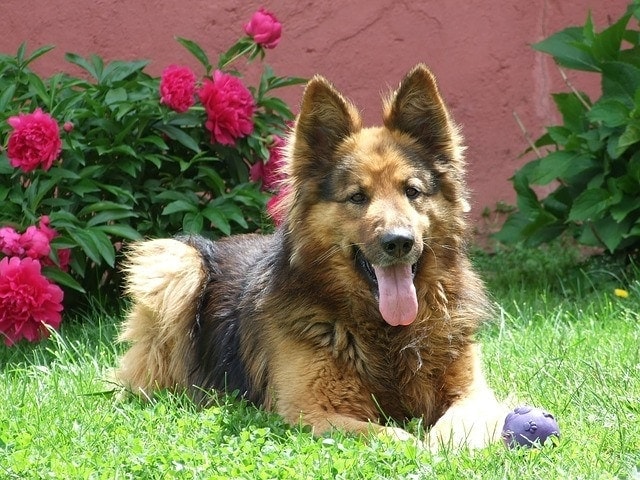
The German Shepherd is known for their proud, curved posture. Despite the breed's size and muscularity, they can move with immense grace. However, females have a slimmer, more feminine appearance than their male counterparts.
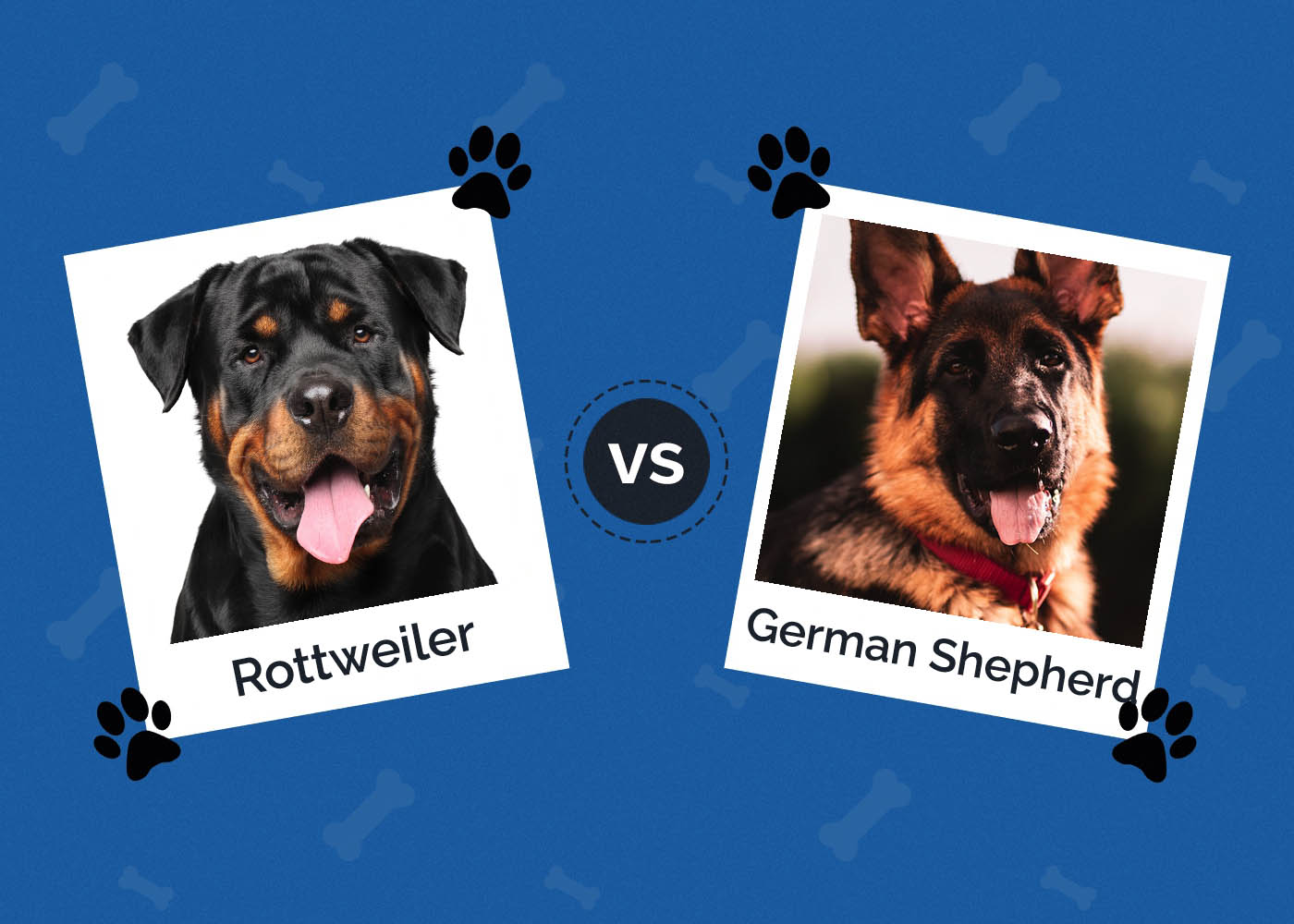
The most common German Shepherd coloration is the bi-colored standard, with distinct black and brown markings across the entire head and body. However, their coats come in several official colors, including all-black, all-white, and almost everything in between.
Like the Belgian Malinois, male German Shepherds are 24 to 26 inches tall, and the females are 22 to 24 inches tall. However, the German Shepherd carries much more weight on their frame. Males weigh in at about 65 to 96 pounds. Females weigh in at 50 to 70 pounds.
Temperament
The German Shepherd's temperament is largely a product of its environment and upbringing. While undertrained and poorly socialized dogs can be hard-headed and even aggressive, properly trained German Shepherds are the ideal working dogs. The breed thrives on having a close relationship with their owner, and they must be allowed to play indoors and participate in day-to-day household activities.
German Shepherds are always on alert, especially around strangers, but early socialization can quell much of the breed's guarding instincts.
Health
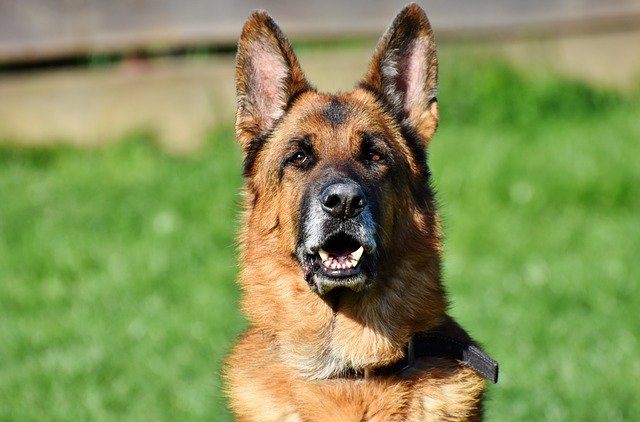
Despite their similarities, the German Shepherd's lifespan is almost half that of the Belgian Malinois. On average, the German Shepherd live to be between 7 to 10 years old.
Because of their size, the German Shepherd is prone to hip and elbow dysplasia, as well as degenerative myelopathy (a disease affecting the spinal cord). They can also develop a condition called bloat.
Grooming
The German Shepherd's coat is slightly longer than the Mal's, but their grooming needs are similar. Weekly brushing should suffice, at least to remove loose fur and debris.
They shed regularly, especially during the changing seasons. More frequent grooming during these times can keep loose furballs at bay.
Belgian Malinois vs German Shepherd: Which Is Right for You?
The Belgian Malinois and German Shepherd both make excellent working dogs. However, one is better suited to life as a family companion. Although the Belgian Malinois certainly impresses with their unmatched focus and work ethic, it's important to remember that this training doesn't come naturally. To put it bluntly, few owners have the skills, experience, or lifestyle appropriate for such a breed.
If you're set on one of these gorgeous dogs and are up for a bit of a challenge, the German Shepherd makes a much better family pet overall. However, with their working heritage, the German Shepherd still has the brains to excel at almost any task! A German Shepherd will be much happier living in the average household, with adequate mental and physical stimulation, than their Belgian cousin.
Have you ever owned a Belgian Malinois or German Shepherd? Are there any important differences (or similarities) we missed? Let us know!
See Also:
Featured Image Credit: (L) nordantin, Shutterstock | (R) Alexander Naglestad, Shutterstock
Get Hepper In Your Inbox


Pet care tips from our vets and experts, straight to your inbox.
You may opt-out at any time. View our Privacy Policy for more information.

Nicole is a lover of animals of all sizes but is especially fascinated with the feline variety. She’s the proud mom of Baby, a Burmese, and works every day so he can relax in the sunshine or by the fire. She’s always had a cat in her home and has spent countless days with others, observing behaviors and softening up even the grouchiest of the lot. Nicole wants to share her kitty expertise with you so you and your cat can live happy, healthy, and care-free.
Join the conversation
Ask a question, share your story, or send private feedback.