Hepper is reader-supported. When you buy via links on our site, we may earn an affiliate commission at no cost to you. Learn more.
Dutch Shepherd vs. German Shepherd: What Are the Differences?
In this article
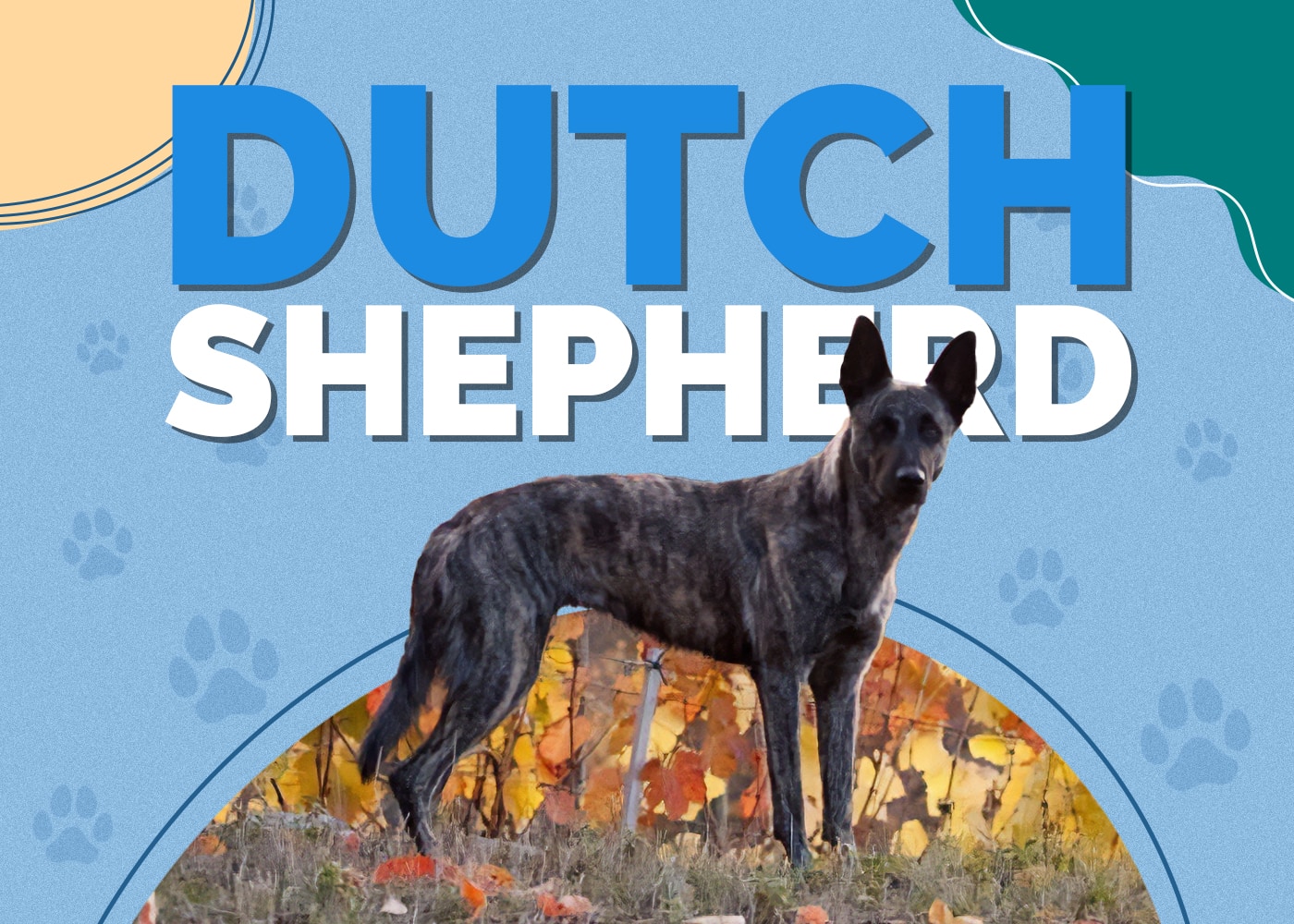
Shepherd dogs are extremely popular as both family pets and working dogs, and while almost everyone has heard of the German Shepherd, their close cousin, the Dutch Shepherd is less well-known in many parts of the world.
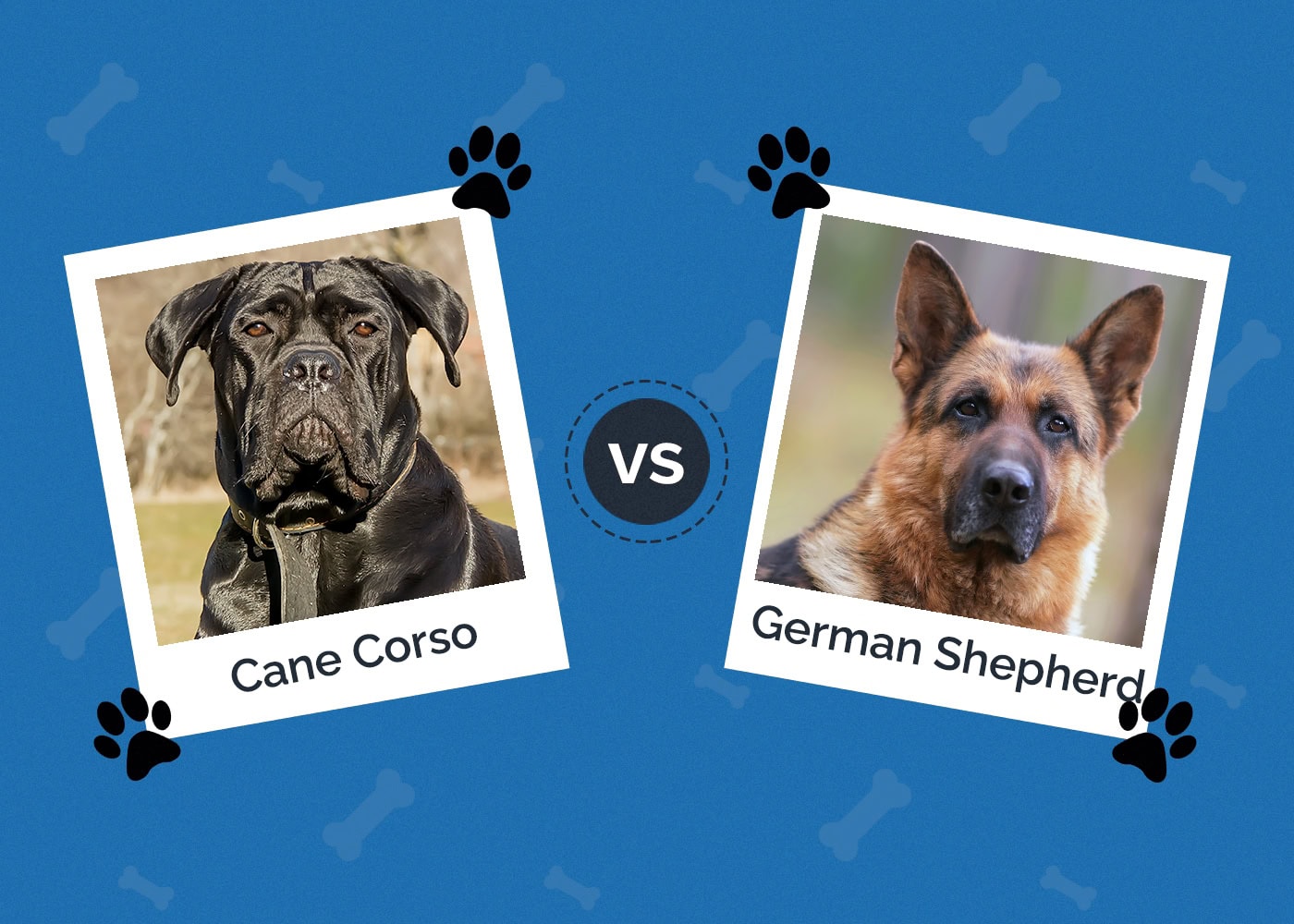
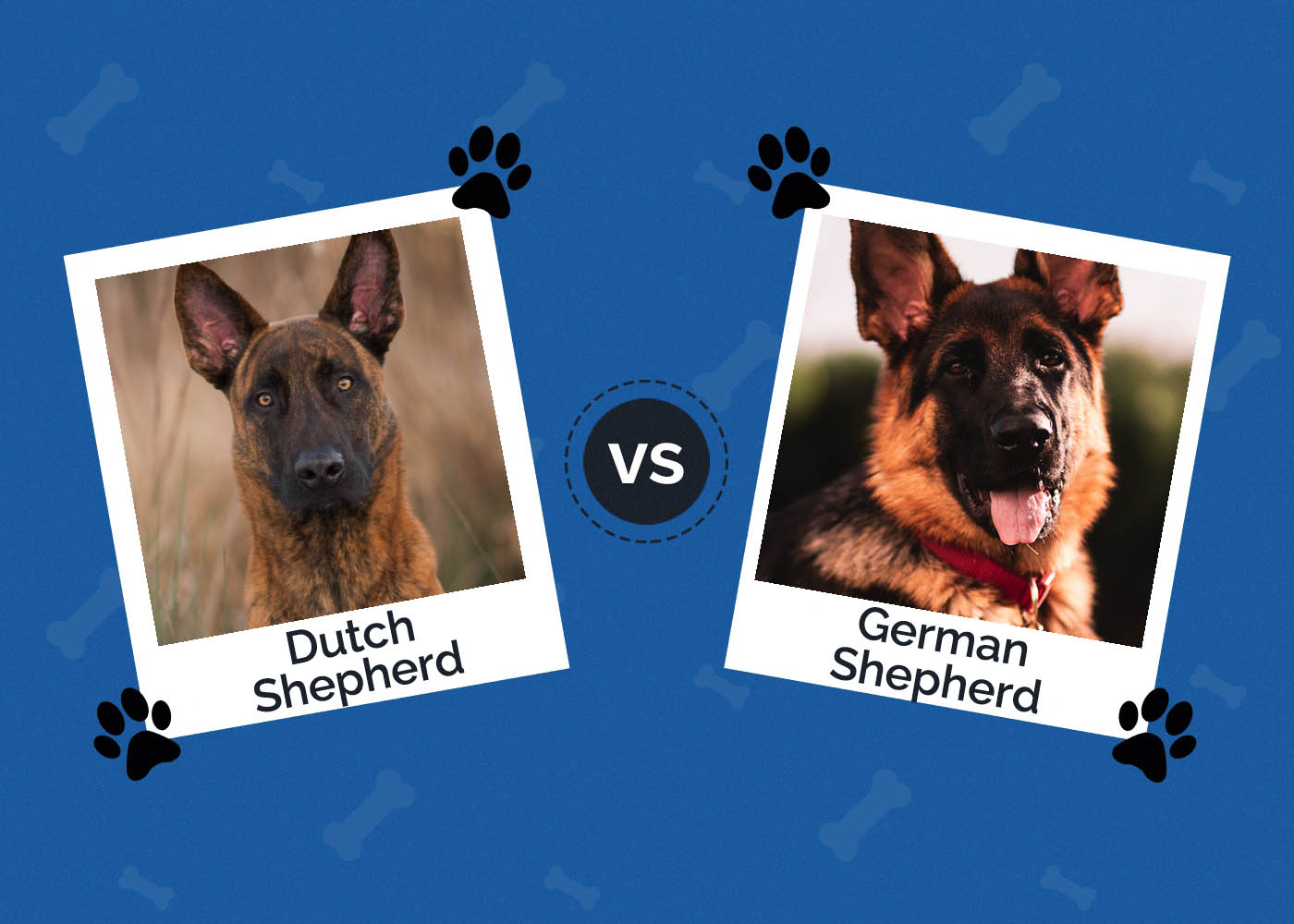
Both breeds share several traits and personality characteristics, and you need only look at a picture of the two breeds side by side to know that they are related. However, they are distinct breeds that were developed in different European countries, and as much as they're similar, they differ in many ways.
While German Shepherds are undoubtedly the most popular of the two (outside the Netherlands, that is), Dutch Shepherds are wonderful dogs. If you are thinking of getting a Shepherd dog, it is well worth taking a close look at both breeds before committing to either one.

Visual Differences Between Dutch Shepherds and German Shepherds
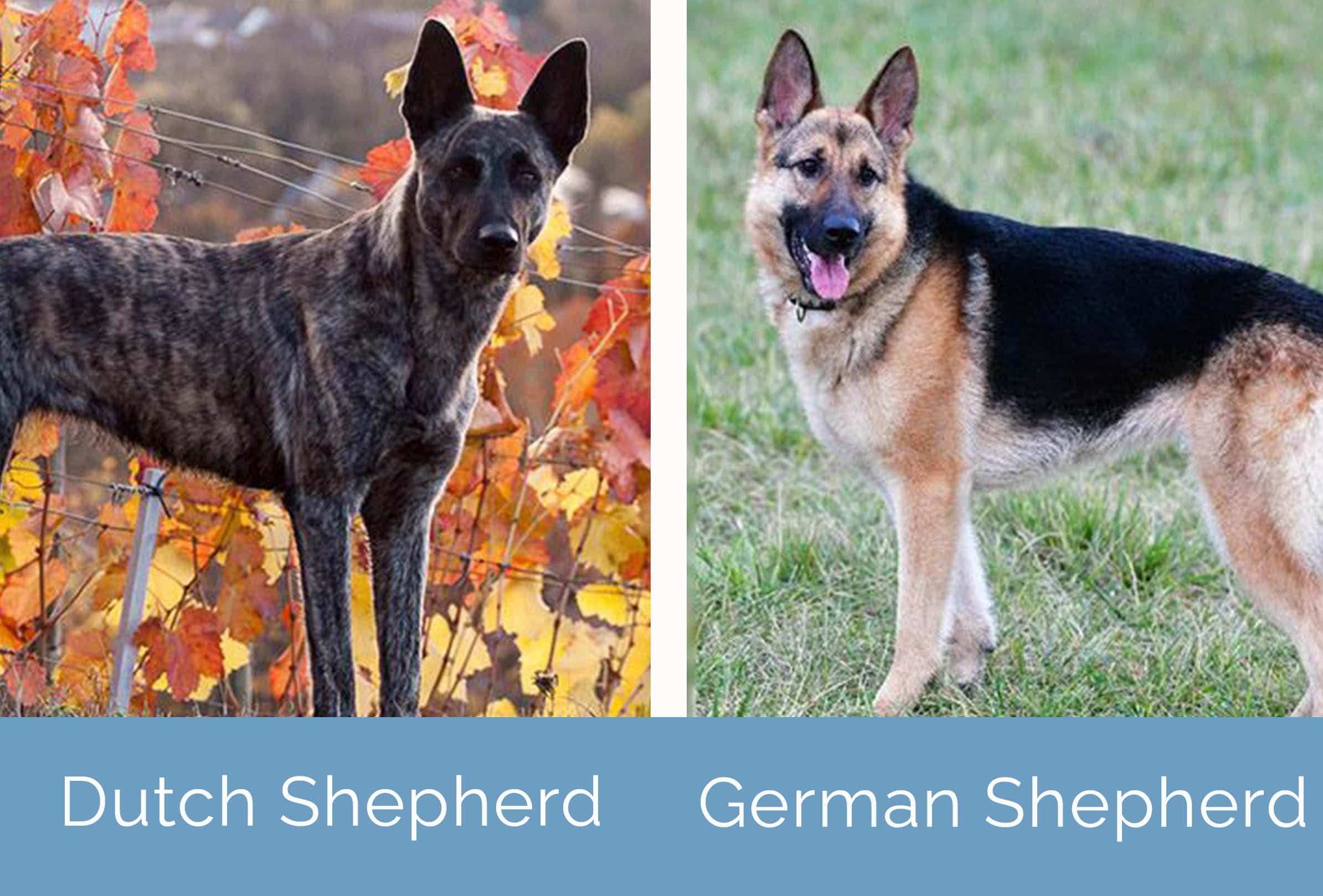
A Quick Overview - Dutch Shepherd vs. German Shepherd

Dutch Shepherd Overview
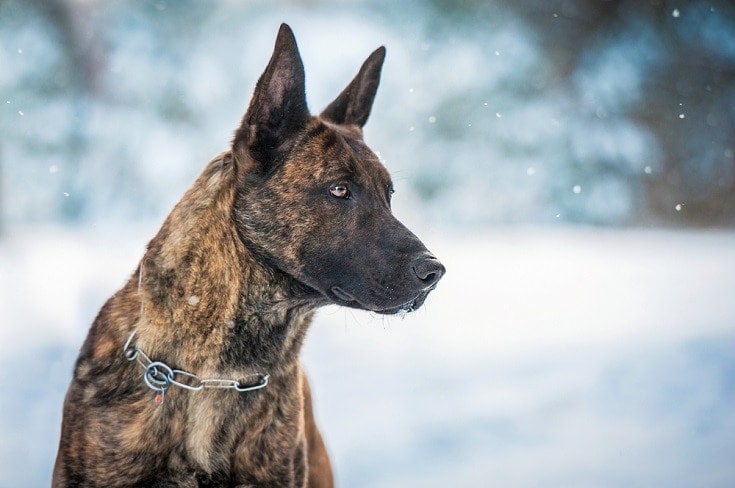
The Dutch Shepherd was developed in the Netherlands as a shepherd’s dog and general farming dog in the late 1890s, with the first registration records of the breed dating back to 1898.
Originally used to guard sheep, Dutch Shepherds are highly adaptable and intelligent dogs that were soon put to work as general farm dogs, as crop protection dogs used to prevent livestock from wandering into fields, as herding dogs, and as guard dogs, and they were even used to pull farm carts. Over the years, as the number of wolves reduced across Europe and sheep farming declined in the Netherlands, the number of Dutch Shepherds also decreased, and by the 1940s, the breed was on the verge of extinction. Thankfully, in recent years, the breed has gained popularity in Europe as both a family pet and a police dog.
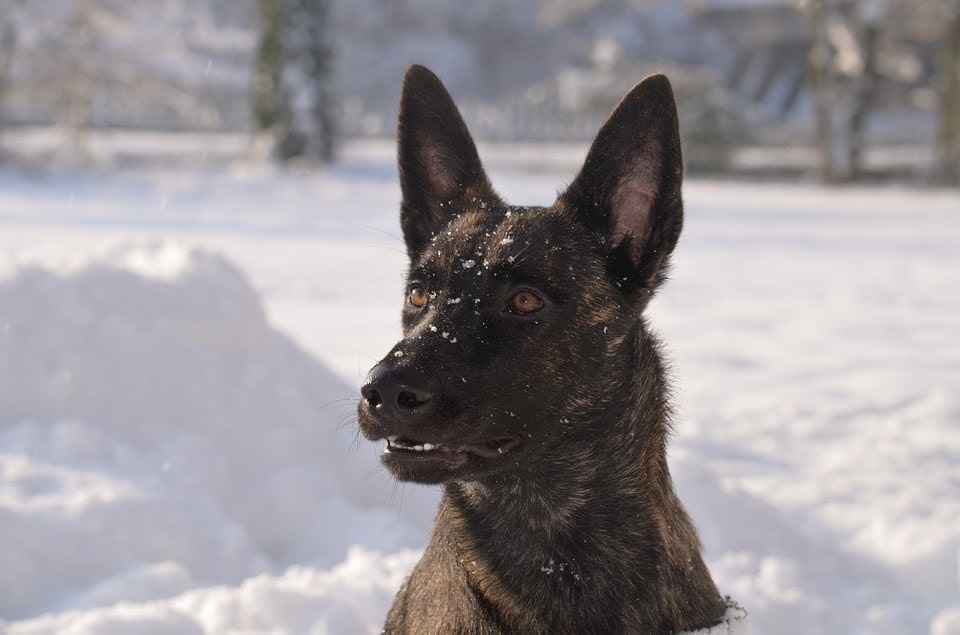
Dutch Shepherds are medium-sized and well-muscled dogs that can have either a short, long, or wire-haired coat.
Personality
Loyal, intelligent, alert, and always watchful, the Dutch Shepherd is a born protector. They follow directions well but are smart enough to learn to anticipate their master’s commands and will act independently once they understand the task that they have been given.
As a family pet, the breed is a big softy at heart and is great with kids, but their protective nature is always there, and they will bravely defend their family and their home from any real or perceived threat. It goes without saying that the breed makes for an excellent family guard dog, yet their soft side allows them to curl up inside at night where they can be close to their family. They typically get on well with other dogs and, provided that they are socialized from a young age, will tolerate most other pets as well.
Training
Being highly intelligent and eager to please, Dutch Shepherds respond well to training, and most will have little trouble mastering basic obedience and will typically enjoy other activities such as dog sports and agility training.
As with most dogs, Dutch Shepherds respond best to positive reinforcement, and you will find your training sessions will be much easier if you praise and reward them when they get things right and never scold or admonish them when they act out or make an error.
Health & Care
Providing your dog with a well-balanced and nutritional diet is perhaps the single most important thing that you can do to help keep your dog fit and healthy. To that end, a Dutch Shepherd will do best when fed a premium quality dry dog food that has been formulated to provide a complete and well-balanced diet for active medium- to large-sized dogs.
They are typically a healthy breed, and provided that they are fed well and get sufficient exercise, you can expect that your dog will live a long and happy life. Of course, there are a few health conditions that the breed is naturally predisposed to, but through careful and responsible breeding practices, most of these can be avoided. For this reason, you should only buy a Dutch Shepherd from a reputable breeder.
Suitability
Dutch Shepherds are suitable for farmers and policing agencies that are looking for reliable, brave, and intelligent working dogs.
They also make fantastic family pets. However, they do need a home with plenty of space to run around. They are not suited to apartment living and will do best with a family that can involve them in every aspect of their daily activities and outdoor-based lifestyle.

German Shepherd Overview
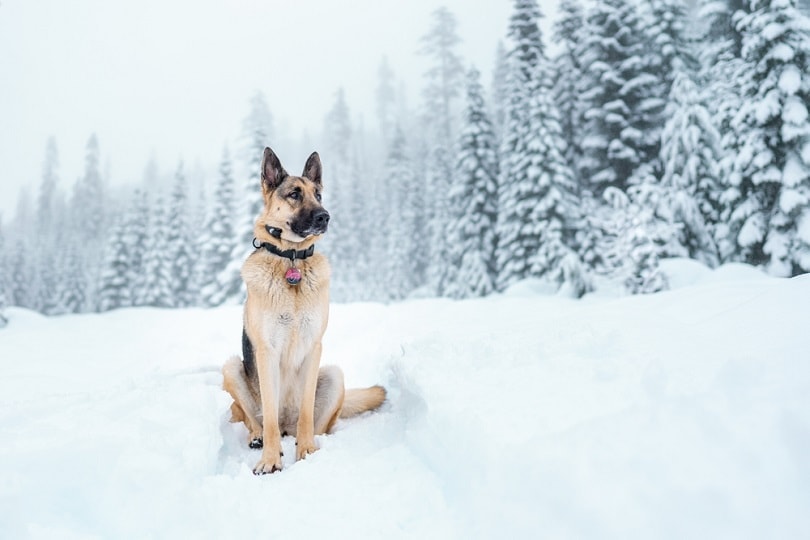
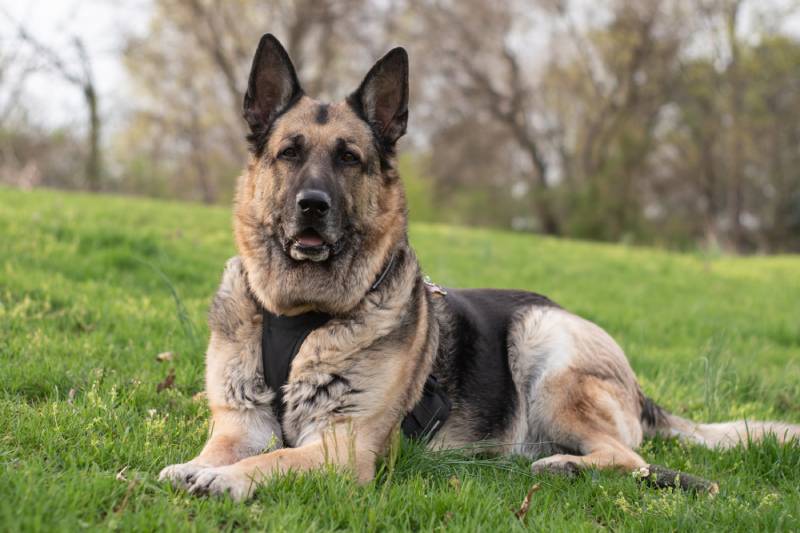
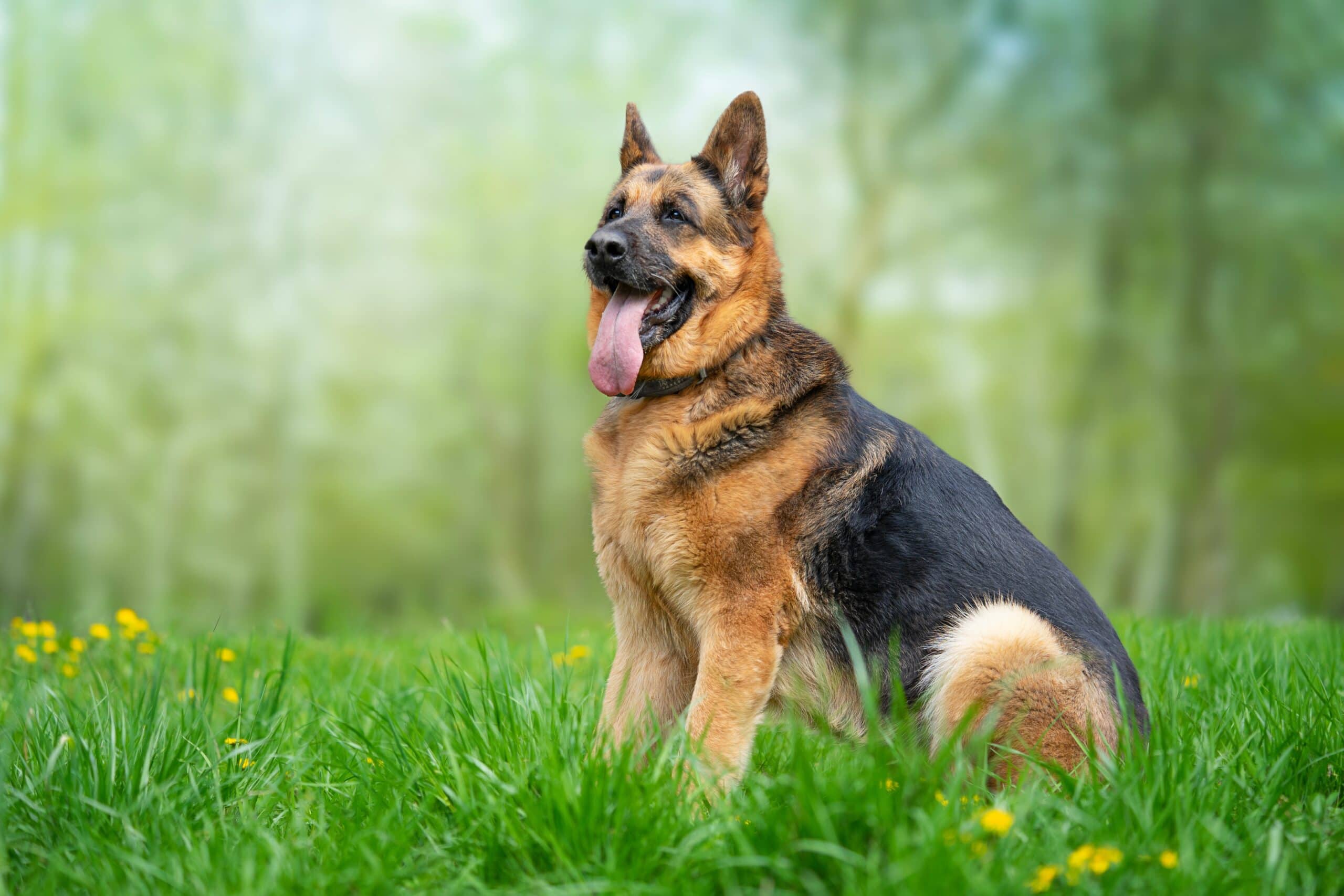
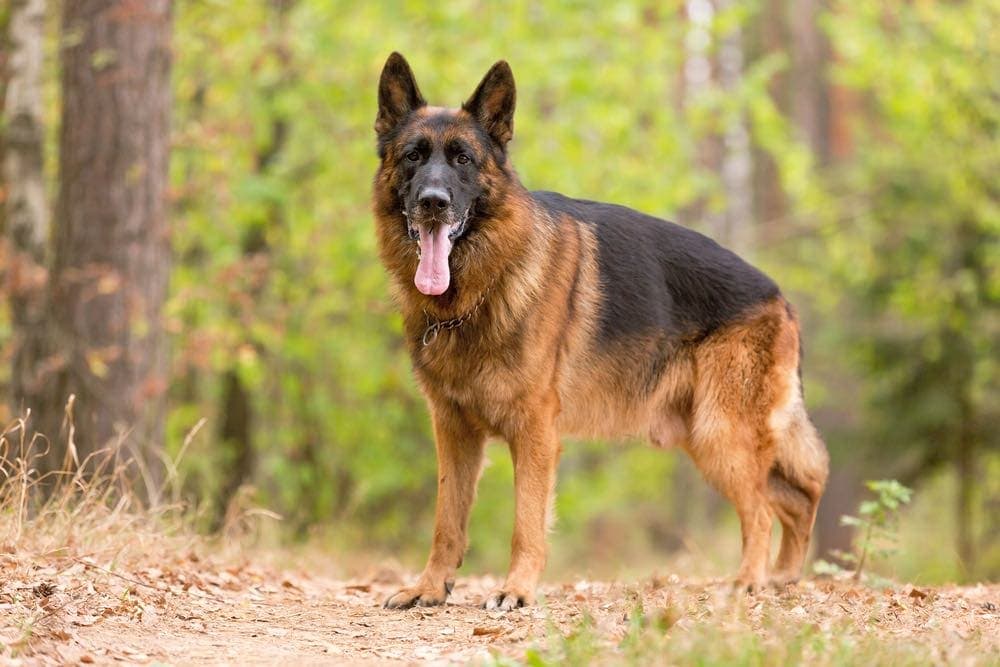
Of the two breeds, the German Shepherd is by far the most well-known and most popular. Larger and heavier than the Dutch Shepherd, the German Shepherd is originally from Germany but has become one of the most popular breeds throughout the world. According to the American Kennel Club, the German Shepherd is the second most popular dog in the United States.
These large, agile, and muscular dogs are known for their intelligence, loyalty, and bravery, and it is little wonder that besides being a champion pet, they have also become the go-to breed for police agencies and militaries around the world.
Like the Dutch Shepherd, the German Shepherd started life as a herding dog. They were first bred in the latter half of the 1800s by a German cavalry officer by the name of Captain Max von Stephanitz. They were later refined and promoted by a core group of breeders in the northern and central districts of Germany. The success of the breed was such that it wasn’t long before the German Shepherd was exported to other European countries, and by the early 1900s, they were also becoming popular in the United States.
Personality
Best known for their intelligence, loyalty, and bravery, German Shepherds are fantastic companions. They love being with their owners and will happily trot around with them all day and then curl up inside beside them at night. While they can sometimes be intolerant of other dogs, German Shepherds are quite affectionate toward their human families and have a real fondness for children. In fact, the more time that they spend with their human family, the happier they tend to be.
Training
German Shepherds are incredibly smart dogs and pick up new things quickly and easily and do best with both positive reinforcement and a game-like learning environment. If you can find a way to turn your training sessions into a game, your German Shepherd will happily play for hours. With a little bit of effort, your pet will even be able to do the most challenging of tasks. They particularly love scent-based games and will usually respond to both treat- and game-based rewards.
The one thing that you absolutely must do with a new German Shepherd puppy is to enroll them in puppy school and give them plenty of socialization when they are young. German Shepherds are large and strong, and an unsocialized adult dog can become a danger to other people and animals.
Health & Care
An active and highly athletic breed, German Shepherds require a great deal of exercise to stay happy. They are typically healthy dogs; however, they can suffer from several hereditary conditions including hip dysplasia, elbow dysplasia, or degenerative myelopathy. To minimize the chances of these, it is essential to buy your German Shepherd puppy from a reputable breeder who carries out the recommended health screenings before breeding.
Suitability
German Shepherds are not suitable for apartment living and will do best with an active family that has a large and securely fenced yard in which they can run about and play. They require plenty of daily exercise and mental stimulation, and in addition to plenty of playtime in their yard, German Shepherds require a long walk or run every day.
The breed is also an exceptionally good police dog or military working dog, and many find homes as working dogs with police agencies and military units around the world.

Conclusion
In many respects, Dutch Shepherds and German Shepherds are remarkably similar dogs. They look alike, were bred to perform the same herding tasks, and make loving and loyal pets. However, there are a few differences between the breeds. Most noticeably, German Shepherds are larger and stronger dogs, but they are also less tolerant of other dogs than Dutch Shepherds. Because of their smaller size, Dutch Shepherds tend to be less intimidating than German Shepherds, which can be an important factor for some people.
German Shepherds are by far the most well-known and popular of the two breeds, and as such, they are likely to be more readily available to purchase than Dutch Shepherds, which can be hard to find in many places. In fact, should you wish to purchase a Dutch Shepherd, depending upon where you live, you may find that your chosen breeder has a long waiting list of potential buyers, and you may have to wait many months or even a year or two to buy one. On the other hand, when comparing the Dutch Shepherd vs. German Shepherd, there are large numbers of German Shepherd breeders in most countries, and puppies are usually readily available.
Featured Image Credit: (L) Three Dogs photography, Shutterstock | (R) Alexander Naglestad, Unsplash
Get Hepper In Your Inbox


Pet care tips from our vets and experts, straight to your inbox.
You may opt-out at any time. View our Privacy Policy for more information.

Nicole is a lover of animals of all sizes but is especially fascinated with the feline variety. She’s the proud mom of Baby, a Burmese, and works every day so he can relax in the sunshine or by the fire. She’s always had a cat in her home and has spent countless days with others, observing behaviors and softening up even the grouchiest of the lot. Nicole wants to share her kitty expertise with you so you and your cat can live happy, healthy, and care-free.
Join the conversation
Ask a question, share your story, or send private feedback.