Hepper is reader-supported. When you buy via links on our site, we may earn an affiliate commission at no cost to you. Learn more.
5 Types of Dog Crates & Their Differences (with Pictures)

In this article
When welcoming a dog into your home, there are many things that you need to do to prepare for the arrival of your new furry companion. One of them is particularly important: buying an adequate crate for your dog.
The crate will be a place for your dog to sleep and rest, and it can also aid with potty training and provide a safe spot for your canine.
But how can you choose the right type of dog crate for your dog? What are the available types that you can choose from?
In this article, we talk about the five main types of dog crates, mentioning their pros and cons and helping you discover how to choose the best one for your dog.

Why Do Dogs Need Crates?
Dogs are considered den animals, which is why they need a peaceful shelter where they can sleep, rest, and get away to relax and unwind. For pet dogs, a crate functions as that necessary, cozy spot in the house.
The 5 Types of Dog Crates
1. Soft-Sided Dog Crate

| Material: | Soft fabric |
| Pros: | Great for small dog breeds, lightweight, easy to assemble, usually foldable, affordable |
| Cons: | Unsuitable for large dog breeds, hard to clean, not sturdy |
Soft-sided dog crates are excellent for people who have small breed dogs. These crates are lightweight, affordable, and easy to assemble.
They are usually made of soft fabric, which is why they’re unsuitable for large dog breeds and dogs that like to chew on things. Also, soft-sided crates are not sturdy and can be hard to clean, so be sure to consider that before getting this type of crate for your dog.
2. Metal Dog Crate

| Material: | Metal, metal wire |
| Pros: | Great for large dogs that like to chew, sturdy, durable, good air circulation and visibility, affordable |
| Cons: | Not aesthetically pleasing, heavy, can be hard to assemble |
Metal crates are ideal for people looking for something that’s durable and sturdy and won’t cost a fortune. These crates are perfect for large dogs that like to chew on things, as they’re made out of metal and metal wiring.
Metal crates are usually affordable, and they provide great air circulation and visibility for your pet. However, these crates tend to be aesthetically unpleasing. Another downside is that they are often heavy and hard to assemble.
3. Plastic Dog Crate
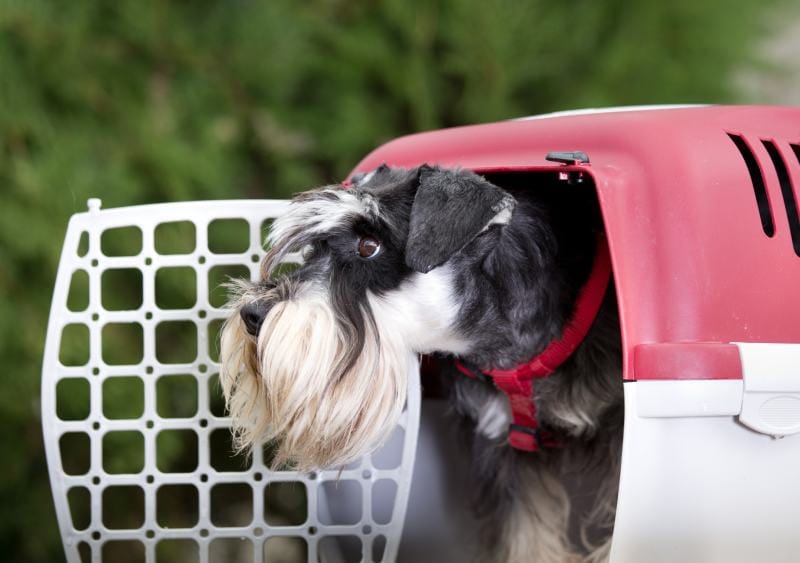
| Material: | Plastic |
| Pros: | Affordable, great for traveling, easy to clean, easy to transport |
| Cons: | Not that durable, could be unsuitable for large dog breeds |
Plastic dog crates are good for people looking for something sturdy yet affordable. These crates are made of plastic and can be ideal for anyone with a small to medium-sized dog.
While these crates are relatively durable, they can still potentially break. Therefore, it’s not recommended to use these crates for large dog breeds.
4. Heavy-Duty Dog Crate
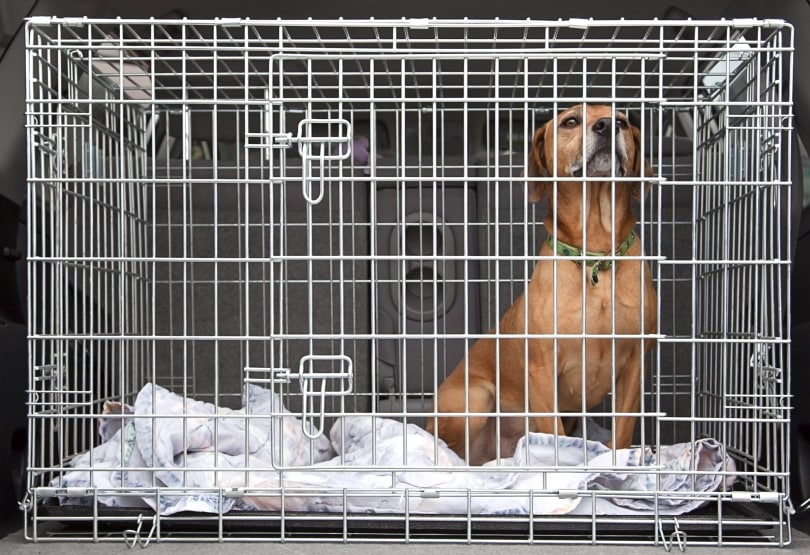
| Material: | Metal |
| Pros: | Great for large and giant dog breeds, for dogs prone to escaping and running away |
| Cons: | Heavy, expensive |
Heavy-duty dog crates are similar to regular metal crates, but they’re even bulkier, heavier, and more durable. Due to their size, these crates are perfect for large and giant dog breeds, especially ones that like to run away or escape.
Unfortunately, these crates are heavy and expensive, so you’ll need to spend a decent amount of money on them and their transportation. You could use these crates for smaller dogs, but there’s no point in doing so, as such breeds don’t need that much space and protection.
5. Wood Dog Crate
| Material: | Wood |
| Pros: | Aesthetically pleasing, can come in a variety of forms (e.g., wood furniture crates), durable, sturdy |
| Cons: | Expensive, heavy, hard to clean, could be hard to assemble |
Wood dog crates are usually the prettiest and the most expensive type of dog crates. They look aesthetically pleasing and can come in various forms. For example, many people make wood crates that are both beautiful and functional.
While pricey, they’re typically well worth the cost. Wood is extremely durable and sturdy, so this type of crate represents a good investment.
However, keep in mind that these crates can often be hard to assemble and clean, though it’s usually not too complicated.

How to Choose the Right Crate for Your Dog
When choosing a crate for your dog, you should consider both comfort and durability to ensure that you’re getting the most for your money and providing an adequate rest spot for your pet.
The crate needs to be large enough for your dog to comfortably turn around, lie down, sit, stand, and perform similar activities. That said, you should ensure that the crate is not too large, or your dog might be tempted to use one end as a bathroom. The most important thing is that your dog is comfy inside the crate and that you can easily clean it.

Conclusion
Dog crates come in several different options and materials, so it all comes down to choosing one that’s appropriate for your canine. Be sure to consider your dog’s size, and ensure that there’s enough space for your dog to comfortably do their daily activities.
Featured Image Credit: Leszek Glasner, Shutterstock
Get Hepper In Your Inbox


Pet care tips from our vets and experts, straight to your inbox.
You may opt-out at any time. View our Privacy Policy for more information.

Visnja is a content writer that covers various topics such as DIY, pets, home improvement, travel, gardening, and more.
She is a young mom and a college student, who didn’t have enough time to balance her personal and work life, so after multiple years of working a regular 9 to 5 job, she decided to pursue her passion and make a living out of it. She has been writing for a couple of years, helping people find valuable and interesting information online.
Join the conversation
Ask a question, share your story, or send private feedback.