Hepper is reader-supported. When you buy via links on our site, we may earn an affiliate commission at no cost to you. Learn more.
What to Put in a Dog Crate for Safety & Comfort: Vet Approved Tips


In this article
Crate training is a widely used method for training dogs and is proven to be one of the best strategies for fast and efficient housebreaking. This type of training relies on your dog’s natural instincts to teach them the rules and the commands you want them to learn.
Knowing what to put in your puppy’s crate and what to avoid putting in there will help crate training be as comfortable and natural as possible for your dog, and it will ensure your pup learns quickly and in a positive and encouraging manner. We'll go over the basics of what should and shouldn’t be added to your dog’s crate, and this will make sure your crate training is optimized for success and comfort. Here's what to put in dog crates—and what to avoid at all costs!

What to Put in Dog or Puppy Crates:
Should You Put Bedding in Your Dog’s Crate?
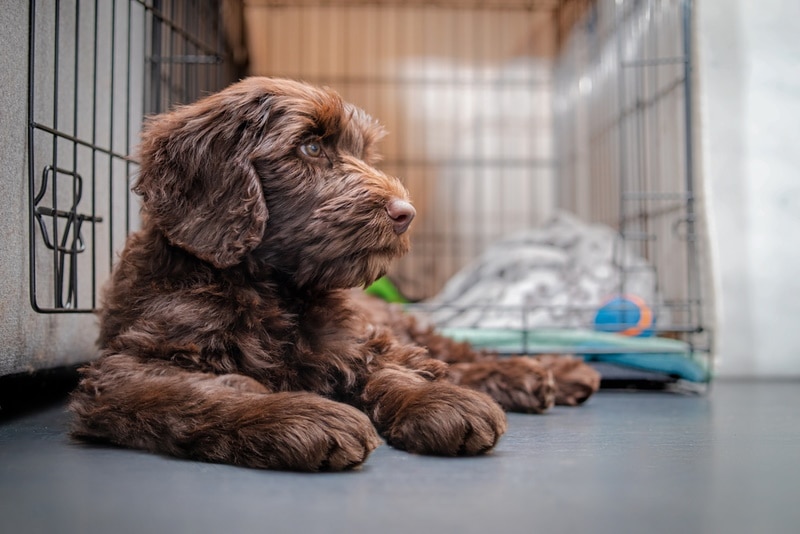
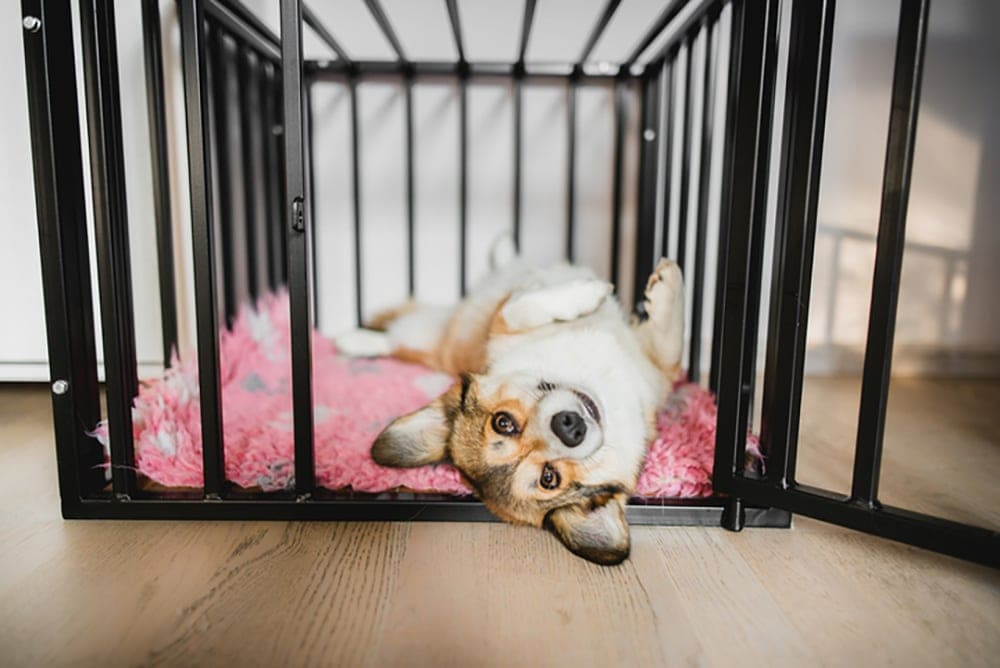
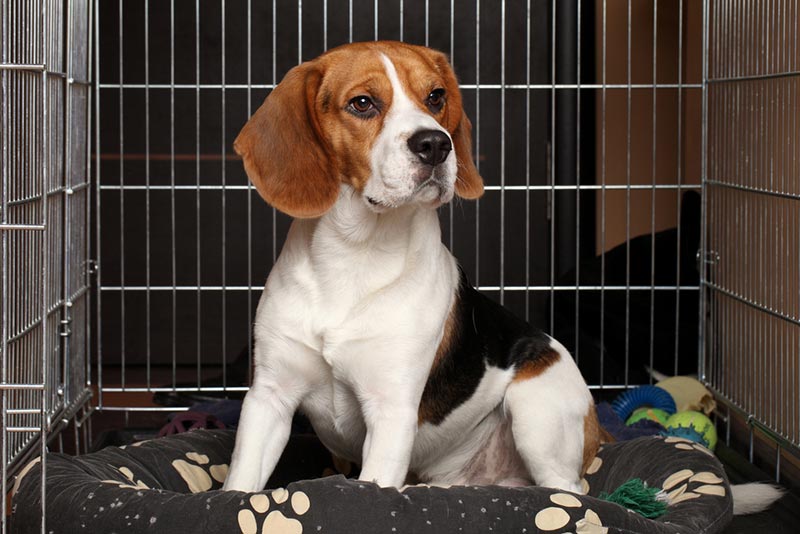
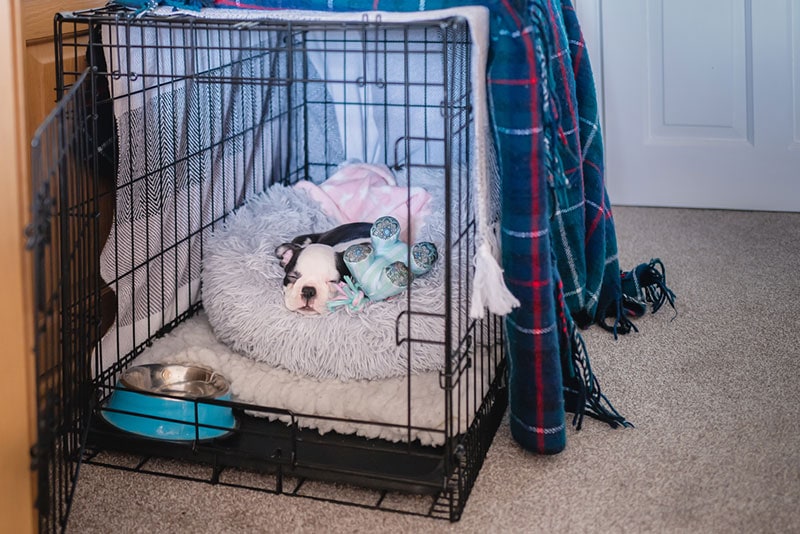
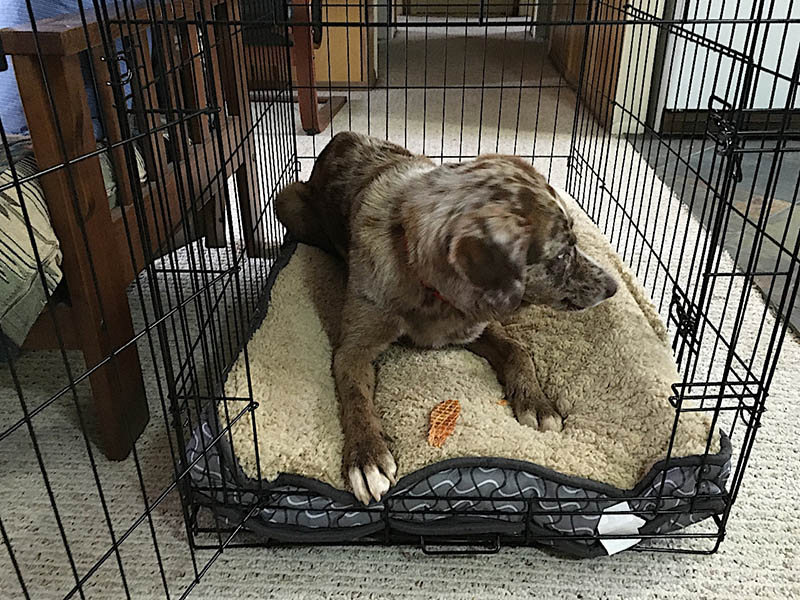
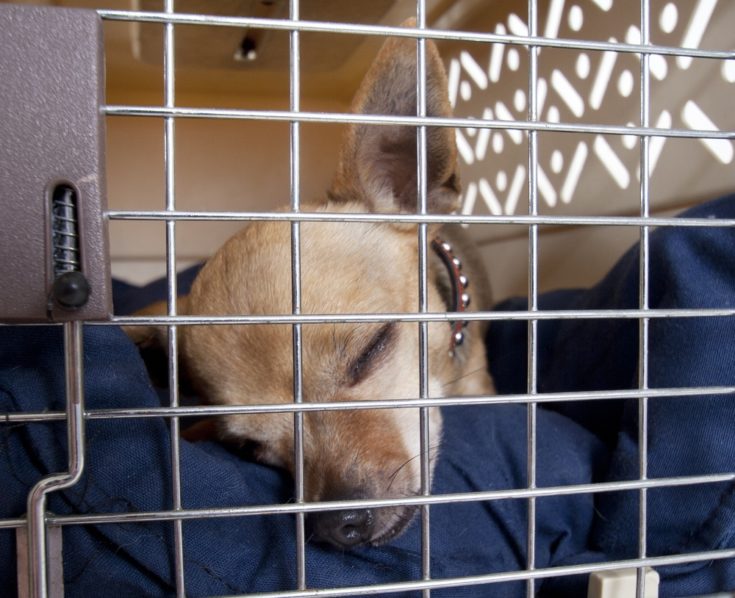
The first question many people have is whether or not bedding should be included in your pup’s crate, and if so, what kind. The answer is simple: you should absolutely include bedding. Many people, unfortunately, tend to use the crate as a punishment or simply to prevent accidents around the house. The goal of having a crate is to create a safe and comfortable place for your pup to escape from stimuli throughout the day, and to provide a cozy and safe place at night to sleep. To appeal to both of these goals, you’ll want bedding in your dog’s crate at all times.
So, what kind of bedding should you include? First and foremost, the bedding you put in your dog’s crate should be comfortable. You want the crate to be a place your dog likes to be and feels safe, so soft bedding that provides comfort is your best option.
No matter the age of your dog, the bedding you choose should also be safe. This means there should be no accessible zippers, plastic edges, or other pieces that your dog could potentially chew off and choke on. Having a bed with no choking hazards is especially important for puppies and dogs that have chewing tendencies.
If you’re crate training a puppy or young dog, you’ll also want to choose bedding that is waterproof. Accidents happen, and being prepared for them will make your life and your cleaning process easier! Choose waterproof bedding for puppies or senior dogs who are prone to accidents.
Having trouble finding the perfect bed that’s safe, comfortable, and waterproof? We recommend the Plush Orthopedic Pillow with Removable Cover. This bed is rectangular, so it will fit nicely in your pup’s crate, it’s super comfortable, only has a zipper on the bottom which will be inaccessible to your pup, and the whole bed is waterproof with a washable cover. Your pup will love it for its comfort, and you’ll love it for its convenience.
Should You Put Toys in Dog Crate at Night?
The short answer is, “yes!” You want your dog to be comfortable, and you also don’t want them to be bored. Including some dog toys in the crate is a great way to stimulate your pup mentally and keep them occupied and happy.
Just like with bedding, you’ll want to ensure that the toys you put in your dog’s crate are safe. With toys, this means no squeakers or other noisemakers in plush toys, no buttons, zippers, or other hard pieces that could be choking hazards, and no plush or stuffed toys that could easily be ripped apart into pieces that can be swallowed.
This can be a tall order for dog toys! We would recommend getting a puzzle toy like the West Paw ZogoFlex Toppl Tough Treat Dispensing Dog Chew Toy. These treat dispensers will keep your pup engaged and interested, they’ll stimulate them mentally, and they’re safe and virtually chew-proof, especially for puppies.
If you have a dog that isn’t a big chewer, you can include some plush toys during the day if you can keep an eye on your pup to make sure they don’t resort to pulling it to pieces. For some daytime stuffed companionship, we’d recommend the Kong Cozie Ultra Elephant Dog Toy. It should be noted that this toy does have squeakers, so you should only keep this toy in your pup’s crate when you can supervise them. The material is very durable and strong, however, and it will likely stand up to your puppy's chewing. There are no hard pieces either, so this is a great option for a daytime toy to keep your dog entertained.
Should You Leave Food or Water in Your Dog’s Crate?
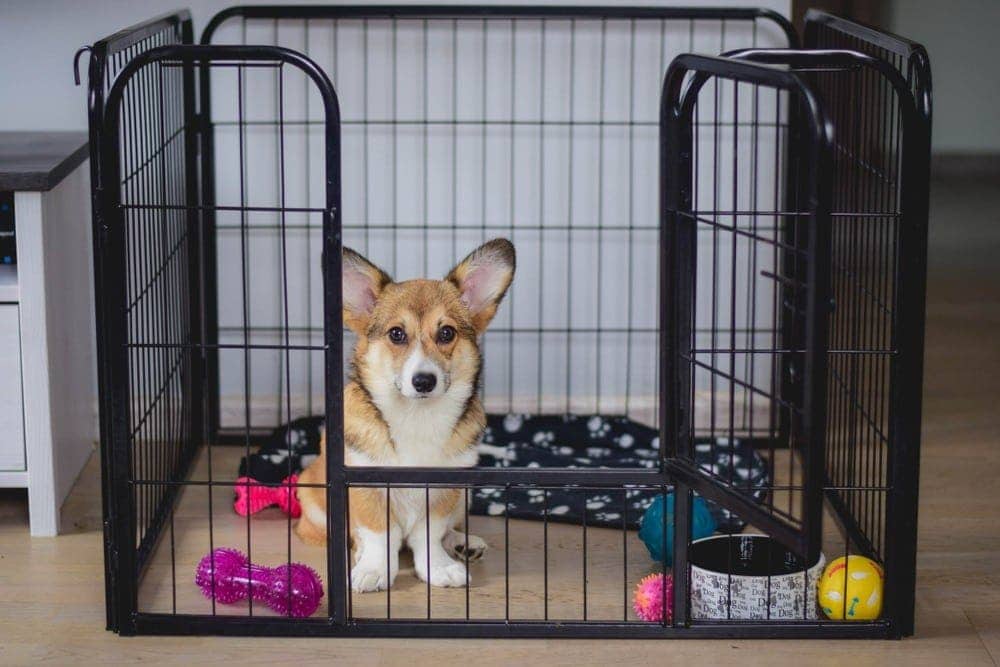
Generally speaking, food and water should not be left in your dog’s crate. Bowls can easily be spilled and create a big mess, and neither you nor your puppy—who has to lay in the mess—wants that!
Your dog should have access to food and water outside of their crate during the day when you’re home, and the crate should be a place for them to retreat and relax, not to eat and drink. If you go out and leave your dog in the crate for a short time, they will be fine without food and water as long as they had access to them before you left.
If you’ll be out for an extended period of time, you need to have someone come in and let your puppy out. Dogs shouldn’t be left in crates for hours at a time during the day anyway, as they can become sad, depressed, or anxious. They’ll also need food, water, and the ability to relieve themselves, so they should be let out and given access to sustenance and an outing to go to the bathroom.
Leaving food and water inside your pup’s crate can also lead to accidents. If your puppy drinks too much while locked in their cage, they’re more likely to urinate in there. This will of course create a mess for you to clean up, but your poor pup will also have to sit in their own mess, which definitely should be avoided.
You should skip the food and water unless your dog has a medical condition that requires constant access to water. If your pup has diabetes, a urinary tract issue, or is prone to urinary stones like the Dalmatian is, you should consider a lickable bottle rather than a bowl.
Bottles won’t spill and create a mess or a wet bed for your puppy, so they’re a better fit for your dog’s crate. The Choco Nose No-Drip Dog Water Bottle is a great option if your pup needs access to water while in their crate. This bottle is drip-resistant, chew-proof, easily attachable and detachable, and it hangs on the outside of the crate so your pup won’t have access to the plastic bottle for chewing.

What Should You NOT Put in Your Dog’s Crate?
Aside from water and food, there are several other things you’ll want to avoid putting in your dog’s crate.
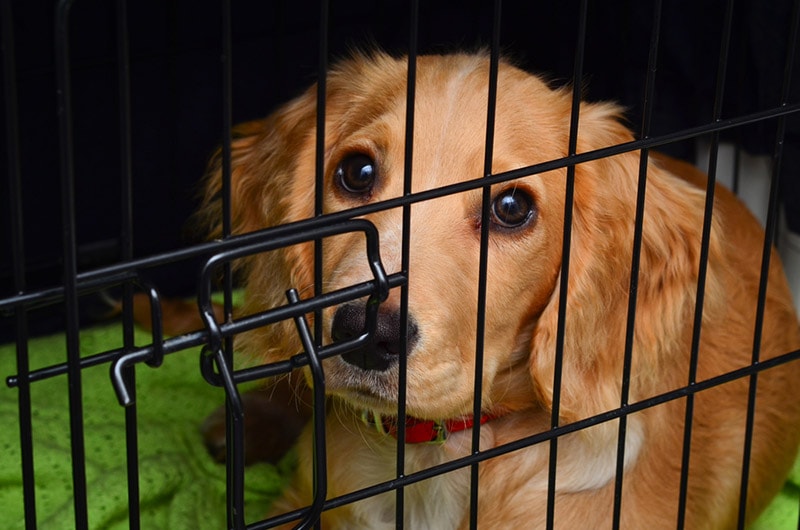
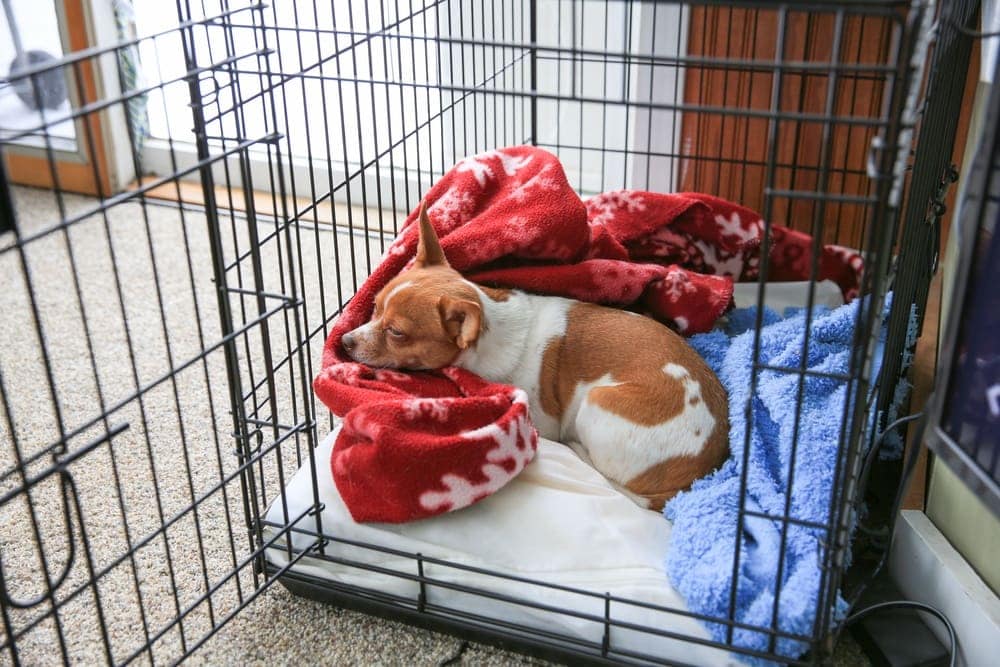
First, don’t let your pooch in their cage with a collar on. Collars have buckles, clips, hooks, and tags that can easily get caught in the bars of the crate. Your dog’s collar getting snagged on the crate could be as simple as a minor annoyance, but in the worst case, it could cause strangulation. It’s very unsafe to allow your pup in their cage with their collar on, so you’ll want the crate to be a strictly no-collar zone for your dog.
While you probably know not to put anything with power cords in your dog’s crate, you should also make sure there are no cables around the crate that your pup could pull inside and chew on. This can obviously be extremely dangerous and lead to electrocution and even fatality. Be very careful not to allow anything with power cords, batteries, or wires in or near your dog’s crate.
A popular product for puppies and senior dogs is a heating pad, so some people think it’s okay to add one to their dog’s crate. After all, these provide additional warmth for your dog and can be made safely with metal-wrapped, chew-proof cords. However, leaving a heating pad in your dog’s crate will mean that they can’t get away from the heat if the cage is closed. You want the crate to be as comfortable as possible for your four-legged friend, but heating pads can quickly make the space too hot and even unsafe in some cases. You can leave heating pads outside of the crate during the day, but you should never place these inside the crate.

Conclusion
Your dog’s cage should be a safe and comfortable place for them, and it should include comfortable bedding and stimulating toys that won’t pose a choking hazard. Adding these things will make for a space your pup will enjoy and feel safe in, and this will help make crate training more successful for you and your pooch. Stay away from food, water, collars, leashes, power cords, batteries, and anything that could potentially be a choking hazard.
Featured Image Credit By: Hilary Halliwell, Pexels
Get Hepper In Your Inbox


Pet care tips from our vets and experts, straight to your inbox.
You may opt-out at any time. View our Privacy Policy for more information.
Nicole is a lover of animals of all sizes but is especially fascinated with the feline variety. She’s the proud mom of Baby, a Burmese, and works every day so he can relax in the sunshine or by the fire. She’s always had a cat in her home and has spent countless days with others, observing behaviors and softening up even the grouchiest of the lot. Nicole wants to share her kitty expertise with you so you and your cat can live happy, healthy, and care-free.
Join the conversation
Ask a question, share your story, or send private feedback.