Hepper is reader-supported. When you buy via links on our site, we may earn an affiliate commission at no cost to you. Learn more.
Bleeding Heart Tetra Breeding: Complete Guide & Pictures
In this article
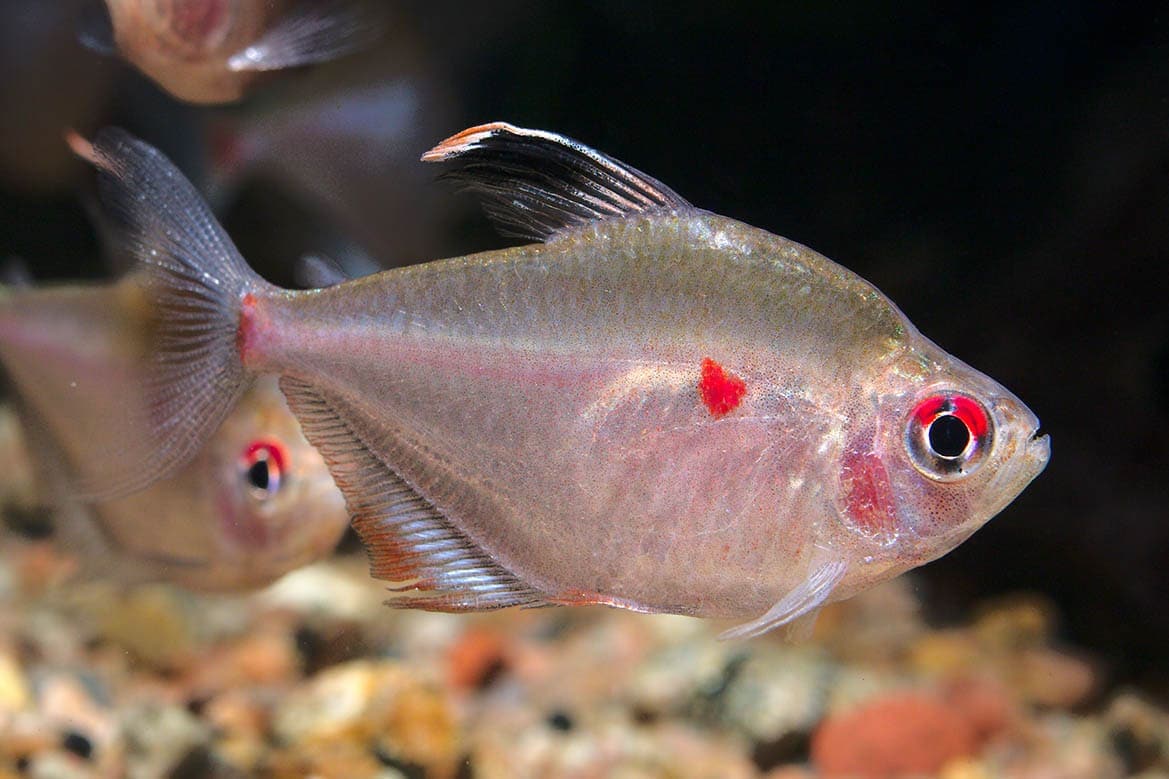
The bleeding heart tetra is a really cool aquarium fish to have, mainly because they do kind of look like a bleeding heart. That being said, they're fairly expensive, so if you want multiple bleeding heart tetras you either have to spend a decent amount of money or breed them yourselves.
Bleeding heart tetras are a little difficult to breed, but it is doable. So, let’s get to it and talk about everything there is to know about bleeding heart tetra breeding.

About The Bleeding Heart Tetra Fish
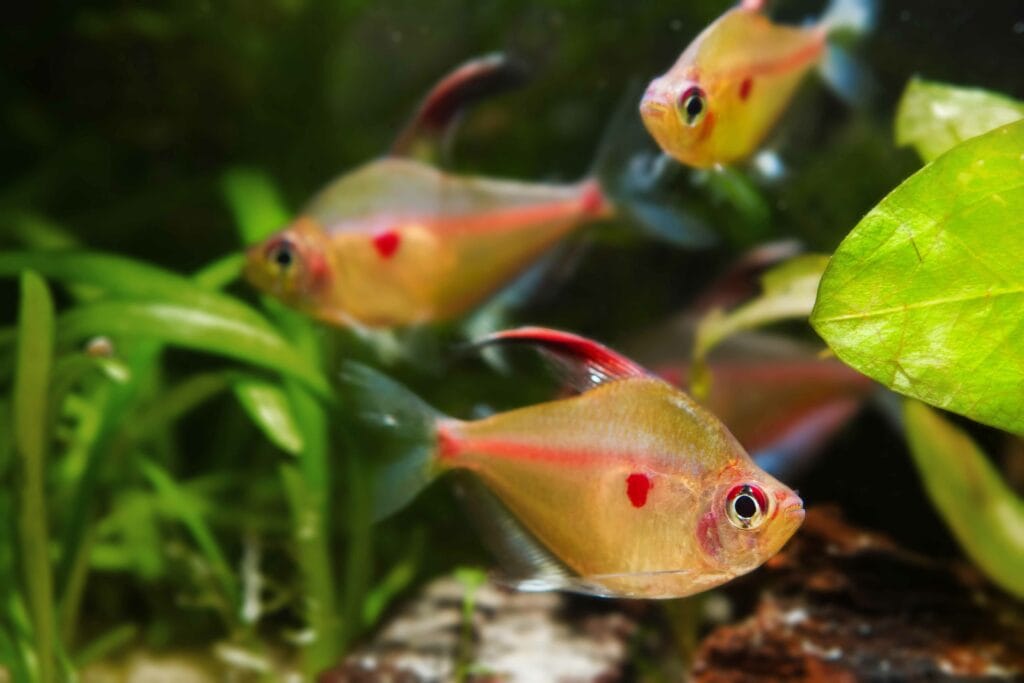
The bleeding heart tetra is native to South American countries such as Columbia and Peru where it inhabits densely vegetated areas in creeks and bends in rivers. They like slow-moving waters and they definitely like a lot of plants. This fish can live for up to 10 years in captivity and usually grows to around 2.5 inches in length. They grow to around 3.5 inches in the wild. This is a stocky, wider, and shorter species of tetra fish.
It’s a warm-water tropical fish that likes relatively soft and acidic water. They are easy to feed because they will eat pretty much anything they can get into their mouths, whether flake or pellet, or whether vegetable or animal-based. They are relatively easy to care for, which is something that cannot be said for breeding the bleeding heart tetra.
Bleeding Heart Tetra Breeding
We have broken this up into the important and key factors to maximize breeding success;
Is It Difficult?
Breeding the bleeding heart tetra is a pretty difficult task to accomplish, not impossible, but quite difficult. Also, the fry tend to be pretty hard to raise as well. That being said, if you follow our instructions, tips, and listen to what we have to say, you should be able to do it without a hitch.
One of the first things to not is that females tend to be very picky and ignore the males. This happens fairly often. Most people find that the best way to breed these little guys is by keeping them in groups. Something like 3 males and 3 females should be just fine. This way they can pick their own mates which will greatly increase the chances of them breeding with each other.
Tank Requirements For Breeding
If you want your bleeding heart tetra fish to breed, you will need to set up a fresh tank with at least 20 gallons of water in it. Larger tanks work better for this, so if you can, aim for a 30 or 40-gallon breeding tank. The next thing to know is that females will not deposit their eggs just anywhere. They need to have a lot of things like java moss, spawning mops, and fine-leaved plants present. They like to dump their eggs on these things. You could even use some kind of mesh to let the eggs fall through while keeping the parents at bay.
Light Sensitivity
Both the eggs and the young fish fry are extremely sensitive to light, so the breeding tank should be kept fairly dim. A bit of illumination is fine, but not too much. You can cover the tank or you can add some floating plants to block out the majority of the light from the top of the tank.
Water Quality / pH Level
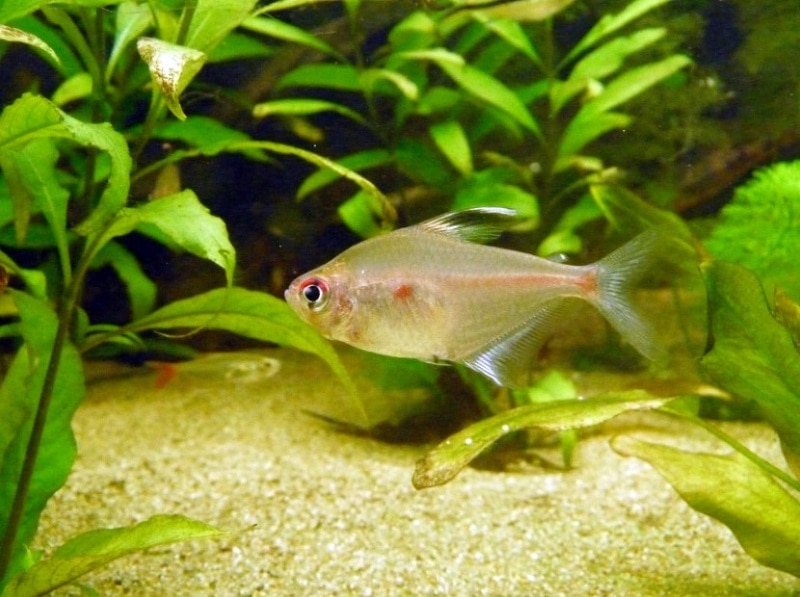
The next thing that's important is the water quality. The water needs to be very soft with a low dH level. Also, the water should be slightly acidic, with the ideal pH level being between 5 and 6.5. In order to spawn, the water should also be fairly warm. Somewhere between 80 and 68 degrees Fahrenheit (27 to 30 degrees Celsius) will do just fine.
The water does need to be fairly clean, so you should use small air filter, preferably a sponge version. You might also want to filter the water through aquarium-safe peat and add some kind of aeration into the mix too. A higher level of oxygen will spur the fish to mate while also ensuring that the eggs and fry can breathe well.
You will know when the female is ready to deposit her eggs because she will become pretty fat due to being full of eggs. On the other hand, when you realize that it is time, you should keep the male separately in the breeding tank to condition him.
Feeding Tips For Breeding
Make sure to feed both the male and the female lots of small living foods such as bloodworms, brine shrimp, daphnia, and other such foods to get them ready. After a few days of doing this, introduce the female into the breeding tank where the male has already been for a few days. The male and female should mate within the next day or two. This usually happens in the early morning within the densest of vegetation.
The Breeding Process / Eggs
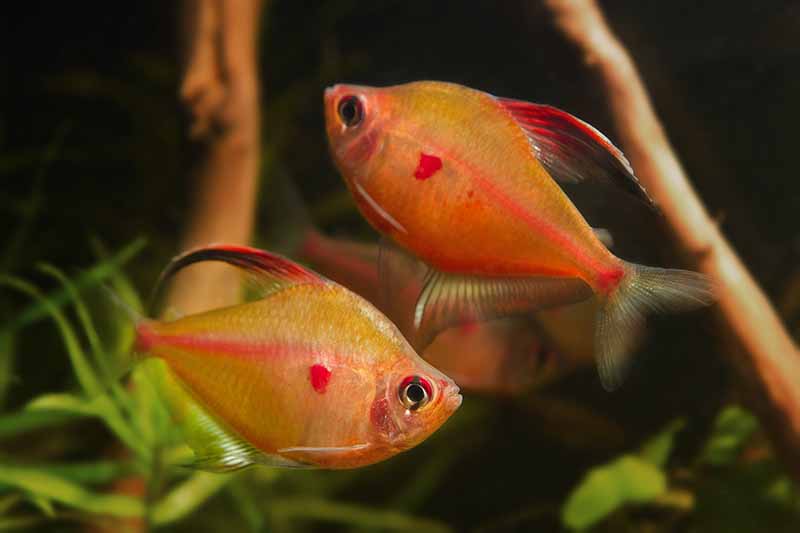
The male and female will press their sides together, the female will quiver/shake, and deposit her eggs. The eggs should either attach themselves to the vegetation present in the aquarium or fall to the bottom. The males will then fertilize the eggs. As soon as this process is complete you need to remove the parents or else they will eat the eggs.
Hungry or not, bleeding heart tetras are well-known for eating their own eggs and fry. The eggs should hatch in about 3 days, and after another 4 days will start to swim around on their own.
Water Changes Are Important
You then need to make sure that you do a 1/3 water change every single day to ensure optimal water quality. These guys are small so you need to feed them foods specially made for fish fry. After they have a grown a bit, you can start feeding them things like brine shrimp nauplii.
You need to feed the fry with both small live foods and crushed frozen foods to give them the nutrients required for life. The unfortunate reality is that barely any of the offspring will survive to reach adulthood, but if you are lucky, you might have a 5% or 10% survival rate.
You might also like our Bucktooth Tetra care guide that you can find here.
Final Thoughts
While caring for adult bleeding heart tetra’s is not hard at all, the exact opposite is true for breeding them. We won’t lie, it’s difficult. However, if you follow our steps and tips outlined above, you should be able to find some measure of success with bleeding heart tetra breeding. We have also covered some tank mate options on this article here.
Featured Image Credit: Dan Olsen, Shutterstock
Get Hepper In Your Inbox


Pet care tips from our vets and experts, straight to your inbox.
You may opt-out at any time. View our Privacy Policy for more information.

Lindsey discovered her passion for fish keeping after a junior high school field trip to the Shedd Aquarium in Chicago. Prior to becoming Editor-in-Chief of It's a Fish Thing, Lindsey studied marine biology at the University of California-Santa Cruz. She loves goldfish, tetras, and mystery snails, and recently began experimenting with a saltwater aquarium.
Join the conversation
Ask a question, share your story, or send private feedback.