Hepper is reader-supported. When you buy via links on our site, we may earn an affiliate commission at no cost to you. Learn more.
Blue Fawn French Bulldog: Info, Pictures, Traits & Facts
In this article
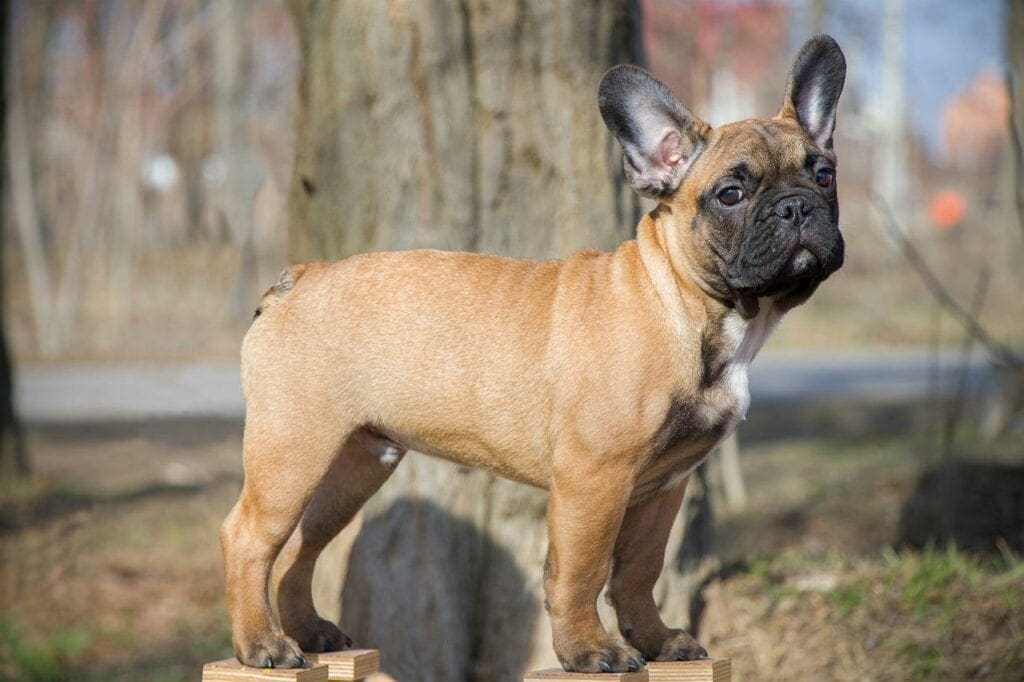
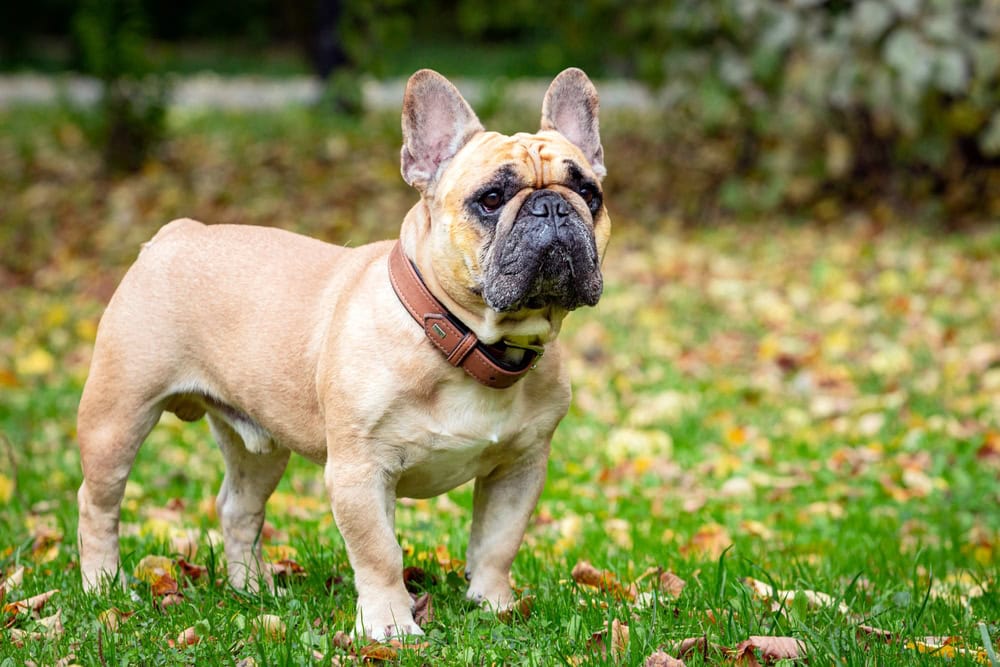
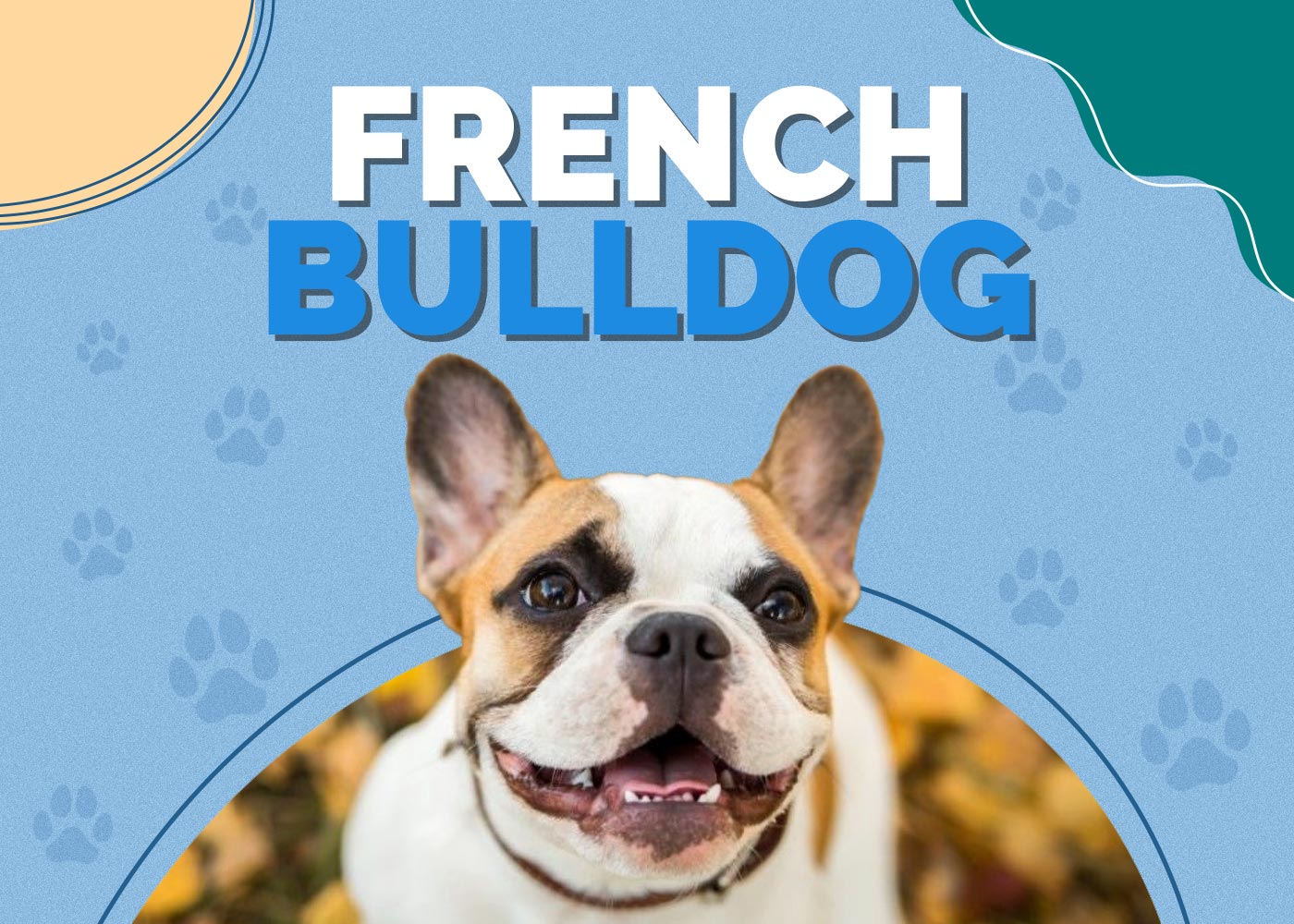
If you ever want your heart to melt, book a playdate with a Blue Fawn French Bulldog. These adorable, even-tempered dogs have squashed faces and upright ears and are around 12 inches in height. Although short and stocky, this breed loves to cuddle up on their owner’s lap and is a true companion, eager for attention and love.
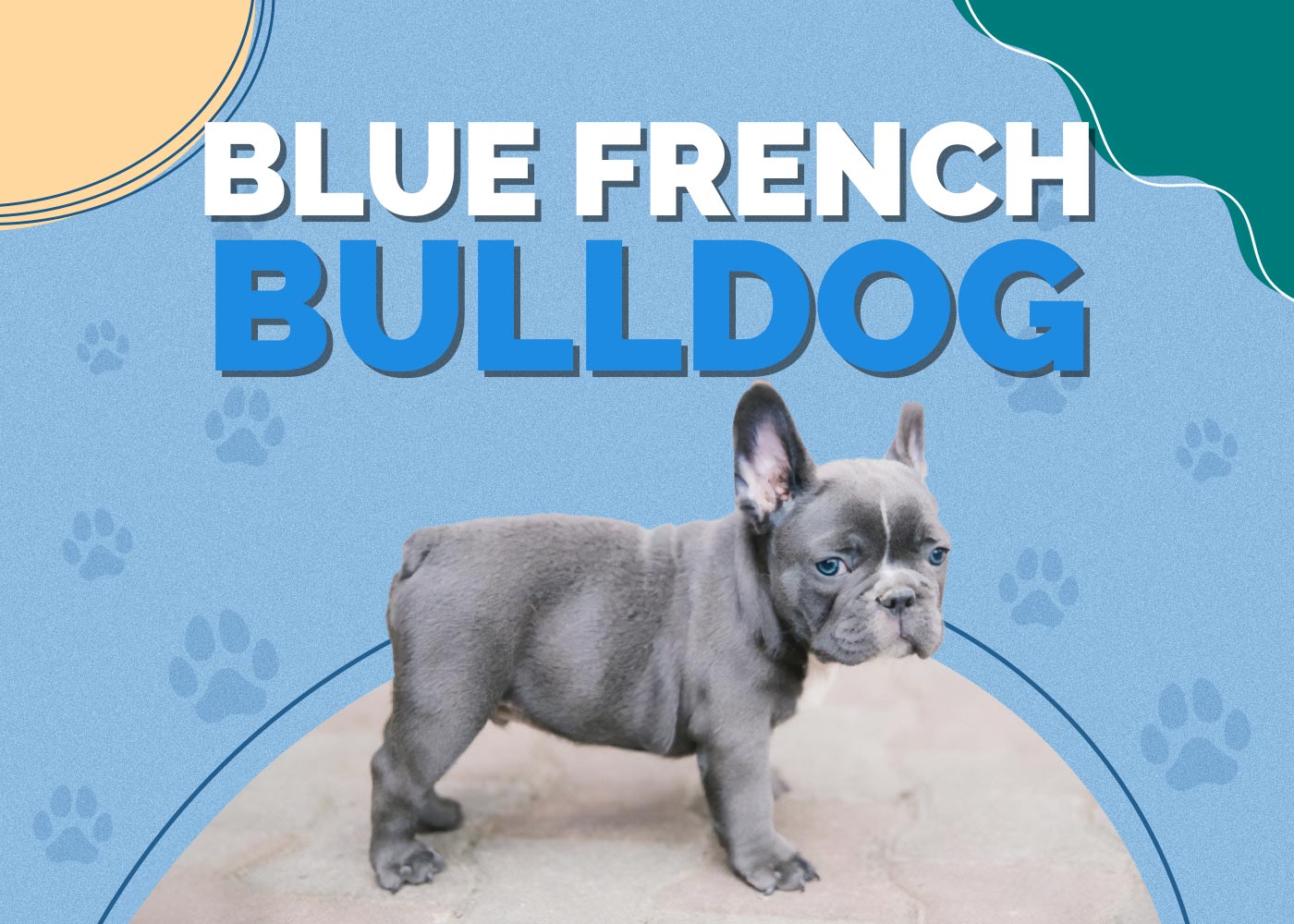
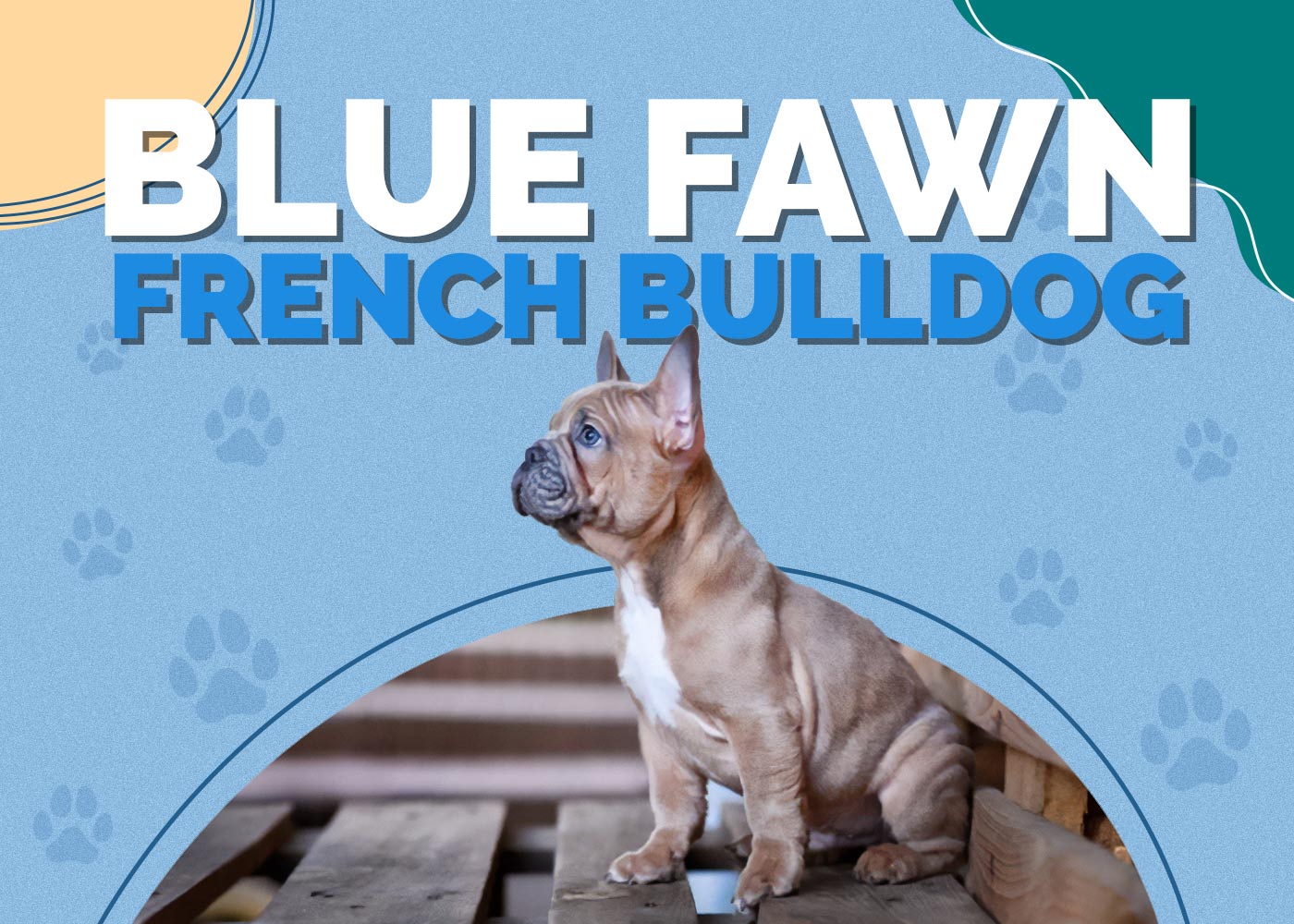
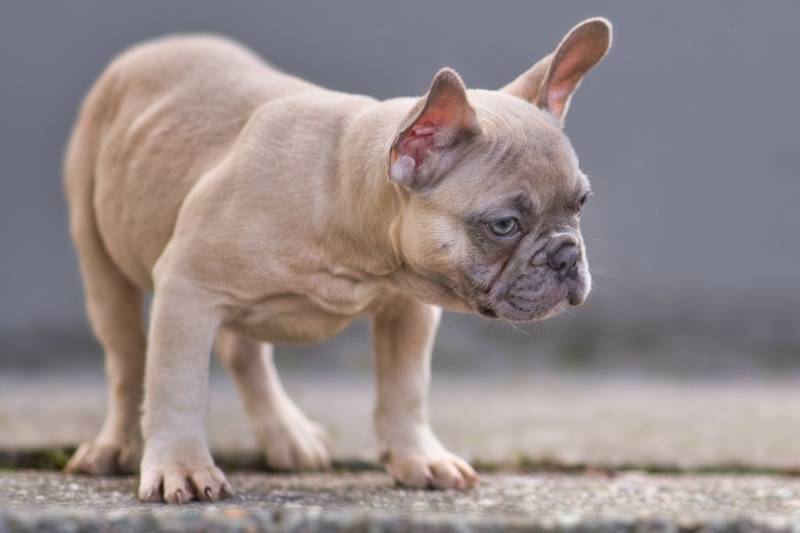
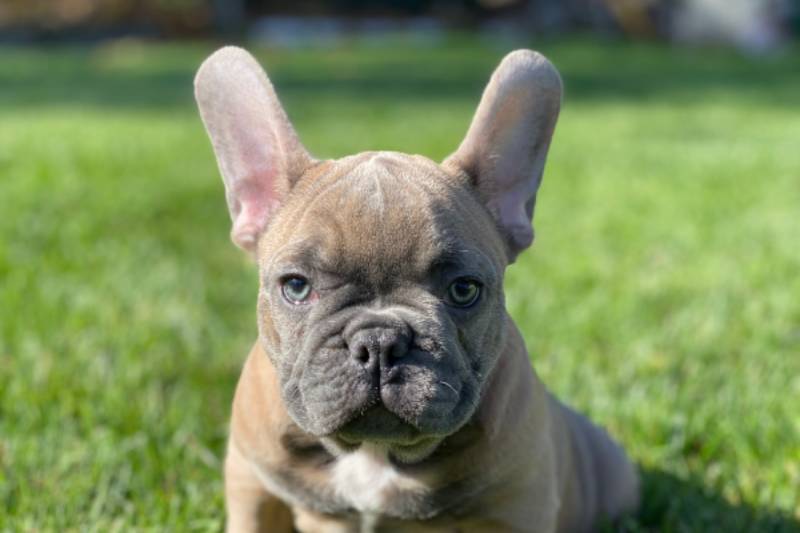
You’ve likely guessed it from their name, but the Blue Fawn French Bulldog boasts a gorgeous light brown coat with a silvery grey mask. These French Bulldogs are less common than regular French Bulldogs and are pricier. However, they’re as popular as ever and have an interesting history to uncover, so let’s get into it.

The Earliest Records of Blue Fawn French Bulldog in History
The Blue Fawn French Bulldog may have a slightly different coat color to the common French Bulldog, but their origins are the same, with the breed originating in England in the 1800s.
English Bulldogs were bred with Pugs and terriers to create their smaller size. They became popular companions amongst Nottingham lace makers for their loyal personalities and rat-catching abilities. They were taken along to northern France when many of the lace makers relocated there for better work opportunities.
In France, the miniature Bulldogs were sought after by the locals, who instantly fell in love with them, and more and more of these small bulldogs that were considered unfit for breeding by the English were shipped over to France and sold. Although they were seen as flawed in their country of origin, they grew in popularity in France and ultimately became known as the French Bulldog.
French Bulldogs come in many colors, including blue fawn. However, this type is rarer because they carry two recessive dilute genes as well as two fawn color genes.
How Blue Fawn French Bulldogs Gained Popularity
The Blue Fawn French Bulldog has lived through all levels of society, moving through the hearts of lace workers, ladies of the night, a high-society guest on board the Titanic, and even the Grand Duchess Tatiana Romanov.
The small Bulldog with pointy ears started as a miniature rat-catching companion in England but was eventually seen as unfit for breeding because they no longer matched the breed standard of the English Bulldog. However, they were popularized by the French.
In France, the breed was welcomed by all levels of class but soon became a status symbol as more and more high-society artists, actors, and celebrities claimed them as pets.
Wealthy Americans traveling through Europe in the late 1800s brought the breed to the US and big names, such as the Rockefellers, soon welcomed them into their homes, quickly drawing attention to the breed and causing them to skyrocket in popularity in America.
After World War One, the breed’s popularity declined, along with many others. However, this durable breed has once again grown in popularity since then, becoming the second most popular dog in America¹, with the Blue Fawn type as one of the most popular choices.
Formal Recognition of Blue Fawn French Bulldog
In 1896, the French Bulldog was placed in the Westminster Kennel Club Show but was not chosen by the judges due to their ears. The French Bulldog was first recognized by the French Bulldog Club of America, which was founded in 18972. This club recognized the breed before it was recognized as an official breed by the AKC in 18983 and set the breed standards.
Although the breed was reviewed by the British Kennel Club in the 1890s, they were only accepted as a separate breed in 19064. However, the French Bulldog Club of England was formed four years before that, in 1902.
Although all French Bulldogs can be registered by the AKC, not all of them can compete in shows. Blue Fawn, along with black, black and white, blue, chocolate, grey, lilac, and merle, don’t meet the breed standards and cannot compete in shows.
Only white, cream, and fawn are accepted as the breed standard, with variations between them. Markings and patterns that are allowed are brindle, piebald, black masks, black shadings, white shadings, and ticking. The accepted eye color is black or dark brown, with lighter brown being accepted too. Clearly, our beloved Blue Fawn Frenchies don’t make the cut with their blue masks and pretty eye colors.
Top 4 Unique Facts About Blue Fawn French Bulldogs
Blue Fawn French Bulldogs aren’t just cute—they’re also full of surprises and do things differently from many other dog breeds. Before buying one of these stocky pups, it’s important to know their needs so you can best care for them.
1. Blue Fawn French Bulldogs Don’t Breed Naturally
Ever wondered by French Bulldogs are so expensive? Well, part of the reason stems from the way they’re conceived and birthed. Because of their little, disproportioned bodies, male French Bulldogs have a tough time mounting their mates, which makes puppy-making almost impossible. Due to this, most Blue Fawn French Bulldogs are brought about through artificial insemination.
The birthing process isn’t any less complicated. Medical assistance is also required when it’s time to give birth. Females have narrow birth canals, which puts both the mother and the pups at risk during natural birth. Instead, to reduce the risk and the stress of natural birth, most French Bulldogs deliver their puppies via Cesarean section.
Of course, artificial insemination along with C-section delivery is costly, which in turn pushes up the price of the puppies.
2. Blue Fawn Genetics Are Pretty Complicated
The blue color that Blue Fawn French Bulldogs are known for is the result of a dilution gene that lightens all the black pigment to a greyish color. However, for this to be evident in a puppy, both their parents would need to carry that recessive gene.
To be fawn in color, these puppies would also need to carry two genes for the fawn color. With all these recessive genes required to produce a Blue Fawn, it’s no wonder why this coat color is pretty rare, yet highly sought after.
Other than their coat coloring and green or blue eye color, Blue Fawn French Bulldogs are just like the rest of their French Bulldog breed.
3. There Are Both Short and Long-Haired French Bulldogs
Although uncommon and not as widely known, long-haired Frenchies are a real thing! Of course, they don’t meet the breed’s standard and aren’t recognized by the AKC, but they’re just like standard bulldogs, except they have rare genes.
A long-haired French Bulldog can be the product of two short-haired French Bulldogs, as long as both those dogs are carriers of the rare recessive gene.
4. They’re Banned by Many Airlines
French Bulldogs haven’t technically done anything wrong to cause the airline ban, other than being a brachycephalic breed that often suffers from breathing problems. Flying can often make their existing struggle with breathing worse because of the tighter space, changes in air quality and temperatures, and the high level of stress that often accompanies the trip.
Unfortunately, many French Bulldogs haven’t survived their flights, and many airlines have banned them. Some airlines that still allow Frenchies to fly with them will only permit it if they’re placed in a crate that is one or more sizes bigger than the breed requires. Getting your dog familiar with the crate and being carried in one is a way to reduce flying stress and better their chances.
Does the Blue Fawn French Bulldog Make a Good Pet?
Blue Fawn French Bulldogs make wonderful pets due to their gentle, friendly, loyal, and playful natures. They get on well with children and seniors but do like to be the center of attention. They generally get on nicely with other pets but also do well on their own.
This breed needs exercise, but not a lot of it, and they’re not full of energy like many other small breeds, making them great apartment dogs. Thankfully, they’re not big barkers either, so you won’t have to worry about upsetting your neighbors.
They’re easy to groom and do require weekly brushing. Although they’re not heavy shedders, they are heavy droolers, so if you’re allergic to dogs, stay away from their slobbery mouths as dog saliva can send you off into an allergic attack.
Conclusion
The Blue Fawn French Bulldog is a pretty rare type due to the complexity of their genes, but they’re gorgeous in appearance and highly sought after. This breed is a favorite amongst the wealthy for several reasons. Firstly, they’re a status symbol, and secondly, they’re expensive to breed and purchase, with some pups being sold for as high as $10 000! However, many Frenchie lovers deem the breed worth the price, with the French Bulldogs ranking as the second most popular dog in the US.
See Also:
Sources
https://www.akc.org/expert-advice/dog-breeds/behind-the-breed-history-french-bulldog/
https://www.akc.org/expert-advice/dog-breeds/most-popular-dog-breeds-of-2021/
https://frenchbulldogclub.org/fbdcahistory/#:~:text=Ears.,America%20on%20April%205%2C%201897.
https://www.thekennelclub.org.uk/search/breeds-a-to-z/breeds/utility/french-bulldog/
https://frenchbulldogio.com/how-to-register-a-blue-french-bulldog-with-the-akc/
https://www.frenchbulldogbreed.net/blog/blue-french-bulldog-the-ultimate-guide/
https://frenchbulldogowner.com/can-french-bulldogs-mate-breed-naturally/
https://www.frenchbulldogbreed.net/blog/long-haired-french-bulldog-revealed/
https://www.avma.org/resources-tools/pet-owners/petcare/air-travel-and-short-nosed-dogs-faq
https://www.sparkpaws.com/blogs/community/13-mind-blowing-facts-about-french-bulldogs
https://www.mentalfloss.com/article/63568/11-charming-facts-about-french-bulldogs
https://www.aspcapetinsurance.com/resources/french-bulldog-facts/
https://www.dailypaws.com/dogs-puppies/dog-breeds/french-bulldog
Featured Image Credit: Firn, Shutterstock
Get Hepper In Your Inbox


Pet care tips from our vets and experts, straight to your inbox.
You may opt-out at any time. View our Privacy Policy for more information.

Keri-Beth is from South Africa and is a freelance writer who specializes in the pet niche. She has grown up with a range of pets, volunteered at countless pet shelters, and is highly passionate about pet care. Currently, Keri-Beth is raising two dogs - Benji, the Golden Cocker Spaniel, and Gracie, the Boerboel. With so much information out there, Keri-Beth has made it her mission to make pet care as easy and straightforward as possible.
In her spare time, Keri-Beth enjoys camping, photography, and spending time with her husband, who is a professional drummer. She not only has a heart for pets but people too.
Join the conversation
Ask a question, share your story, or send private feedback.