Hepper is reader-supported. When you buy via links on our site, we may earn an affiliate commission at no cost to you. Learn more.
Border Collie Hip Dysplasia: Signs, Causes & Care (Vet Answer)
In this article
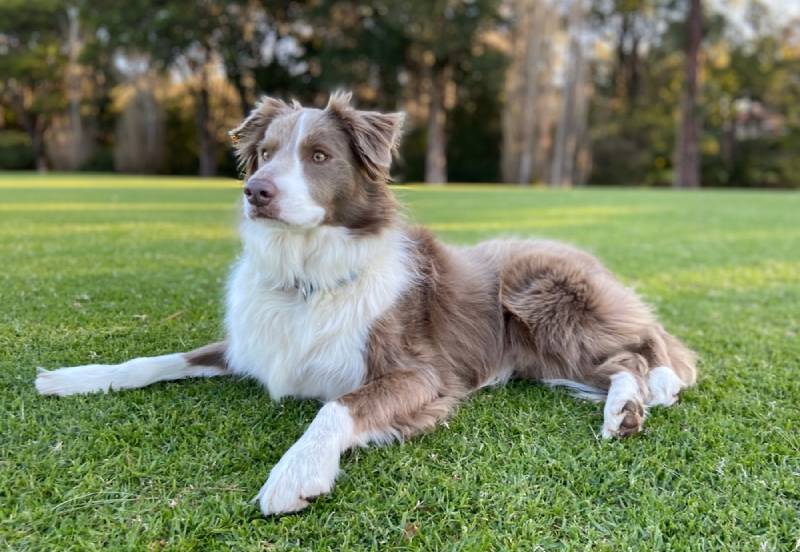
Hip dysplasia, an abnormal and painful laxity in the hips, has become quite infamous in the dog world, especially with certain breeds. And while Border Collies are generally a healthy dog breed, they are prone to getting hip dysplasia.
Hip dysplasia is a complex syndrome that involves genetic and environmental triggers. While its genetic component can tell us a lot, a dog’s pain can also tell us a lot about how well their personal needs are being met.
To learn more about how to improve your Border Collie's quality of life with hip dysplasia, read on.

What Is Hip Dysplasia?
Hip dysplasia is a complex joint disease that involves genetics and environmental triggers. It combines the joint, muscles, tendons, and ligaments surrounding the joint failing. It is a disease that starts while the puppy is growing and continues to be progressively problematic for their entire life.
The hip joint, where the femur attaches to the hip bone, develops abnormally loose. The hip joint is a ball and socket joint, and the deformity forms when the ball does not fit into the socket tightly and, as a result, loosely rotates within the socket.
In the early stages of hip dysplasia, the laxity in the joint causes the joint to move unevenly. This uneven movement is painful, causing the dog to limp, or have weakness in the joint. The unstable joint fails to provide normal strength and range of movement.
After years of laxity, the joint develops arthritis as the uneven, loose movements aggravate and degrade the lining and bones of the joint. An unstable joint becomes inflamed. And years of an inflamed joint cause bone spurs to grow on the joint's surface so that the bone degrades in quality along its surface. This is arthritis.
So, a puppy starts with hip dysplasia, and as they get older, it turns into hip dysplasia combined with osteoarthritis (the veterinary term for arthritis). Dogs with chronic hip dysplasia also move their other joints abnormally to compensate. As a result, they are also more likely to develop osteoarthritis in other joints as well.
It is a vicious cycle that is hard to break. The only hope is to try and slow it down.

What Are the Signs of Hip Dysplasia?
While soreness and limping with the hindlegs can be a sign of hip dysplasia, there are a number of problems that can cause this, some genetic, some traumatic. As a result, hip dysplasia will require a veterinary diagnosis.
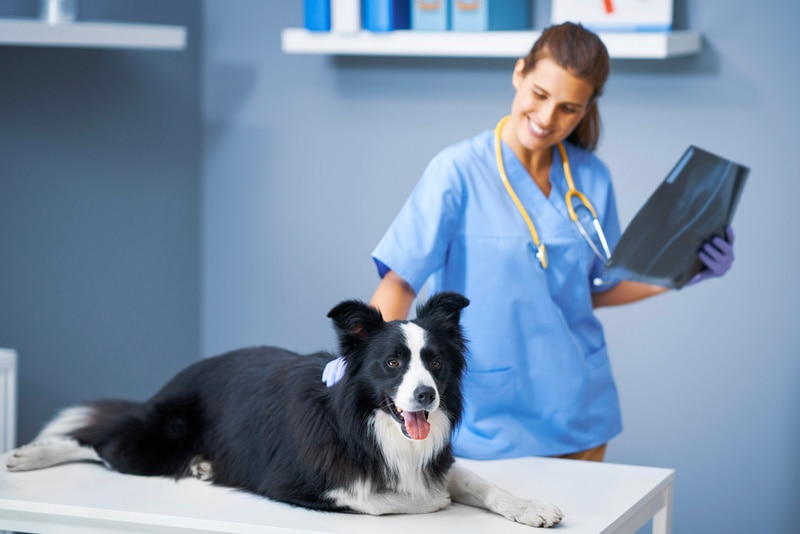
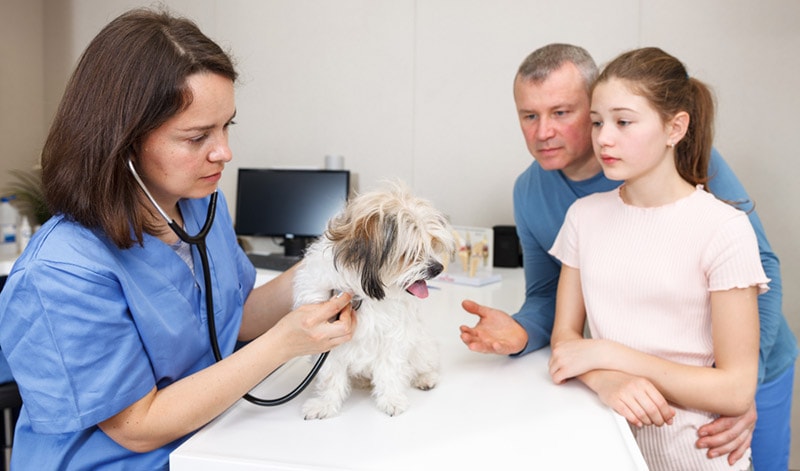
A veterinarian will perform a physical exam to help identify the problem. They may need to sedate the Border Collie to fully examine the hip joint since many will resist moving the joint and, as a result, obscure the joint’s full range of motion.
X-rays (radiographs) are also often used to diagnose hip dysplasia. Some radiographs may be used on a scale to grade the level of hip dysplasia. To get good X-rays, most dogs will also need to be sedated or even put under general anesthesia—so they are completely unconscious versus just slightly asleep.
Watch for the following signs:
The 4 Most Common Causes of Hip Dysplasia
There are four main causes of hip dysplasia: genetics, exercise, nutrition, and growing too fast.
1. Genetics
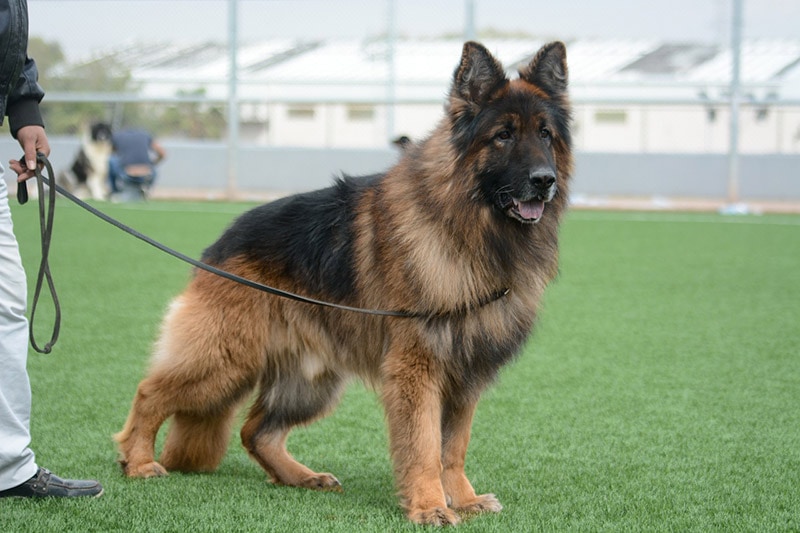
The genetic component of hip dysplasia means you could do everything right and still end up fighting this problem. Large dogs are more likely to get hip dysplasia than smaller breeds—but never say never.
If getting your puppy from a border collie breeder, ask them about genetic diseases such as hip dysplasia to assess the likelihood of it developing. There are other breeds predisposed to hip dysplasia:
2. Exercise
Excessive exercise, particularly during development—while a puppy is growing—can aggravate hip dysplasia. Too little exercise is also not good. A moderate level of exercise and remembering that your puppy is still growing and may need some help regulating their over-the-top zoomies is important.
3. Nutrition
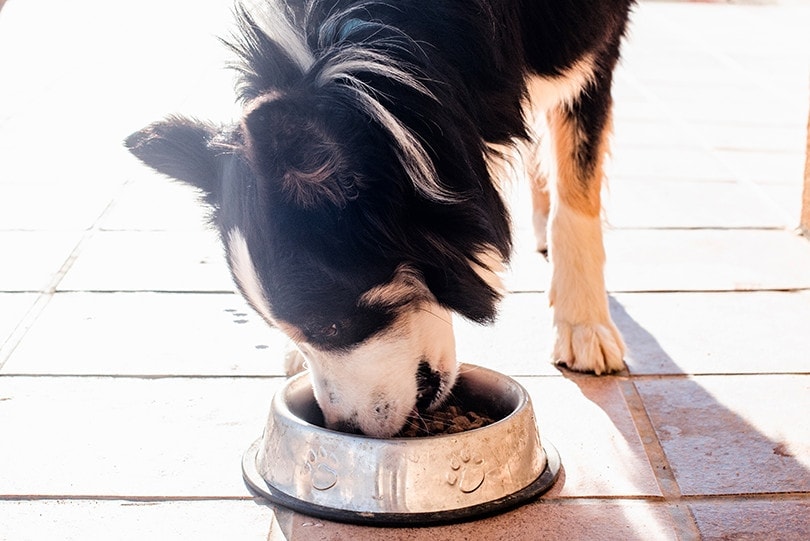
When they are puppies, it is very important to keep them lean. There can be a tendency to want to encourage growth, and humans innately associate food with healthy growth.
However, encouraging your big-breed puppy to ‘get big’ too early can disrupt their bone growth so that some bones grow faster than others. This is what happens with hip dysplasia joints; the ball and socket do not grow together at the same rate. Overweight dogs really struggle with their hip dysplasia. Carrying more weight on an unstable joint speeds up the degenerative cycle.
4. Growing too fast
This is a combination of nutrition and exercise. Let your young puppy grow at their own pace and do not encourage them to get too big too fast.
How Do I Care for a Border Collie With Hip Dysplasia
Weight management is essential. Keeping puppies and adults lean is an important tool for managing hip dysplasia. The importance of having a lean dog with hip dysplasia cannot be overstated. Leave the beefcakes and dadbod dogs to other breeds without hip issues. Controlled exercise helps with weight management and maintaining strength. However uncontrolled exercise can aggravate hip dysplasia, so do it in moderation. Physical therapy with dogs is an advancing field. It includes exercises you can do at home or going to a professional.
Your vet may prescribe pain relief in the form of anti-inflammatories to help your dog manage their pain. When, how much, and what type will be an individual evaluation, and will need your vet’s input to make sure they are not getting too much. And, conversely, to make sure they are getting enough.
There are multiple surgical techniques for relieving hip dysplasia. Which one is chosen will depend on your dog, their hip dysplasia, the surgeon’s preferred method, and your dog's lifestyle. Deciding if your dog needs surgery will be a discussion with your vet. If you are unsure about your vet’s recommendation, get a second opinion. Getting more professional advice can help relieve the worry about doing the right thing.
Frequently Asked Questions (FAQs)
Why should I get X-rays?
Even if you know your dog has hip dysplasia, X-rays might be necessary. Not only do they provide a baseline so that in a few years if something happens or it gets significantly worse, the X-rays will provide a data point to understand what happened.
If your dog is going for surgery to properly plan for the surgery X-rays are necessary. We also would never want to be in a situation where we perform the surgery only for it to be a different problem. It is always better to be as confident as possible before performing irrevocable procedures.
Why didn’t the surgery fix my dog?
Unfortunately, surgery is not a 100% fix. It can be a significant tool in correcting hip dysplasia, and it may even be necessary for some dogs to have a chance at being pain-free.
But the success of surgery relies entirely on what you do at home immediately after surgery while they heal and in the long term. If you look at the list of treatments above, surgery is only one of seven or eight treatment options.
The surgery will only work if you utilize other treatments as well. The surgery will only be effective if you help them with physical therapy, weight management, or healthy joint supplements.

Conclusion
Hip dysplasia is painful and can be a debilitating problem with unstable hips impacting everyday life for many dogs. It also changes as the dogs age and will need to be accommodated differently with time.
In the same way, as it is a complex disease with many factors that trigger and aggravate it, there are also many different ways to treat it. The best treatment, though, the best way to care for your dog with hip dysplasia is to adopt a multimodal, lifelong care plan that incorporates every treatment option, including considering how they will impact future generations of Border Collies.
Sources
Featured Image Credit: Susan McQuade, Shutterstock
Get Hepper In Your Inbox


Pet care tips from our vets and experts, straight to your inbox.
You may opt-out at any time. View our Privacy Policy for more information.
Dr. Chantal is passionate about the human-animal bond and improving animals' lives through their connections with their human companions. She has worked with many different species, big and small, including dogs, cats, birds, rabbits, guinea pigs, reptiles, amphibians, and even horses and mice. Chantal is excited to share her knowledge using her writing to help people connect with their animal friends.
Dr. Chantal believes that the best way for animals to be healthy is for their humans to understand their needs and well-being. She loves spreading her knowledge to as many people as she can through her writing.
Education
Dr. Chantal graduated from the Royal Veterinary College in London, England, where she received her vet degree. She then received her Masters in Conservation Medicine from Tufts University.
Experience
Dr. Chantal has worked with animals her entire life in many fields, even outside of veterinary medicine. She managed horse barns, worked as a dog trainer, and as a wildlife biologist before attending vet school. Chantal has been a veterinarian for over three years and continues to work with dogs, cats, and exotic animals. And, she still knows a thing or two about horses.
Join the conversation
Ask a question, share your story, or send private feedback.