Hepper is reader-supported. When you buy via links on our site, we may earn an affiliate commission at no cost to you. Learn more.
Is My Border Collie Pregnant? 4 Signs & Vet-Approved Tests



In this article
Whether a deliberate breeding effort or an accident, a pregnant Border Collie comes with a lot of responsibility. Unfortunately, there’s no home pregnancy test for dogs, but you can take note of the signs to prepare for the litter.
Find out how to tell if your Border Collie is pregnant, and the signs to watch for, from ultrasounds to hormone testing, we go over that and more.

The 4 Steps to Check If Your Border Collie is Pregnant
In the early stages, the signs of pregnancy can be excruciatingly subtle. The most accurate way to determine pregnancy is with testing through your vet, which includes the following:
1. Palpation
If you know when your dog tied with a male, your veterinarian can check for pregnancy with palpation around 24 to 30 days after. The puppies can be felt at this point, often feeling like small balls in the abdomen. The timing is critical, as these sacks will lose their shape after about a month.
The balls are actually fluid-filled sacs that surround the fetus, so it’s important not to palpate yourself. You can hurt the pups if you’re not careful.

2. Hormone Testing
Around 25 to 30 days of gestation, you can schedule a blood test to check for hormone levels that indicate pregnancy. This is similar to how human pregnancy tests work, though the dog version is testing for the hormone "relaxin". This is only produced by the placenta, during pregnancy, so it’s a reliable indicator.
3. Radiographs
Radiographs, or X-rays, are an effective way to check for puppies. You must wait until about 42 days into gestation, however, since the puppies’ skeletons won’t show up before then. This will confirm pregnancy and reveal the number of puppies accurately.
4. Ultrasound
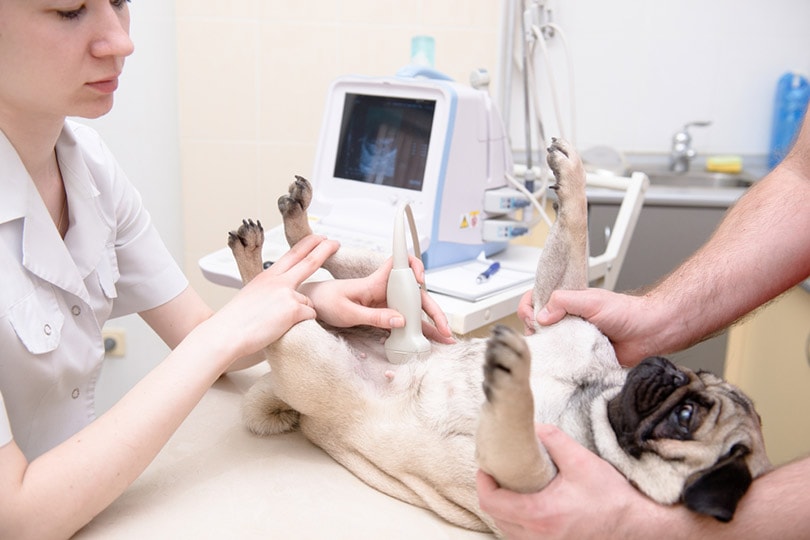
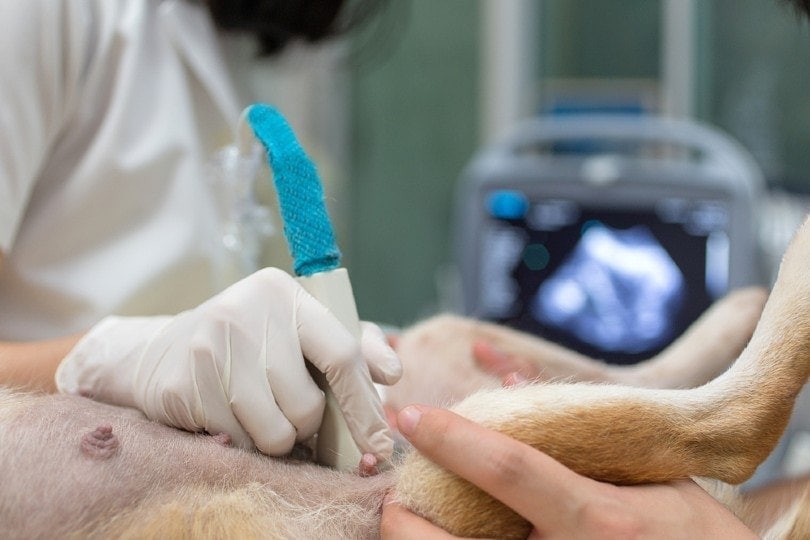
If you prefer, you can schedule an abdominal ultrasound to check for fetal heartbeats. This can be done at around 25 to 35 days. Ultrasound imaging not only confirms pregnancy but gives you an estimate of the size of the litter.
Signs That Your Border Collie Is Pregnant
Other than veterinary diagnostic testing, you can look for signs of pregnancy in your dog. It’s not as accurate, but you can get an idea and determine whether to schedule further testing.
These signs include:
Initially, some dogs may show signs that mimic “morning sickness” in humans, such as a decreased appetite and nausea or vomiting. If this is the case, it could be false pregnancy or another condition, so it’s best to discuss the symptoms with your vet.

Border Collie Gestation Period
Border Collies are usually easy to breed and have litters of six to eight puppies. The gestation period lasts about two months or 62 to 64 days. The length of gestation can vary by a few factors, however, including the litter size and the actual date of conception.
During the first month of pregnancy, the fertilized ovules travel to the uterine horn, become embryos, and become embedded in the lining. This happens around 15 to 18 days. The fetuses grow quickly, doubling in diameter about every seven days.
At the end of the first month, your vet can detect fetal heartbeats. Development in the second month is also rapid. At the start of the third month, the puppies are ready for birth.
What to Expect with Dog Pregnancy
Once you’ve confirmed pregnancy, it’s important to give your dog the best care to ensure healthy puppies and a healthy nursing mom.

Nutrition
Nutrition is one of the most important aspects of caring for your pregnant dog. If your dog is at a healthy weight and is eating high-quality dog food already, you don’t need to make any changes to the diet for a few weeks (unless your veterinarian recommends it).
In the last few weeks of pregnancy, you may need to increase your dog’s food intake gradually until it reaches 30-60% of her usual intake. It’s important to do so with small, frequent meals to avoid digestive upset. Always follow your vet’s recommendations.
Veterinary Care
Ideally, your dog’s breeding is planned, and you’ll have an opportunity for checkups and vaccinations prior to breeding. If the pregnancy is an accident, speak to your vet about conducting a fecal exam to check for parasites and running blood tests to check her general health.
This is a good opportunity to discuss any concerns with your vet and any signs to watch for during pregnancy and when labor begins. Though it’s not as common with Border Collies as some other breeds, some situations may require cesarean sections rather than vaginal birth. If this is the case, it’s best to schedule the surgery in advance.

Exercise
Many Border Collies are kept for work or competition purposes. If your dog is pregnant, it’s important to cut back on strenuous exercise for the first few weeks to encourage embryo implantation.
Once that’s complete, your dog should be able to return to regular exercise for a few weeks until the abdomen swells. Discuss your dog’s exercise needs with your vet. Pregnant dogs need all their strength to nurture growing pups and have a healthy birth.

Getting Ready for Labor
When labor is imminent, you’ll notice more obvious signs of pregnancy, like swollen breasts and nipples, a large abdomen, and some milky discharge from the nipples. You may be able to see or feel the puppies in the belly as well.
It’s best to prepare for the birth, or whelping, in advance. Set up a whelping box in a clean, warm area to allow your dog to whelp. You can buy whelping boxes or rely on homemade efforts like a plastic swimming pool. Make sure the box or pool is shallow enough for the mother to enter and exit but high enough that the puppies can’t get in and out easily.
If possible, set up the whelping box in a quiet area of the house that’s blocked off from other pets or children. Naturally, the mother will be protective of herself and her pups when they’re firstborn.
Introduce your dog to the whelping box in advance. If she’s not familiar with the box, she may choose to nest elsewhere and deliver where she feels most comfortable—which could mean a mess where you don’t want one.
You should also prepare whelping supplies, which include:
If you’re not experienced with dog birthing, speak to your vet to understand what’s normal, what isn’t, and when you need to seek veterinary care. Usually, dogs handle the process on their own, but plenty of complications can arise, and you need to know how to handle them.
When the time comes, your dog will begin nesting. Ideally, this will occur in the whelping box. Before delivery, your dog will pant heavily. There’s usually a drop in temperature to about 99 degrees or lower compared to a dog’s normal temperature of 100 to 102.5 degrees Fahrenheit.
Like human labor, the abdominal contractions will start slowly, becoming more frequent and stronger as time passes. Your dog may moan and strain. You may see the water break, but not always.
Within an hour, the first puppy should be delivered. They’ll come out enclosed in the placental membrane, which the mother licks to break. If your dog doesn’t remove the placental membrane, it’s important you do. Puppies only have a few minutes before the oxygen depletes, and they’ll suffocate. If necessary, gently rub the puppy with a clean towel until it cries.
Many dogs will sever the umbilical cord on their own while cleaning the pups, but if yours doesn’t, you’ll need to do it yourself. Use the dental floss to tie the cord about an inch from the puppy’s belly, then snip it. Wipe the abdomen and the end of the cord with iodine.
Puppies usually deliver one after the other in rapid succession, but not always. Your dog may need to rest in between, but there should not be more than two hours between puppies. If that happens, contact your veterinarian.
If your dog takes breaks between puppies, offer water and see if she wishes to go outside. Don’t leave her unsupervised, as puppies can be delivered at any point. Leave any delivered puppies in the whelping box in the meantime.
Your prenatal checkups should have given you an idea of how many puppies to expect, so you’ll know when the delivery is complete. Be sure to count the placental sacs—there should be one for each puppy. If there’s not, it could indicate that the mother has retained the placenta, which is a dangerous issue.
Once delivery is complete, place all the puppies along the mother’s belly to nurse. Pay attention to their behavior and make sure they’re nursing and breathing normally.
Watch for Complications
Dogs are natural at delivering puppies, but complications can arise.
Here are some signs to watch out for:

Conclusion
Having a pregnant Border Collie can be rewarding, but it can be stressful! The more prepared you can be in advance, the better the pregnancy and whelping will go. After that, the real work begins—taking care of newborn puppies!
Sources
Featured Image Credit: 4924546, Pixabay
Get Hepper In Your Inbox


Pet care tips from our vets and experts, straight to your inbox.
You may opt-out at any time. View our Privacy Policy for more information.
Nicole is a lover of animals of all sizes but is especially fascinated with the feline variety. She’s the proud mom of Baby, a Burmese, and works every day so he can relax in the sunshine or by the fire. She’s always had a cat in her home and has spent countless days with others, observing behaviors and softening up even the grouchiest of the lot. Nicole wants to share her kitty expertise with you so you and your cat can live happy, healthy, and care-free.
Join the conversation
Ask a question, share your story, or send private feedback.