Hepper is reader-supported. When you buy via links on our site, we may earn an affiliate commission at no cost to you. Learn more.
How Big Do Box Turtles Get? Size & Growth Chart

In this article
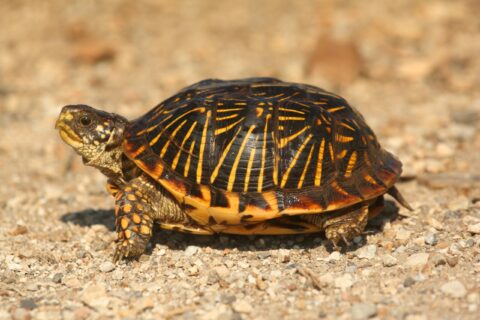
Eastern box turtles can make pretty exciting pets. They have incredibly long lifespans and are generally very easy to care for. So whether you're a seasoned professional or a first-timer, these turtles can make wonderful introductions to the reptile world. An adult turtle can grow up to be 125–150 millimeters long.
In this article, we will go over exactly how fast a box turtle grows and everything you can do to ensure they're on par.

Box Turtle Overview
Eastern box turtles are a widespread turtle breed in North America. You can find them in nature, and many people choose to keep them as pets. They make extremely easy companions because they have simple care requirements and are moderately social.
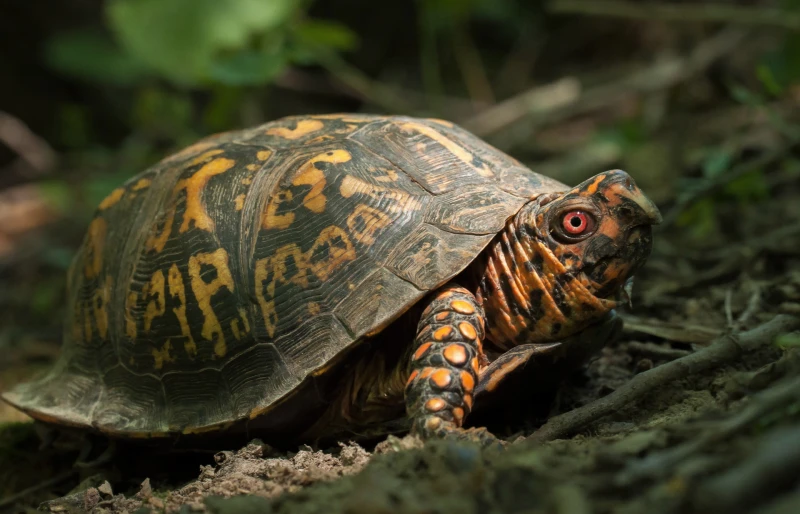
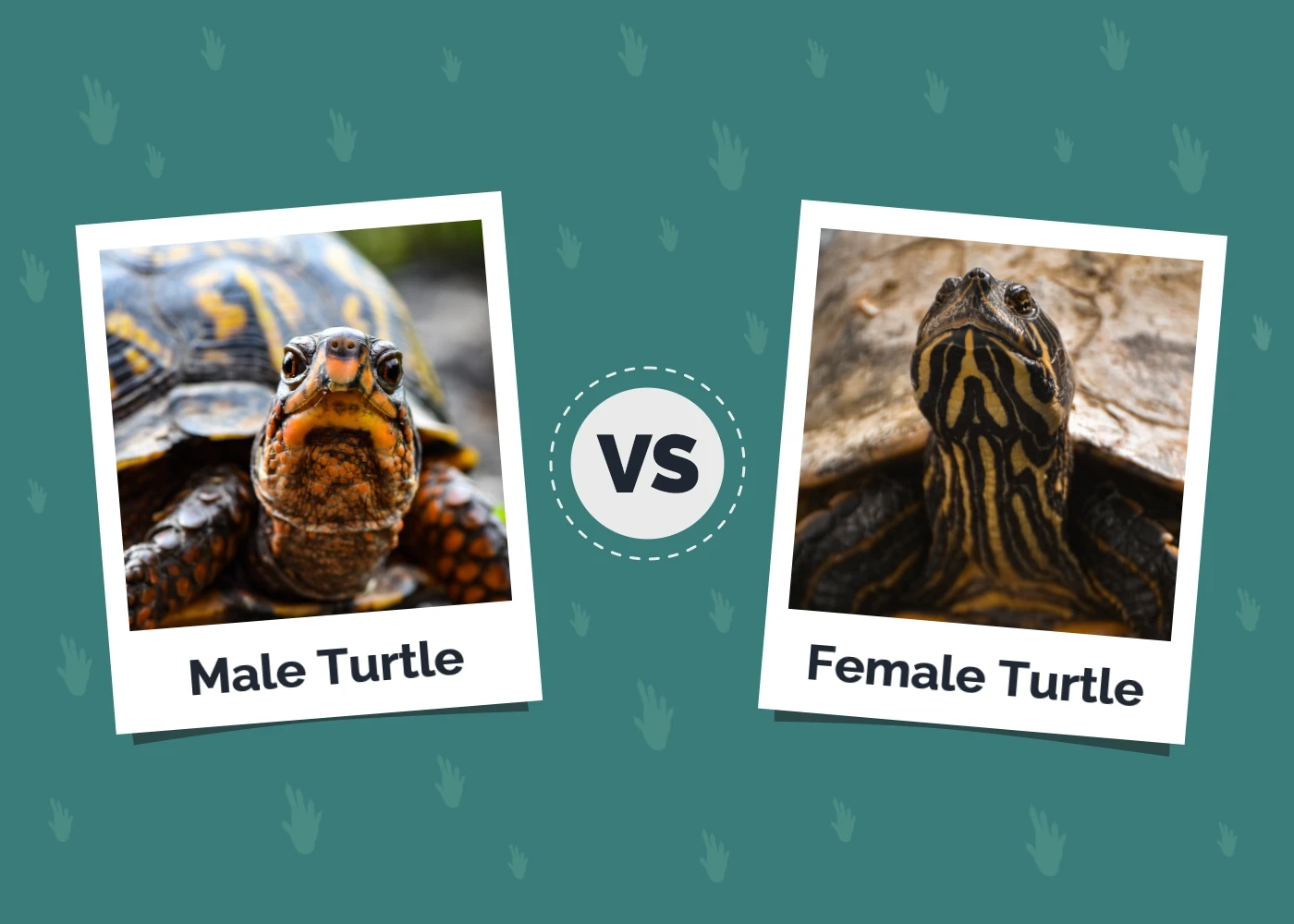
Males and females have extreme visual differences, so it's easy to tell them apart. Males sport a concave plastron, while the females are flat. Males also tend to be very brightly colored with red eyes. Females do not carry these characteristics.
Several subspecies of box turtles vary in color. If you find one in nature, they are usually located around ponds, fields, woodlands, and meadows.
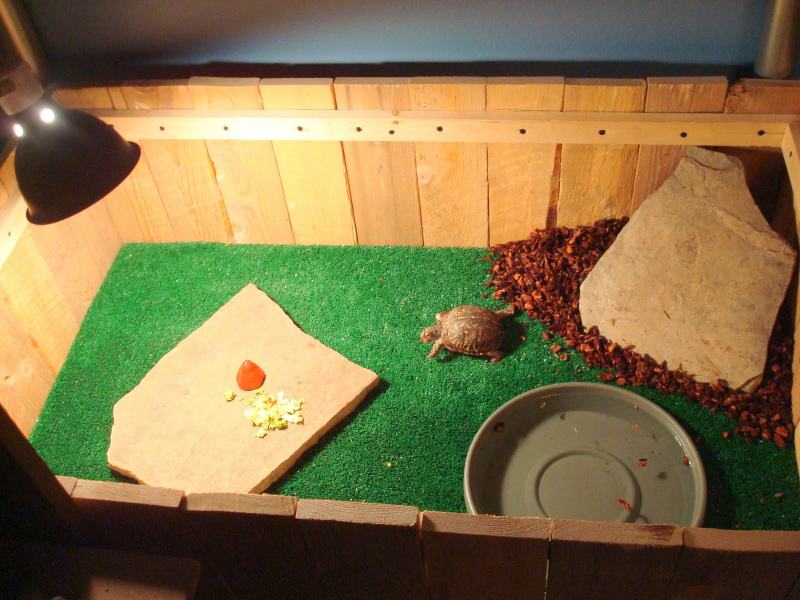
Box Turtle Size and Growth Chart
What is astonishing about box turtles is that they can take several years to grow to their full stature. While they can start mating at roughly 10 years of age, they often don't stop growing until they reach 20 years old.
Below is a general chart that shows you how big to expect your box turtle to be at various life stages.
| Age (in years) | Length Range (in millimeters) |
| 0–1 | 20–25 |
| 2–3 | 45–60 |
| 4–5 | 60–70 |
| 6–7 | 70–75 |
| 8–9 | 75–100 |
| 10–11 | 100–110 |
| 12–13 | 110–125 |
| 14+ | 125–150 |
When Does a Box Turtle Stop Growing?
Box turtle growth is pretty nifty. You might be used to domestic pets, and even some exotics grow very quickly during their first few years of life and just stop after that. But that's not how a box turtle rolls.
Box turtles grow about 1/2 an inch per year during their first 5 years of life. But they continue to grow slowly for approximately 20 years in total before they're considered finished.
Interestingly, a box turtle can live between 50 to 100 years of age. So, it's no wonder they take so long to mature fully.
Factors Affecting the Size of Box Turtle
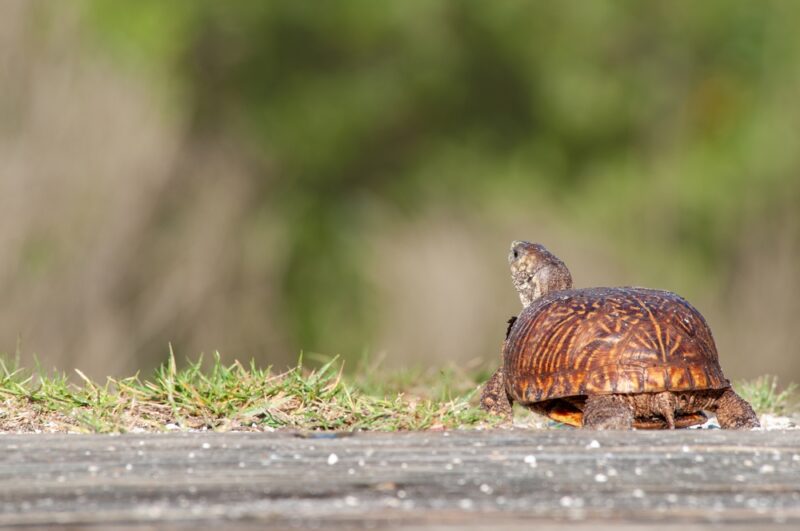
Many different environmental and dietary factors can affect how your box turtle grows. Here are a few of these categories in detail.
1. Diet
It is crucial to understand the omnivorous diets of box turtles. These guys love to snack on berries, roots, insects, eggs, flowers, and even amphibians. As with many other reptiles, juvenile turtles are more carnivorous than their adult counterparts.
They generally hunt in streams and ponds for food. On the other hand, adult turtles primarily feed on land instead. Captive box turtles will eat various fresh fruits, vegetables, and insects supplied by their owner.
Calcium is a crucial element of their diet. If their diet lacks these key nutritional points, it can cause slow growth or shell deformities.
2. Temperature
The correct temperature in your box turtle’s enclosure is absolutely crucial to their growth. When they are very cold, their metabolism and growth slow down as they prepare for hibernation. When they are warm, they thrive and grow a lot more quickly.
If they are in captivity, you have to mimic the natural cycles they would go through in the wild. That means you should always keep your reptile's enclosure at the desired temperature to ensure it grows correctly.
3. Hibernation
As we mentioned with temperature, colder temperatures create a much slower growth process. So, when your box turtle prepares for hibernation, it will grow slowly to reserve all its energy for the cold seasons.
This is a normal and natural part of their growth process and should not impact their ultimate size. However, if temperatures are too cold, it can cause slow growth for longer periods, resulting in stunted development.

Ideal Diet for Maintaining a Healthy Weight
The ideal diet for your box turtle will change over time. So keep that in mind when you are researching a feeding schedule that will work for your reptile.
Juvenile reptiles need daily rations, while older turtles are usually fed every other day, depending on their individual appetite and overall health. Younger turtles tend to eat more insects and amphibians than adults.
Adults should eat 80 to 90% of vegetables and flowers. The other 10 to 20% should consist of fruits. Too many fruits in the diet can throw off the digestive tract and cause unnecessary weight gain.
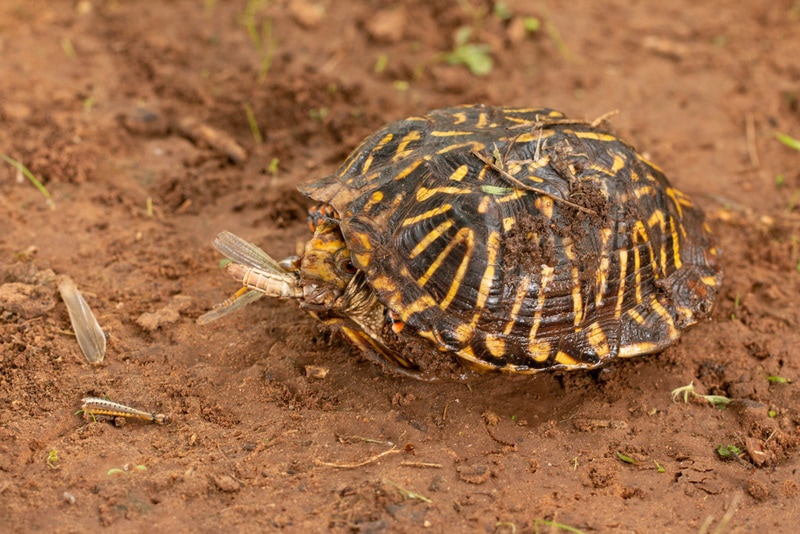
You should always avoid feeding your box turtle any light-colored greens, such as iceberg, head lettuce, and celery and cucumber. These veggies contain mostly fiber and water, which can ultimately cause diarrhea and nutrient depletion.
You should also avoid feeding your box turtle anything that contains oxalates. Oxalates can be found in veggies like swiss chard, beet greens, spinach, and peas. These oxalates bind to the calcium in the body, preventing them from being absorbed correctly in the turtle's intestines.
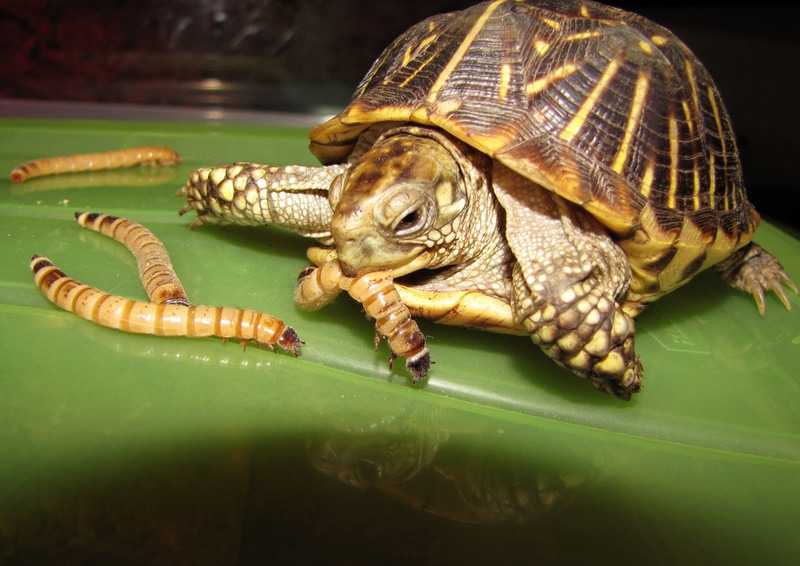
Turtles enjoy a laundry list of insects and animal-based protein sources.
Some common examples include:
How to Measure Your Box Turtle
If you want to ensure your box turtle is growing on par, here's how to measure your turtle and various parts of their bodies.
1. Carapace (Top of Shell)
The carapace is the top of your turtle's shell. For this measurement, you will need a soft measuring tape to bend with the curvature of the turtle shell.
2. Length
To measure the length, hold your turtle securely and start at one end of the shell, bending down the length of the spine to the bottom of the shell. Measure the shell in centimeters.
3. Width
You will do the same for the box turtle’s width. Hold your turtle securely and measure from the whitest part of the shell across the body.
4. Plastron (Bottom of Shell)
Your turtle's plastron is the stomach region of their bodies.
5. Length
To measure the length, start at the underbelly making sure the measuring tape is stretched firmly from the top of the shell down to the tail.
6. Width
To measure width, perform the same steps from edge to edge. Measure the hinge on both sides.
7. Shell Height
To correctly measure your turtle's shell height, flip your turtle onto its back safely. Trying to get the turtle shell as level as possible. Stand a ruler up vertically to measure your turtle's height.

Conclusion
It is so interesting to learn how slowly box turtles grow. They take a long time to develop and live extreme lifespans, upwards of 100 years. If you feed your turtle a correct diet, ensure they have proper temperatures, and always go on par with natural hibernation cycles, they should grow perfectly well.
If you have any questions or concerns about your box turtles' growth, always contact a licensed exotic veterinarian to address the problem.
Featured Image Credit: Steve Byland, Shutterstock
Get Hepper In Your Inbox


Pet care tips from our vets and experts, straight to your inbox.
You may opt-out at any time. View our Privacy Policy for more information.
Ashley Bates, a freelance writer with a passion for pets, is currently studying animal therapy. She is a mother to four children and 23 pets, both furry and feathery. Ashley actively volunteers at local shelters, advocates for animal welfare, and rescues animals in distress. Her mission is to promote awareness, education, and entertainment about pets to help prevent animal homelessness. She specializes in the care and well-being of dogs and cats.
Join the conversation
Ask a question, share your story, or send private feedback.