Hepper is reader-supported. When you buy via links on our site, we may earn an affiliate commission at no cost to you. Learn more.
Male vs Female Turtle: The Main Differences (With Pictures)

In this article
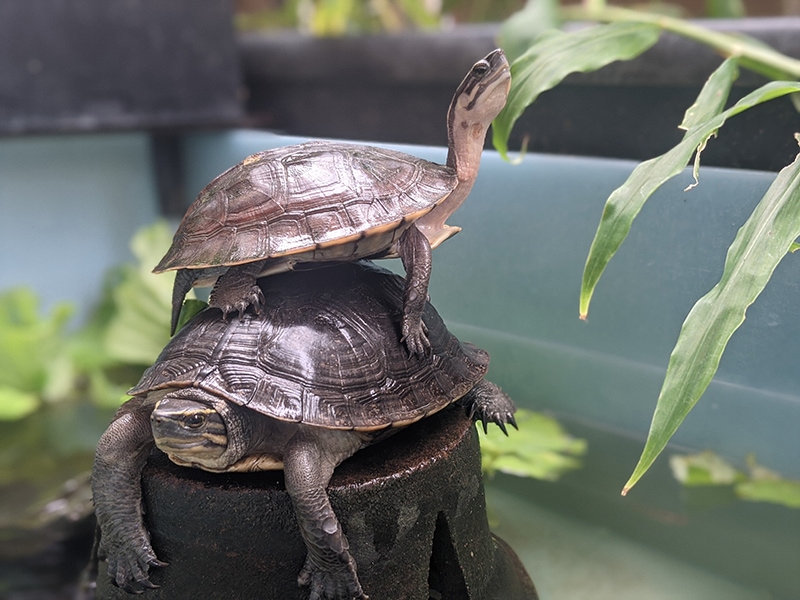
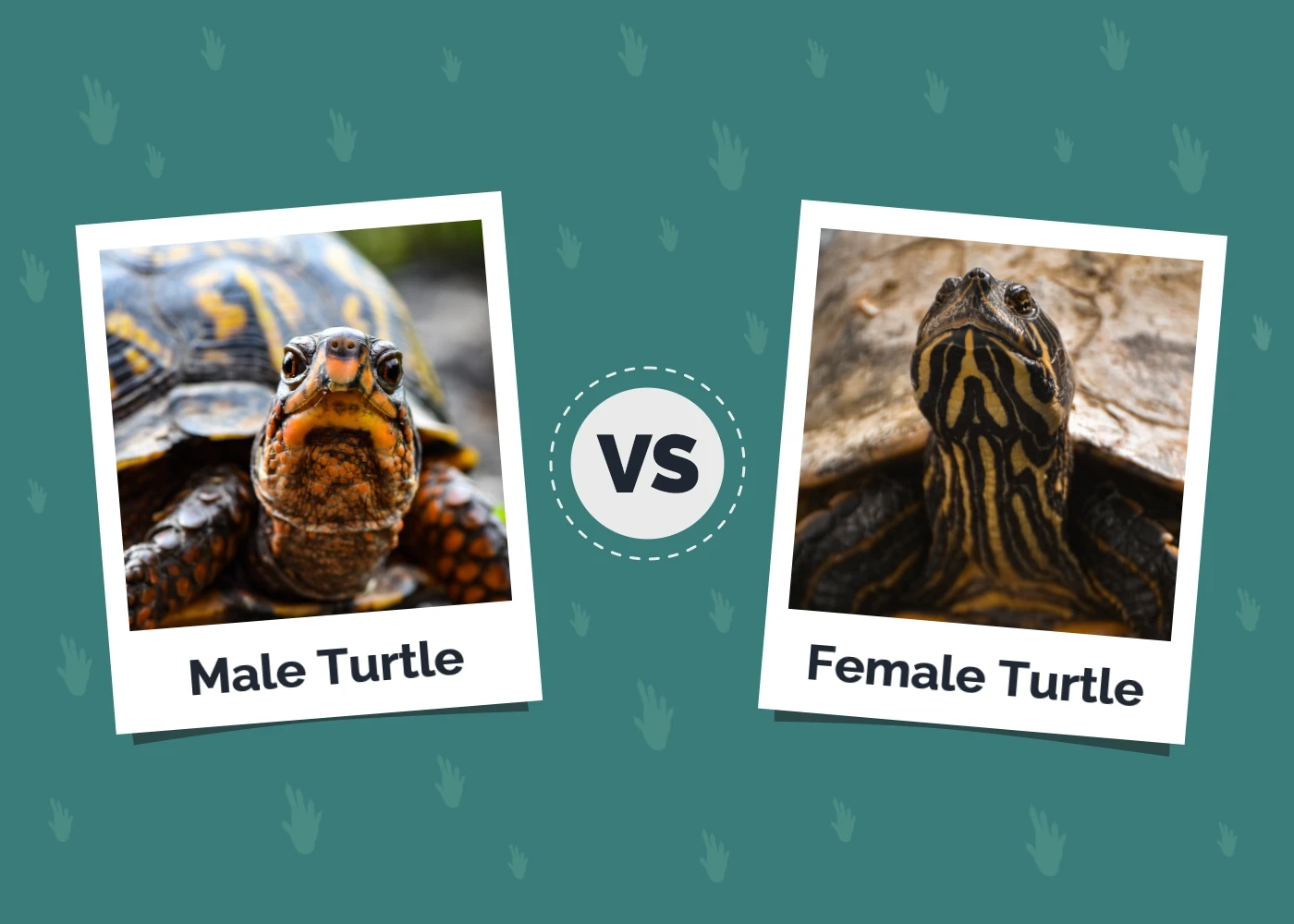
Turtles are rather mysterious animals, especially if you’re new to caring for them, and new turtle parents are likely curious about the differences between male and female turtles.
Fortunately, there are some clear physical differences between the two that can help you tell a male from a female, but personality differences are much less clear-cut because turtles are very diverse in this area. Nevertheless, there are some factors to take into account. Read on to find out how to tell male and female turtles apart.

Visual Differences
At a Glance
Turtles 101
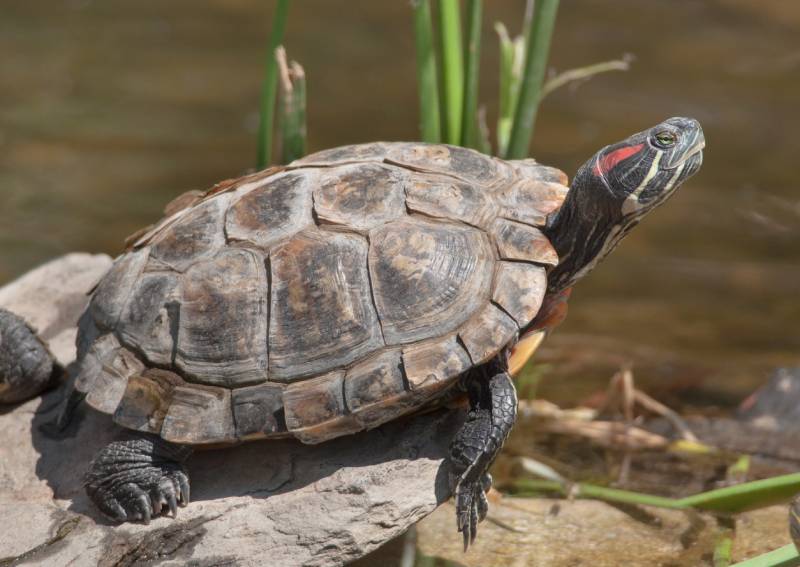
Turtles are some of the most ancient reptiles in the world that span every continent except for Antarctica. Largely aquatic animals, there are hundreds of turtle species that come in various sizes and weights ranging from a few pounds to up to 1,500 pounds in the case of Leatherback Turtles! Of course, turtles kept as family companions, like Box Turtles, Red-eared Sliders, Painted Turtles, and Spotted Turtles, are much smaller.
Caring for a turtle is not a commitment to enter into lightly. Though different breeds have different needs, turtle care, on the whole, requires careful attention to factors like aquarium setup, temperature, lighting, filtration, and diet. Getting these things right is critical to keeping your turtle thriving and maximizing their well-being.
For attentive and conscientious turtle parents that are up for the challenge, turtles make beautiful, fascinating, independent, and sometimes even playful and sociable companions. Though their care needs are very specific, turtles aren’t very demanding in terms of getting interaction with humans.

Male Turtle Overview
Appearance
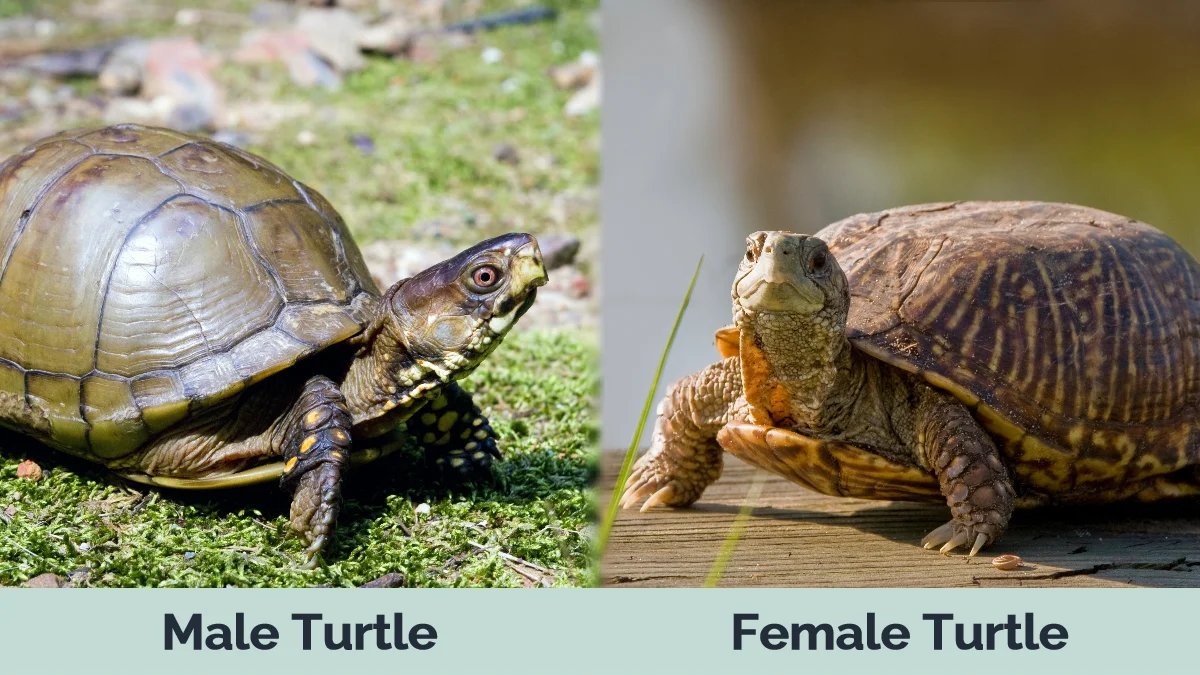
A male adult turtle’s size depends on the species, but males often have shorter shells than females do. However, sometimes the length difference is barely noticeable, so judging the shell length isn’t always an accurate way to tell the gender. In addition, your turtle must be fully grown to be able to make the possible distinction.
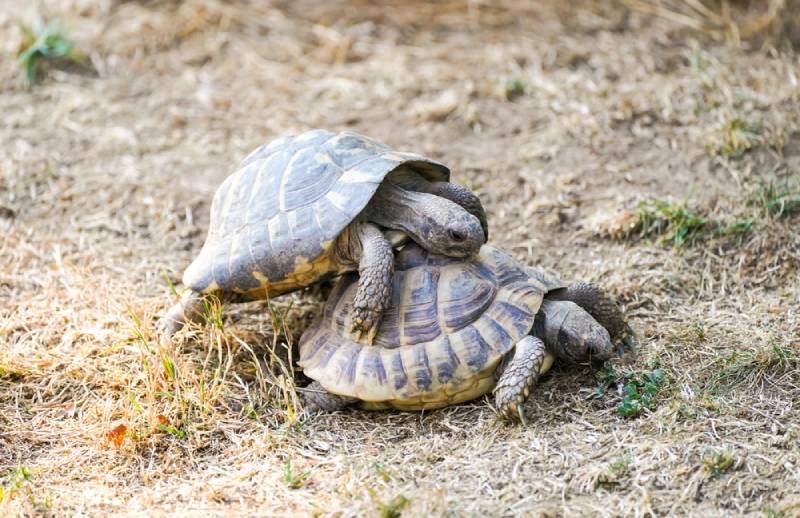
Another thing to look for: male turtles’ plastrons (the shell over the belly area) form a sort of concave, which is useful as it helps the male stay in position when mating with a female. Furthermore, male turtles flutter their front claws as a means to attract females and use them when necessary to guard their territory and fight with other males. For this reason, the male’s front claws are noticeably longer than those of females
The tail is another marker for potential gender distinction because males have longer tails than females. Also, the cloaca (the vent) is further down the tail than that of females, being closer to the tip, and is longer.
Personality
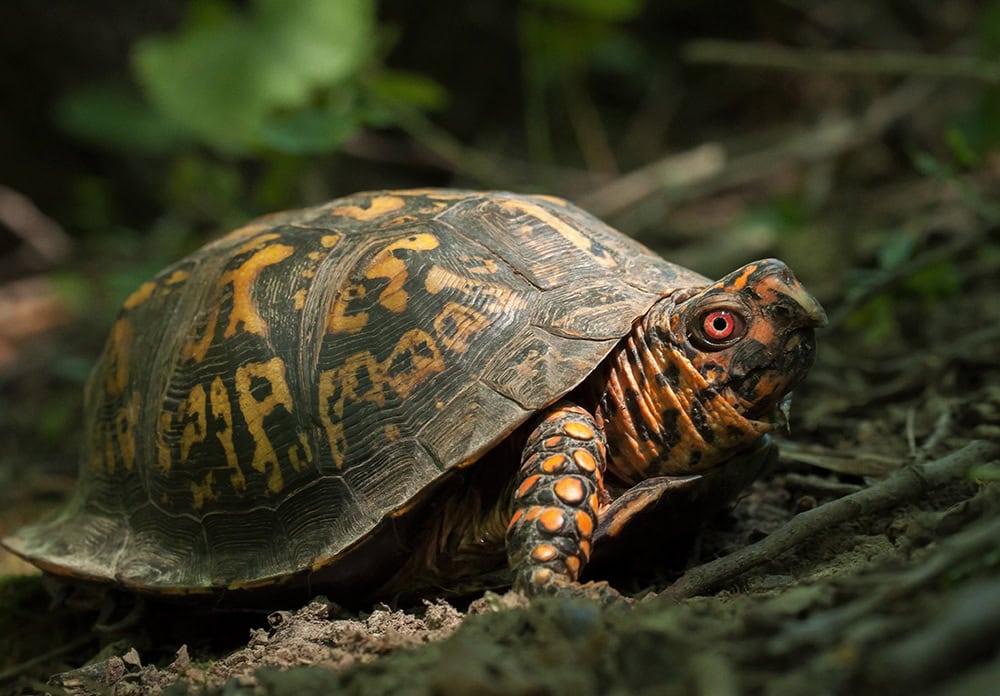
Turtles have their own, unique personalities regardless of gender, but one thing to be aware of is that adult males kept together are likely to fight, whether over females or over territory in general.
Dominant adult males also tend to bully smaller males over space and resources like food. For this reason, it’s best to avoid putting two male turtles in the same tank together. In any case, turtles are solitary and don’t need a “friend”.
Female Turtle Overview
Appearance
In addition to often having longer carapaces (shells) than males, female turtles have a flat plastron instead of a concave one. Females have this feature because they need to grow eggs and a flatter plastron allows for more egg space.
In contrast to the male’s long ones, females typically have much shorter front claws, and the cloaca (tail vent) is positioned at the base of the tail whereas, in males, it’s closer to the tip of the tail. The female’s cloaca has a rounder shape than the male’s thinner one, and the female’s tail tends to be shorter and thinner than a male’s.

Personality
It’s more likely for two female turtles to live together harmoniously than it is for two males since females (in general) don’t have such a high tendency to get aggressive with one another. They’re also less inclined toward bullying behaviors.
However, as with males, it is not necessary for females to live together—they do perfectly fine on their own. Individual turtles’ personalities vary; some are shy, some are friendly, and some are more aggressive than others.
Which Gender Is Right for You?
If you’d like to keep a single turtle, either gender would be a good choice. Each turtle will display different personality traits and you can’t predict these without getting to know that turtle. If you’re thinking of having two live together, you’ll likely have better luck with two females rather than two males due to their tendency to fight.
On a final note, it’s always wise to exercise caution when housing turtles together, especially if they’re of a different species. Some species are compatible with certain other species, whereas others are not at all, so be sure to do your research before deciding to offer your turtle a tank mate. If in doubt, contact the (hopefully reputable) breeder you acquired your turtle from or an exotic vet.
See Also:
Sources
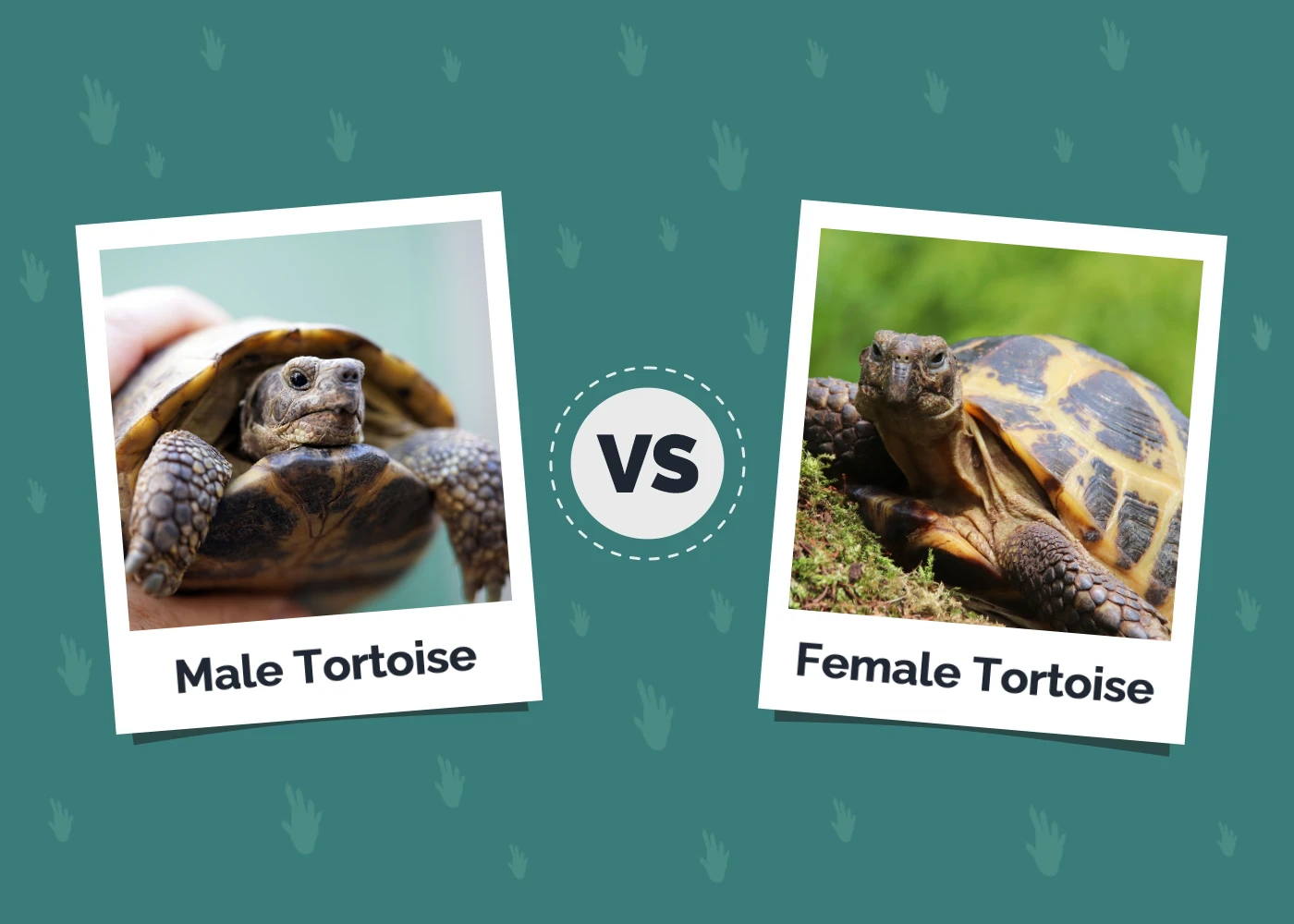
Featured Image Credit: Left - David Dibert, Pexels | Right - Alexas Fotos, Pexels
Get Hepper In Your Inbox


Pet care tips from our vets and experts, straight to your inbox.
You may opt-out at any time. View our Privacy Policy for more information.
Kit Copson is a freelance writer and lifelong animal lover with a strong interest in animal care. She has parented various furry beings over the years and is currently a proud cat mom of two—one skittish but adorable Domestic Shorthair and very chilled (unless hungry) Siamese and a —and dog mom of one—an adopted Bichon Poodle cross. When not writing about or spending time with pets, Kit can be found doodling in her sketchpad, reading, or more often than not, drinking tea.
Join the conversation
Ask a question, share your story, or send private feedback.