Hepper is reader-supported. When you buy via links on our site, we may earn an affiliate commission at no cost to you. Learn more.
Do Turtles Hibernate? Vet Approved Facts & Explanation


In this article
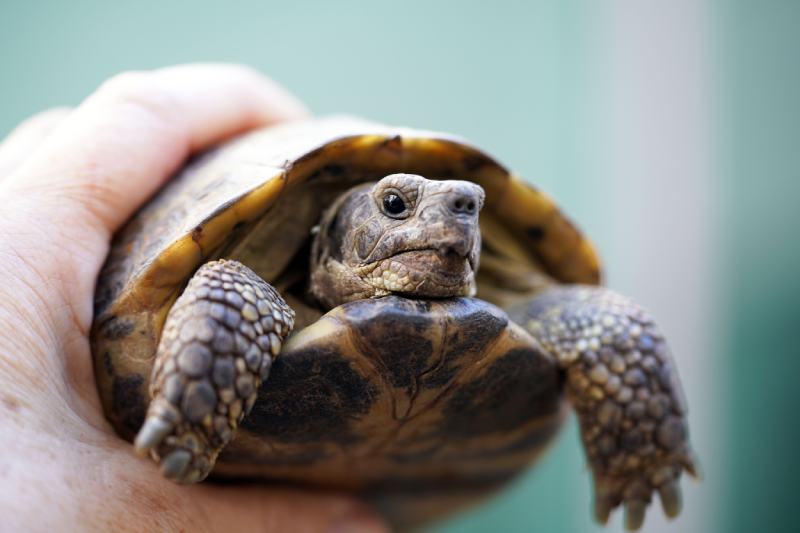
When you think of hibernation, chances are that bears spring to mind. But all kinds of creatures hibernate in some form or other, including turtles and tortoises.
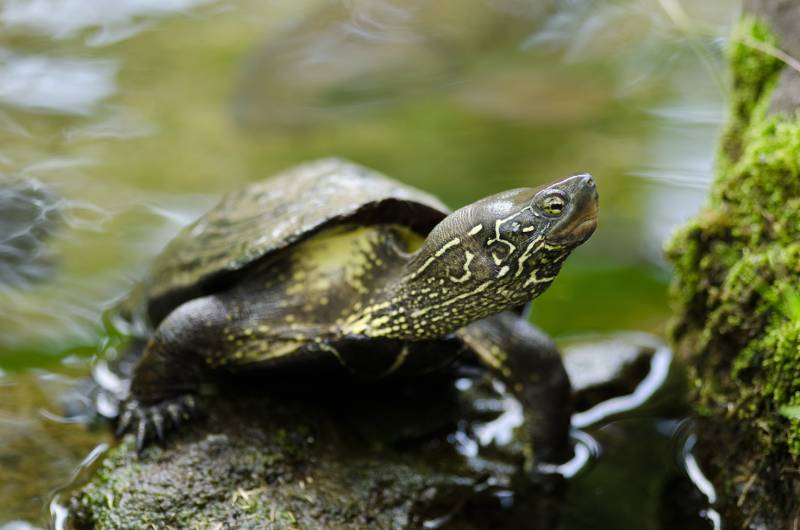
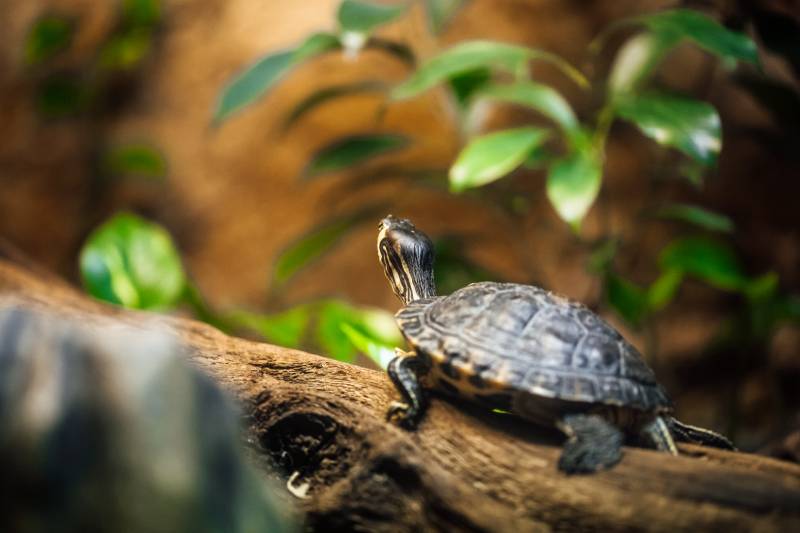
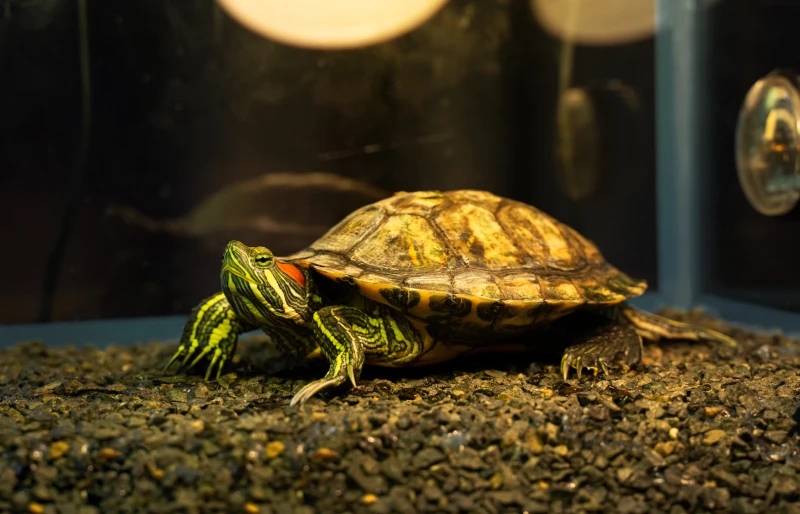
Turtles in the wild and even pet turtles can hibernate, but to be more precise, turtles go through something called brumation.
Here, we get into the fascinating facts about turtles going through brumation and whether your pet turtle should hibernate!

What’s the Difference Between Brumation and Hibernation?
Brumation is fairly similar to hibernation in that it’s a period of dormancy that animals enter when the weather turns cold. But there are a few differences.
Hibernation
Hibernation is a period of dormancy that warm-blooded animals, or endotherms, enter during cold weather. Endotherms generate their own internal heat and can warm up by producing metabolic heat and through shivering. Humans and most mammals are endotherms.
Besides bears, ground squirrels and certain species of marmots and bats hibernate. Their metabolic rate, heart rate, body temperature, and breathing rate all slow down during the cold winter months. This helps the animal conserve energy and increases the odds of survival when food sources are at a minimum.
These animals can hibernate for a few days, weeks, or months, depending on the temperature and the animal’s condition. Hibernating animals do not need to consume water or food because they live on the body’s reserves from food eaten in the prior months.
Brumation
Cold-blooded, or ectothermic, animals can’t regulate their body temperature like warm-blooded animals can, so they rely on their immediate environment to absorb heat to regulate their body temperature.
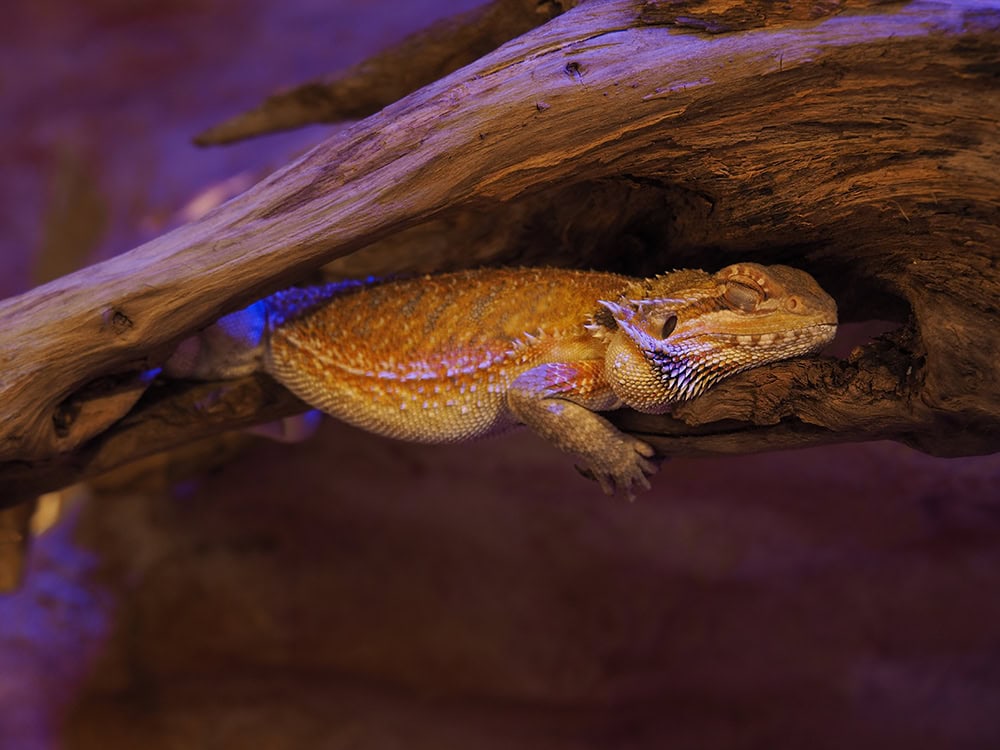
Certain reptiles hide in rock crevices during cold weather and might even burrow underground. Their respiratory rate, body temperature, and heart rate also drop, like in hibernation.
The main difference between hibernation and brumation is that hibernating animals do not move until they come out of their hibernation. But brumating animals will move on warmer days to find water and sometimes food.
They aren’t in quite the same deep sleep and don’t have the same food and water reserves as hibernating animals. So, rousing every now and then is essential for their survival.
How Do Turtles in the Wild Brumate?
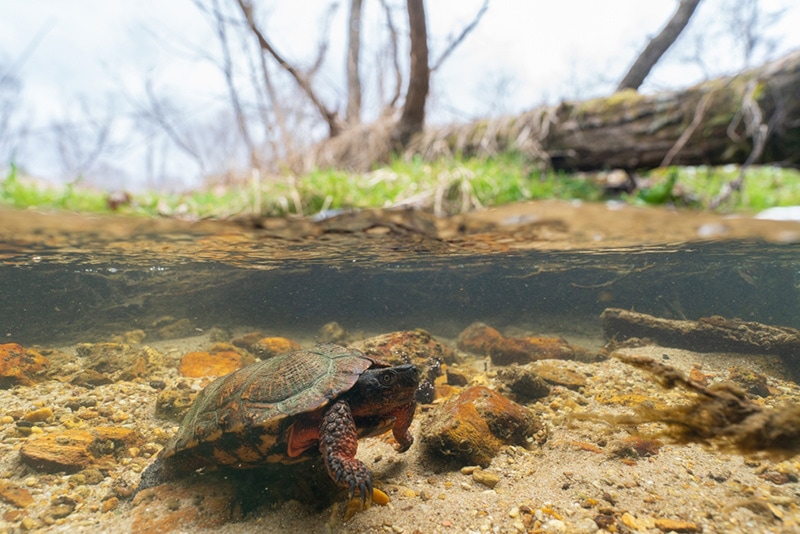
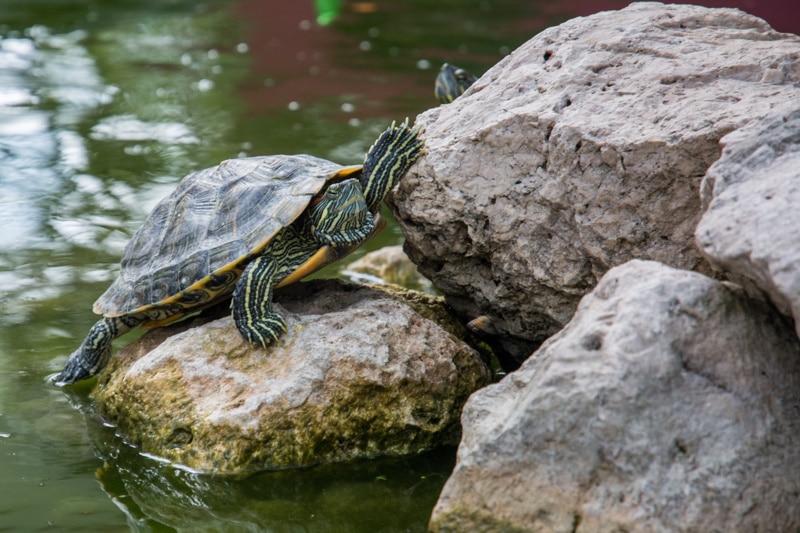
Most turtles will start brumation in the autumn, around October and November, when the temperature starts to plummet and the daylight hours decrease. The cooler air begins to slow down a turtle’s metabolism. Since they are an ectotherm and reliant on the temperature of their immediate environment, if the pond's temperature is 34°F (1°C), so is the turtle’s body.
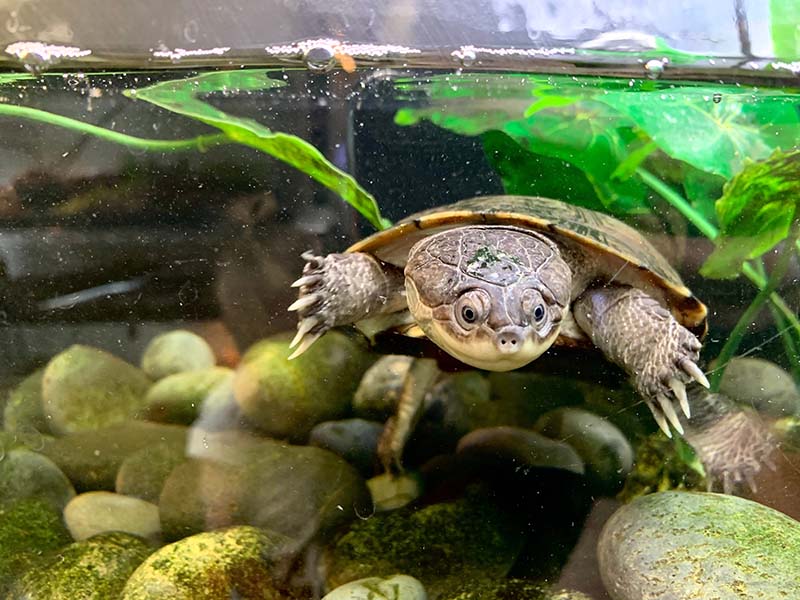
When turtles are in ponds, the colder the water gets, the slower the turtle’s metabolism gets, which means they have lower energy and oxygen requirements. But they have another unique feature: Turtles can breathe through their butts, more officially known as cloacal respiration.
However, adult turtles can’t survive frigid temperatures, and being underwater during brumation enables their body temperature to remain fairly stable because pond water tends to stay the same over the winter.
How Can You Help Your Turtle Brumate?
Brumation is an innate behavior that happens because the turtle’s body is telling them to brumate. Some pet turtles might even brumate when everything stays the same, including any light cycles that you have set up.
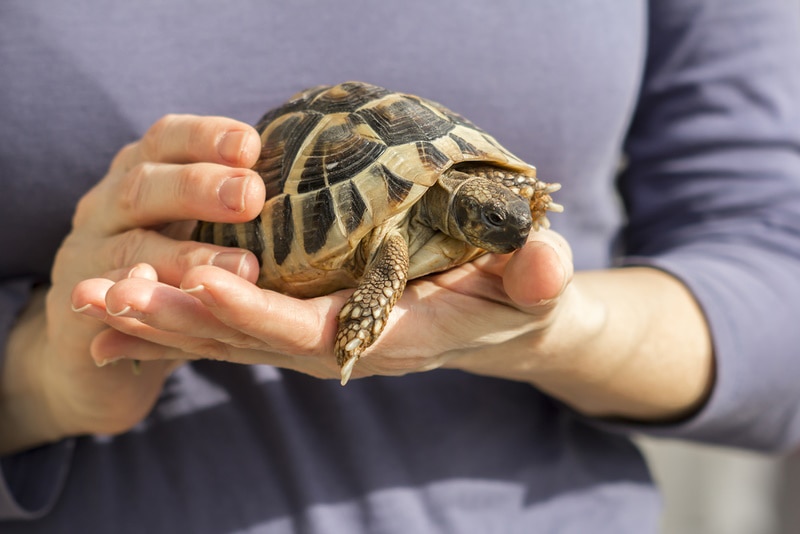
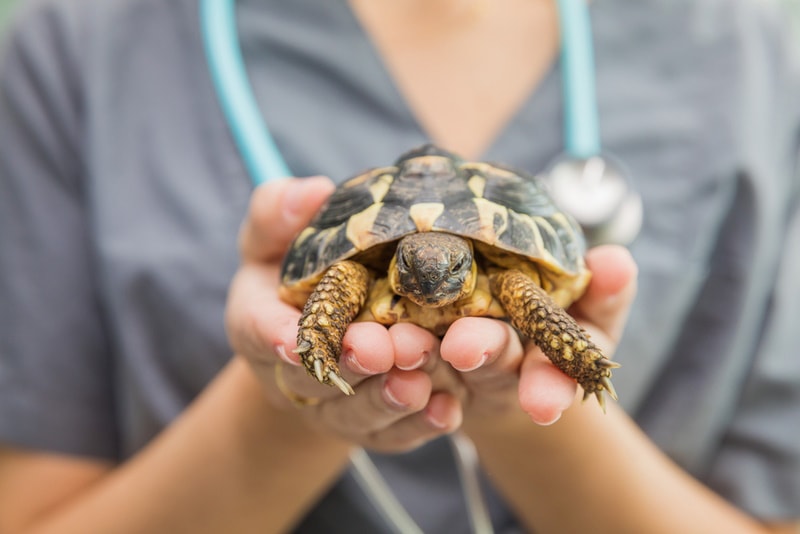
Your turtle must be in good health and at a minimum, the age of 4. It would be a good idea to ask your veterinarian for help in this area. They can check your turtle to ensure that they will be able to safely brumate and give you further advice.
You also need to check that your turtle is a species that goes through brumation. They need to gain weight over the summer with foods high in vitamin A. A habitat temperature of about 41°F (5°C) is ideal for brumation.
When the turtle gets closer to the start of brumation, they will taper off and eventually stop eating. They'll bury themselves, and throughout the brumation, they will lose weight—an average of 6% to 7% altogether. Any more weight loss than that might be a health problem.
You should check on your turtle throughout the brumation to ensure that they are okay. This will include occasional soaking to avoid dehydration, doing weigh-ins, and ensuring that their environment is stable.
It’s usually recommended that only turtle owners with experience should support their turtle going through brumation. The process can actually be quite dangerous and might result in a turtle never waking up. Always consult with your vet before supporting your turtle in brumation.
How to Prevent Brumation
Keep the lighting, temperature, and feedings consistent all year. The most important thing is to ensure that the lights in the winter follow the same times as the summer months and that the temperature remains high enough that your turtle won’t go into brumation.
But if your turtle still enters brumation, know that it is a natural process, though you should speak to your vet if this occurs.

Final Thoughts
Brumation is almost a milder version of hibernation. It isn't quite as deep a sleep, and the turtle can rouse themselves enough to seek out food and water before entering brumation again.
Whether you want to allow your turtle to brumate is up to you, but you should get the go-ahead and any advice from your veterinarian. You can also do research on your own, but be sure to only read trusted sources.
Remember that brumation is a serious process, and if it’s not done right or your turtle is too young or in poor health, they might not survive. This is why it's essential to get your vet involved.
See Also:
Featured Image Credit: Mark Leung, Shutterstock
Get Hepper In Your Inbox


Pet care tips from our vets and experts, straight to your inbox.
You may opt-out at any time. View our Privacy Policy for more information.
Kathryn was a librarian in a previous lifetime and is currently a writer about all things animals. When she was a child, she hoped to work in zoos or with wildlife in some way, thanks to her strong love for animals. Unfortunately, she's not strong in the sciences, so she fills her days with researching and writing about all kinds of animals and spends time playing with her adorable but terribly mischievous tabby cat, Bella. Kathryn is hoping to add to her family in the near future – maybe another cat and a dog.
Join the conversation
Ask a question, share your story, or send private feedback.