Hepper is reader-supported. When you buy via links on our site, we may earn an affiliate commission at no cost to you. Learn more.
Telescope Eye Goldfish: Care, Traits, Pictures & More
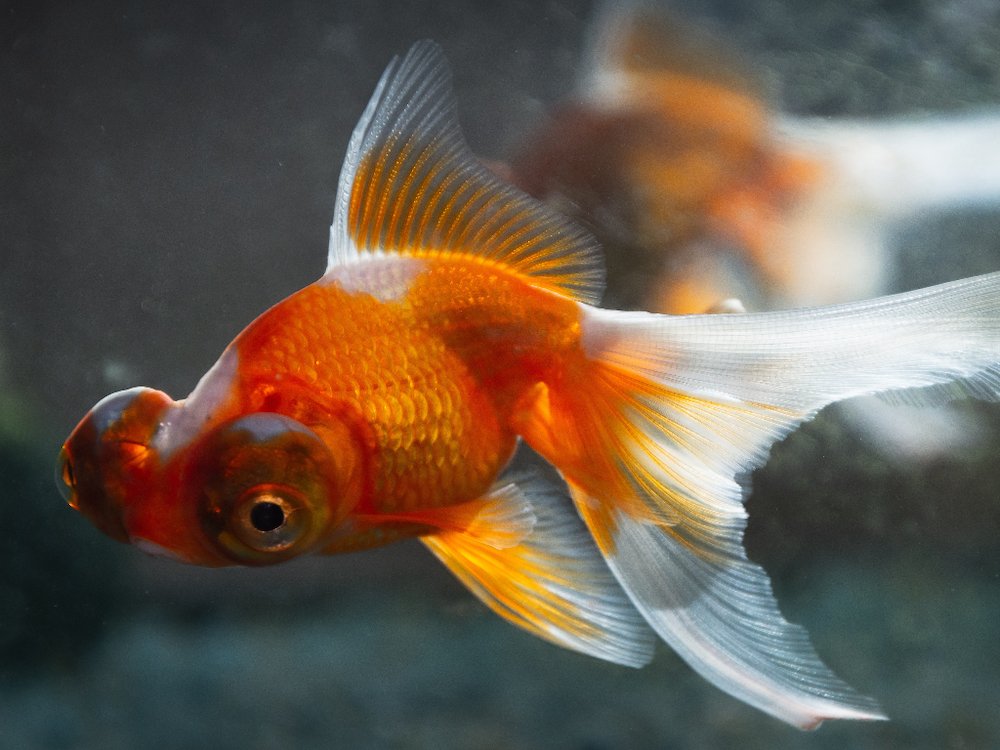
With large protruding eyes, the telescope-eye goldfish is nothing if not distinctive. But, how much do you know about this striking fish?
If you’re thinking of keeping telescope eyes – or you already do – we’ve got all the information you need about these fish to keep them happy and healthy. Not to mention some interesting facts and figures.
So, read on to learn more about this memorable type of fancy goldfish.

Defining Looks Of The Telescope Eye Goldfish
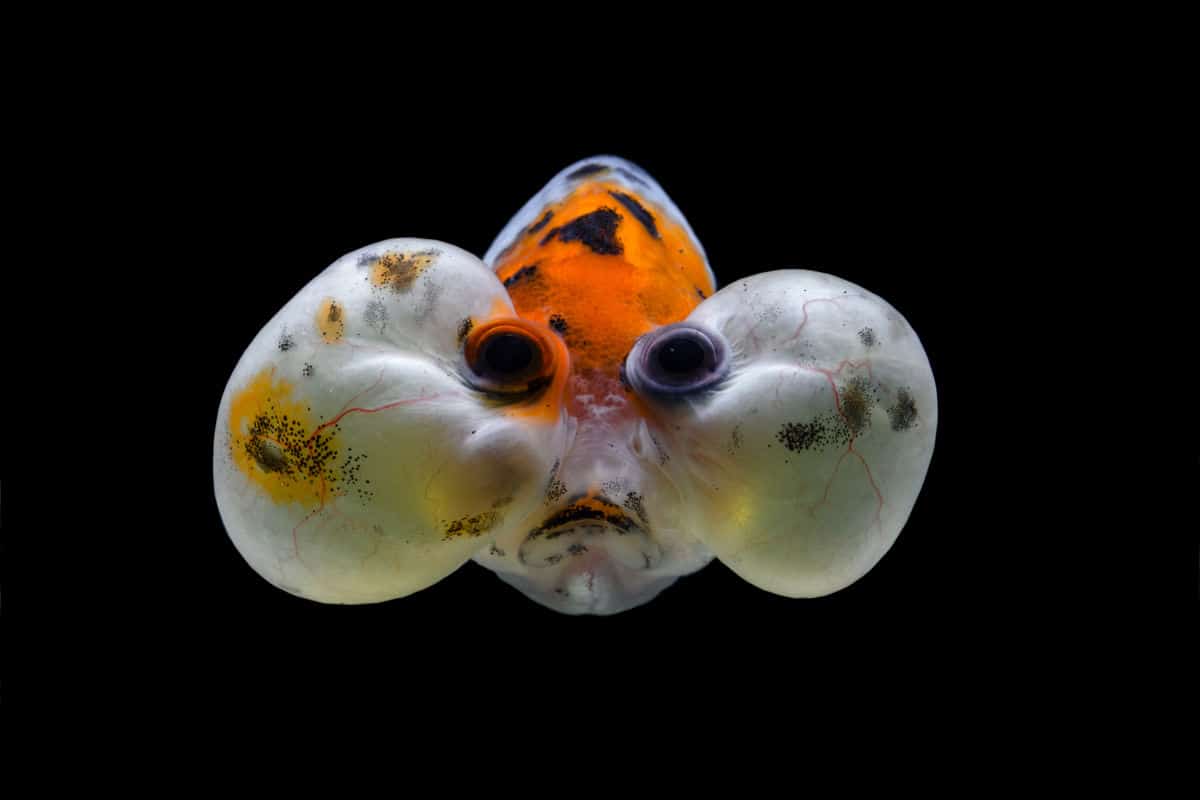
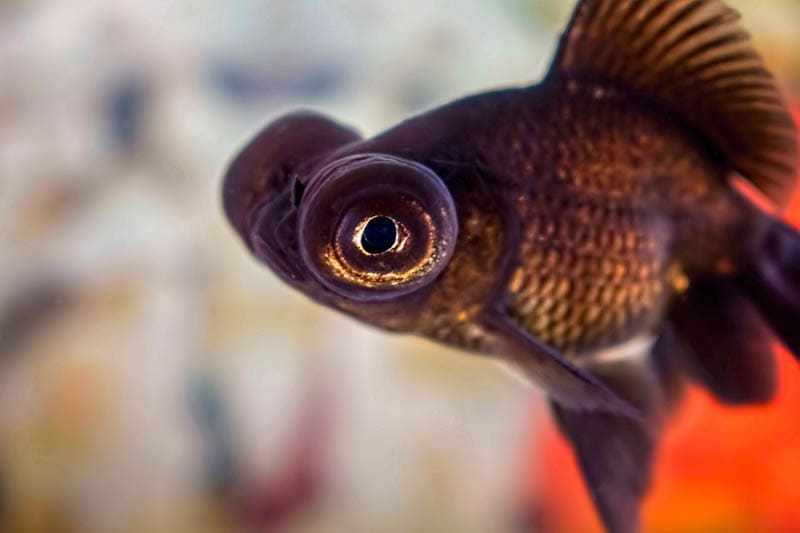
The most distinctive feature of the telescope eye goldfish – and the feature from which they get their name – is their protruding eyes perched on the end of long “stalks.” This makes them stand out in comparison to all other goldfish types.
In some fish, these stalks can reach up to 3/4-inch in length, though most are shorter.
Their bodies are rounded, or egg-shaped, much like the fantail goldfish, except slightly smaller, with a body depth about two-thirds of the length.
Telescope eyes have a distinctly short and stubby look to them, plus a split, slightly forked caudal fin.

Available Colors
Telescope eyes can be found in a range of colors, with either metallic or nacreous scale types, but rarely with matte scales.
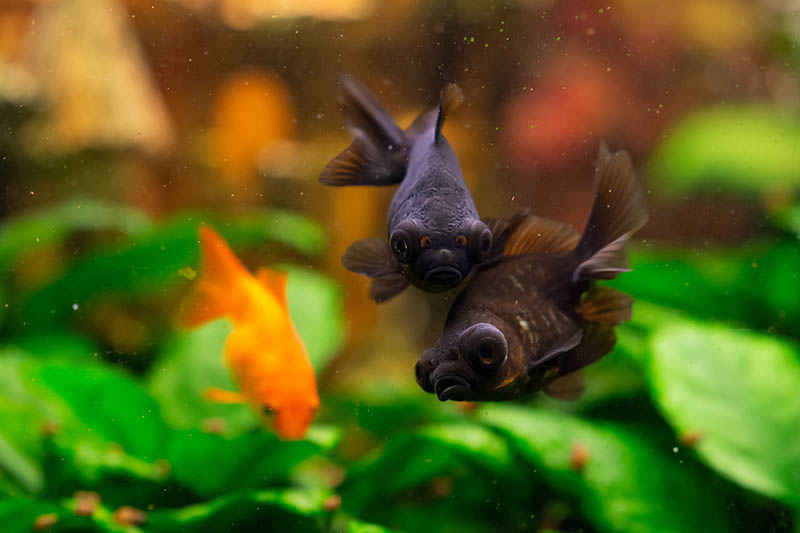
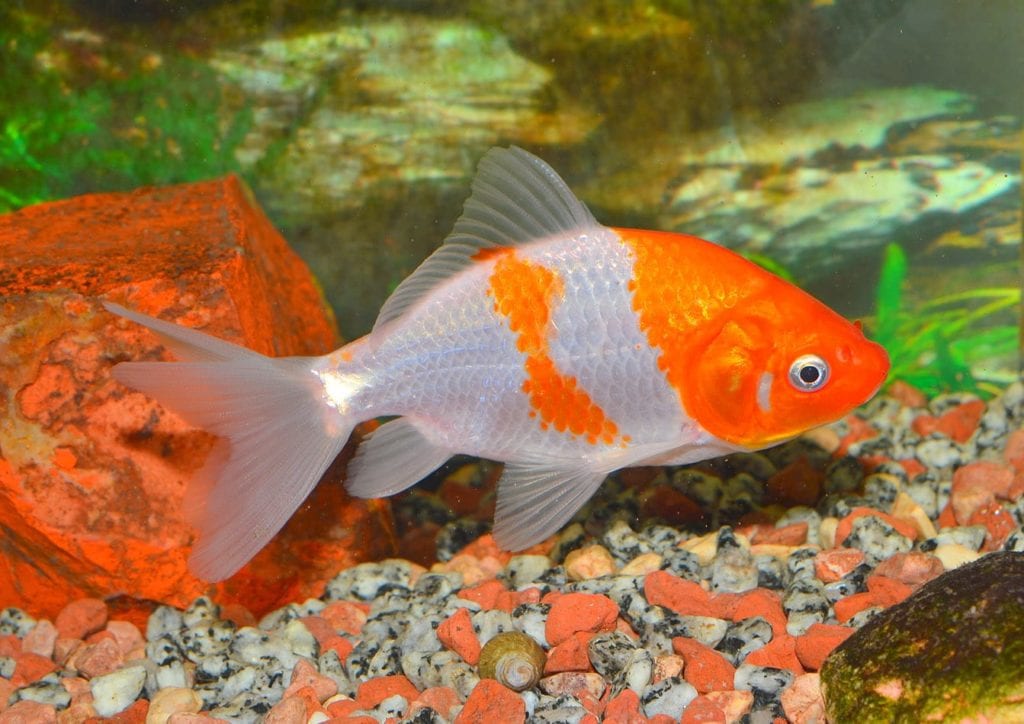
Colors include solid white, red, blue, or chocolate; bi-colored red and white or black and white; or tri-colored/calico. The goldfish known as the black moor is technically a black telescope eye, but they tend to have slightly shorter eye stalks.
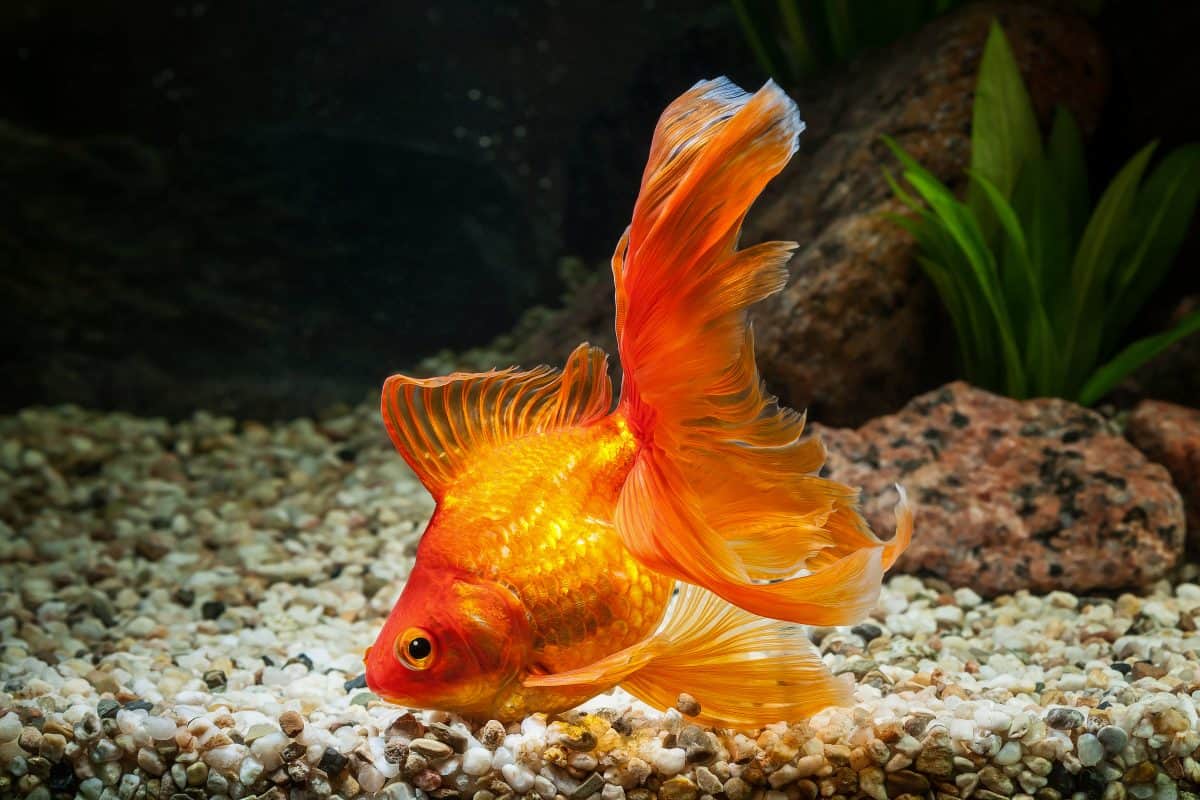
Regarding tail type, telescope eye goldfish can come in a few variations: the standard split caudal fin of a moderate length, a long flowing tail, a veil tail, a broadtail, or a butterfly tail.
How Big Can Telescope Eye Goldfish Get?
Telescope-eye goldfish usually measure between roughly 4 and 6 inches, but they have been known to reach 8 inches in length.
How Long Can Telescope Eye Goldfish Live?
Like all goldfish, telescope eyes have a reasonably long lifespan. It’s common for them to live for 10 to 15 years if properly looked after.
However, 15 to 20 years isn’t uncommon when kept in a pond or a large, well-maintained aquarium.
Origins
In our article on goldfish history, we discuss how all goldfish can be traced back to the carp kept in ponds in ancient China. However, we do know some details of the origins of the telescope eye goldfish more specifically.
These beautiful fancy goldfish were among the first to be bred to type, back in China in the early part of the 1700s. Originally, the Chinese called this type the “dragon eye” or “dragonfish.” The telescope eye was further developed in Japan in the late 1700s, where it was called the “demekin” – the name these fish still go by in Japan to this day.
Are they Easy to Keep?
Telescope eyes aren’t one of the easiest goldfish types to keep, and therefore aren’t recommended as a first fish or even a first goldfish.
Their eyes can easily become injured and infected, and they have poor eyesight so don’t compete well for food – as such they’re best left to more experienced goldfish-keepers.
If you're new to the world of goldfish or are an experienced goldfish keeper that loves to learn more, we recommend you check out our best-selling book, The Truth About Goldfish, on Amazon.
From diagnosing illnesses and providing correct treatments to ensuring your goldies are happy with their setup and your maintenance, this book brings our blog to life in color and will help you to be the best goldfishkeeper you can be.

Telescope Eye Goldfish Care
Due to their delicate protruding eyes, you must be careful what you put in a tank with telescope-eye goldfish. Avoid anything with sharp edges, as it could damage your fish’s eyes most decorations should be avoided, including any fake plastic plants.
Provide cover for your goldfish in the form of live plants suitable for goldfish tanks, or silk plants without any “scratchy” parts.
Dietary Requirements
Telescope eye goldfish – like all members of their species – are omnivores, which means they eat both plants and animals. The key to a healthy goldfish is feeding a good range of food – just like us; they need a varied and balanced diet.
We’d recommend starting with a high-quality flake or pellet food explicitly designed for goldfish.
Because goldfish lack stomachs, pellet foods should be soaked in water before feeding. Otherwise, they can cause constipation and swim bladder issues.
Supplement this flake or pellet food with a range of fresh, frozen, or freeze-dried foods, such as brine shrimp, tubifex worms, daphnia, bloodworms, shelled peas, and zucchini.
Aquarium Requirements
Your telescope eye’s tank is their home – where they may even spend the whole of their life – so it’s essential to get the set-up right to help keep them happy and healthy.
Tank Size and Shape
Even though telescope eyes aren’t the largest of goldfish, they still need a relatively big aquarium.
Goldfish produce a lot of waste, so in too small a tank, the water quality will be poor, which isn’t good for your fish – plus it means more water changes for you.
Not to mention that your goldfish needs adequate room to swim – so absolutely no fishbowls allowed!
Start with a minimum 20- to 30-gallon tank for a single telescope eye goldfish, and add 10 gallons per additional fish you house with them. So, if you keep three fish together you’ll need a tank of 40 to 50 gallons, if you keep five you’ll need a tank of 60 to 70 gallons, and so on.
Bear in mind, that’s the minimum – goldfish thrive in large spaces, so the larger the aquarium you can provide, the better.
Telescope eye goldfish do best in rectangular tanks that are longer than they are wide. This gives them more horizontal swimming space, plus the larger the surface area of the water, the more oxygenated it is.
Is a Filter Needed?
As mentioned above, goldfish produce a lot of waste, so powerful filtration is a must. Choose whichever type of filter you prefer, but bear in mind the specific needs of a telescope eye goldfish when making your selection.
First, ensure your chosen filtration system has no rough or pointed edges, as these could damage your fish’s delicate eyes. Secondly, avoid filters that produce a particularly strong current as telescope eyes aren’t the fastest or strongest of swimmers.
It’s also important to make sure your filter is strong enough to deal with the size of tank you have – and, remember; your filter should be slightly too powerful rather than not powerful enough.
What Substrate Should You Add?
While the substrate isn’t 100 percent essential for goldfish, many fish-keepers find it looks more attractive than a bare-bottomed tank. Goldfish also like to forage for food in the substrate, so it allows them to practice this natural behavior.
Plus, your substrate can harbor some of the good bacteria essential for maintaining a healthy aquarium environment.
Opt either for a fine sand substrate or a completely smooth gravel too large for your goldfish to swallow. Never have any jagged gravel or rocks with a telescope eye goldfish, as you don’t want them to scratch and injure their protruding eyes.
Do They Need Lights?
If you keep your tank in a room with lots of natural light, artificial lighting is not essential (unless you grow live plants), but many people like to use it anyway, as it makes the tank more attractive, especially after dark or on gloomy days.
The aim with artificial lighting is to maintain a natural day/night cycle, so keep the light on for about 12 to 16 (consecutive) hours a day, and off for 8 to 12 hours a day. Use a timer to regulate this, as it’s easy to forget and you might not always be home when it’s time for “lights out.”
What Temperature Do They Need?
The temperature in your telescope eye’s tank should be kept between about 65 and 75 degrees Fahrenheit. This means, in most climates, they won’t need a heater in their tank.
While goldfish can survive colder temperatures than this, it isn’t comfortable for them, and a sudden drop in temperature can prove fatal.
Therefore, if you live somewhere extremely cold, think about getting a basic water heater for your tank to help maintain a constant temperature.
Tank Mate Compatibility
Due to water temperature and other requirements, goldfish are best kept with other goldfish. While some people report success keeping them with other coldwater species, we wouldn’t recommend it.
Telescope eyes are slower than most goldfish – even other fancy types – and have poor eyesight, so you must be careful when selecting tank mates, so they don’t get out-competed for food.
Of course, other telescope eye goldfish (including black moors) are the ideal tank mates, but other slow-moving fancy goldfish with handicaps also work out well, for instance, bubble eye goldfish, celestial eye goldfish, and lionhead goldfish.
Video: A Look at the Telescope Eye Goldfish
If you want to see the telescope eye goldfish in action, check out the video below. Note this isn’t their usual tank – this would be too small for the amount of fish in there. The maker of the video states they usually live in a 127-gallon tub/indoor pond.

Final Thoughts
Telescope eye goldfish may have a unique appearance – with their protruding eyes – but they do have some specific needs because of this, so you should not take one on before carefully considering whether you can meet their needs.
And, don’t forget, your new aquatic pal could live for 20 years, so you must be prepared to be in it for the long haul.
Featured Image Credit: PxFuel
Get Hepper In Your Inbox


Pet care tips from our vets and experts, straight to your inbox.
You may opt-out at any time. View our Privacy Policy for more information.

Jeremy has been a fish keeping enthusiast for more than 2 decades. He loves to share his knowledge with others, to aid in the enjoyment of fish keeping, and to get as much fun and joy out of the hobby as he does.
Join the conversation
Ask a question, share your story, or send private feedback.