Hepper is reader-supported. When you buy via links on our site, we may earn an affiliate commission at no cost to you. Learn more.
Briard Dog Breed: Info, Pictures, Characteristics & Facts
In this article
Breed Overview
Height:
Weight:
Lifespan:
Colors:
Suitable for:
Temperament:
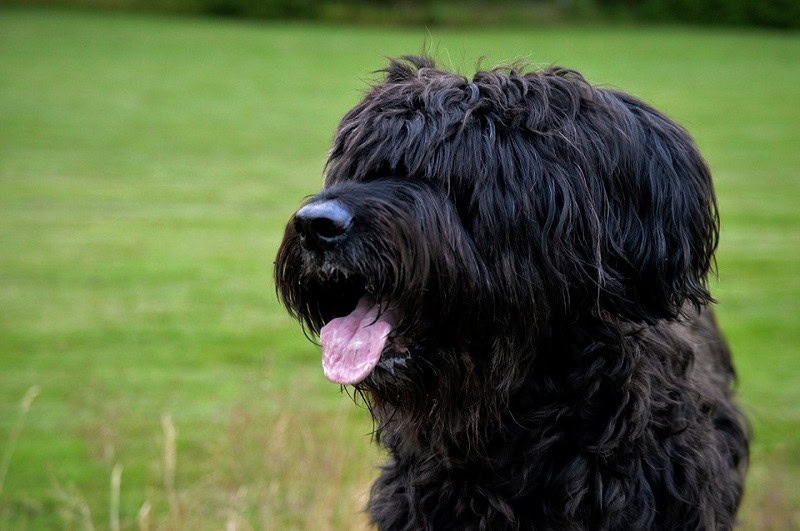
The Briard is an unusual dog in America, and it's unlikely that you've met one before. Unless, of course, you have a holiday home in France, and then you probably have. He hails from the dairy belt of northern France and is linked to the town where the gorgeously gooey French cheese, Brie, is produced.
The Briard is a versatile dog who is a hardworking member of the family. He loves nothing more than to snuggle in the evening after he has earned his keep during the day. He's great with kids, other dogs, and he slots himself well into family life. But, before you rev up your engine and head towards your nearest Briard breeder, there are a few things that you need to know. Because he is not for everyone!
Here we will run you through the good, the bad (if you can call it that), and the not-so ugly (because he is gorgeous) so that you are armed with all the Briard facts. If you think that this guy sounds like he would fit well with your family, this guide is a must-read.

Briard Puppies
Briard Characteristics
The Briard is undeniably a fantastic family dog. But before we start reeling off why, we're going to run you through the crucial facts that might not make him the best option for you or your family.
First off, the Briard is a working dog breed. This means that he is intensely energetic and is happiest when there is a job to be done. Despite his lovely flowing locks, he will not be impressed sitting around the house all day being pampered. Until he has burned that energy of his off, he will not be able to sit still.
For this reason, he cannot be placed with a family who likes to Netflix and chill all day long. If you can’t work him on a ranch, that's fine, but he needs a lot of exercise instead. Without this commitment, he will become unruly, problematic, and destructive for sure.
Not only was he a herding dog, but he was also a flock protector. This means that he is wary of strangers, and he will protect his family. This is great if you are looking for a watchdog or a family protector, but not so much if you aren't. He can be a handful if you aren't used to protective dogs, so this guy is best for those with previous dog experience.
Being a hardworking herding dog who organizes farmers' fields on his own, you can bet that this guy has an independent streak. Sometimes, this guy believes that he doesn't need a master. But this is where you need to step up and be firm with him. Novice dog owners, or the meek and mild dog parents, need not apply for a Briard.

Temperament & Intelligence of the Briard 🧠
Aside from the temperament traits that we mentioned in the first section, the Briard has some wonderful characteristics that would compliment most families. He is super loving and affectionate. So if you are looking for a hairy water bottle, this is the guy for you. He likes to feel as though he is a part of the human gang, and he’ll sit with you on the sofa every night.
Because he craves human companionship, you can expect a second shadow with this guy. Some dog parents love this trait, but others prefer a less needy family pet. If you are a fan of intense dogs, this guy could be your match made in heaven.
The Briard likes to get stuck into family fun and be the center of attention. This means if you have plenty of time to play with a pooch, this guy is game for, well, lots of games! If you haven’t got the time or the energy for this, you need to pick another dog breed altogether.
The Briard is an intelligent dog. Not only can he handle a whole flock of sheep on his own, but he can pick up commands very quickly. This is great, but there's a big but. The Briard can be an independent dog who will do what he wants if he’s having an off-day. This is why his puppy training is critical. But, if you are expecting a fully obedient pup, that would be great, but no, not with the Briard.
Are These Dogs Good for Families? 🏡
As long as you are the right family, yes, he makes a great family dog. He needs to be placed with an active family who is happy to involve him with everything they do. This guy makes a fantastic jogging partner, adventurous mountain hiker, swimmer, and everything else you can think of.
He loves the family lifestyle and would be much happier with a busy family. He is a great fan of children, and he is gentle in play with kids of all ages. If you travel on vacation without your doggies in tow, this guy will not be impressed.
Because he is a traditional herding dog, you need to keep an eye on any herding behavior in the family home. You may notice that he tries to herd the younger family members of the family, which should not be tolerated. We’ll talk about this in the training section.
Does This Breed Get Along with Other Pets? 🐶 😽
Yes, the Briard gets along well with all other pets if he is socialized well. The Briard needs to be socialized well as a pup for him to be polite as an adult. If you are welcoming a Briard into a multi-pet household, you need to introduce your pets slowly in a controlled environment before you make any commitments.
If you live on a ranch, you’ll naturally find your Briard wanting to assist you, so don’t be too harsh on him if he tries to get involved without an invitation. If you can involve him, please do, because he will be a fantastic cowboy colleague.

Things to Know When Owning a Briard:
Now that you know everything there is about his personality, intelligence, and what he needs from a family, here are his day to day needs. So, take note soon-to-be Briard moms and dads.
Food & Diet Requirements
The Briard needs a high-quality diet that will sustain his energetic lifestyle, not a typical budget brand full of fillers. So, look for the best food that you can afford, and make sure it provides him with a well-balanced diet and plenty of protein and energy.
Briards consume approximately three cups of food every day. This will vary depending on his age, size, and energy levels. The Briard is known to suffer from gastric torsion, also known as bloat. So be sure to spread his meals throughout the day, and do not feed him immediately before or after exercise.
The Briard is a large dog breed, so you must choose a breed appropriate food. Essentially, this means that you need to feed him large breed dog food. This will ensure that he gets all the nutrients he needs for his large body.
This also leads to another vital requirement: during puppyhood, you need to feed him large breed puppy food. These puppy foods have the optimum calcium and phosphorus ratio, which will help control his rapid bone growth. This can decrease the chances of developing bone diseases such as hip dysplasia, so nothing else will do for the Briard.
Exercise 🐕
You already know that the Briard is an energetic pup, but just how much? Well, you need to set aside at least one hour of your time every day for this guy to be happy. And we’re not just talking about a casual stroll around the block here. We are talking intense exercise to expel that working energy of his.
We are talking an hour of jogging or an hour of playing fetch, as well as swimming in the local lake or playing with his buddies down at the local doggy park. It’s got to be fun and wear him out, otherwise, your Briard will be raring to go again as soon as you’ve walked back through the door.
You also need to mix his exercise activities up. Otherwise, he will become bored and turn into a diva doggo. His intelligent brain needs stimulation, too, so be sure to play with him throughout the day and keep him busy with brain games and toys for him to play with.
Training 🦮
The Briard is a naturally protective dog and can quickly become domineering and aggressive without proper socialization. And this is something that reputable breeders will begin with straight away, and you will need to continue when you take him home.
Expose him to different sights and sounds, as well as unfamiliar animals and humans. This way, he will transform into a confident and polite pooch who will not feel the need to be overly protective.
Remember we mentioned earlier the herding in the home issue? Well, this might be your biggest struggle in the home, so you need to stop it the second you notice him trying to herd children or smaller animals. Although it isn’t dangerous in itself, it can lead to annoying behaviors and pet squabbles if left unchecked. Be sure to read up on how to prevent herding behaviors in the home.
The Briard likes to see himself as one of the humans and will not take it well being told off, and he’ll likely sulk too. But, remember protective dogs need firm leadership so that he doesn’t assume the top dog position. Always use the positive reinforcement training method, but don’t be afraid of telling him off when he needs it.
Grooming ✂️
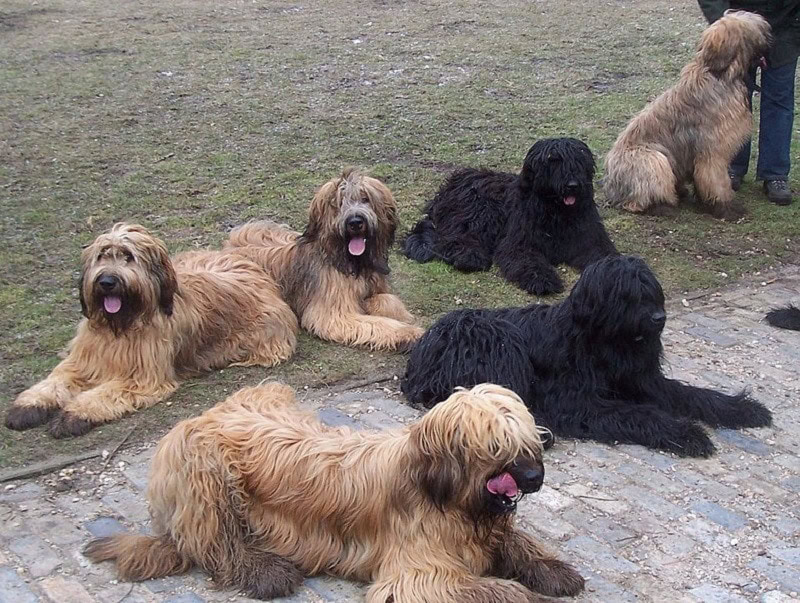
The Briard has a great head of hair. His luscious locks can grow up to 6 inches long, so he needs brushing every other day to keep him looking smart and fresh. It also helps remove dead hair, dirt, prevent tangles, and spread his natural coat oils. His hair can grow quite quickly, so many owners choose to take him to a groomer to keep him looking his best.
Thankfully, although he is not considered to be a hypoallergenic dog, he does shed much less than your average canine. Use a pin brush and a slicker brush to get the most out of his grooming schedule. Bathe him once every 8 to 12 weeks or so, and use a concentrated, but gentle, shampoo to penetrate his thick coat.
Brush your Briard's teeth several times a week too, and clip his nails if you hear them tapping on the floor. This guy suffers from many eye concerns, so each time you groom him, cast an eye over them and note any changes. If you notice that he is scratching them more than he usually does, it’s time to visit the vet.

Health and Conditions ❤️
The Briard is a generally healthy dog breed, who, just like most purebred dogs, is only prone to a handful of health concerns. He enjoys a healthy lifespan of approximately 12 years, so you can expect a long and happy time with him. Here are the more common health concerns to look out for in the Briard breed.

Male vs Female
The Briard’s personality is determined more by his upbringing, training, and his living environment, rather than his sex. After searching online, owners do not comment on the difference between male and female Briards, so this choice comes down to preference.
The only difference that you will notice about males and females is that the male Briards are typically larger than the females. Considering that he is already a large dog breed, the difference can be vast. If the size is a consideration for you, look to his parents for a size guesstimate. But remember, it is a guesstimate and not a guarantee.
3 Little-Known Facts About the Briard
1. The Briard is the doggy mascot of the French army.
His versatility and hardworking ethic made him the canine choice of French soldiers. He located wounded soldiers, pulled heavily laden carts, as well as working on guarding duty.
2. The Briard breed turned Napoleon into a dog fan.
According to records, Napoleon was not a fan of dogs. But, when he met a Briard, he soon changed his mind, and the rest was history. The Briard has this effect on many people.
3. The Briard makes a brilliant watchdog.
This dog might look like he belongs in a hairstyling magazine, but he is actually a courageous canine who doesn’t take any rubbish. He will stand his ground and protect his family if he feels there is something or someone around that shouldn’t be.
Final Thoughts
The Briard is a brilliant family dog who can bring joy and sunshine to most people's day. But, he is an intense dog who can be a handful with the wrong type of family. So, if you are thinking about taking this guy on, you need to be sure that you can tick all of his boxes mentioned in this breed guide.
As long as he receives adequate exercise, human company, and a fun environment to live in, he will be a happy French bunny for sure. If he can change Napoleon's mind, you can be sure that the whole family will adore him.
Featured Image Credit: AgnethaA, Pixabay
Get Hepper In Your Inbox


Pet care tips from our vets and experts, straight to your inbox.
You may opt-out at any time. View our Privacy Policy for more information.

Nicole is a lover of animals of all sizes but is especially fascinated with the feline variety. She’s the proud mom of Baby, a Burmese, and works every day so he can relax in the sunshine or by the fire. She’s always had a cat in her home and has spent countless days with others, observing behaviors and softening up even the grouchiest of the lot. Nicole wants to share her kitty expertise with you so you and your cat can live happy, healthy, and care-free.
Join the conversation
Ask a question, share your story, or send private feedback.