Hepper is reader-supported. When you buy via links on our site, we may earn an affiliate commission at no cost to you. Learn more.
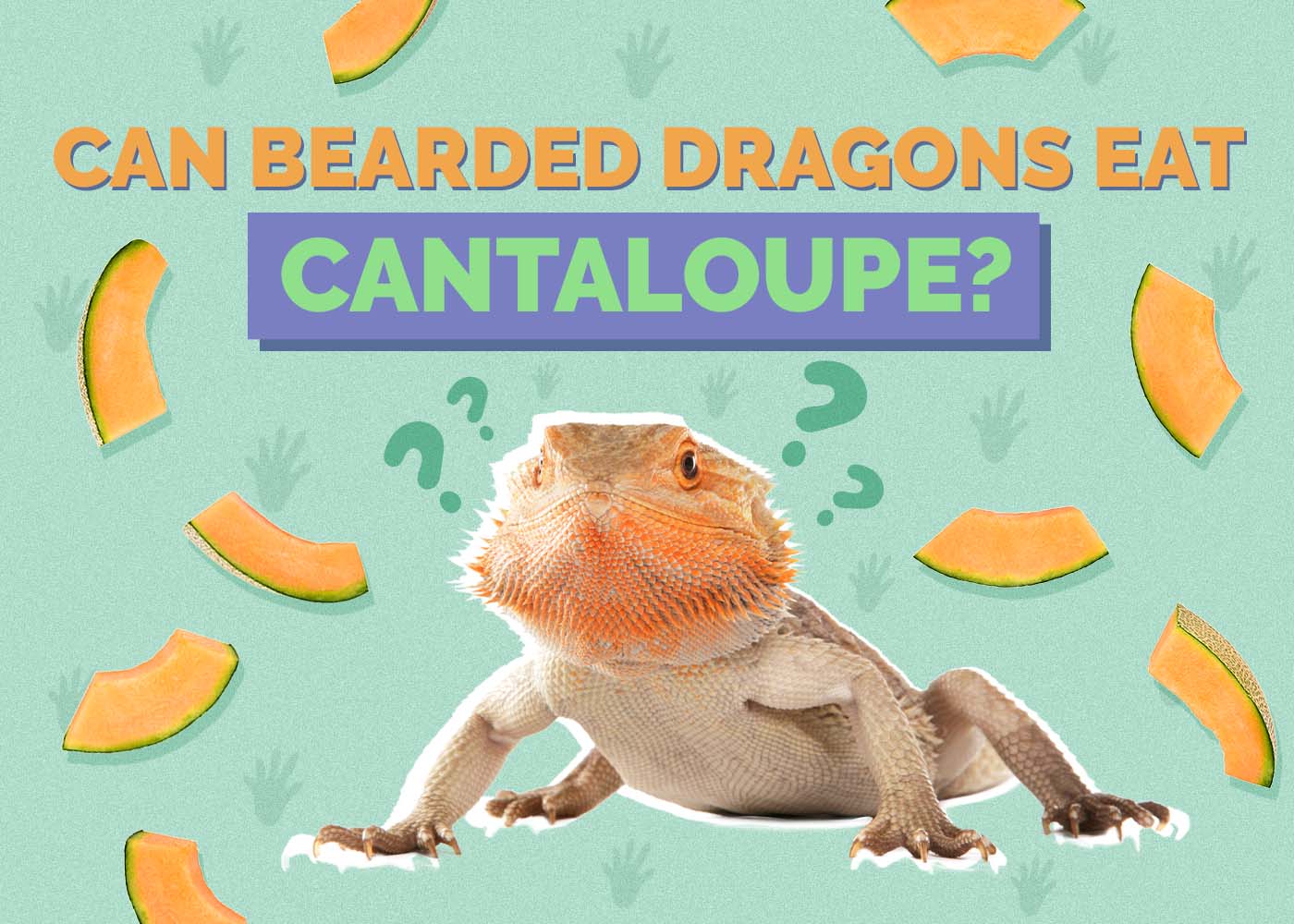
Can Bearded Dragons Eat Cantaloupe? Facts & FAQ
In this article
Wild bearded dragons are very resourceful at foraging. They feed on vegetation like leaves and fruit, invertebrates like termites, and small vertebrates like lizards. Adult beardies in captivity have a slightly different diet consisting primarily of plant material with insects a few times per week. Their need for vegetables is much higher than for fruit, as fruit should only be offered as an occasional treat. If you’re putting together a fruit salad, you might wonder if you can share some cut-up cantaloupe with your beardie.
Yes, bearded dragons can eat cantaloupe on rare occasions. Read on to find out why this fruit isn’t the best option to offer your beardie.

Can Bearded Dragons Eat Cantaloupe?
Bearded dragons can eat cantaloupes rarely, in very small quantities1.
Key Nutritional Information of Raw Cantaloupe per 100 Grams (3.5 oz.)
Cantaloupe also contains vitamin C, but this particular vitamin isn’t considered essential for a bearded dragon because they can make it themselves, unlike humans. As nutritious as cantaloupes are for humans, they aren’t the best fruit for beardies.
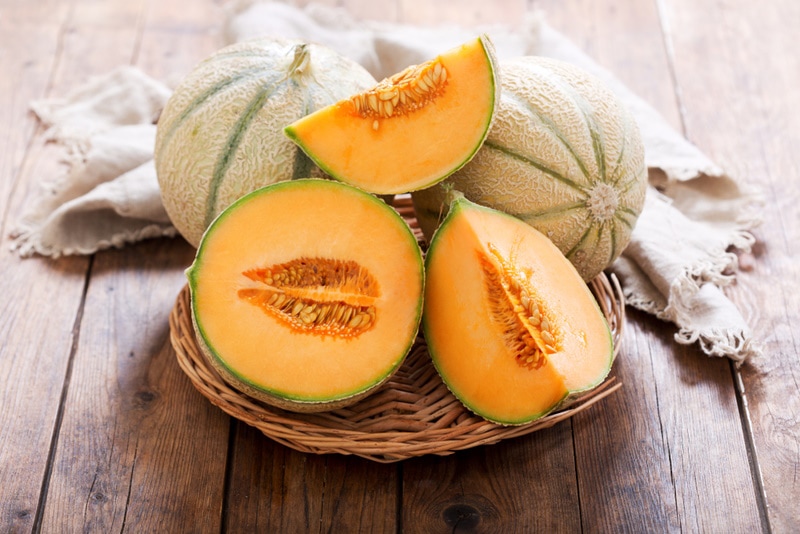
The Downsides of Cantaloupe for Bearded Dragons
Despite their many benefits, cantaloupe should be viewed as an occasional treat for your bearded dragon and not a staple part of their diet.
The main reason is the fruit’s calcium-to-phosphorus ratio. For healthy adult bearded dragons in maintenance, their diet should have a calcium-to-phosphorus ratio of anywhere between 1.5:1 and 2:1, which means the calcium should be around twice as much as the phosphorus. The recommended ratio for juveniles is around 2:1, and dragons that are breeding (especially females) require a much higher calcium intake compared to adults in maintenance.
In cantaloupes, the calcium is much lower than the phosphorus, typically around 1:1.6. Such a ratio is undesirable for the long-term health of a bearded dragon. Phosphorus balance in the body requires that it be in the correct proportion with calcium. It binds to calcium, so when a bearded dragon is fed high amounts of phosphorus, their body responds by pulling calcium out from the bones to restore the proper levels of minerals and reduce the excess phosphorus in the bloodstream. Over time, the loss of calcium from bone mass can make the bones brittle and weak, leading to a condition called metabolic bone disease2.
Also, an inappropriate ratio of calcium to phosphorus is undesirable for the long-term health of a bearded dragon because it may predispose them to kidney or parathyroid issues. Therefore, cantaloupes (like many other fruits) should be viewed as treats and not significant components of their daily salad servings.
Digestive issues may also be observed if you feed too many cantaloupes to your bearded dragon. The high water content of most fruits means consuming large numbers of them in a short period can lead to digestive distress that often manifests as episodes of diarrhea.
Cantaloupes contain a moderate amount of sugar (in the form of carbohydrates). In bearded dragons, excess sugar is not directly associated with diabetes, and the exact mechanism of diabetes in bearded dragons is still not properly understood. That said, an overabundance of calories can lead to an obese pet, which isn’t healthy and may serve as a precursor for other diseases. Their diet should consist mainly of vegetables, as they’re nutrient-dense and low in sugar.
How to Offer Cantaloupe
If you’ve decided you want your beardie to experience the tastiness of cantaloupe, here’s how to do it properly.
Always opt for fresh, raw fruit. Thoroughly wash the cantaloupe. Then, slice the fruit and remove the skin and seeds. After that, you can proceed to slice the cantaloupe into small pieces, around 1x1 cm (⅖ inch) in size. Add these pieces to your bearded dragon’s salad for the day. Bon appétit!
Cantaloupe should be considered an occasional treat. Feeding a bearded dragon a piece of cantaloupe once a month (while rotating other fruits in their diet) is considered acceptable.
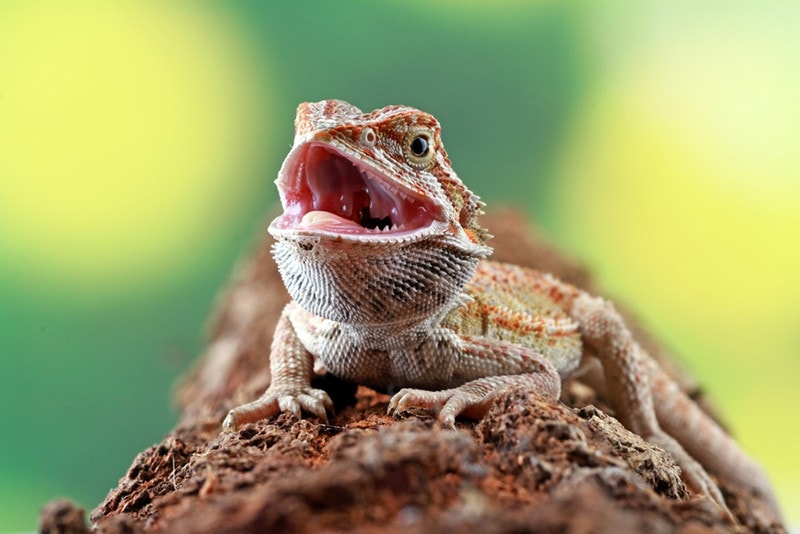
What Fruits Are Better for Bearded Dragons?
Fruit should be considered a special treat for your bearded dragon. They don’t need it daily, weekly, or at all. Your bearded dragon should get the nutrients they need from the vegetables and protein in their diet. However, in small quantities, the following fruits can be offered as treats:
Final Thoughts
Due to cantaloupe’s high sugar and water content and poor calcium-to-phosphorus ratio, you should offer this fruit on rare occasions, in small quantities, and only if your bearded dragon loves it. There are plenty of healthier and more suitable fruit options your beardie can eat instead for their monthly fruit treat.
See Also: Can Bearded Dragons Eat Rolly Pollies?
Featured Image Credit: PublicDomainImages, Pixabay
Get Hepper In Your Inbox


Pet care tips from our vets and experts, straight to your inbox.
You may opt-out at any time. View our Privacy Policy for more information.

Dr. Luqman grew up with an extreme fondness for animals and turned a childhood dream into reality by becoming a veterinarian. His goals are now focused on helping pet owners understand their pets better in order to ensure the best quality of life for all pets globally. He is passionate about wildlife, exotic pets, pet owner education, and animal welfare. Luqman has 3 years of professional experience working with a variety of animal species. He has skills in demonstrating proper animal husbandry and training some exotic species, such as parrots. Additionally, he has decades of personal experience with keeping many exotic pets: freshwater fish, parrots, songbirds, chickens, ducks, turtles, and hamsters.
Dr. Luqman grew up with an extreme fondness for animals and turned a childhood dream into reality by becoming a veterinarian. His goals are now focused on helping pet owners understand their pets better in order to ensure the best quality of life for pets all around the world. His passions are wildlife, exotic pets, pet owner education, and animal welfare.
Education
Luqman received his degree from Universiti Putra Malaysia.
Experience
Luqman has 3 years of professional experience working with a variety of animal species. He has skills in demonstrating proper animal husbandry and training some exotic species, such as parrots. Additionally, he has decades of personal experience with keeping many exotic pets: freshwater fish, parrots, songbirds, chickens, ducks, turtles, and hamsters.
Join the conversation
Ask a question, share your story, or send private feedback.