Hepper is reader-supported. When you buy via links on our site, we may earn an affiliate commission at no cost to you. Learn more.
Can Bearded Dragons Eat Pears? Vet Approved Facts & FAQ


In this article
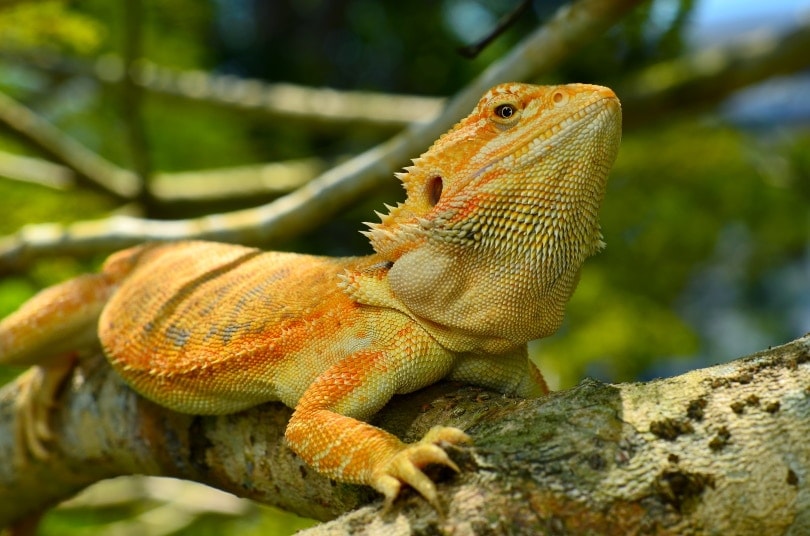
A pear is a juicy and sweet snack that’s full of nutrients. If you find your home constantly stocked with this tasty green fruit, you might wonder if it’s something you can share with your bearded dragon. While beardies can occasionally enjoy a small amount of pear, this isn’t a snack you should offer too often. An adult bearded dragon’s diet should consist mostly of vegetables and insects. Read on to learn more about pears, their benefits for your beardie, and how to offer them as a treat.

Are Pears Healthy for Bearded Dragons?
Yes, pears are a healthy treat for your beardie to have occasionally. The keyword here is “occasionally.”
Bearded dragons are omnivores, needing a diet of plant and animal material to thrive. While pears may fall under the “plant” category, fruit generally isn’t recommended for beardies more than a few times per month.
What Benefits Do Pears Offer?
Key Nutritional Information of Raw Pear per 100 Grams (3.5 oz.)
Pears are rich in nutrients and vitamins beneficial to reptiles like bearded dragons1. They contain a good dose of vitamin C, vitamin K, and fiber.
While reptiles have no direct need for vitamin C, it may be necessary to recover from certain diseases. Beardies deficient in vitamin C may exhibit poor wound healing, increased bleeding, and sometimes diarrhea.
Vitamin K is produced by gut bacteria, so it is difficult for reptiles to get a true deficiency, though it plays a role in the calcium and phosphorus metabolism in bone.
Fiber is necessary for your beardie’s diet as it helps promote healthy digestion. Your pet will likely get most of its fiber needs from the staple vegetables you provide, but the pear’s impressive fiber content makes it a great fruit to offer when your beardie deserves a treat.
Perhaps the biggest benefit that pears offer your pet is their delicious and juicy flavor. They work great as a salad topper but shouldn’t be offered more than once or twice a month.
Are There Downsides to Offering Pears?
While pears are healthy, they’re high in sugar, especially for a bearded dragon’s digestive system, which is not designed to digest that much sugar. Although your beardie may prefer it, fruits generally shouldn’t make up more than 5% of their diet because they’re mineral-poor compared to vegetables. A high-fruit diet for reptiles may lead to nutrient deficiencies and obesity.
Another reason that a pear isn’t recommended as a dietary staple in a bearded dragon’s diet is its calcium-to-phosphorus ratio. For healthy adult bearded dragons in maintenance, their diet should have a calcium-to-phosphorus ratio of anywhere between 1.5:1 and 2:1. This means the calcium should be around twice as much as the phosphorus. The recommended ratio for juveniles is around 2:1, and dragons that are breeding (particularly females) require a much higher calcium intake compared to adults in maintenance.
In pears, the calcium is lower than the phosphorus, typically around 1:1.3. This ratio is undesirable for the long-term health of a bearded dragon. Phosphorus balance in the body requires that it be in the correct proportion with calcium. It binds to calcium, so when a bearded dragon is fed high amounts of phosphorus, their body responds by pulling calcium out from the bones to restore the proper levels of minerals and reduce the excess phosphorus in the bloodstream. Over time, the loss of calcium from bone mass can make the bones brittle and weak, leading to a condition called metabolic bone disease.
In addition, pear skin can pose a choking risk, especially when left intact on fruit pieces that are too big for your beardie.
How to Feed Pears to Bearded Dragons
You can offer a slice or two of a pear—not the whole fruit—once or twice a month. If you provide pears or any fruit, more often than that, your beardie may become ill, nutrient deficient, or obese.
Before feeding a pear to your pet, make sure it’s ripe. The ripened fruit is soft, so it is easier to eat and digest. Wash, peel, and slice the pear before feeding it to your bearded dragon. Cut it into small, bite-sized pieces that will be easy for your pet to manage.
Final Thoughts
Pears are delicious treats that you can offer your beardie every once in a while. As with most fruits, their high sugar content makes them inappropriate for daily feedings, and their poor calcium-to-phosphorus ratio makes them unsuitable for feeding more than once or twice a month. If you do choose to offer your beardie a pear, wash, peel, and cut it into bite-sized pieces and put it on top of your beardie’s veggie-rich salad. Remember, your beardie needs a diet of mostly vegetables and insects to thrive.
Sources
Featured Image By: Ahanov Michael, Shutterstock
Get Hepper In Your Inbox


Pet care tips from our vets and experts, straight to your inbox.
You may opt-out at any time. View our Privacy Policy for more information.
Chantelle's life revolves around two passions: writing and animals. Raised on the prairies of Canada amidst a menagerie of pets, she now lives with five cats, two guinea pigs, and a bearded dragon. Together with her husband and child, Chantelle delights in being an exemplary animal parent, going as far as installing wall-mounted cat shelves to give their cats an indoor playground. When she's not cozying up with her cats or snapping their amusing antics, she enjoys venturing into the Rocky Mountains, binge-watching her favorite Netflix shows, and indulging in spontaneous reading adventures.
Join the conversation
Ask a question, share your story, or send private feedback.