Hepper is reader-supported. When you buy via links on our site, we may earn an affiliate commission at no cost to you. Learn more.
Can Cats Eat Sage? Vet-Verified Nutritional Info & Safety Guide


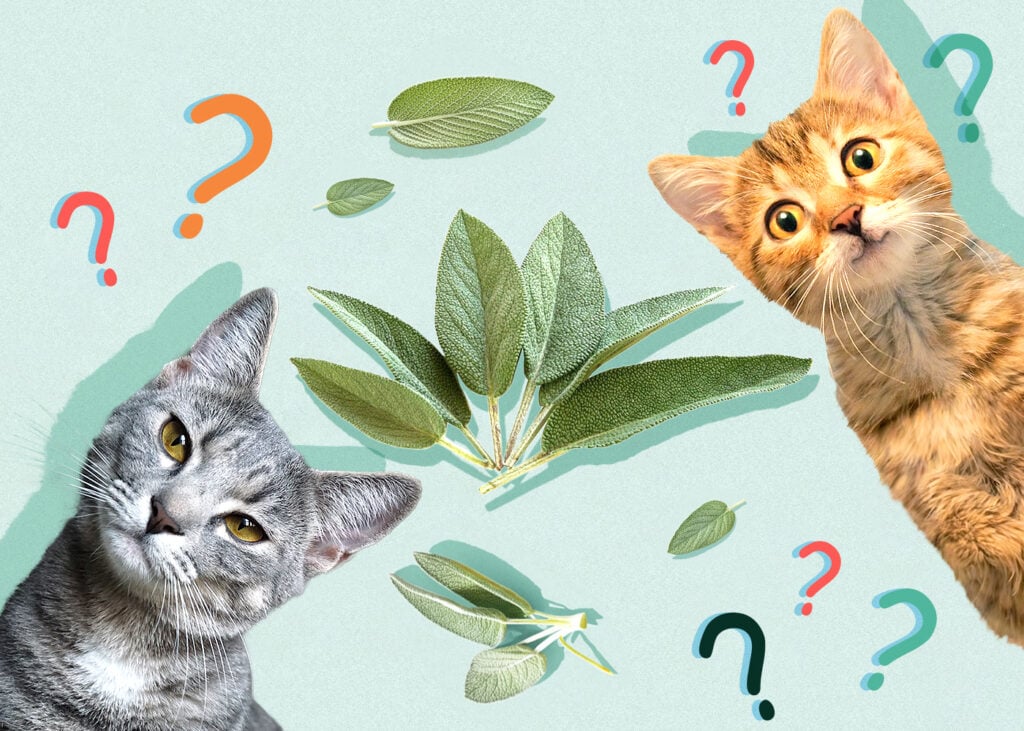
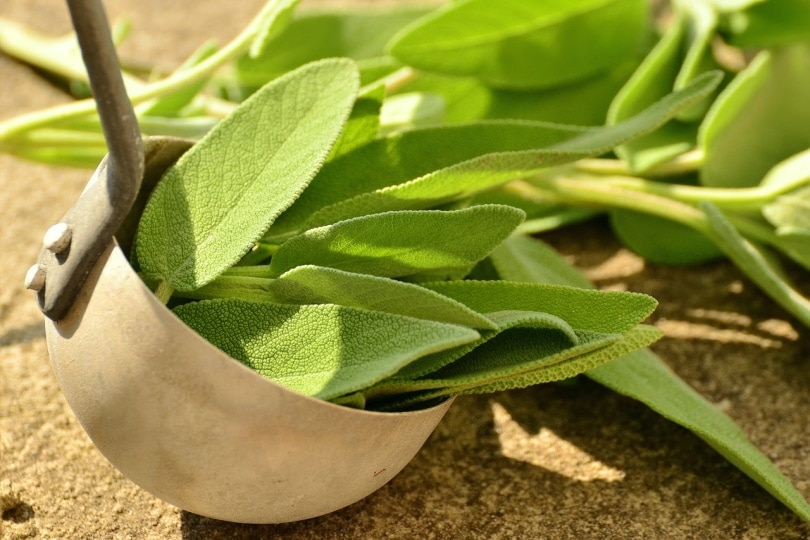
Every year when the holidays roll around, we all start looking for ways to include our pets in the festivities. One of the top ways people try to involve their cats in the holiday season is by feeding special treats and sharing holiday foods. One common ingredient in many savory fall and holiday dishes is sage, Salvia officinalis. If you’ve ever wondered if sage is safe for you to share with your cat, we can tell you yes, sage is not toxic to cats and they can eat it in moderation.
Keep reading for more info.

Can Cats Eat Sage?
Good news! Cats can safely consume sage in moderation. There are quite a few ingredients in holiday foods that are not cat-safe, though, so make sure all ingredients in the dish are safe for your cat to partake in before feeding any. Sage plants belong to the mint (Lamiaceae) family, the same plant family that catnip belongs to. Not all plants in this family are cat-safe, though.
The ASPCA lists sage on its list of non-toxic herbs for cats. However, sage essential oils can be a problem for cats, like many other essential oils. You should avoid using any essential oils around your cat to be on the safe side. Some essential oils can lead to respiratory, skin, and eye irritation when consumed, touched, or inhaled. Your cat should also not consume sage essential oil; this contains substances such as thujone and camphor, which are toxic to them. Your cat lacks the liver enzymes that are necessary to break down some of the compounds in sage oil, leading to toxicity.
How Much Sage Can I Feed My Cat?
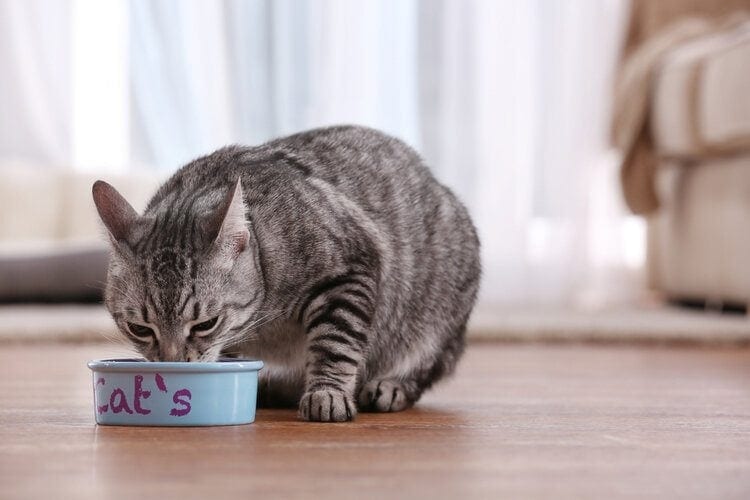
Cats are obligate carnivores, requiring a meat-based diet for longevity and health. Some plants are safe for cats in moderation, and sage is one of them. However, your cat should not be allowed unfettered access to sage plants or leaves, especially if your cat is the type to munch on plants for extended periods of time. Limit your cat’s access to sage plants, leaves, and dried sage, as well as foods containing sage.
Some cat foods and treats contain sage, and it can be a safe part of a balanced and varied diet. The distinct flavor and smell of sage may be interesting to your cat and may aid in offering an enrichment experience to your cat. As with any herb or plant, limit your cat’s access and only offer it in moderation as part of a balanced diet.
Can I Burn Sage Around My Cat?
Burning white sage, also known as “sageing” or smudging, may be part of some spiritual practices or used as a technique to improve sleep or calm anxiety. While there is no evidence that this may be toxic for cats, we don’t recommend doing so around your feline due to the possibility of irritating your cat’s respiratory tract. If you decide to burn sage in the home with your cat, make sure there is adequate ventilation and keep your kitty away from the burning sage to avoid the risk of burns and keep them away from the smoke itself.
The sage used for this ritual is not the same type of sage you cook with. While cooking sage is Salvia officinalis, white sage is Salvia apiana. White sage is also safe for your cat to consume in small quantities, but in large amounts, it can lead to stomach upset. There are no known benefits to feeding white sage to your cat, but if your cat happens to chew on a little bit, there is little risk of harm.
Now that you know what you can safely feed your cat, it’s just as important to find a bowl that supports their health and well-being. With whisker-friendly bowls and a wide tray to catch any spills, our Hepper NomNom Cat Bowl is our favorite option.

- NO MESS - The 360° tray on this cat food and water bowl set has a raised design to catch and contain stray crumbs and drips. Protect your indoors and floors from wet and messy meals!
- WHISKER FRIENDLY - Shallow and wide metal containers with flat bottoms ensure your kitty can enjoy mealtime free from whisker fatigue!
- CHEW-SAFE MATERIALS - Kittens and cats love chewing on silicone and soft rubber - but it's a choking hazard. Our cat feeding station materials are anti-chew for a 100% safe feeding frenzy!
Conclusion
Sage is not toxic to cats and is safe for them to consume it in moderation. If allowed to snack on sage regularly or for an extended period, it can lead to stomach upset. Sage may be a healthy part of a balanced and varied diet for your cat. If you’re ever unsure if something is appropriate for your cat, always talk to your cat’s vet about it. All cats have slightly different needs. Your cat’s vet is the professional who knows your cat’s health status and history so they can make tailored recommendations for your cat’s needs.
Sources
Featured Image Credit: JernejaR, Pixabay
Get Hepper In Your Inbox


Pet care tips from our vets and experts, straight to your inbox.
You may opt-out at any time. View our Privacy Policy for more information.
After nine years as a veterinary assistant, Brooke Billingsley transitioned to a career as a nurse in 2013. She lives in Arkansas with her boyfriend, sharing their home with three dogs, two cats, five fish, and two snails. A dedicated animal lover, Brooke has a special place in her heart for special needs pets, including a three-legged senior dog and a famous cat with acromegaly and cerebellar hypoplasia. Fish keeping is one of her hobbies, and she is constantly improving her knowledge to care for her aquarium pets. Brooke is an active yoga enthusiast, having obtained her 200-hour yoga teacher certification in 2020. She believes in the importance of continuous learning and dedicates time each day to developing new skills and expanding her knowledge.
Join the conversation
Ask a question, share your story, or send private feedback.