Hepper is reader-supported. When you buy via links on our site, we may earn an affiliate commission at no cost to you. Learn more.
Can Cats Eat Rosemary? Vet-Approved Nutrition Facts & FAQ


When it comes to plants, cats tend to nibble on them, despite being carnivores. So, if you have cats, you’ll likely find them nomming on your houseplants at one point or another. Normally, a little bite here and there may not be harmful, but some plants are toxic to cats.
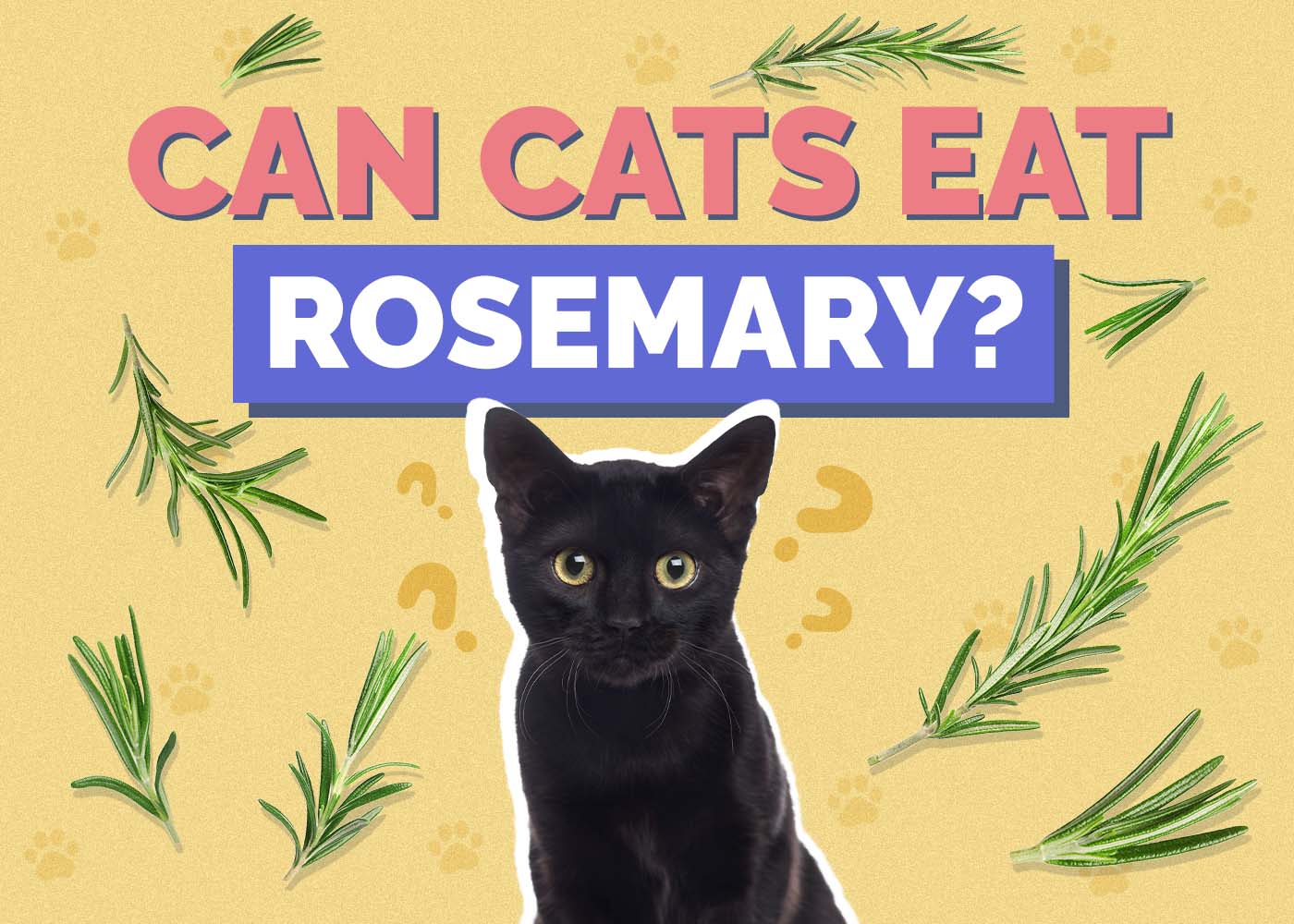
If you have an herb garden in or around your house, you need to know which herbs are toxic or not if your cat wanders through and stops to munch, especially since several herbs are poisonous to animals. One herb commonly found in gardens is rosemary, which leads to the question if cats can eat rosemary? The answer is yes, but you should know a few things.

Can Cats Safely Eat Rosemary?
Luckily, rosemary is excluded from the list of herbs that are poisonous to cats and dogs, so if you catch your kitty chowing down on some, it shouldn’t be cause for alarm. That said, your cat shouldn’t eat rosemary in enormous quantities as rosemary contains oils that, in big doses, can cause gastrointestinal upset. The good news? Your cat is very unlikely to overeat rosemary. It has a strong odor and flavor that most felines tend not to enjoy very much.
Does Rosemary Offer Benefits to Cats?
Rosemary can offer a few benefits to your cat when they eat it in small amounts. One way rosemary can be beneficial to felines is by soothing digestive issues. It sounds strange since it can also cause digestive problems.
But rosemary is a member of the mint family, and mint can be soothing for an upset stomach. This is because plants in the mint family contain oils that can relieve pressure and pain in the gastrointestinal tract. If your pet is experiencing digestive trouble, adding just a half teaspoon of dried leaves to food or water can help make them feel better.
What other benefits might they derive? Rosemary provides vitamins and minerals such as vitamin A and C, folate, calcium, and iron. Rosemary may also help reduce inflammation, protect from free radicals, and ward off infections. There’s even evidence that rosemary may help your cat heal quicker and fight off cancer cells! Applied topically, rosemary can serve as a natural flea remedy too, though likely not as effective as prescription flea prevention.

Is Rosemary Extract Safe for Cats?
Today, many pet foods contain very tiny amounts of rosemary extract because of its antioxidant and preservative capabilities. However, you may have heard that rosemary extract can cause seizures in cats. It turns out this may not be entirely true. It seems the reason people believe rosemary extract can cause seizures in pets is that there have been rare instances of humans having seizures after consuming it. This led to the belief that this occurrence could also extend to cats and dogs. But there doesn’t seem to be hard proof that this is the case. At most, if your cat is already prone to having seizures, you may want to be careful with giving them anything containing rosemary extract.
How to Safely Give Your Cat Rosemary
The easiest way to try and get your kitty to eat rosemary is by serving it with their food. Dried rosemary leaves will likely be your best bet; just start with small portions to make sure it won’t affect your cat negatively. If they do well with this much, you can add a bit more (we advise talking to your vet for a recommended amount), but remember that rosemary should be a treat more than an everyday occurrence.
Don’t be surprised if your cat turns up their nose at it, though! The strong smell and taste are typically not something cats are particularly fond of eating.
Now that you know what you can safely feed your cat, it’s just as important to find a bowl that supports their health and well-being. With whisker-friendly bowls and a wide tray to catch any spills, our Hepper NomNom Cat Bowl is our favorite option.

- NO MESS - The 360° tray on this cat food and water bowl set has a raised design to catch and contain stray crumbs and drips. Protect your indoors and floors from wet and messy meals!
- WHISKER FRIENDLY - Shallow and wide metal containers with flat bottoms ensure your kitty can enjoy mealtime free from whisker fatigue!
- CHEW-SAFE MATERIALS - Kittens and cats love chewing on silicone and soft rubber - but it's a choking hazard. Our cat feeding station materials are anti-chew for a 100% safe feeding frenzy!
Final Thoughts
Rosemary isn’t listed as a toxic herb to cats, so they should be safe if they occasionally consume just a tiny bit. Too much rosemary can cause stomach upset, though, so be sure your pet doesn’t manage to overeat it. However, rosemary can also offer some benefits to your favorite feline, such as reducing inflammation, easing digestive troubles, helping them heal faster, and maybe even warding off cancer cells!
When it comes to rosemary extract, an extract that’s common in most pet foods, you may have heard that it can cause seizures in cats, but there doesn’t seem to be actual proof of that. This theory most likely came about because of the rare instances it occurred in humans who ate rosemary. At most, if your kitty is prone to having seizures, we’d recommend being careful with rosemary extract.
If you’d like to add rosemary to your pet’s diet, talk to your vet first about how much would be suitable for them. Then, you can try giving them some with their food (though don’t be shocked if your favorite finicky eater decides they’d rather not have any!).
See also:
Featured Image Credit: Alim Yakubov, Shutterstock
Get Hepper In Your Inbox


Pet care tips from our vets and experts, straight to your inbox.
You may opt-out at any time. View our Privacy Policy for more information.
Nicole is a lover of animals of all sizes but is especially fascinated with the feline variety. She’s the proud mom of Baby, a Burmese, and works every day so he can relax in the sunshine or by the fire. She’s always had a cat in her home and has spent countless days with others, observing behaviors and softening up even the grouchiest of the lot. Nicole wants to share her kitty expertise with you so you and your cat can live happy, healthy, and care-free.
Join the conversation
Ask a question, share your story, or send private feedback.