Hepper is reader-supported. When you buy via links on our site, we may earn an affiliate commission at no cost to you. Learn more.
Can Cats Eat Salmon? Vet-Reviewed Health & Safety Guide


In this article
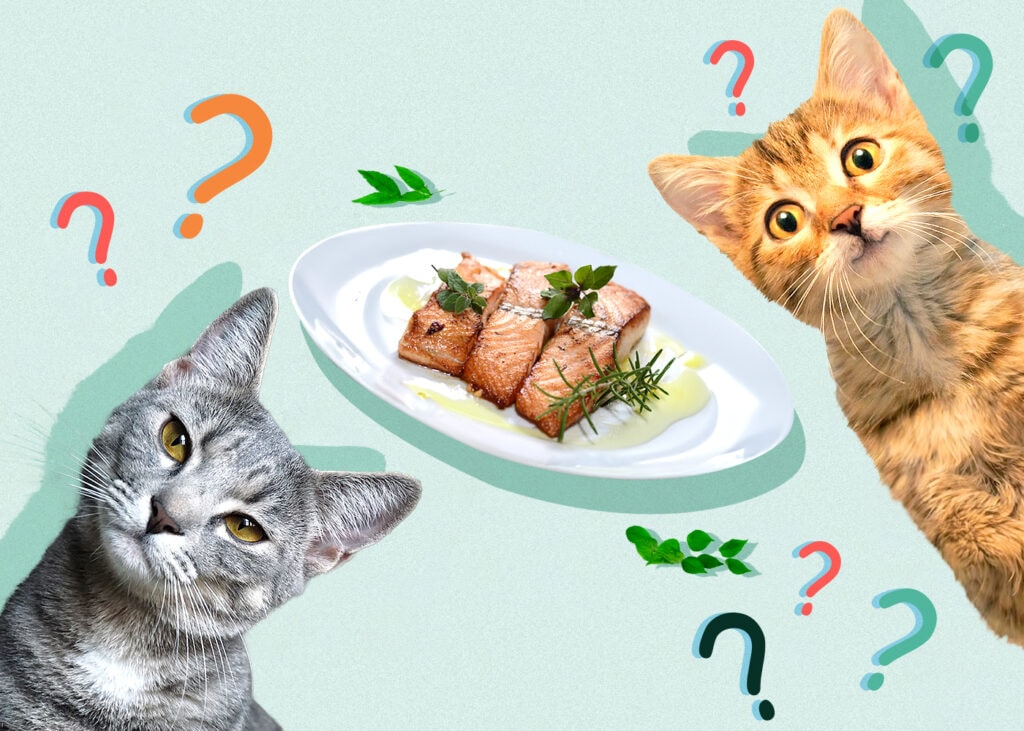
As pet parents, one of the best ways we can bond with our feline friends is by feeding them good-quality food because nutrition plays a major role in their life. Commercial pet foods are a convenient way to feed our felines, but as pet parents know, our feline fur babies sometimes beg for food that we're preparing for ourselves. If you frequently observe your cat begging for fish, you might be wondering if salmon, a popular fish all over the world, is safe for your cat.
Cooked, unseasoned, and deboned salmon is safe and healthy for cats as a treat or occasional meal, but salmon shouldn't be a standalone dietary protein for your cat on a long-term basis. This guide is here to help you learn everything you need to know about feeding cats salmon.

Is Salmon Safe for Cats?
As mentioned above, cats can eat salmon that is cooked, not seasoned, and deboned. However, cats cannot be kept solely on a salmon diet.
Raw salmon is not considered safe for cats, as it is a fish that contains thiaminase1, which can lead to a thiamine (vitamin B1) deficiency. Cooked salmon is safe for cats; however, the cooking process greatly reduces the overall protein content of salmon.
That being said, salmon is a great protein source and offers other health benefits, which we will dive into shortly. Therefore, it is safe to incorporate salmon into your cat's diet.
A Note About Salmon Cat Food
You might have noticed that many cat foods (kibble, canned, and semi-moist) are made of salmon. These are safe for your cat in the long term because they are fortified with extra nutrition and other vitamins and minerals. At other times, brands will mix different meat options together in a single meal to accomplish a nutritional profile appropriate for your cat. In this article, we are talking about salmon on its own, not salmon in a pet food mixture.
Always ensure any pet food you purchase for your cat is compliant with legal guidelines in your country. These are AAFCO in the US, FEDIAF in Europe, or the Food Standards Agency of your country of residence. Any doubts about your cat's nutrition should be discussed with your veterinarian or a feline nutritionist.
How to Prepare Salmon for Your Cat
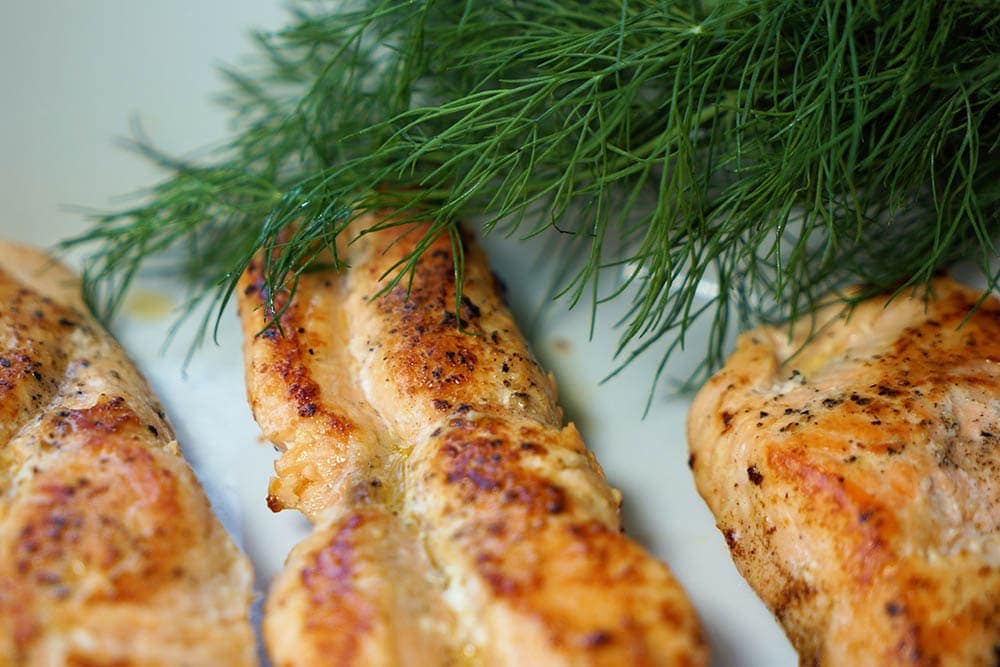
When buying salmon for your cat, get fresh fish, preferably a boneless filet. These are less likely to have small, brittle bones that you don’t want your cat eating.
You can roast, steam, poach, bake, or grill salmon. When preparing salmon for your cat, do not add any oil, seasonings, or spices onto the filet or during the preparation process. Remember that some seasonings, such as onions, garlic, and chives, are toxic for cats.
Portion control is key when feeding your cat. If your cat isn’t used to salmon as a regular part of their diet, introducing large quantities at once may lead to an upset stomach. Start with a small piece and monitor for any adverse reactions.
If your cat tolerates the intake well, you can adjust the serving size to an appropriate amount for your cat's age, activity level, and size by gradually increasing the portions on the next feeding. You can also choose canned salmon, but make sure it's packed with water.
IMPORTANT
Health Benefits of Salmon for Your Cat
Salmon is a healthy addition to your pet's diet, and offers several benefits:
Benefits of Salmon
Should You Worry About Mercury Poisoning?
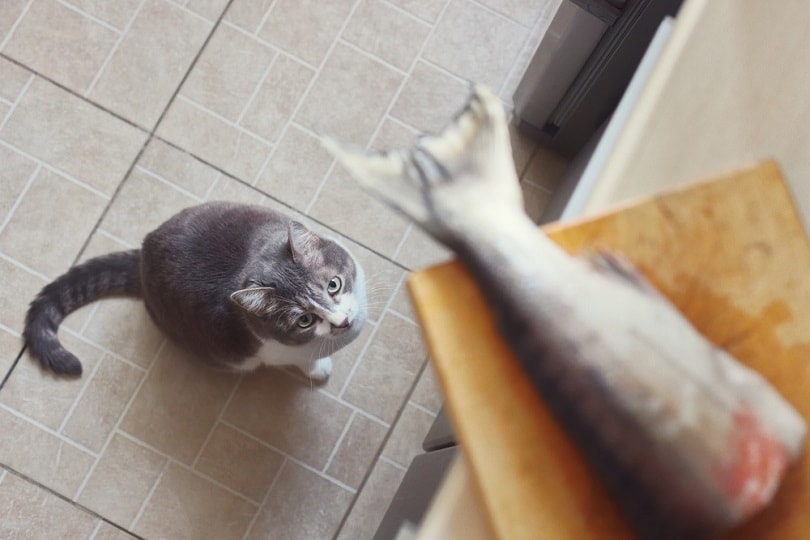
A rising cause of concern with feeding fish to your cat is the risk of mercury poisoning. Almost all fish that are farmed around the world contain some amount of mercury, though certain fish are considered a higher risk. Salmon is often included in the "high risk" category. There are no regulations for monitoring the mercury content in pet foods in the US at this point. Therefore, it is advised that you take the following precautions when feeding fish to your cat:
- Limit your cat's intake of fish, especially predator fish (example: tuna) or large fish.
- Consider purchasing your pet food or treats from companies that voluntarily perform quality control of their products.
- Keep an eye on the news for any fish consumption advice/announcements (from fisheries or local authorities) with regards to safety, especially if you offer your cat wild-caught fish.
Now that you know what you can safely feed your cat, it’s just as important to find a bowl that supports their health and well-being. With whisker-friendly bowls and a wide tray to catch any spills, our Hepper NomNom Cat Bowl is our favorite option.

- NO MESS - The 360° tray on this cat food and water bowl set has a raised design to catch and contain stray crumbs and drips. Protect your indoors and floors from wet and messy meals!
- WHISKER FRIENDLY - Shallow and wide metal containers with flat bottoms ensure your kitty can enjoy mealtime free from whisker fatigue!
- CHEW-SAFE MATERIALS - Kittens and cats love chewing on silicone and soft rubber - but it's a choking hazard. Our cat feeding station materials are anti-chew for a 100% safe feeding frenzy!

Final Thoughts
Cooked, unseasoned, and de-boned salmon is a safe, healthy, high-quality protein treat you can incorporate into your cat's diet that offers several health benefits.
Concerns about long-term consumption of salmon leading to undesired levels of mercury in your cat's system, along with the risks associated with raw salmon, mean salmon isn't as risk-free as many owners would hope. Nonetheless, it is easy to circumvent or minimize these risks by providing your kitty with some love in the form of salmon as a part of their diet.
Get Hepper In Your Inbox


Pet care tips from our vets and experts, straight to your inbox.
You may opt-out at any time. View our Privacy Policy for more information.
Hallie has been a proud nature and animal enthusiast since she was a little girl. She attributes her passion for the environment and all its creatures to her childhood when she was showing horses on weekends and spending her weeknights devoting her attention to her pets. Hallie is happiest when she is playing with her two rescue cats, Chewbacca and Lena, and her dog, Clayton. When Hallie isn’t writing about animals, you can probably find her curled up on the couch read a good books or watching a documentary.
Join the conversation
Ask a question, share your story, or send private feedback.