Hepper is reader-supported. When you buy via links on our site, we may earn an affiliate commission at no cost to you. Learn more.
Can Dogs Eat Flan? Vet Reviewed Facts & FAQ


In this article
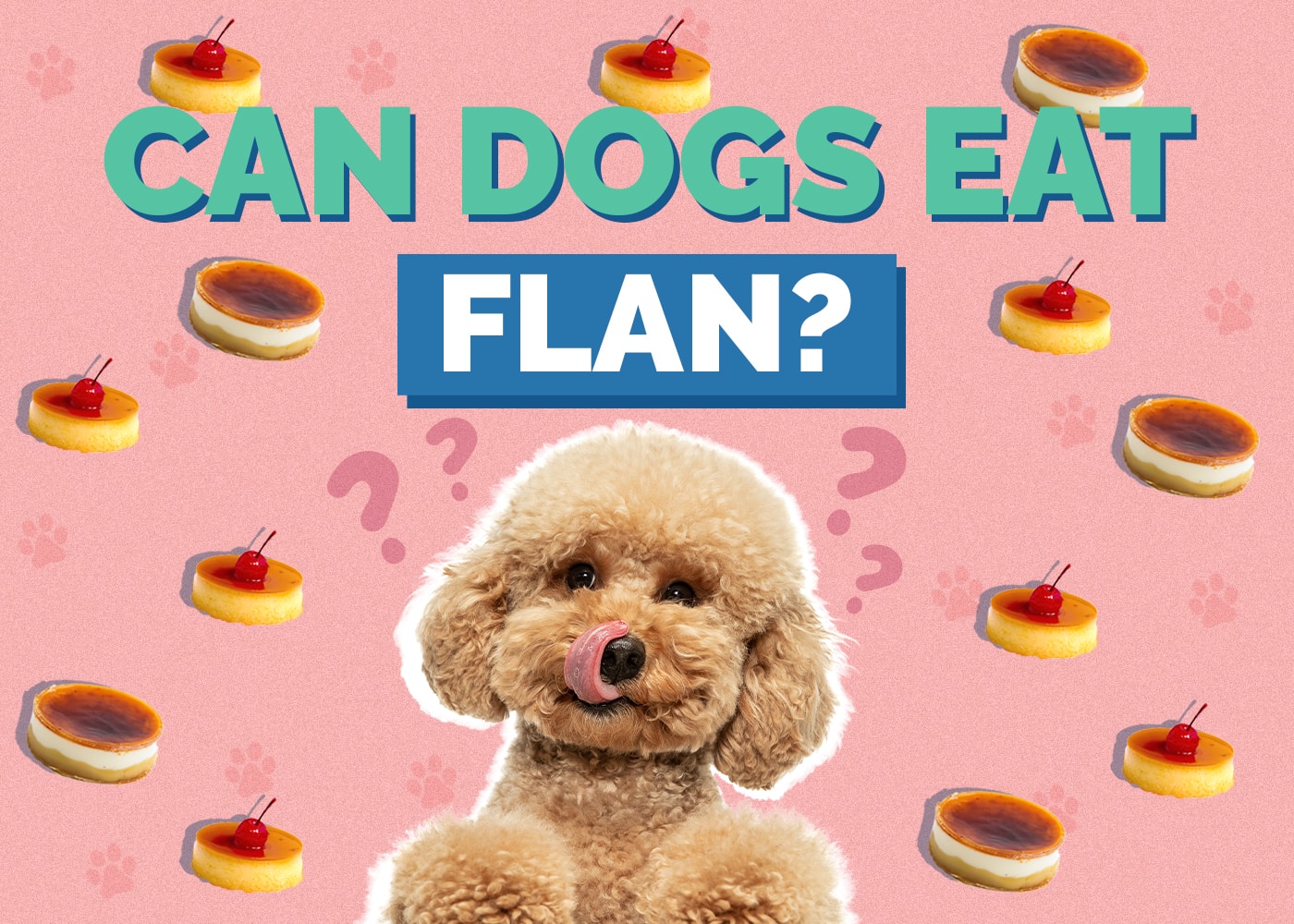
Although some entrées and desserts are not poisonous to dogs, that doesn’t mean they are good for them. Flan is a perfect example. Flan will not poison your dog, assuming there are no toxic ingredients, but it doesn’t provide any health benefits. Flan is a custard that contains eggs, milk, and sugar, among other ingredients. The milk content alone makes flan a problematic meal for your pup, as many dogs are lactose intolerant and will suffer from an upset stomach if they consume too much dairy.
So, feeding your dog flan isn’t advised. Depending on which ingredients you use in your flan, they may even be dangerous for your dog to consume. To learn more about the potential dangers, keep reading below.

Is Flan Safe for Dogs?
Since flan can come in many forms, we have categorized it into three main types so we can break down the most common ingredients in each and explain why they aren’t a good fit for canines.
When it comes to milk content in flan, dietary lactose from the milk enters the small intestine and is digested by the lactase enzyme. In the case of lactase deficiency, which is common in dogs, undigested lactose enters the large intestine and is metabolized by the bacteria. The result is excessive gas production, bloating, diarrhea, vomiting, and abdominal pain. Most puppies tolerate lactose, at least to some extent, but with increasing age, the activity and quantity of lactase gradually decrease in most dog breeds. A recent study conducted in China found that 50% of dogs fed standard cow milk powder and 60% of dogs fed goat milk powder manifested mild symptoms of lactose intolerance.1

Leche Flan
Leche flan is a sweet egg custard. The main ingredients in leche flan are:
- Sugar
- Eggs
- Sweetened condensed milk
- Evaporated milk
- Vanilla extract
- +/- caramel syrup
The only beneficial ingredient on this list is eggs, but when combined with all the sugar and fat, the eggs offer no benefit to your dog. Most leche flan has a significant amount of sugar, which does not help your dog’s dental health or daily caloric intake.
Vanilla extract and flavoring are toxic to dogs due to the high alcohol content, and drinking even part of a bottle could be a serious health risk, especially for smaller dogs, leading to diarrhea, disorientation, confusion, vomiting, slow heart rate, lethargy, dehydration, seizures, and even death. Since most flans only contain about a tablespoon of vanilla extract, they are less likely to lead to signs of toxicity, but we advise you to stay on the side of caution. Overall, feeding your dog flan may not be safe, especially depending on other possible toxic ingredients.
Dogs should not eat caramel. Despite it not being directly toxic, the high sugar content can lead to short- and long-term health issues for your dog. Caramel can upset your dog’s stomach and lead to more serious issues like inflammation of the pancreas (pancreatitis) or dental disease.
Fresh Fruit Flan
A fresh fruit flan typically has three parts: the crust, the filling, and the fruit. The most dangerous ingredient in the crust is baking soda (sodium bicarbonate), which can be toxic to dogs in large quantities. However, the amount used in the crust should not be enough to cause any significant signs. The other ingredients are flour, eggs, butter, and sugar. Again, these ingredients are not suitable for dogs, but they are not toxic, either.
The filling in a fresh fruit flan may vary depending on the recipe, but a recipe may include ingredients such as vanilla extract, sugar, and cream cheese, none of which are especially beneficial for dogs, and again, vanilla extract can be toxic if ingested in large amounts or by a smaller dog. The fruit topping is the final part of the fresh fruit flan, and it may provide benefits for your dog (depending on the fruit used). Although fruits are high in sugar, some can be safely fed to your dog as long as they are fed in moderation and only as snacks, not meals. Fruits such as apples, raspberries, and peaches can provide various health benefits for dogs. However, some fruits, such as cherries or grapes, are not advised for canine consumption and are hazardous.
All parts of a cherry other than the ripe pulp around the seeds are considered toxic and contain cyanide. The main concern is the pits (seeds): when chewed through, they release cyanide. When ingested in toxic amounts, signs of dilated pupils, difficulty breathing, bright red gums, shock, and death can be seen. If a dog ingests the whole pit without chewing and breaking it open, poisoning is not expected. Stomach upset and a potential for a gastrointestinal foreign body may be present depending on the size of the dog and the number of whole pits ingested.
Ingestion of even a small amount of grapes or products that contain grapes can result in severe acute kidney failure, vomiting, diarrhea, abdominal pain, and anorexia. The exact way grapes cause toxicity is still unknown and toxicity does not necessarily appear to be dose-dependent, which means as little as one grape can be dangerous, though sometimes several grapes lead to no signs of toxicity at all. Due to this, we strongly advise you to contact your vet immediately if your dog has ingested as little as one grape.

Savory Flan
Like the fresh fruit flan, the savory flan has an outer crust and an inner egg custard filling. The crust generally contains the same ingredients as the fresh fruit flan, and the inner filling has milk or cream, which may not sit well on your dog’s tummy.
Vegetables may be included in the filling as well. Some vegetables can be safely eaten by your dog, while others may be dangerous. Onions, garlic, chives, and leeks are all toxic to dogs and can quickly become lethal. Garlic is about five times more toxic than onions or leeks. Some Japanese breeds of dogs (e.g. Akita, Shiba Inu, and Japanese Chin) are more susceptible to the effects of garlic. Toxic doses of garlic cause damage to red blood cells, making them more likely to rupture and cause anemia. The usual signs of toxicity are lethargy, pale gums, increased heart rate, increased respiratory rate, weakness, exercise intolerance, and collapse. Stomach upset (nausea, drooling, abdominal pain, vomiting, and diarrhea) can also occur secondary to garlic ingestion. Large ingestions of garlic may cause clinical signs within 24 hours, while signs of garlic poisoning after small ingestions can be delayed for up to 1 week.

What Happens if Your Dog Eats Flan?
If your dog sneaks a quick nibble of flan, chances are that everything will be fine. Your dog may experience some minor gastrointestinal upset as the worst-case scenario, assuming no toxic ingredients are in the flan recipe. Call your vet immediately if your dog begins to vomit or has diarrhea or if you are aware of any toxic ingredients in the flan.

Ingredients to Avoid That May Be in Flan
Some toxic ingredients may be featured in flan recipes. If the flan you are making contains any of the ingredients below, keep it out of your dog’s reach.
Chocolate
Chocolate contains chemicals called methylxanthines, specifically theobromine and caffeine, that can lead to severe illness in dogs since they cannot metabolize it as well as humans. Dogs that consume chocolate may experience vomiting, diarrhea, increased thirst and urination, panting, restlessness, muscle twitching, and an increased heart rate. The severity of chocolate toxicity varies depending on the type and amount of chocolate ingested and the size of the dog. The darker and less sweet the chocolate, the more toxic it can be to dogs. Baker’s chocolate and dark chocolate pose the greatest risk of toxicity, while white chocolate carries the lowest risk. Also be aware that some chocolate-containing products may contain other toxins such as macadamia nuts, raisins, coffee or espresso beans, or xylitol. Macadamia Nuts
If macadamia nuts are in your flan, ensure that your dog doesn’t sneak a bite. Macadamia nuts may cause your dog to vomit, have diarrhea, show signs of depression, or become weak in the back legs. In most cases, these negative effects are mild, but they will often require treatment. Macadamia nuts are a very fatty food, so in rare cases, dogs may develop pancreatitis after eating them. If you see your dog vomiting or experiencing a lack of appetite, stomach pain, or a decrease in activity level within three days of eating macadamia nuts, you should contact your vet right away.

Xylitol
Xylitol is a sugar substitute that is sometimes used in sugar-free flans and is extremely toxic to your dog. In general, lower doses of xylitol cause low blood sugar, while higher doses cause liver failure. Initial signs of xylitol poisoning can develop within an hour of consumption. Signs of low blood sugar may include the following: vomiting, weakness, lack of coordination, difficulty standing or walking, muscle twitching, seizures, and coma. If you suspect your dog might have eaten a flan product containing xylitol, contact your vet immediately.

Frequently Asked Questions
Now that you know the potential risks of feeding flan to your dog, you may have even more questions than before. Check out some of these frequently asked questions and see if any of them satisfy your curiosity.
1. Can Cats Eat Flan?
No. Just like dogs, cats can be lactose intolerant (despite the stereotype that cats love milk). Lactose is extremely difficult for cats to digest, and it can lead to severe gastrointestinal upset, causing diarrhea, vomiting, bloating, and abdominal discomfort after ingesting cow or goat milk.
2. Are Human Desserts Okay for Dogs to Eat?
No. Sugar is bad for dogs, so even if the ingredients of a dessert are not toxic, they are not beneficial, either. No form of sugar is good for dogs, and most sugar substitutes are just as bad or worse in many cases. Although it may be tempting to share a bite with your dog, it is for the best that you feed your pup canine-specific treats rather than human sweets.
3. What to Do If You Suspect That Your Dog Has Eaten Something Toxic
If you suspect that your dog has eaten something toxic, reach out to your vet, local veterinary emergency clinic, or the pet poison control hotline immediately. A quick response may be the difference between life and death.

Conclusion
Flan is not a suitable treat for your dog, but that doesn’t mean that there is no human food you can share with your pup. Some vegetables and fruits are healthy dog snacks if given in moderation. Before feeding anything new to your dog, consult your vet for a professional opinion regarding your dog’s dietary needs. Although it’s tempting to share your meals and snacks with your favorite pup, your pet will benefit more by eating high-quality dog food and healthy treats.
See also:
“Sources”
https://www.aspca.org/pet-care/animal-poison-control/people-foods-avoid-feeding-your-pets
https://www.akc.org/expert-advice/nutrition/can-dogs-drink-milk/
https://www.petmd.com/dog/conditions/mouth/dental-issues-dogs
https://www.akc.org/expert-advice/nutrition/fruits-vegetables-dogs-can-and-cant-eat/
https://vcahospitals.com/know-your-pet/onion-garlic-chive-and-leek-toxicity-in-dogs
https://vcahospitals.com/know-your-pet/chocolate-poisoning-in-dogs
https://www.akc.org/expert-advice/nutrition/can-dogs-eat-macadamia-nuts/
https://vcahospitals.com/know-your-pet/xylitol-toxicity-in-dogs
https://vcahospitals.com/know-your-pet/adverse-reactions-to-food-in-dogs
https://www.wageningenacademic.com/doi/epdf/10.3920/JAAN2022.0007?role=tab
https://fdc.nal.usda.gov/fdc-app.html#/food-details/172235/nutrients
https://www.petmd.com/dog/poisoning/alcohol-poisoning-in-dog
https://www.aspca.org/pet-care/animal-poison-control/toxic-and-non-toxic-plants/cherry
https://vcahospitals.com/know-your-pet/adverse-reactions-to-food-in-cats
Featured Image Credit: Mircea Costina, Shutterstock
Get Hepper In Your Inbox


Pet care tips from our vets and experts, straight to your inbox.
You may opt-out at any time. View our Privacy Policy for more information.
Pets are Jordyn’s passion, cats especially. Whenever she has the opportunity, she loves to learn about them and share her knowledge with everyone. She is devoted to her tabby cat named Jack and works hard to buy him his favorite treats and toys. Discovering new ways to better care for her pet is always on her to-do list, and she is eager to help pet parents everywhere who have similar pursuits. In her spare time, she loves to read, write, and take long walks. She has a creative spirit, which often helps her to come up with funny cat names.
Join the conversation
Ask a question, share your story, or send private feedback.