Hepper is reader-supported. When you buy via links on our site, we may earn an affiliate commission at no cost to you. Learn more.
Can Dogs Eat Flour? Vet Approved Facts & FAQ



In this article
Flour has existed for thousands of years and is a common ingredient in many foods to this day. While humans have been consuming flour almost daily, you’ve probably wondered if you can feed your dog flour too. The answer is yes! Dogs can consume flour, and chances are you’ve already been feeding them flour without even knowing!
Want to know more about dogs eating flour and how healthy it is? In this article, we discuss just that!

Is Flour Healthy For Dogs? Is It Safe?
Flour, in simple terms, is a fine powder made up of ground cereal, grain, seeds, or rice. It is used for making bread, pasta, crackers, cakes, and other common foods! Regardless of the cuisine, flour is a very common ingredient and most humans consume this in one form or another.
As a common ingredient in baked foods, many baked dog treats also contain flour. If you’ve given any baked treats or foods to your dog, then they’ve already eaten flour! Flour is completely safe for dogs and is also considered a healthy food. Provided that your dog has no allergies or sensitivities to flour, your dog can benefit from eating flour!

Health Benefits of Flour
Different kinds of flour also have different nutritional profiles. It is important to understand what kind of flour you are dealing with to have an idea of how healthy it is. Flours like whole wheat and oat flour are packed with nutrients, while other flours, such as all-purpose flour, are best avoided because of their minimal or complete lack of nutritional value.
Here are some vitamins and minerals that flour contains that can benefit your dog’s overall health!
- Dietary fiber
- Complex carbohydrates
- Vitamin B
- Folate
- Thiamin
- Riboflavin
- Niacin
- Iron
- Manganese
- Phosphorous
- Zinc
- Potassium
- Calcium
- Magnesium
Can Dogs Eat Whole Wheat Flour?
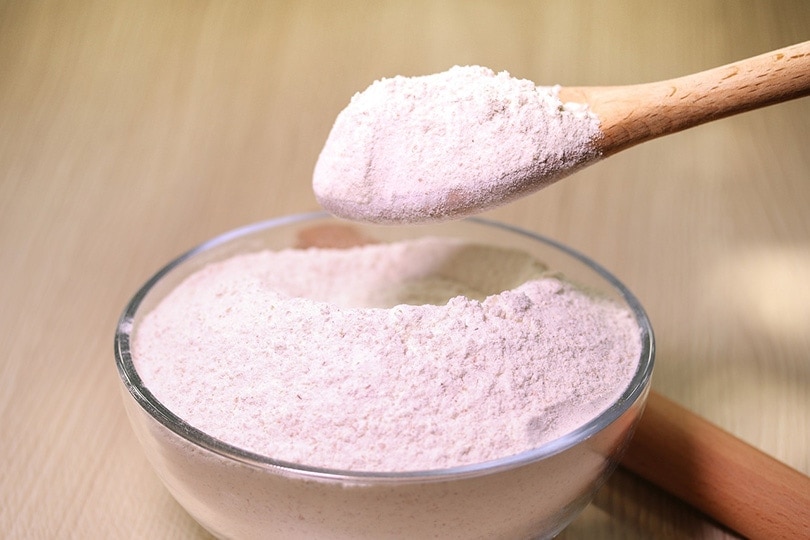
Whole wheat is one of the healthiest types of flour that you can feed your dog. The “whole” in “whole wheat” is what makes this flour so nutritious. The use of whole grains makes this flour packed with fiber, protein, vitamins, minerals, and antioxidants.
Consuming the whole wheat grain means eating the germ, endosperm, and the bran parts of the grain. This allows your dog to get all the benefits at much higher quantities!
Before feeding whole wheat to your dog, make sure your dog has no wheat allergy. Dogs can be allergic, just like humans, and wheat consumption by a dog with a wheat allergy can lead to various uncomfortable symptoms, such as constipation, loose bowel, or itchy skin. Don’t hesitate to consult with your veterinarian to rule out any allergies before adding wheat flour to your dog’s diet.
What Other Types of Flour Can Dogs Eat?
Aside from wheat flour, other types of flour are packed with nutrients. Other flours use other ingredients and therefore offer varying nutritional values. Here are other types of flour that can be beneficial for your dog!
- Almond flour
- Brown rice flour
- Buckwheat flour
- Chickpea flour
- Coconut flour
- Oat flour
- Quinoa flour
- Sorghum flour
- White flour
Before introducing any type of flour into your dog’s diet, you’ll want to avoid any allergic and negative reactions by starting with small quantities. It is best to consult with your veterinarian regarding dietary recommendations.

How Can I Feed My Dog Flour?
Flour is already used in commercial dog food as a binding agent. If you want to introduce flour into your dog’s diet, it is best to use them for homemade baked dog treats. Avoid feeding them raw, powdered flour as it is a choking hazard, and be sure to avoid adding any harmful or unhealthy ingredients into your recipe!
Are There Risks of Eating Flour?
With all the benefits of flour, there are a few risks that should be kept in mind. While flour can be nutritious for your dog, there are certain factors to consider that can make flour more harmful than good.
Raw Flour
Loose, powdered flour can be harmful as it is considered a choking hazard. Your dog can inhale the flour, which can cause breathing difficulties. They can also develop infections if the powder finds its way into their lungs, so be sure to keep bags of flour out of reach of your dog.
Raw flour can also contain bacteria, which can be harmful to your dog. Avoid feeding raw flour to your dog in powder, dough, or batter form. When feeding flour to your dog, make sure it is properly cooked to avoid any bacterial infections.

High Carbohydrate Content
Flour may be low in fat and cholesterol, but it is also high in carbohydrates. An increase in carbohydrates in a dog’s diet can lead to weight gain and obesity. Obese dogs are more susceptible to other health conditions, which can greatly affect their quality of life.
When Should I Not Feed Flour to My Dog?
Overweight Dogs
Overweight dogs have to be careful about their flour consumption because of its high-carb content. When putting your dog on a weight-loss diet, it is best to stick to healthy, low-calorie foods paired with proper exercise. Avoiding or minimizing flour-based foods is recommended.
Consult with your veterinarian for proper dietary recommendations when it comes to your dog’s weight loss program.
Wheat Allergies
Like many types of food, dogs can have allergic reactions to flour, such as wheat. Before feeding your dog flour, it is best to monitor their reaction while presenting it to them in small amounts. Feeding wheat flour to dogs with wheat allergies can cause digestive issues and skin irritations. Consult with your veterinarian to rule out any allergies to wheat and other ingredients.
Should your dog exhibit allergy symptoms, it is best to avoid that particular type of flour or flour-based foods altogether.

Gluten Intolerance
Gluten intolerance exhibits similar symptoms to allergies but is considered a digestive disorder rather than an allergy. Dogs with gluten intolerance will be intolerant to multiple types of grains compared to those allergic to specific types of grains, such as wheat.
Gluten is a protein found in wheat, barley, and rye, among others. Any ingredient that contains gluten will cause digestive issues and must be avoided. For dogs with gluten intolerance, it is best to monitor the ingredients of the food in their diet by ensuring they are all gluten-free.
Final Thoughts
Flour is a common ingredient used in many types of baked foods. It is safe and healthy for your dog as it contains many vitamins and minerals, but is also high in carbohydrates, which may lead to weight gain. To maximize the benefits of feeding your dog any flour-based food, ensure that the ingredients used are healthy and that your dog has no allergies or intolerance.
Related Read:
Featured Image Credit: Tatjana Baibakova, Shutterstock
Get Hepper In Your Inbox


Pet care tips from our vets and experts, straight to your inbox.
You may opt-out at any time. View our Privacy Policy for more information.
Oliver (Ollie) Jones is a zoologist turned freelance animal writer living in South Australia with his partner Alex and their mini zoo consisting of many aquatic creatures, dog Pepper, and of course, cat Steve. Ollie is originally from the USA and holds a Master's degree in wildlife biology. He hopes to share his feline knowledge and expertise with people so they can share in his passion and help their cats live their best lives.
Join the conversation
Ask a question, share your story, or send private feedback.