Hepper blog

Search our database of over 9,984 posts with up-to-date information from our experts and veterinarians.

Hepper is reader-supported. When you buy via links on our site, we may earn an affiliate commission at no cost to you. Learn more.

Can Dogs Eat Almond Flour? Vet-Verified Facts & Considerations

By Nicole Cosgrove · Reviewed & fact-checked by Dr. Paola CuevasVet Approved
Dr. Paola Cuevas
Reviewed & Fact-Checked byDr. Paola CuevasMVZ (Veterinarian)
Paola Cuevas is a veterinarian and animal behaviorist, with over 18 years of experience working with a variety of species. Her passion is animal welfare and focuses on the importance of preventive medicine. Paola has skills in the fields of nutrition, microscopy, clinical pathology, diagnostic imaging, and endoscopy as well as extensive experience in animal training through positive reinforcement. As our in-house veterinarian, Paola is very happy to share her knowledge and experience with our readers and hopes to be helpful with any issue presented by your non-human family members.View authorThe information is current and up-to-date in accordance with the latest veterinarian research. Read about our vets
Share
Ask us a question in the comments
Can Dog Eat almond-flour

Several pet parents are tempted to treat their fur babies to edible goodies other than their pup’s daily dog kibble. Whether these are meaty table scraps or baked desserts, owners should always proceed cautiously. Many human foods are unsafe and even toxic to dogs. If you want to bake up a delicious dish for your pup, you may wonder what types of flour are safe for dogs.

While it’s rare, some pups are allergic to gluten and react negatively to wheat flour. So, can your dog consume almond flour? Yes, they can. However, you should always feed almond flour to your dog in small doses. To get a better understanding of almond flour and canines, let’s take a deeper look at this flour and its possible health benefits and drawbacks for your dog.

Can Dogs Eat Almond Flour?

Your dog can safely eat almond flour, and almonds are also safe for your pet to consume. In fact, many pups love the taste of almonds. However, some canines might be sensitive or even allergic to these legumes and can experience vomiting, diarrhea, or skin problems. Also, the high fat content of almonds means the amount consumed by your dog must be strictly controlled, or it can lead to obesity later.

As for almond flour, while you won’t be feeding your dog straight almond flour, baked goods containing it aren’t toxic to dogs. Your pet can safely consume products with almond flour as long as they don't contain additional additives, including sweeteners like xylitol.
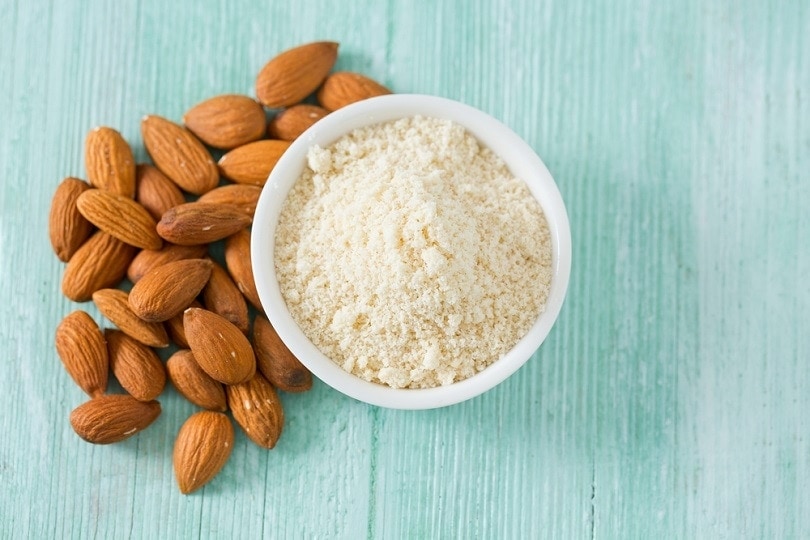
almond flour on wooden surface
Image by: Diana Taliun, Shutterstock

Why Can’t My Dog Consume Xylitol?

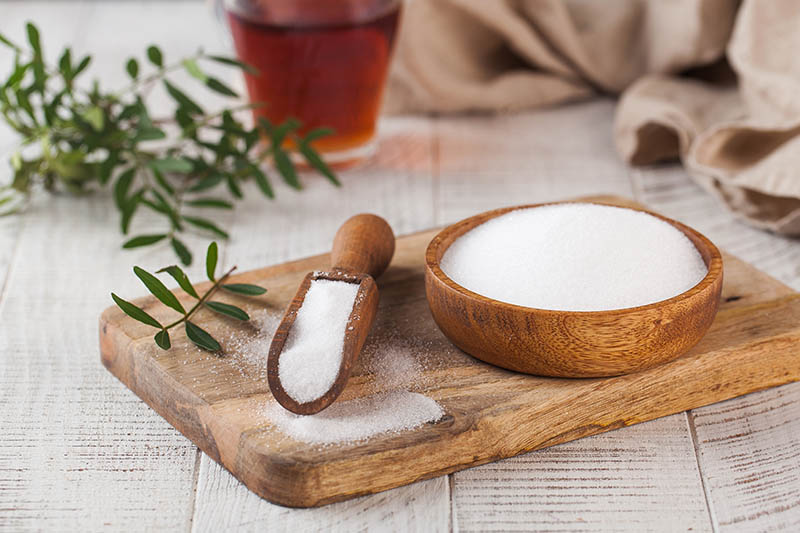
Many types of flours contain xylitol. Although perfectly safe for people, the sugar alcohol is highly toxic to dogs. If your pet ingests xylitol, their confused pancreas will secrete insulin, leading them to suffer from low blood glucose. This can also result in seizures, liver failure, and even death.

Signs of xylitol poisoning in dogs can include:

  • Weakness
  • Tremors
  • Vomiting
  • Seizures
  • Lethargy
  • Difficulty standing or walking
  • Coma

If you think your dog ate xylitol, contact your vet immediately.

Health Benefits of Almond Flour for Dogs

For people, eating almond flour as a substitute for white flour has many health perks. Not only does almond flour have fewer sugars and carbs, but it can also promote digestive health and lower your risk of disease. Almond flour also provides proteins and contains vitamin E and other antioxidants, which can combat diabetes, stroke, cancer, and heart disease.

However, will your dog enjoy these same health benefits of almond flour? The short answer is no. While the occasional almond butter treat is fine, don’t try to enhance your dog’s daily diet with almond flour.

grain-free dog treat recipes

What Flours Should I Avoid Feeding My Dog?

Many flours are not toxic for your dog, but since your dog’s food is likely already high in carbohydrates, adding more carbohydrates should be avoided. An alternative flour that has fewer carbohydrates and provides proteins or healthy fats might be a better option.

Try to avoid feeding your dog the following types of flours:

  • Wheat flour
  • Corn flour
  • Rice flour
  • Oat flour
  • Cassava flour
  • Tapioca flour

Alternative Dog-Safe Flours

Other types of flours besides almond flour that your dog can eat include:

  • Cricket flour
  • Hemp flour
  • Ground flaxseed flour
  • Garbanzo bean flour
  • Soy flour
  • Coconut flour

How to Feed Your Dog Almond Flour

You can occasionally treat your pet to a baked goodie containing organic almond flour with no additional additives. Never feed your pet pure almond flour. Instead, consider serving dog-friendly baked goods, such as a baked biscuit or pup-cake.
almonds on white background
Image Credit: Mockup Graphics, Unsplash

Bottom Line

While dogs can safely eat products containing organic almond flour, you shouldn’t be feeding your pet almond flour every day. Instead, treat them to the occasional baked cookie. Never feed your pet any flour containing artificial ingredients, especially xylitol. If you think your pet ingested xylitol, contact your vet right away.

So, go ahead and bake some wholesome treats for your dog using organic almond flour! They'll love it as much as you do.

Get Hepper In Your Inbox

Pet care tips from our vets and experts, straight to your inbox.

List

Select all that apply.

You may opt-out at any time. View our Privacy Policy for more information.

Nicole Cosgrove
Authored by

Nicole Cosgrove

Join the conversation

Ask a question, share your story, or send private feedback.

Rate this post
Required to post. Only our editors see your rating.
Who should see this?

A human reviews every comment before it appears. Your email is never published.

Picked to go with this article

Can Dogs Eat Flour? Vet Approved Facts & FAQ

Can Dogs Eat Flour? Vet Approved Facts & FAQ

Flour has existed for thousands of years and is a common ingredient in many foods to this day. While humans have been consuming flour almost daily, you’ve prob…

Oliver Jones
By Oliver Jones ·
Can Dogs Have Almond Butter? Vet Approved Nutrition Facts & Safety Guide

Can Dogs Have Almond Butter? Vet Approved Nutrition Facts & Safety Guide

Peanut butter has been replaced in many kitchens by almond butter because of its slightly higher nutritional value. If you are one of those who now indulge in…

Nicole Cosgrove
By Nicole Cosgrove ·
Can Dogs Eat Almonds? Are Almonds Safe for Dogs?

Can Dogs Eat Almonds? Are Almonds Safe for Dogs?

Some dogs are quite food-motivated. They’ll eat anything you offer them—or drop on the floor. If you like to eat almonds for their nutritional value, you may w…

Nicole Cosgrove
By Nicole Cosgrove ·
Is Erythritol Safe for Dogs? Vet Reviewed Health Concerns & FAQ

Is Erythritol Safe for Dogs? Vet Reviewed Health Concerns & FAQ

In an age where every other food label has a laundry list of exotic-sounding ingredients and additives, it can feel impossible to decipher which ingredients ar…

Codee Chessher
By Codee Chessher ·

Keep reading

More stories you might like

Can Dogs Eat Cookies? Vet-Approved Nutrition Facts & Info

Some of our dear dogs think it’s their sole responsibility to watch us like a hawk as we bake up a batch of cookies. And if your back is turned and they happen…

Emma Stenhouse
By Emma Stenhouse ·
Can Dogs Eat Cookies? Vet-Approved Nutrition Facts & Info

Can Dogs Eat Ginger Snaps? Vet-Reviewed Benefits & Risks

As the holiday seasons approach, many of us turn with glee toward our kitchens. We get ready to make the traditional meals and goodies, including ginger snaps.…

Nicole Cosgrove
By Nicole Cosgrove ·
Can Dogs Eat Ginger Snaps? Vet-Reviewed Benefits & Risks

Can Dogs Eat Rye Bread? Vet-Reviewed Nutritional Info & FAQ

If you have a loaf of rye, you may wonder if dogs can eat rye bread. After all, many human foods are hazardous for our furry buddies. The good news is rye brea…

Nicole Cosgrove
By Nicole Cosgrove ·
Can Dogs Eat Rye Bread? Vet-Reviewed Nutritional Info & FAQ

Can Dogs Eat Peanut Butter? Vet-Verified Facts & FAQ

It doesn’t seem possible, but somehow, your dog can recognize the sound of the peanut butter lid getting unscrewed. Every time you go for a spoonful, in comes…

Quincy Miller
By Quincy Miller ·
Can Dogs Eat Peanut Butter? Vet-Verified Facts & FAQ

Can Dogs Have Stevia? Vet-Reviewed Risks, Facts & Safety Guide

Stevia is a popular and healthy sugar substitute, one of many that have popped up in the last few years. Stevia is used in a variety of ways for both humans an…

Nicole Cosgrove
By Nicole Cosgrove ·
Can Dogs Have Stevia? Vet-Reviewed Risks, Facts & Safety Guide

Can Dogs Eat Cornbread? Vet-Reviewed Nutrition Facts & Safety

Cornbread is a simple bread that is made primarily from cornmeal. It's common in the Southern USA, although there are variants found across the world, and was…

Nicole Cosgrove
By Nicole Cosgrove ·
Can Dogs Eat Cornbread? Vet-Reviewed Nutrition Facts & Safety

Can Dogs Eat Raspberries? Facts & Safety Guide

Raspberries are a well-known superfood, so it’s only natural that you’d want to feed them to your dog. While they’re generally safe for pups to eat, there is o…

Quincy Miller
By Quincy Miller ·
Can Dogs Eat Raspberries? Facts & Safety Guide

Can Dogs Eat Blackberries? Health & Nutrition Facts

If you have blackberries around your home and you are wondering if it’s ok to feed them to your dog, the short answer is yes. It is perfectly safe to feed your…

Nicole Cosgrove
By Nicole Cosgrove ·
Can Dogs Eat Blackberries? Health & Nutrition Facts