Hepper is reader-supported. When you buy via links on our site, we may earn an affiliate commission at no cost to you. Learn more.
Can Dogs Eat Mulberries? Vet-Reviewed Health Benefits & FAQs



Depending on the area that you call home, mulberries may grow all over the place. They take root in the yard and quickly form bushes that can take over large corners of the garden. If you can’t control the growth, how are you supposed to control your dog when they are outside and want a quick snack?
Since mulberries are one of the more common berries, it is helpful to know whether they are harmful to your dog. If they take a quick bite, will they be alright? The short answer is yes, dogs can eat mulberries, but there are caveats. Keep reading to find out more about why this berry is safe, along with other berries you might want to keep a closer eye on if you see your dog edging towards them.

Can Dogs Eat Mulberries?
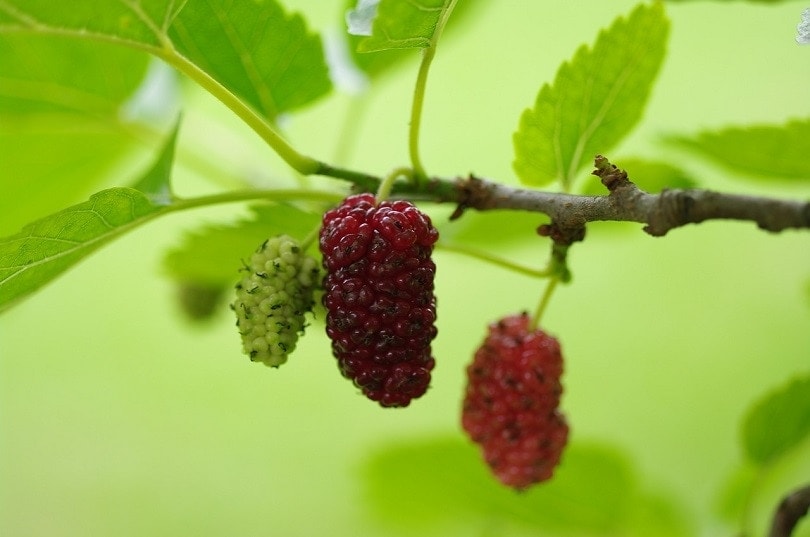
Typically, dogs can have a small number of ripe mulberries. They are not toxic to dogs and will easily travel through their digestive system without wreaking havoc along the way.
Mulberries are a natural fruit that doesn’t present much of a danger to your pup. Dogs are primarily carnivores, so they shouldn’t eat too many mulberries or they may start to feel ill, and their stool could become much runnier. No one wants that, but it is easily avoided by limiting the number your dog consumes.
Dogs won’t generally do more than taste them once or twice. If you notice that they do not handle even a couple of these berries very well, avoid introducing them into their diet again.
Unripe Mulberries
Why did we specify that dogs should only eat ripe mulberries?
Just as humans aren’t the biggest fans of unripe fruit, don’t encourage your dog to snack on them either. Unripe mulberries have a much higher chance of causing an upset stomach for your pup than when they are fully ripe.
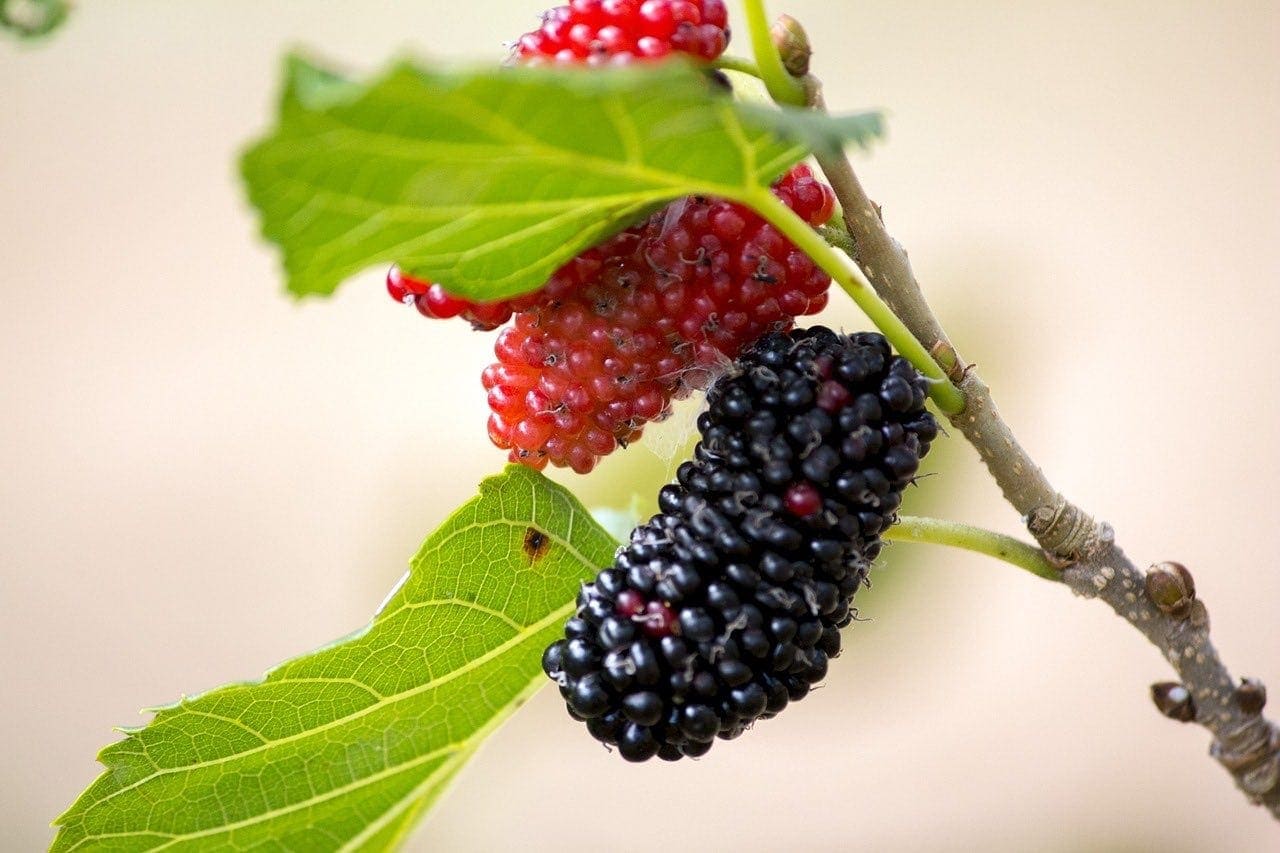
Perhaps the more concerning thing is that unripe mulberries have also been known to cause hallucinations. All types of mulberries are hallucinogenic when they are in their unripe form, since they contain a white sap that causes these stimulating effects. As they ripen, they use and change those chemicals that would typically cause hallucinations. As there is limited information and research on these effects in dogs, it's best to be safe rather than sorry and avoid the unripe mulberries altogether.

Potential Health Benefits of Mulberries for Your Dog
Fresh mulberries are largely made up of water. They contain about 60 calories in each cup. When they are fresh, they are more than 80% water, 1.4% protein, 1.7% fiber, 0.4% fat, and 9.8% carbohydrates.
You can also find mulberries dried, which will decrease the amount of water and will concentrate their carbohydrate levels. However, feeding your dog dried fruit is never recommended, since the juices and sugars are so much more concentrated in that form and may lead to a stomach upset. Fruits are also not an appropriate treat for diabetic dogs, so consult with your vet regarding mulberries if your dog is suffering from diabetes.
When it comes to the benefits of mulberries for dogs, many of these are extrapolated from human nutrition and need to be carefully and critically evaluated. There is very little research available to confirm the same beneficial effects this fruit may have on our canine companions as it does on us. However, the amount of mulberries also counts.
As dogs should only have this type of ripe fruit in moderation in order to avoid any unpleasant digestive signs, the actual benefits are likely to be quite limited. Although their complete and balanced diet provides dogs with all the nutrients they require for a healthy life, fruits like mulberries can be a nice occasional addition and may bring some health benefits.
Some of the potential benefits of mulberries may include:

Potential Dangers of Mulberries for Your Pup
Have you ever heard the phrase “everything in moderation”? When it comes to mulberries and their relationship to dogs, this principle applies. Limit the amount that you feed them, and their benefits won’t reverse themselves to cause any upset stomachs and unhappy puppies.
When you first introduce them to your dog, observe them carefully to ensure they won’t have an allergic reaction to the berries. It is rare for a dog to be sensitive to them, but still worth watching for initially.
Serving Mulberries to Your Dog
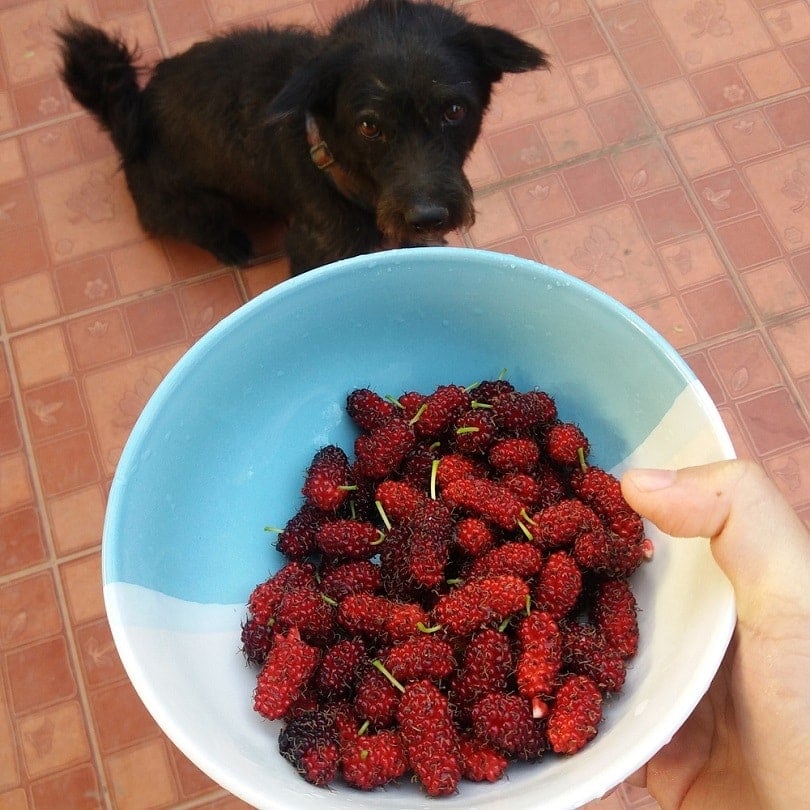
Mulberries are best served to your pup just how nature intended, fresh from the plant once they are ripe. Feeding them a couple of berries to start with is more than enough for them to get the taste. Doing so in such a small amount also allows you to test for any sensitivity they could have towards them.
Baking mulberries into treats is not a good idea since it will typically allow them to have too many at once. Baking them also chemically breaks down some of the compounds in mulberries that are so beneficial for your pup.
Instead, give your dog about a handful of fresh mulberries. Only do this once every couple of days and always monitor how they feel afterward to ensure you aren’t overdoing it. There can always be too much of a good thing.
Toxic Berries for Dogs
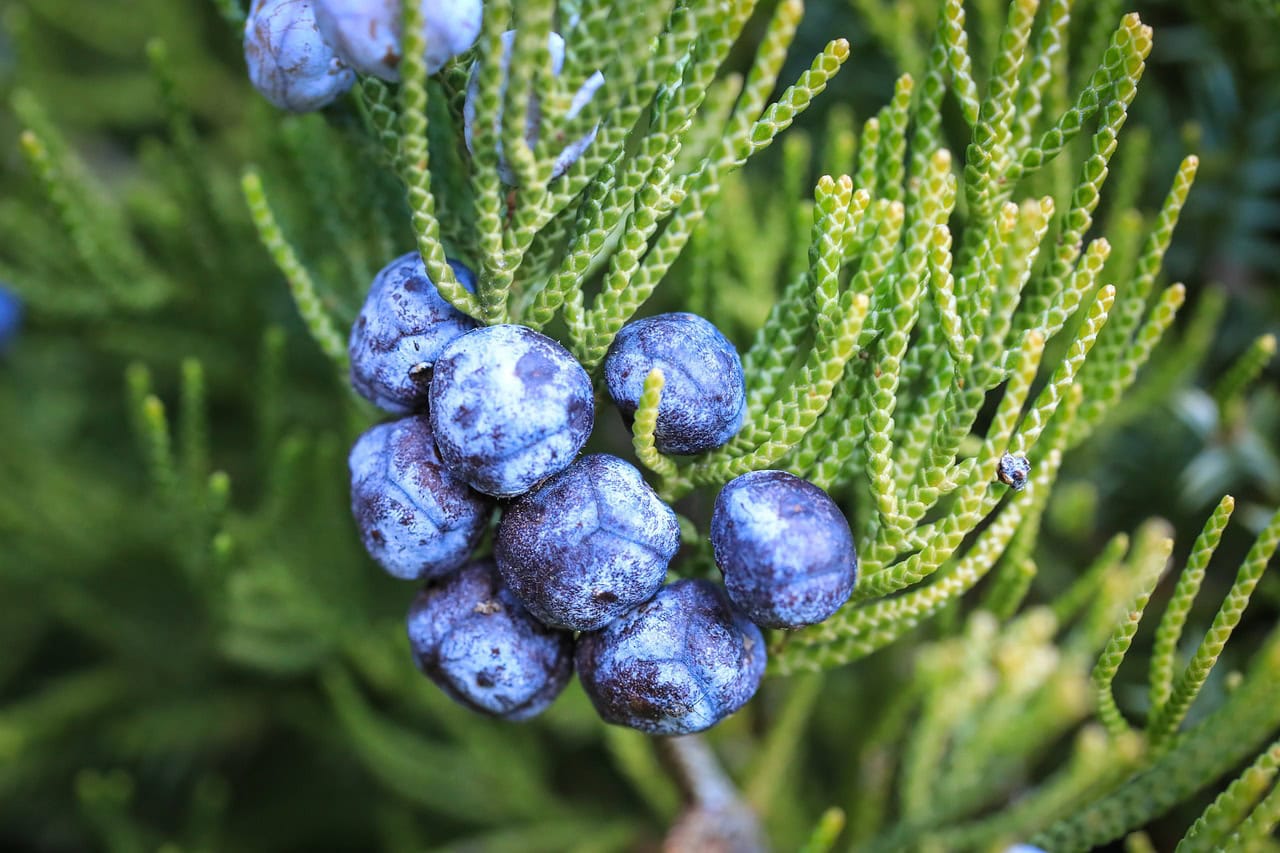
Mulberries aren’t the only common berry your dog can have access to when on a walk or wandering around the yard. Not all berries are healthy for your dog, with some of them being dangerously toxic.
If your pup likes mulberries, they might be more inclined to eat a berry straight from the plant. Watch out for these toxic and harmful berries when you are out and about, or take them out of your yard if you allow your dog to wander alone.
Harmful and Toxic Berries for Dogs

Summary
Dogs can eat mulberries in moderation and reap certain benefits from them. They are a source of antioxidants that provide health benefits. The key to your dog having mulberries is to limit their consumption to a handful every few days at a maximum. Watch out for any potential allergies, and don’t let them eat them from a bush directly, since you can’t always be certain what they are snacking on. If your dog is a diabetic, first consult with your veterinarian.
Related Reads:
Featured image credit: BoyKat, Pixabay
Get Hepper In Your Inbox


Pet care tips from our vets and experts, straight to your inbox.
You may opt-out at any time. View our Privacy Policy for more information.
Nicole is a lover of animals of all sizes but is especially fascinated with the feline variety. She’s the proud mom of Baby, a Burmese, and works every day so he can relax in the sunshine or by the fire. She’s always had a cat in her home and has spent countless days with others, observing behaviors and softening up even the grouchiest of the lot. Nicole wants to share her kitty expertise with you so you and your cat can live happy, healthy, and care-free.
Join the conversation
Ask a question, share your story, or send private feedback.