Hepper is reader-supported. When you buy via links on our site, we may earn an affiliate commission at no cost to you. Learn more.
Can Dogs Eat Blueberries? Our Vet Answers!


In this article
You love your pooch. You share your love and time with them. You may wonder if you can give them an occasional treat, like some of the blueberries you’re noshing on for a healthy snack. The short answer is…
Yes, but with a few considerations. Let’s begin with some background information about the things that affect what we and our pets eat.

Genetics, Canines, and Humans
When questioning whether you can give different people foods to your dog, it’s essential to remember that all animals are different in our genetic makeup. You can think of genes as ingredients. Varying mixtures result in organisms, whether plant, person, bacteria, or canine.
It turns out that chimpanzees and humans share 98.8 percent of their DNA. With dogs, it is 84 percent. Along with our genetic similarities and differences, we can find that we have similarities or differences in our gastrointestinal system’s anatomy and physiology. That is why different species have evolved to ingest different kinds of food. Chimpanzees are omnivores, just like humans. That means they eat all sorts of vegetarian food as well as animals. In the case of dogs, they are descendants from carnivores but through millions of years of evolution these scavenger creatures have adapted to receive some nutritional benefits from plant sources they find in the environment and therefore became what is known as “facultative carnivores”.
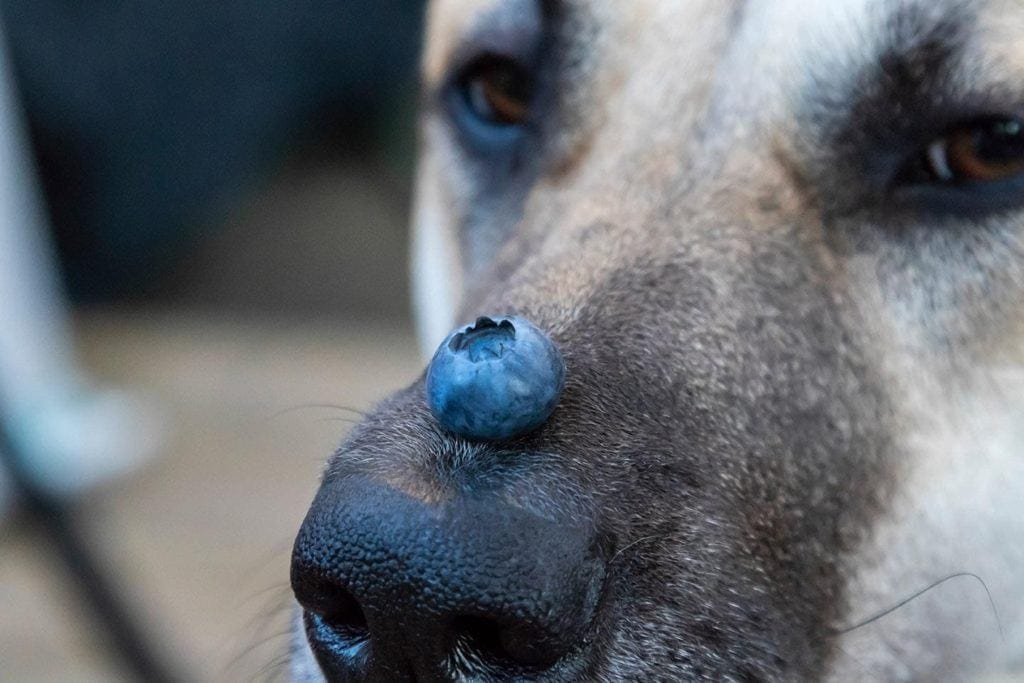
Nutritional Benefits of Blueberries
As a facultative carnivore, your dog’s diet should be based on animal-derived proteins, however, it can also contain some carbohydrate sources.
We’ll use both the National Research Council (NRC) and the Association of American Feed Control Officials (AAFCO) nutritional requirements as a guide for determining the efficacy of feeding your pooch blueberries.
As it turns out, many of the nutrients that these fruits contain are also present in the list of what dogs must have, such as magnesium, potassium, and riboflavin. The amounts vary. Some have negligible health value for canines. Others have some. Blueberries also contain things that your pup won’t need in great quantities, such as sugar.
The bottom line is that there are some useful nutrients that your pet can use and others that need to be limited.
Antioxidants and Your Dog
One of the prevalent health messages you may hear specifically regarding blueberries is their antioxidant content. The benefits they offer are protective. Some research suggests that it can ease the harmful effects of brain aging in dogs. Dementia, unfortunately, occurs in canines too as they get older. A diet that includes antioxidants, therefore, may help preserve your pet’s quality of life. Antioxidants in general have a positive effect on protecting cells against free radical damage.
Before you replace his kibble with blueberries, there is another twist to this story. Too much of a good thing—antioxidants, in this case—don’t deliver more benefits and might have an antinutrient effect since they can destroy thiamine. It’s all about balance. That concept is crucial for another reason. Blueberries are mainly a carbohydrate source and lack the protein levels that your dog needs to thrive. Therefore, offering some blueberries to your dog is a great idea, but too many of them have a negative effect on their health.
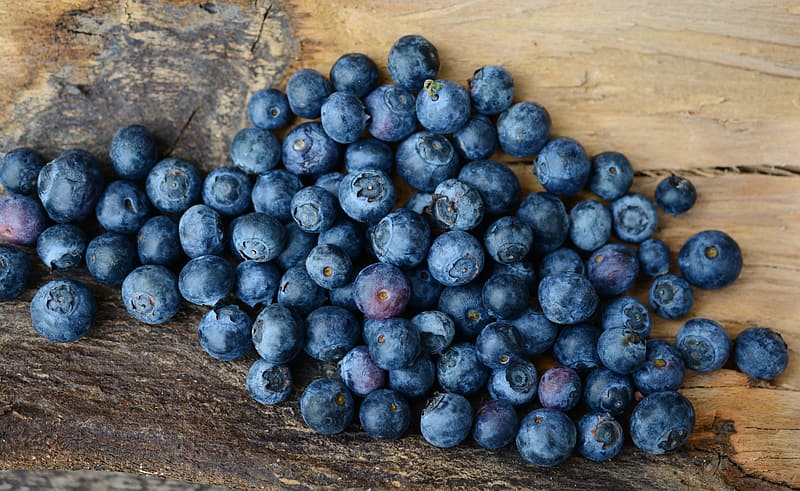
Blood Sugar Levels
If your dog is diabetic, the question of stability also comes into play with your pooch’s blood sugar or glucose levels. The problem with blueberries is that they contain simple carbohydrates also known as easily digestible sugars that can cause levels to spike. That is potentially harmful or even life-threatening with some dogs.
The chances are that if you have a diabetic pooch, you’re monitoring his diet carefully, anyway, and are controlling his blood sugar levels with a special diet and perhaps even insulin injections. To be fair, you’re probably not going to give your pup a bowl of berries in one sitting. It might make this question a moot point. However, if your pet suffers from diabetes we’d strongly urge you to contact your veterinarian before giving your pet any blueberries or other treats, even if they are “all-natural”.
How to Feed Your Dog Blueberries
If your vet gives you the green light, you can try giving your pooch a few to see if they like them. The chances are that he may already be enjoying them in his dog food. Many commercial diets and treats contain a variety of fruits and vegetables to make sure they are meeting the nutritional needs of your pet. You may even find blueberry-flavored ones.
You can feed your dog blueberries, either fresh or frozen. We’d recommend the latter if just to make them easier and less messy to handle. Speaking of that point, we suggest offering them outside instead of in the house. You can use them as a training aid in place of other treats. Or, you can even prepare some healthy blueberry frozen Greek yogurt dog treats! Just remember to limit foods outside of their regular diet to no more than 10 percent of your pet’s daily intake.
This point centers on the question of nutritional balance.
Conclusion
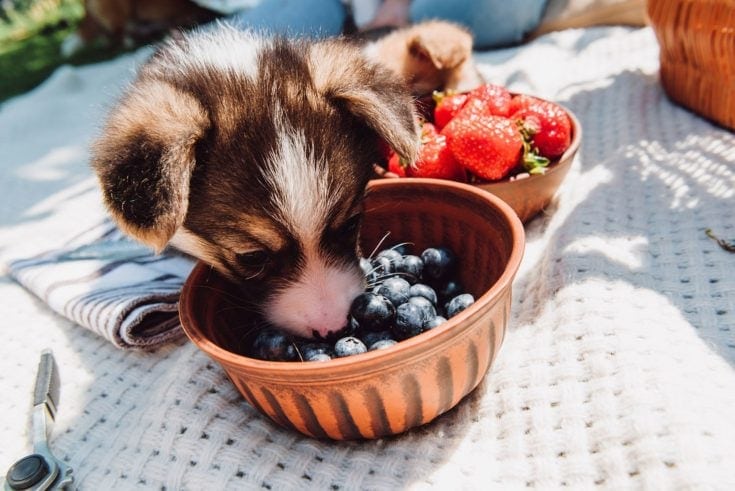
Berries might not be the first thing you think of when it comes to a healthy dog treat. It turns out that you can give them blueberries in moderation to mix things up with something different. When they’re in season, berries are inexpensive. If you’re lucky, maybe your pup will share his new treat with you so that you both can enjoy the health benefits of fresh fruit in your diet.
See Also:
Featured Image Credit: Congerdesign, Pixabay
Get Hepper In Your Inbox


Pet care tips from our vets and experts, straight to your inbox.
You may opt-out at any time. View our Privacy Policy for more information.
Paola Cuevas is a veterinarian and animal behaviorist, with over 18 years of experience working with a variety of species. Her passion is animal welfare and focuses on the importance of preventive medicine. Paola has skills in the fields of nutrition, microscopy, clinical pathology, diagnostic imaging, and endoscopy as well as extensive experience in animal training through positive reinforcement. As our in-house veterinarian, Paola is very happy to share her knowledge and experience with our readers and hopes to be helpful with any issue presented by your non-human family members.
Dr. Paola is our Senior In-House Veterinarian at Hepper, and she loves sharing her knowledge and experience with our readers. Paola hopes to provide helpful information for any issue presented by your fur babies.
Her passion is animal welfare and she focuses on the importance of preventive medicine.
Education
Paola graduated from the University of Guadalajara, Mexico.
Experience
Dr. Cuevas has over 18 years of veterinary and animal behaviorist experience and has worked with a variety of species, from companion animals to exotics. She has skills in the fields of nutrition, microscopy, clinical pathology, diagnostic imaging, and endoscopy as well as extensive experience in positive reinforcement animal training.
Things You Didn't Know About Dr. Paola:
As a student, Paola received an outstanding student scholarship. She had the opportunity to travel to Canada and learn about aquaculture diagnostics and pathology.
Paola and another colleague trained gentoo penguins to recognize shapes and colors and their project achieved an international first-place award in research.
Paola has trained several species of animals to voluntarily accept medical procedures such as ultrasound examinations, X-rays, and the collection of biological samples with the goal of improving their healthcare without additional stressors or the need for physical restrain.
Join the conversation
Ask a question, share your story, or send private feedback.