Hepper is reader-supported. When you buy via links on our site, we may earn an affiliate commission at no cost to you. Learn more.
Can Dogs Eat Pears? Are Pears Safe for Dogs?

Since dogs are omnivores, eating foods such as spinach, apples, and squash is good for them. Dogs can also safely eat pears, which is excellent for them because pears are such a juicy, sweet treat.
Some dogs love them, and other dogs might not give them a second sniff. Pears are a healthy addition to a dog’s life and make a great snack.

Health Benefits
Pears have many nutrients that help keep them eating a well-balanced diet. These include:
- Potassium
- Vitamins A, C, and K
- Antioxidants
- Dietary fiber
This combination means that they help the dog build strong bones and ligaments, supplemented with potassium.
Antioxidants are powerful fighters in the body, attaching themselves to free radicals that can cause cancer, heart disease, and other diseases.
The dietary fiber boosts your pup’s digestive system, keeping them at a prime level of fitness and helping ease stomach pains and other issues.
More studies are being done, but some evidence suggests that a dog that eats fruit with some consistency can reduce the risk of suffering from a stroke by up to 50%.
Health Hazards
Since pears are generally a safe bet, there are not too many hazards to be aware of when feeding them to your pup.
When feeding a dog a pear, make sure that the core and any of the seeds are not a part of the chunks they receive. This rule of thumb applies to any fruit with seeds because the seeds contain small amounts of cyanide. The core is tougher and is difficult for a dog to digest.
Don’t use pears from a can or dried pears. These products often contain quite a bit of sugar, which a dog’s system is not prepared to work with and digest properly. Plain, fresh pears are the safest option.
Since pears are a starchier, harder fruit, make sure to cut them up into bite-sized pieces. They should be small enough that if the dog forgets to chew out of excitement for receiving such a tasty treat, they won’t choke on it.
Adding Pears to Your Dog’s Diet
When considering whether to add pears to a dog’s diet, especially if you have an interest in a raw food diet, you need to think about the phrase: Everything in moderation. No matter what you supplement a pup’s diet with, it should never be in surplus.
Fruit, due to its natural sugar, doesn’t sit well in a dog’s stomach when overeating. It can cause vomiting or diarrhea. If your pup gains weight quickly, you need to limit the amount of fruit they receive because it can lead to jumps in poundage.
Fruit grouped into one food group should only make up 10% of a dog’s diet at a maximum. The quantity is all based on a pups’ ideal weight, meaning that tiny dog breeds like Chihuahuas can eat substantially less fruit than a Newfoundland dog.
Check out the guidelines put out by the World Small Animal Veterinary Association regarding how many calories a dog should eat based on their ideal weight as a general rule.
For example, if a dog’s ideal weight is 22 pounds, they should eat 470 calories a day. If 10% of their diet can be fruit, they can only eat 47 calories of it each day. In other words, they can have 81 grams of pears specifically, or about ⅓ a cup.

Featured Recipe
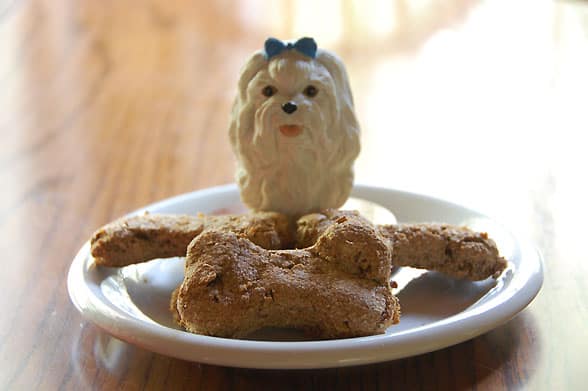
Pear & Molasses Dog Biscuits
Ingredients
- 2 cups chopped pears, sans core
- 2 ½ cups whole wheat flour
- ¼ cup of water
- 1 tablespoon baking powder
- 3 tablespoons molasses
Instructions

Final Words
There are many options for feeding your pup pears, from raw as a training treat or baking them into a delicious snack. Ensuring that there are no seeds present and coring the pear keeps the fruit safe for them to enjoy. Test it out by giving them a small piece to start with and going from there.
See Also:
Featured Image Credit: mali maeder, Pexels
Get Hepper In Your Inbox


Pet care tips from our vets and experts, straight to your inbox.
You may opt-out at any time. View our Privacy Policy for more information.

Nicole is a lover of animals of all sizes but is especially fascinated with the feline variety. She’s the proud mom of Baby, a Burmese, and works every day so he can relax in the sunshine or by the fire. She’s always had a cat in her home and has spent countless days with others, observing behaviors and softening up even the grouchiest of the lot. Nicole wants to share her kitty expertise with you so you and your cat can live happy, healthy, and care-free.
Join the conversation
Ask a question, share your story, or send private feedback.