Hepper is reader-supported. When you buy via links on our site, we may earn an affiliate commission at no cost to you. Learn more.
Can Dogs Eat Cucumbers? Vet-Approved Safety Facts



In this article
Dogs are omnivores, so they’re happy to eat just about anything, whether it’s actually good for them or not. Some foods aren’t the best for dogs because they create gastrointestinal problems. Some foods, like onions, are actually poisonous to dogs. But can dogs eat cucumbers? The short answer is yes!
Cucumbers are a nutritious snack option that most dogs enjoy eating, and they are safe when offered in moderation and sliced up. They’re full of water, vitamins, and minerals, and can be a refreshing snack in warm weather. A whole cup of sliced cucumber pieces (or about two thirds of a regular cucumber) only has around 18 calories, so you don’t have to worry about your dog putting on any extra weight. Here’s everything you need to know about feeding your dog cucumbers.

Nutrient Benefits of Feeding Dogs Cucumbers
Cucumbers are a good source of vitamin K, vitamin C, magnesium, and potassium.1 All of these and many more nutrients are required for dogs to have normal digestive and immune function and overall healthy lives. Dogs will get all of these valuable nutrients from their complete and balanced diet, and you simply cannot rely on cucumbers to provide a significant source of these minerals and vitamins. The amount of cucumber dogs can safely eat is too small for them to actually reap many benefits. Still, this can be a small occasional treat with some bonus healthy ingredients.
Cucumbers are also high in fiber, which can support digestive system health. Thanks to the low-calorie count of cucumbers, dogs that are overweight can safely consume them as healthy occasional treats.
Replacing high-caloric treats with low-calorie cucumbers may help your dog maintain normal weight without sacrificing the rewards they are used to receiving.
Cucumbers are among the many non-starchy veggies that can help keep your blood sugar levels stabilized, although more research is needed into these benefits and whether they could actually apply to dogs.

Health Hazards to Worry About
While cucumbers are perfectly safe to feed to dogs in small amounts, there are a couple of hazards to be aware of. The first possible problem is digestion issues. If a dog eats too much cucumber at once, digestion can become uncomfortable, with signs of excess gas, vomiting, diarrhea, lethargy, and discomfort. Contact your vet for advice as some dogs may need treatment. So, it’s best not to feed them more than a few pieces of cucumber at a time. Also, whenever introducing new food ingredients to your dog, do so in accordance with your vet’s advice and start with very small amounts gradually, as change of food and new treats can also lead to an upset stomach in many dogs.
Another health hazard to worry about is choking. Dogs are typically eager eaters and don’t always take the time to chew their food properly before trying to swallow it. Giving a whole or even half of a cucumber to your dog without cutting it up first could lead to choking. Sometimes food that gets swallowed too quickly gets stuck at the back of the throat and can even block the dog’s airway, which is life-threatening and needs immediate emergency care. You can easily avoid this danger by always cutting cucumber into slices or small pieces before offering any to your pooch.
Cucumber seeds can also lead to an upset stomach in some dogs, so consider removing them first. The skin of many fruits and veggies is often contaminated with pesticides, so wash the cucumber first and peel the skin before slicing it up for your pooch.
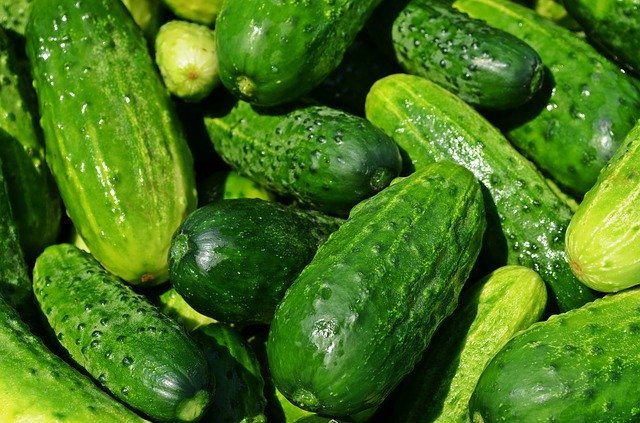
Finally, cucumbers contain a potentially toxic and irritating compound called cucurbitacin, which is responsible for the bitterness. Newer studies are suggesting they may have some beneficial effects on human health, but they may also lead to vomiting and stomach upset if present in excess. Cucurbitacin is mostly found in the roots, stems, and leaves, but can also be present in the fruit. This is another reason to peel the cucumber, but also to cut off the ends before slicing it up for your pooch.

Fun Feeding Ideas to Consider
Dogs are typically happy to eat cucumber slices plain, but there are many different things that you can do to create fun feeding opportunities that your dog is sure to appreciate. One easy idea is to put cucumber chunks in an interactive toy, like a Kong, to create a rewarding challenge for your dog to take on. Here are a few other ideas to consider:
Try different feeding methods every time you cut a cucumber up to share with your pooch to keep things fresh and exciting.

Our Final Thoughts
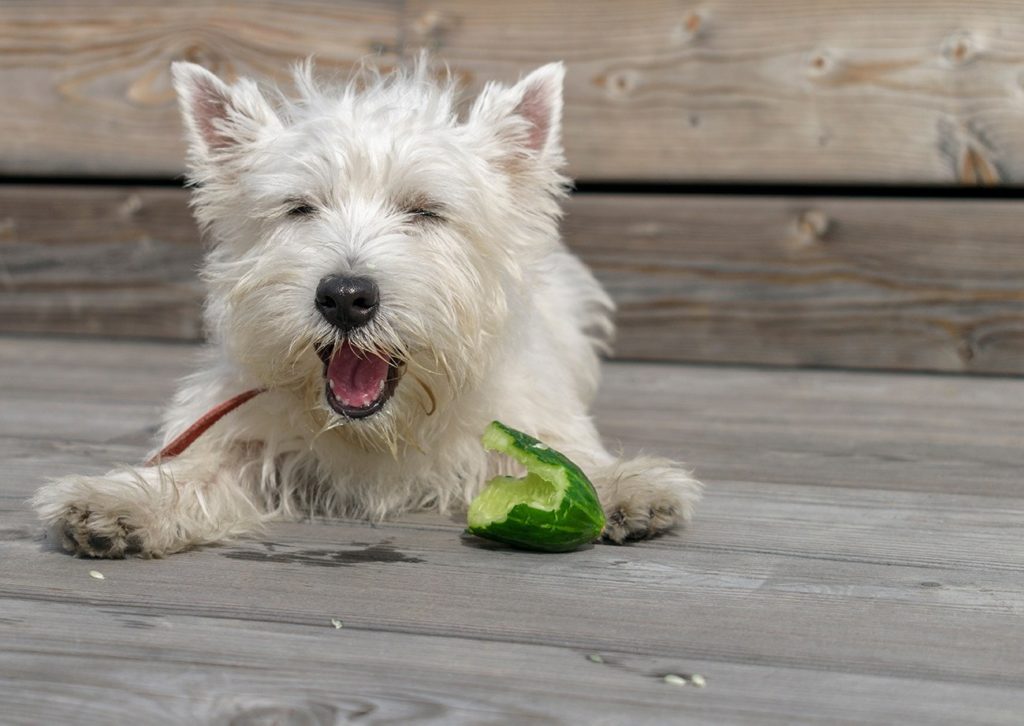
Cucumbers are easy to find in the store and can be easily grown at home, so getting your hands on some to give your dog an occasional treat should never be a problem. Cucumbers are just as good for humans as they are for dogs, so you and your pooch can actually share the same snack from time to time. While cucumbers shouldn’t be a predominant part of your dog’s diet, there is no reason to avoid them.
Have you ever fed your dog a cucumber? If so, how did they like and react to it? We want to know all about the cucumber antics you’ve experienced with your pup!
See also:
Sources
https://www.akc.org/expert-advice/advice/can-dogs-eat-pickles/
https://www.akc.org/expert-advice/nutrition/can-dogs-eat-cucumbers/
https://www.acs.org/molecule-of-the-week/archive/c/cucurbitacins.html
https://www.sciencedirect.com/topics/agricultural-and-biological-sciences/cucurbitacin
https://fdc.nal.usda.gov/fdc-app.html#/food-details/1103352/nutrients
https://extension.oregonstate.edu/news/cucumber-bitterness-explained
Featured Image Credit: Pixabay
Get Hepper In Your Inbox


Pet care tips from our vets and experts, straight to your inbox.
You may opt-out at any time. View our Privacy Policy for more information.
Nicole is a lover of animals of all sizes but is especially fascinated with the feline variety. She’s the proud mom of Baby, a Burmese, and works every day so he can relax in the sunshine or by the fire. She’s always had a cat in her home and has spent countless days with others, observing behaviors and softening up even the grouchiest of the lot. Nicole wants to share her kitty expertise with you so you and your cat can live happy, healthy, and care-free.
Join the conversation
Ask a question, share your story, or send private feedback.