Hepper is reader-supported. When you buy via links on our site, we may earn an affiliate commission at no cost to you. Learn more.
Can Dogs Eat Salmon Skin? Vet Approved Facts


In this article
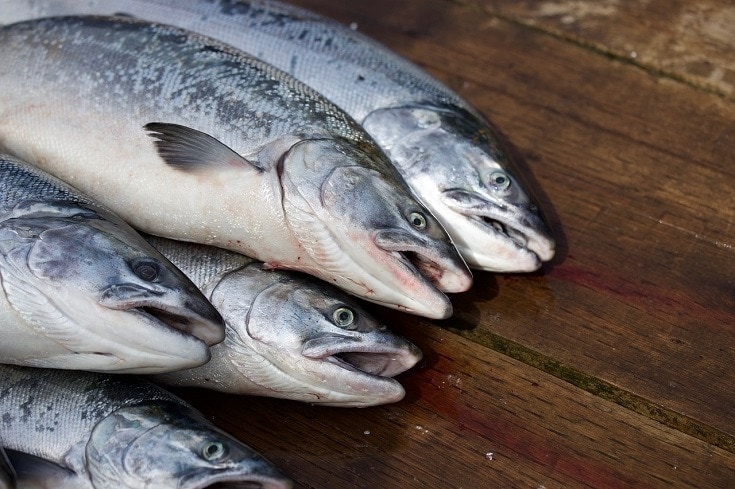
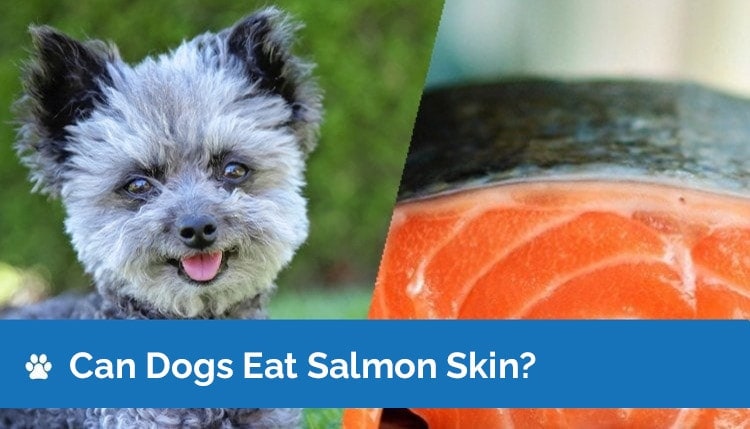
As most dog owners know, dogs aren’t the pickiest eaters. Most dogs will eat plenty of things that a majority of humans wouldn’t touch. Of course, you’d never feed something to your pooch that might pose the possibility of harming them. You’re even researching to see if salmon skin is safe to feed your dog, which is what every discerning dog owner should do. Luckily, cooked salmon skin without any seasoning or additives is safe for your canine to consume; however, there are some caveats you need to be aware of.

Moderate the Intake
Fish is rich in polyunsaturated fat, such as omega-3 fatty acids, while being low in saturated fats, and salmon is no exception.
While it is not bad for dogs to eat fat, you always have to be careful with how much fat you’re feeding a dog. Dogs can gain weight quickly when introduced to a high-fat diet, depending on their level of activity. Because salmon is so high in polyunsaturated fat, it can contribute to weight gain very easily, especially if given too often.
But a high-fat diet is more dangerous than just posing the possibility of weight gain. Dogs that regularly over-consume fat or eat table scraps may potentially be at risk of developing a stomach upset and pancreatitis, although this remains controversial.1 Pancreatitis is an inflammation of the pancreas and will most often happen in dogs for no clear or identifiable reason. It may be life-threatening. There are some known risk factors for this illness, but the link between pancreatitis and fatty foods has yet not been confirmed and pancreatitis still remains a mystery when it comes to dogs.
Salmon may also be contaminated with mercury or polychlorinated biphenyls (PCBs) and other toxins if farmed in polluted or dirty waters. However, salmon is still considered a fish with lower mercury content. Again, in small doses and only on occasion, this isn’t going to pose a health risk for your pooch. But if you feed them salmon skin too often, the mercury levels can build up in their body, causing mercury poisoning, which absolutely is a threat to their health.
Ensure the Salmon Skin is Fully Cooked
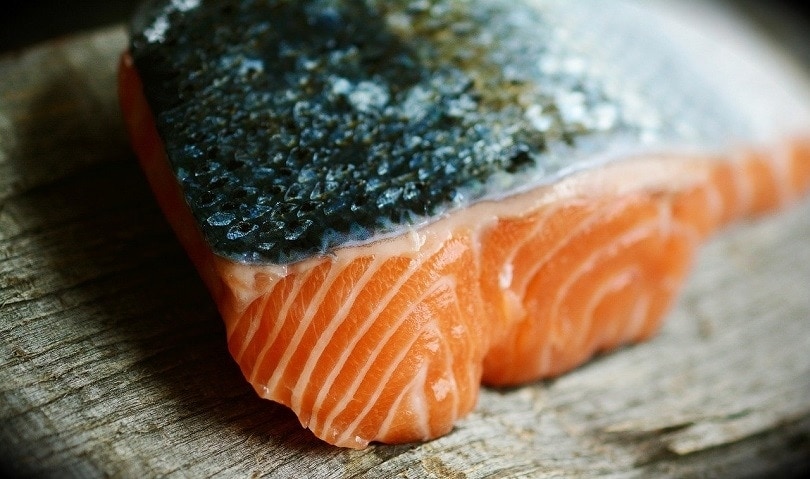
Salmon often contains bacteria and parasites. Many of these parasites cannot finish their cycle in humans or dogs, as they are fish-specific, but they may certainly cause an upset stomach. However, there is a flatworm called Nanophyetus salmincola which is often infected with a bacteria called Neorickettsia helminthoeca that causes salmon poisoning in dogs. This is a serious condition that can be fatal if not treated in time.
Because of this, it’s vital that you ensure any salmon skin you feed to your dog is completely and thoroughly cooked. You’ll also want to make sure that there are no large, hard scales that could scratch your dog’s throat or potentially cause a choking hazard. It may be best to cut the skin into small pieces before offering it to your dog and do so in moderation.

Avoid Additives and Flavorings
Whenever people eat salmon, they almost always season and flavor it prior to cooking so that it tastes amazing. Rarely does anyone cook salmon completely devoid of flavors and seasonings. But if you plan on feeding the salmon skin to your dog, you’re going to need to change this up.
Many seasonings are packed full of sodium, which isn’t great for your dog, especially if eaten often or in larger amounts. To be fair, dogs need sodium in their diets, more specifically a minimum of 5-13.3 mg per kg of body weight per day. For comparison, humans should not eat more than 2300 mg of sodium per day, according to the FDA, while ingestion of 2000 mg per kg (2.2 lb) of body weight of sodium can lead to signs of salt toxicosis in dogs. For a healthy, 33-pound dog, the minimum recommendation of sodium for a day’s intake is 75-200 mg. Most humans are eating 10 to 20 times or more of sodium each day. All this means is that the amount of sodium in a few pieces of salmon skin is unlikely to lead to signs of poisoning in your dog, but it would still be best to be careful not to add salt if you’re planning to offer your dog the skin leftovers.
You also need to avoid any type of flavoring that can be harmful to dogs. For instance, garlic and onion are both toxic to dogs, though humans use them for flavor all the time, especially with salmon. If you cooked the salmon with garlic, onion, or other seasonings and flavors, you shouldn’t feed the skin to your dog.

Are There Benefits to Feeding Your Dog Salmon Skin?
While the fats in salmon skin need to be fed to your dog sparingly, they can also provide some healthy benefits. Because salmon is made up of so much omega-3 fatty acid, it can actually have an anti-inflammatory effect on your dog in small doses. Furthermore, the fatty acids are great for your dog’s coat, helping to keep it vibrant and healthy.
There are many more benefits of omega-3 fatty acids that have been studied in humans and extrapolated to pets as well, but species-specific evidence about safety and indications for its use in dogs is still lacking. However, one thing we do know is that too much omega-3 may be harmful to some dogs, leading to adverse effects such as vomiting, diarrhea, altered platelet function (important for normal clotting), fishy odor, itchiness, and delayed wound healing. Consult your vet if your dog is taking anticoagulant medication or suffering from a blood clotting disorder, pancreatitis, diarrhea, or diabetes.

Conclusion
As long as you’ve cooked up the salmon skin thoroughly with no additives, flavorings, or seasonings, it’s perfectly safe to feed to your dog in small amounts. It can even benefit them to some degree, thanks to the high levels of omega fatty acids. However, salmon skin does contain a fair amount of these polyunsaturated fats that, if overfed to your dog, could contribute to weight gain, stomach upset, and possibly a higher likelihood of developing pancreatitis, although the potential link between fatty foods and pancreatitis is still under scrutiny. The key is moderation. Plus, the mercury levels and PCBs in fish skin may be another reason for caution. Just be sure to consult with your vet first and only feed cooked salmon skin to your dog, in moderation, using a verified source. If you take all of these precautions, you should be safe.
Related Read: 10 Best Fish Oils for Dogs - Reviews & Top Picks
Sources
https://www.purina.co.uk/articles/dogs/feeding/what-dogs-eat/can-dogs-eat-salmon
https://www.akc.org/expert-advice/nutrition/can-dogs-eat-salmon/
https://www.medicalnewstoday.com/articles/320838#nutritional-benefits
https://globalsalmoninitiative.org/en/blog/farmed-salmon-low-in-mercury-high-in-health-benefits
https://www.msdvetmanual.com/toxicology/salt-toxicosis/salt-toxicosis-in-animals
https://www.fda.gov/food/nutrition-education-resources-materials/sodium-your-diet
Featured Image Credit: congerdesign, Pixabay
Get Hepper In Your Inbox


Pet care tips from our vets and experts, straight to your inbox.
You may opt-out at any time. View our Privacy Policy for more information.
Chris is an experienced pet writer specializing in science topics, with a particular passion for health and the environment. She has been a writer for over 15 years and lives with her husband and three cats in Michigan.
Beyond writing about cats and dogs, Chris loves to learn about wine. She has WSET 1 and 2 certifications and is currently pursuing her Certified Wine Specialist Award (CSW).
Join the conversation
Ask a question, share your story, or send private feedback.