Hepper is reader-supported. When you buy via links on our site, we may earn an affiliate commission at no cost to you. Learn more.
Can Dogs Eat Salmon? Vet Approved Nutrition Facts & Recommendations



In this article
Have you ever cooked yourself a nice filet of salmon and noticed a hungry face wagging their tail nearby? If so, you may have asked yourself whether or not salmon is an appropriate treat for your dog. If you have taken a stroll down the pet aisle lately, you can probably answer this question. Salmon is not only a good source of protein for your pooch, but it also has many other added benefits.
Like anything else, however, there are some precautionary measures you want to take before feeding your dog this fish. Take a look at the article below as we will discuss all of the pros and cons of this pet food ingredient.

The Benefits of Salmon for Your Dog
As we mentioned, salmon contains many vitamins, minerals, and nutrients that are essential to your dog’s diet. One of the most important nutrients is protein. This is the building block of the body that allows your dog to be active, strong, and healthy. Salmon is a good source of protein and is low in saturated fat, yet it is also beneficial in many other ways. It's often referred to as "fatty" or "oily" fish, as it contains a high amount of polyunsaturated fats, such as omega-3 and omega-6.
Let’s take a look at some of the nutrients provided by salmon:
EPA and DHA
EPA (eicosapentaenoic acid) and DHA (docosahexaenoic acid) are both omega-3 fatty acids that are stacked together in long nutritious strands. There are many benefits to these two ingredients that have been studied primarily in humans, and your pooch may also benefit from them, although research for specific benefits in dogs is still lacking.
Human Health Benefits of EPA and DHA That May Apply to Dogs:
Speak to your vet before giving your dog salmon as a regular part of their diet or as a supplement, as it may not be recommended for every dog. Omega-3 fatty acids can cause potential adverse effects in some dogs depending on the dose, such as altered platelet function (important for normal clotting) and delays in wound healing. Your vet will advise you on the appropriateness of salmon for your pooch.

Other Benefits
If those benefits were not enough, salmon also has many vitamins, minerals, and other nutrients that will promote your pup’s overall well-being.
- Vitamin B12: Cobalamin is important for maintaining normal brain, nerve tissue, and red blood cell functions.
- Vitamin A: Vitamin A is also important for your pet’s muscles and bones, growth and development, and vision. Not only that, but it is also good for their skin and coat.
- Selenium: This trace mineral is very important in protecting cells against damage and supporting the immune system, thyroid gland, reproduction, and normal function of the muscles and heart.
- Vitamin B3: Niacin is important for normal cell metabolism and creating energy from food, making and repairing DNA. It is also an antioxidant.
- Phosphorus: Key mineral for building bones, teeth and cell membranes, and regulating normal function of nerves and muscles.
- Many other valuable vitamins and minerals: thiamine or vitamin B1, riboflavin or vitamin B2, niacin or vitamin B3, zinc, manganese, calcium, sodium, and potassium.
Another benefit of salmon is it’s less likely to upset your pet’s stomach. Dogs that have a hard time processing meat such as chicken, beef, or lamb may do well with salmon as a protein alternative.
How to Prepare Salmon for Your Dog
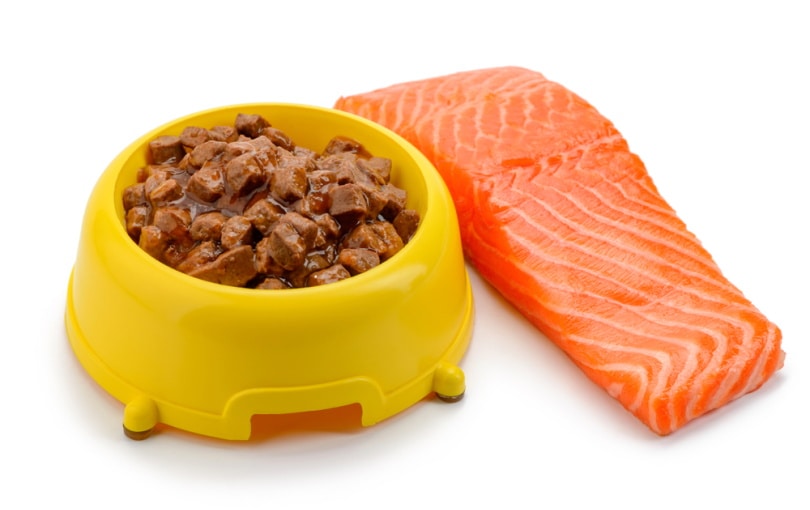
Salmon can be served to your pet in many different ways. It is the main ingredient in a lot of store-bought foods, it’s available in treat form, or you can cook it at home. If you choose to do the latter, you want to make sure that you are cooking it correctly to give your pet the most benefits.
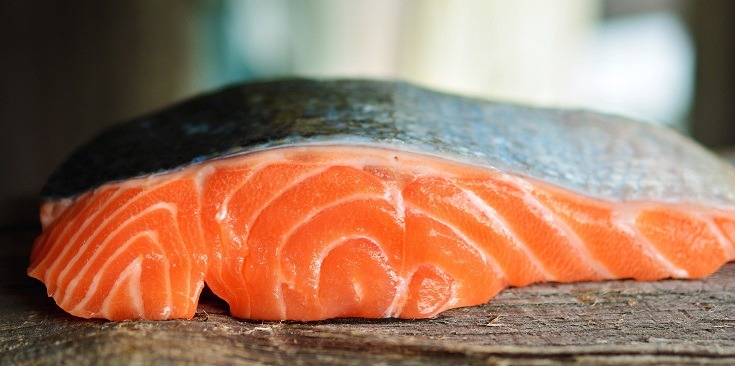
First, you want to make sure that you are purchasing boneless filets. What’s more, you never want to serve your pup raw salmon, which we will talk about a little bit later. When it comes to cooking the fish, you can broil, bake, boil, or grill it.
You want to stay away from frying the meat or cooking it with any additives or ingredients that are not good for your pooch such as grease, oil, butter, salt, pepper, and other spices. You also want to stay away from foods that would typically go with salmon such as onions and garlic as both can be toxic to your dog.
Grilling or boiling a filet of salmon in its natural state is usually your best option. That being said, you want to introduce any new food to your pet slowly. Give them a small portion to see how their stomach reacts, and you can increase the amount from there. What’s more, you should always check with your vet before making any changes to your dog’s diet.

Salmon Caution
As we mentioned, there are some things that you should be aware of before you serve your pet salmon. First and foremost, you want to give them this protein in the safe form. Although we talked about this above, you never want to give your dog raw fish, as it may be contaminated with bacteria or contain parasites that can make them very ill. Make sure to remove all bones, as they can be a choking hazard if they get stuck in the mouth or the back of the throat, and may even puncture their stomach or intestines during digestion.
If you are buying salmon fresh, make sure that you are purchasing boneless filets. Even then, however, you still want to make sure that small pieces of bone have not been missed. Besides the bones, there is also another crucial reason why you do not want to give your pet raw salmon. Salmon skin should only be given in very small amounts and when thoroughly cooked, as it can otherwise contain dangerous bacteria. It should also be free from additives and seasoning.
Salmon is rich in polyunsaturated fats such as omega-3, as we already discussed, which may predispose some dogs to obesity if fed often or in large amounts. Excess of these fats in some dogs may also lead to an upset stomach with vomiting and diarrhea, lethargy or inflammation of the pancreas (pancreatitis). The link between fatty foods and pancreatitis in dogs remains controversial and further research is required to confirm or disregard this connection. Consult with your vet first if your dog is on anticoagulant medication, has blood-clotting disorders, diabetes, diarrhea, or a history of pancreatitis, before making salmon a regular addition to their diet. On the other hand, a small amount of salmon used as an occasional treat, is unlikely to lead to significant health issues.
Salmon 'Poisoning' Disease
Raw fish, especially salmon, trout, steelhead and Pacific Giant Salamanders, can have bacteria and parasites that can cause serious health consequences. Specifically, in salmon, there is often a parasite called Nanophyetus salmincola. However, this flatworm is generally not the issue, unless it is infected with a bacteria called Neorickettsia helminthoeca that causes salmon poisoning. This is a very serious condition that can be fatal if not treated in time.
Unfortunately, the signs of this illness can vary widely and appear within a week of eating the raw or undercooked fish. That being said, some signs you should look out for are fever, discharge from the eyes and nose, decreased appetite, vomiting, diarrhea, weakness, weight loss, depression, enlarged lymph nodes, changes in breathing, lethargy, muscle tremors, and sometimes seizures. If you notice any of these signs or your pooch has eaten raw or undercooked salmon, get your dog to a vet right away.
How Much Salmon to Give My Dog?
Many fish contain mercury, a heavy metal that is harmful. Over time, if ingested, it may lead to signs of chronic mercury poisoning in dogs. Salmon is one of the fish species that is low in mercury, and commercial pet food containing salmon is considered safe for dogs according to nutrition experts at UC Davis Veterinary Medical Teaching Hospital.
Finally, like any other food that you give your pet, moderation is best. Check with your vet if salmon can be a good protein source for your dog. Salmon should not exceed more than 1-2 ounces per 10 pounds of body weight, but these approximate guidelines will differ for very small and giant breeds. Again, when changing up your dog’s diet or adding new ingredients, you should consult your vet first and do this gradually over a minimum of 7 days.
Related Read:
Conclusion
We hope that the above information has given you all of the details you need to make the decision of occasionally adding salmon to your dog’s diet. As long as you are cooking the meat properly and giving it to them in moderation, according to your vet’s advice, without any bones and with minimal skin, this protein can have many positive benefits for your pup’s overall well-being.
Sources
Featured Image Credit By: Waldemar Dabrowski, Shutterstock
Get Hepper In Your Inbox


Pet care tips from our vets and experts, straight to your inbox.
You may opt-out at any time. View our Privacy Policy for more information.
Nicole is a lover of animals of all sizes but is especially fascinated with the feline variety. She’s the proud mom of Baby, a Burmese, and works every day so he can relax in the sunshine or by the fire. She’s always had a cat in her home and has spent countless days with others, observing behaviors and softening up even the grouchiest of the lot. Nicole wants to share her kitty expertise with you so you and your cat can live happy, healthy, and care-free.
Join the conversation
Ask a question, share your story, or send private feedback.