Hepper is reader-supported. When you buy via links on our site, we may earn an affiliate commission at no cost to you. Learn more.
Can Hamsters Eat Radishes? Vet-Approved Facts & FAQ


In this article
Hamsters are common small pets kept by many families across the world. While there are thought to be at least 19 different species of hamster, only around 5 of these are kept as domestic pets. Whichever kind of hamster you keep, you should know what snacks you can safely give them, and which are not recommended. Not all human foods are safe for our pocket pals, but fortunately, if you are wondering if radishes are, then you’re in the right place.
Yes, you may feed radishes to your hamster, but as with all fresh foods, care needs to be taken with how much you offer.

Can All Hamsters Eat Radish?
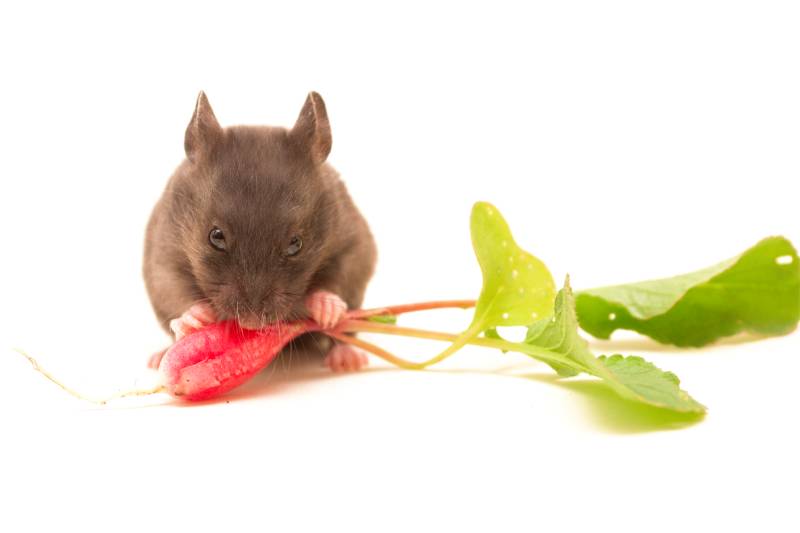
Hamsters are omnivores, meaning they eat both plant and animal-based foods. Radish is fine to feed your hamster. However, as with all fresh foods, moderation is key.
Benefits of Feeding Radishes to Your Hamster
In the wild, hamsters search for and gather their food, and usually live on a diet of fruits, seeds, cereals, leaves, plants, and insects (and occasionally the odd frog or lizard!) The latter gives them protein and the variety of other foods they find helps keep their diet nutritionally balanced.
When you choose to keep a hamster as a pet, it is recommended that you feed them a high quality hamster pellet, which will ensure their daily nutritional requirements are met. In addition to this they can have a small amount of fresh fruits and vegetables (such as a slice of radish), and the occasional protein rich treat, like a small piece of boiled egg. A good rule of thumb when wondering how large a fruit or veggie offering should be is a 1x1cm piece. This is manageable for all species of hamster, and although the dwarf breeds are smaller, they have a higher calorie need, so they can handle a slightly bigger morsel compared to their size.
Do note, though, that many hamsters do not like radish. Often, they will stay away from it and opt for alternatives. If you do offer them a slice of radish, ensure this pink/red veggie is of the milder variety and not one of the hot, peppery ones. The spicier and stronger-tasting radishes might upset your hamster's digestive system.
The nutrients that are of particular interest in the radish are some of the vitamins and minerals, such as vitamin Bs (particularly riboflavin, pantothenic acid and folate),vitamin K, vitamin C (although dietary vitamin C is not necessary in hamsters as they can make their own), fiber, calcium, potassium and iron. Radishes are also a low-calorie snack, which is helpful for those owners watching their hamster's waistline or wishing to prevent weight gain from occurring in the first place, as obesity in hamsters is common and can easily occur.
The vitamin B available in radishes helps with maintaining healthy skin and fur. Iron helps oxygen circulate properly around the body. Magnesium is needed for bone maintenance, support, and growth, while vitamin K helps support effective blood clotting.
Here is what can be found in 100 grams of raw radish:
Hazards of Feeding Radish to Hamsters
As with any treat, moderation is key. It can also be trial and error to find the right fruit and vegetables your hamster likes and can tolerate. Overfeeding any fresh morsel may result in a disrupted gastrointestinal system which is unpleasant for them and for you, so it is best to keep to very small amounts initially. If there are no signs of gastro-intestinal upset, you can feed slightly larger pieces of that vegetable next time.
You may notice the following signs if a tummy upset occurs. If this is the case, it would be advisable to take your hamster to the veterinarian for a check-over, as even a small amount of upset can cause big problems for a little animal.
Can My Hamster Eat Radish Leaves?
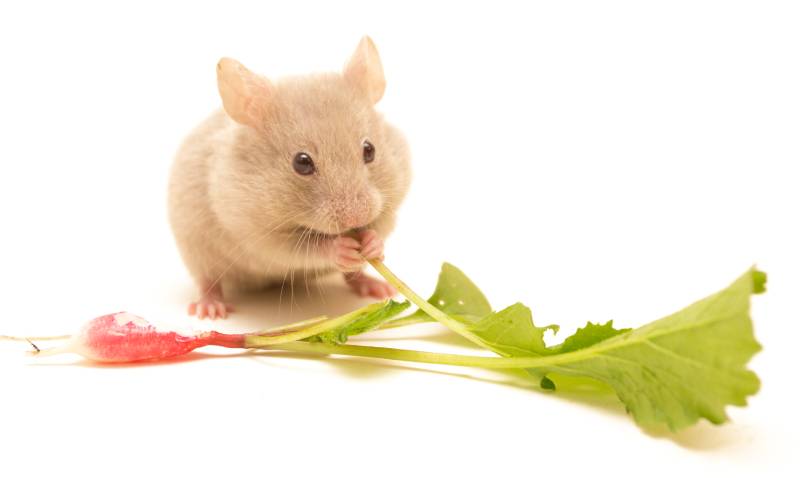
Yes, they can. These are full of nutrition, and you may find your furry pocket friend prefers these to the radish vegetable itself. Be sure to wash them thoroughly to remove debris, bugs, and chemicals used on them.
What Veggies Can Hamsters Not Eat?
Here are a few common vegetables hamsters cannot eat, as they are not considered safe. Please note this list is not exhaustive. Any uncertainty over whether food can be offered to your hamster should be checked with your veterinarian.
- Garlic
- Raw potato
- Avocado
- Raw/uncooked kidney beans
- Onions
- Tomato leaves
- Eggplant (aubergine)
What Fruits Can Hamsters Not Eat?
Here are a few common fruits hamsters cannot eat. Please note this list is not exhaustive. Any uncertainty over whether food can be offered to your hamster should be checked with your veterinarian.
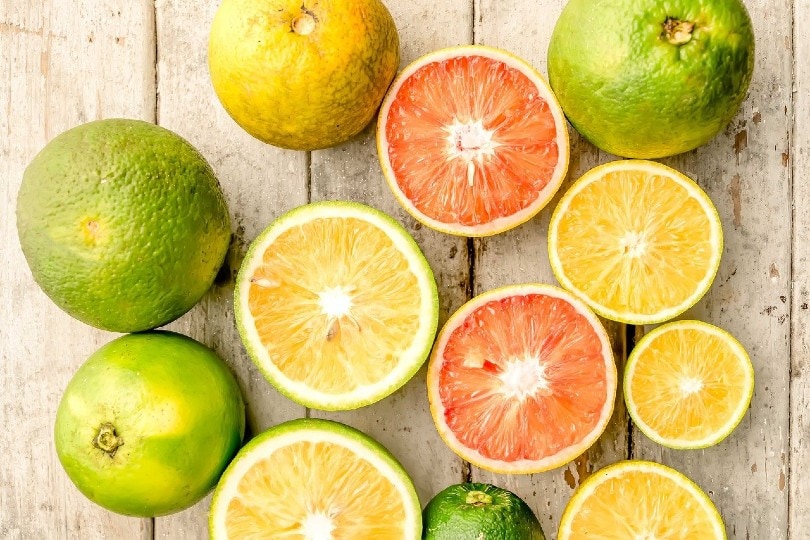
- All citrus fruits
- Apple seeds
- Rhubarb
What Else Can I Give My Hamster as a Treat?
The following delightful foods can all be offered to hamsters as alternatives to radish:
Conclusion
Hamsters can and do eat a variety of fruits and vegetables, which is perfectly acceptable and safe for them, in small amounts. Their main diet should be a pellet-based hamster food (not muesli style), with veggies like radishes offered in small amounts alongside this. Giving a good variety of veggies is important, but remember to keep the quantities moderate. A useful rule of thumb is a 1x1cm piece of a safe vegetable every few days. Keep fruit offerings to once a week, as the high sugar in fruit can cause obesity in hamsters. If your hamster particularly likes radish, it is a safe addition to their diet.
See also:
Sources
https://www.petmd.com/exotic/evr_ex_hm_where-do-hamsters-come-from
https://www.petsradar.com/advice/what-can-hamsters-eat-a-vets-guide-to-good-nutrition
https://www.pdsa.org.uk/pet-help-and-advice/looking-after-your-pet/small-pets/your-hamsters-diet
https://fdc.nal.usda.gov/fdc-app.html#/food-details/169276/nutrients
https://arborviewah.com/wp-content/uploads/2021/05/1Hamsters.pdf
Get Hepper In Your Inbox


Pet care tips from our vets and experts, straight to your inbox.
You may opt-out at any time. View our Privacy Policy for more information.
Annaliese began her career as a veterinary nurse in Edinburgh, later advancing her qualifications with a diploma in advanced veterinary nursing in surgery from London. Her work in small and mixed veterinary practices led her to become a head nurse, where she trained other veterinary nurses, managed the nursing department, conducted nurse clinics, and developed new patient care protocols.
Throughout her career, Annaliese has cared for thousands of patients and their owners, setting higher standards in nursing regimes with a focus on surgery and anesthesia. She co-authored multiple veterinary nursing textbooks and contributed to various mainstream publications in the UK and USA. After more than twenty years in the veterinary and pet care professions, she retired from clinical practice to pursue full-time writing. Having cared for thousands of patients and owners, Annaliese specialized in surgery and anesthesia. She was asked to co-author several veterinary nursing textbooks and contributed to a number of other publications in the UK and USA. After more than two decades in the veterinary and pet care industries, she retired her scrub suit and now works as a full-time writer.
Annaliese Morgan has been a dedicated veterinary nurse for over two decades, having completed a diploma in advanced veterinary nursing in surgery from London and qualifying from Edinburgh. Her professional experience includes managing a nursing department, training other veterinary nurses, providing patient care, and running nurse clinics in both small and mixed veterinary practices.
As an expert in surgery and anesthesia, Annaliese has treated thousands of patients and owners. In addition to being asked to co-author multiple veterinary nursing textbooks, she has written for a variety of publications in the UK and USA. After a long and successful career in the veterinary and pet care professions, Annaliese now dedicates her time to writing full-time. You can find out more about her work at www.annaliesemorgan.com.
Join the conversation
Ask a question, share your story, or send private feedback.