Hepper is reader-supported. When you buy via links on our site, we may earn an affiliate commission at no cost to you. Learn more.
How Long Does it Take a Dog to Recover From Being Spayed? Our Vet Answers

In this article
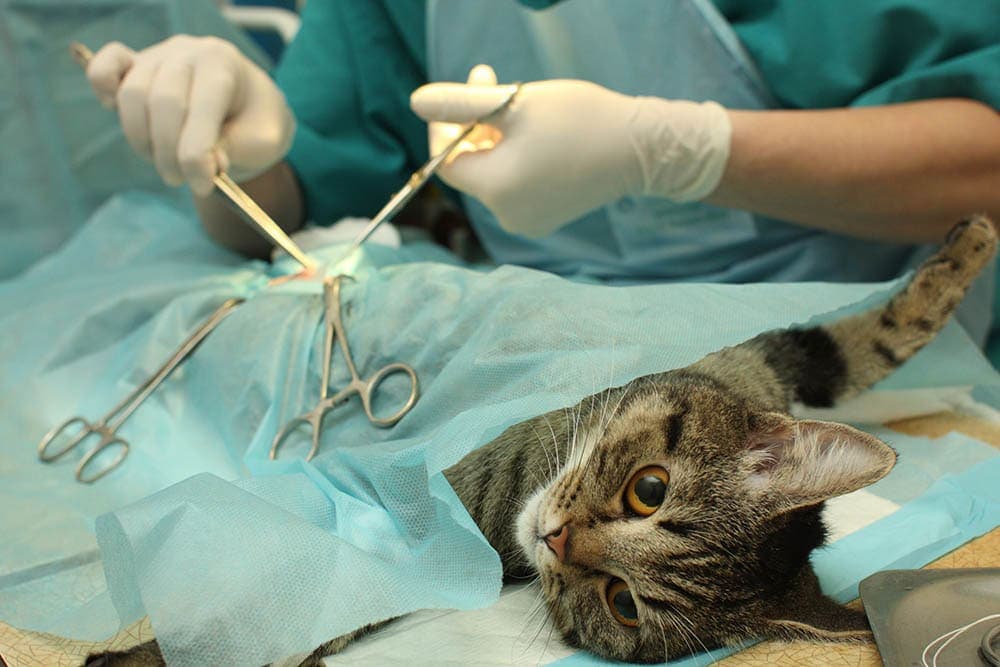
During a spay or ovariohysterectomy, the ovaries and uterus are surgically removed from a female dog while she is under general anesthesia.1 After removing the reproductive organs, the dog is no longer able to reproduce. On average, it takes a female dog 10-14 days to fully recover from a spay.
Although the thought of your precious girl undergoing major abdominal surgery may be daunting, veterinarians routinely perform this procedure, and the overall incidence of complications is very low, provided you stick to your vet’s aftercare instructions.

What to Expect After a Spay
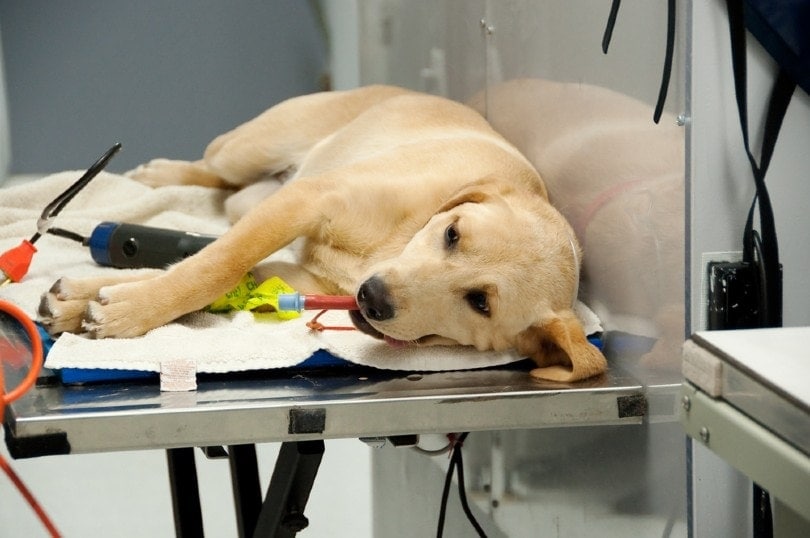
Most dogs are admitted to the veterinary clinic the morning of the procedure and won’t go home until later in the day when the veterinarian in charge feels they have adequately recovered from anesthesia.
It’s normal for a dog to be drowsy the evening after discharge, as well as the following day. However, within 24-36 hours, your dog should be fully alert, urinating, and defecating on her normal schedule, and should have regained her appetite.
A dog’s age, size, and body composition will all affect her recovery. Younger, smaller, and leaner dogs tend to recover faster than those that are older, larger, and have a higher percentage of fat in the abdomen.
Many dogs act as if they are fully recovered after a day or two. However, it’s important to remember that the incisions would not have fully healed at this point, so there is still a risk of complications developing. The risk of complications is generally the highest in the first few days after the surgery.
The incisions take 10-14 days to heal fully. It is only at this point that the sutures in the skin can come out, and your dog can return to normal life. During the two-week healing period, there are a couple of things you can do to ensure that your precious pup makes a smooth recovery.
Since there is a very high probability that you will get your dog spayed or neutered at some point in his life, it is best to have a pet insurance covering this procedure. You can start your choosing by checking these top-rated pet insurance companies:
Top Rated Pet Insurance Companies:



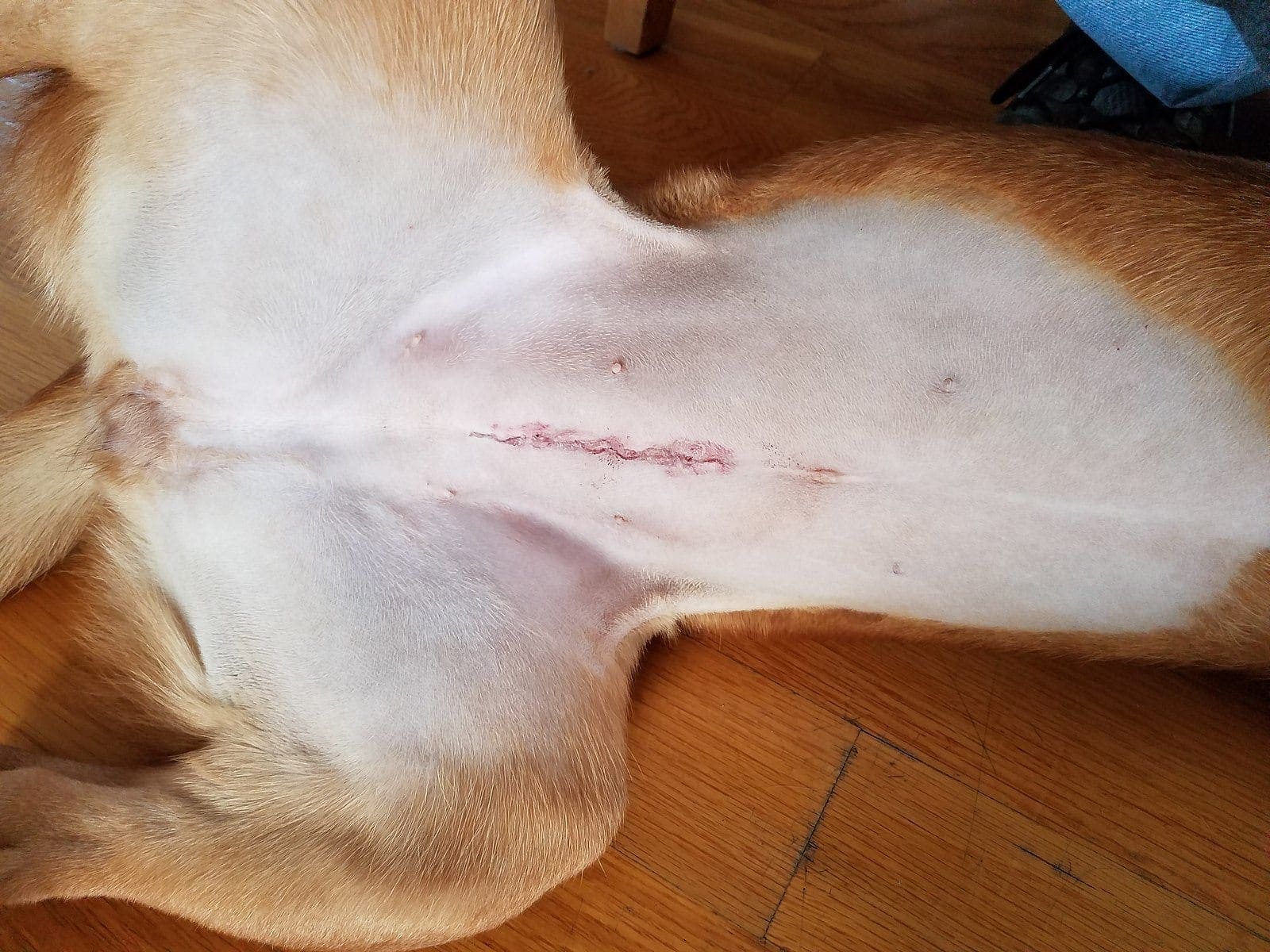
Monitor Your Dog’s Spay Incision
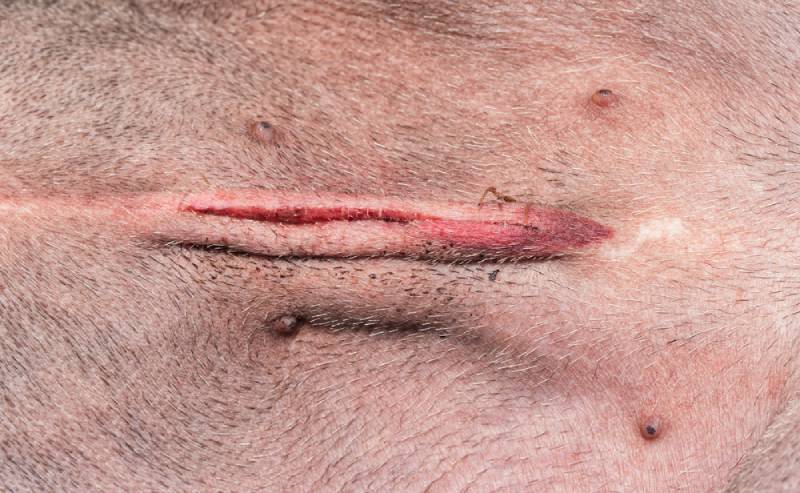
Check your dog’s spay incision immediately after the surgery so that you have a frame of reference if any changes occur. Thereafter, be sure to check the incision site for changes at least once a day. Mild swelling and inflammation along the incision line is normal in the first few days after the surgery.
If you notice any excessive redness, swelling, bleeding, or discharge coming from the spay wound, contact your veterinarian. Loose stitches or the edges of the wound opening up should also prompt you to contact your veterinarian as soon as possible.
Monitor Your Dog’s Behavior
Your dog will probably appear drowsy for the first 24 hours after the spay. She may whine or cry the first night after the surgery, her appetite may be absent or reduced, and she may be hesitant to go outside to urinate or defecate. Her behavior should be back to normal within 24-36 hours. If not, it’s best to contact your veterinarian.
If your dog shows any of the following signs, you should contact your veterinarian:

Restrict Exercise
Exercise should be limited for 10-14 days post-spay, and your dog should be kept on a short leash during toilet breaks to stop her from moving around too much. It’s also important that you don’t leave your dog unsupervised with other dogs during her recovery period.
Activities such as running, playing, and jumping can cause stitches to loosen or fall out, and the spay wound to open. Excessive activity can cause other complications such as bleeding, swelling, and pain.
Use an Elizabethan Collar
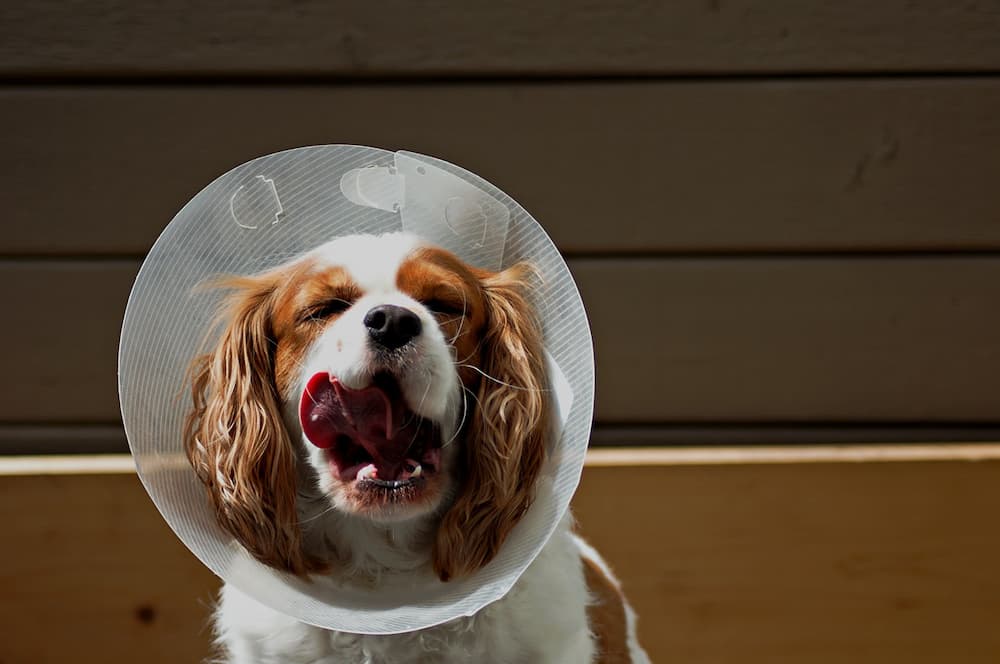
Do not allow your dog to lick or bite at her spay wound. Licking can lead to serious complications, such as the spay wound opening up and infections. Use an Elizabethan collar (also known as a cone) to prevent this from happening.
Keep the Incision Dry
Keep the incision dry to avoid introducing infection. Avoid bathing your dog for 10-14 days after the surgery and don’t allow her to swim during this time.

Is it Worth It to Have My Dog Spayed?
Although 10-14 days may seem like a long recovery period, having your dog spayed has many health benefits and is worth doing.
Not only does spaying prevent unplanned litters, it helps eliminate the risk of your dog developing ovarian and uterine cancers, while also reducing the risk of her developing breast cancer. Dogs spayed before their first heat have less than 0.5% chance of developing breast cancer.
Spaying also helps prevent a dog from developing a life-threatening infection of the uterus known as pyometra. Furthermore, spaying prevents a dog from displaying unwanted behaviors linked to her heat cycle, like escaping or roaming to find a mate.
See Also:
Does Pet Insurance Cover Surgery? Insurance Standards Explained
How Long Does It Take for Dog Stitches to Dissolve? Vet-Approved Facts & FAQ
Featured Image Credit: aspen rock, Shutterstock
Get Hepper In Your Inbox


Pet care tips from our vets and experts, straight to your inbox.
You may opt-out at any time. View our Privacy Policy for more information.
Lindsay is a veterinarian who lives in the beautiful city of Cape Town, South Africa with her husband and their rescue cat and dog, Harrison and Blizzard. Lindsay obtained her bachelor's degree in veterinary science from the University of Pretoria and currently works in small animal practice. When she’s not at work, you can find her out in nature, hiking with Blizzard, or following some kind of creative pursuit, such as writing, playing the piano or sewing.
Lindsay is a veterinarian living in Cape Town, South Africa with her husband and their rescue animals, Harrison and Blizzard. You can find her hiking with Blizzard, enjoying time in nature, or writing when she’s not working.
Education
Lindsay graduated from the University of Pretoria, receiving her bachelor's degree in veterinary science.
Experience
Lindsay currently works in small animal practice.
Join the conversation
Ask a question, share your story, or send private feedback.