Hepper is reader-supported. When you buy via links on our site, we may earn an affiliate commission at no cost to you. Learn more.
Cane Corso vs Mastiff: Which One is Right for Me?
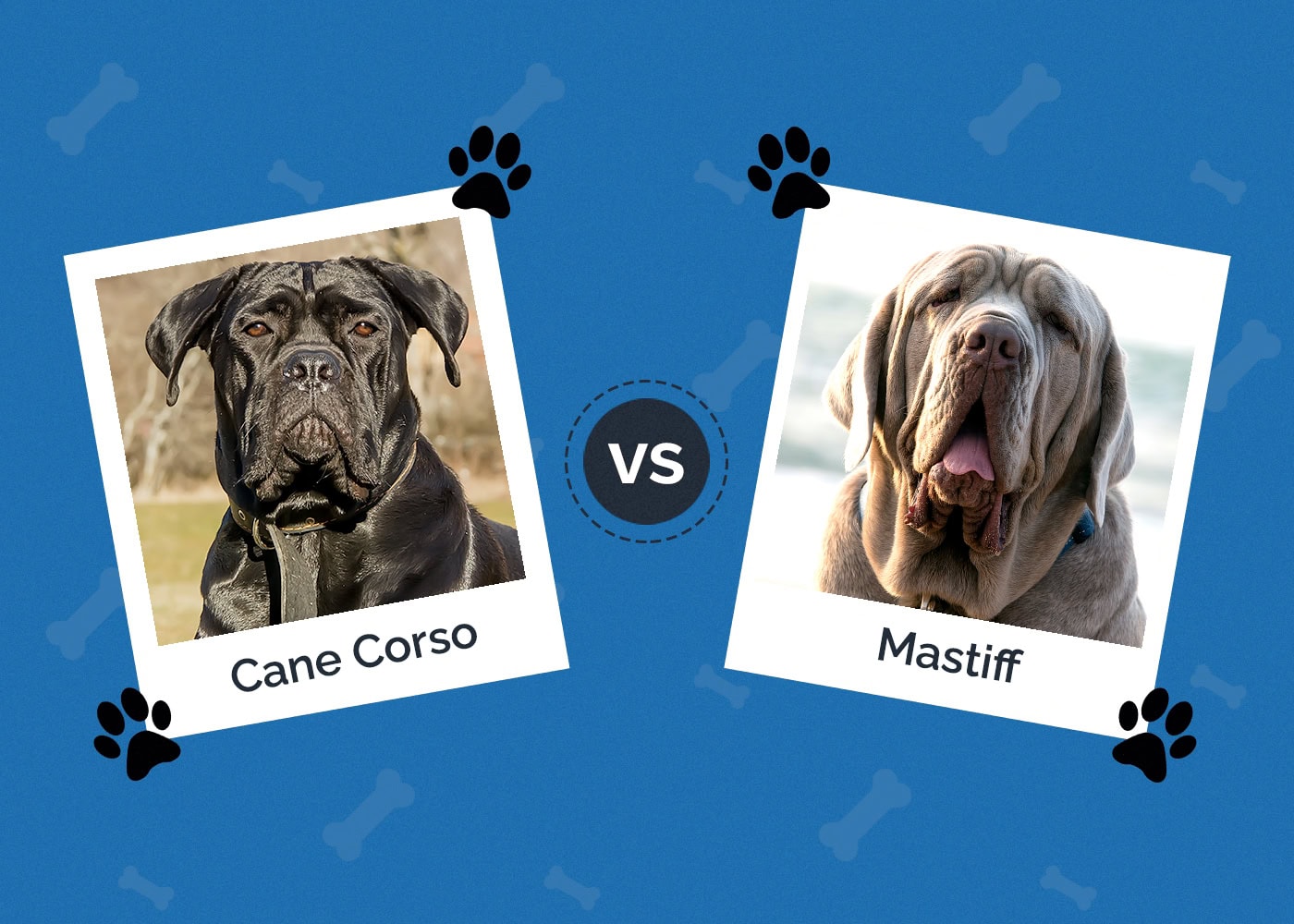
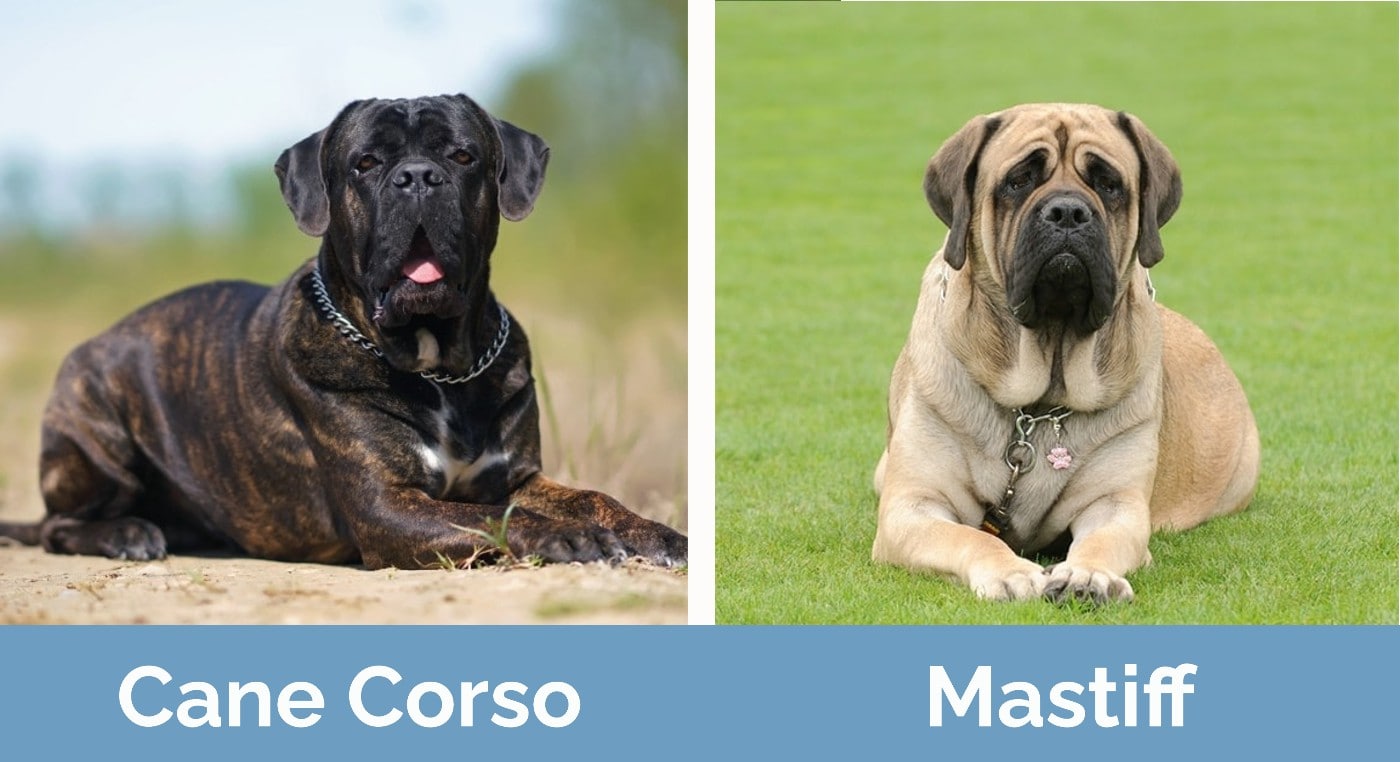
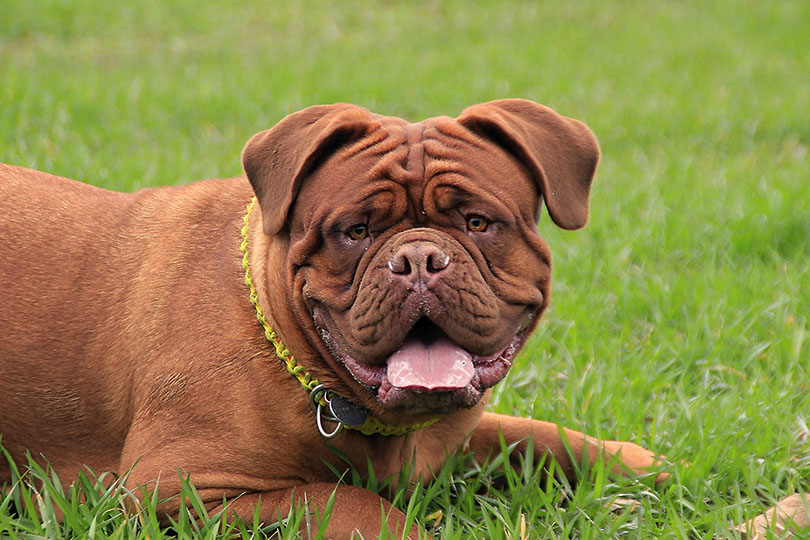
Often mistaken for one another, the domineering Cane Corso and the colossal Mastiff are very similar breeds of dog on the larger side of the size chart. Aside from their similarities in general appearance, they are also both loyal, affectionate, and highly trainable.
The reason behind their similarities in physical appearance is that the Cane Corso, also known as the Italian Mastiff, is the descendant of the Mastiff. They are both working dogs that make excellent protectors, with rich histories that span back to ancient times.
Despite the close relationship of the two dog breeds, they also have key differences, as they were bred for different purposes. If you are choosing between the Cane Corso and the Mastiff as a new member of your family, it is important to understand how they contrast—especially in terms of personality, temperament, and size.
In this article, we will compare and contrast the Cane Corso with the Mastiff to help you choose which lovable giant is right for you!

Visual Differences

At a Glance

Cane Corso Overview
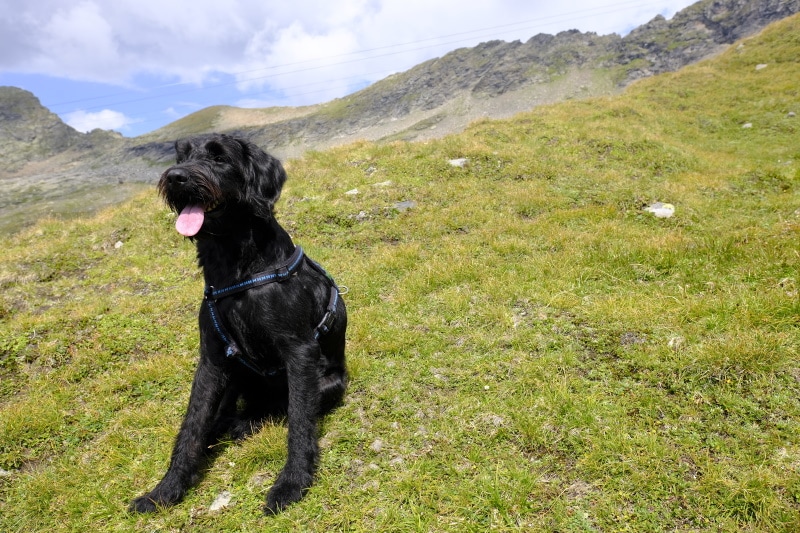
The Cane Corso, or the Italian Mastiff, is a muscular and domineering breed of dog with the nickname of “the peerless protector”. Intimidating and intense in appearance, Cane Corsos are also affectionate and loyal dogs toward their families.
The Cane Corso is a descendant of the molossus, a Mastiff-type dog, and can trace their roots back to ancient Rome. The Cane Corso were bred to be guard dogs and have a history of being utilized in battle and for hunting. Because they were bred as protectors, the name Cane Corso is translated to “guardian dog” or “protector dog”—derived from the Italian word, cane, meaning dog, and the Latin word, cohors, which means protector.
Cane Corsos are often misunderstood to be an overly aggressive breed due to their physical appearance and history. At the same time, they also have a reputation of being loving, affectionate, and loyal to their families. They are naturally protective, which makes them great guard dogs who can eventually learn to work well with children! Like most dogs, early socialization and training is essential. Training the Cane Corso is recommended for more experienced dog owners due to the breed’s general temperament and personality type.
Intimidating and intense, the Cane Corso is a dependable breed of dog that is loyal and protective of their families.
Size
With many similarities in appearance, the most notable difference between Cane Corsos and Mastiffs is in their size. The Cane Corso is a large breed of dog that stands at 24 to 28 inches, which is relatively smaller than the Mastiff, even when fully grown. They also weigh around 90 to 130 pounds, which is significantly less than a Mastiff. Even full-grown Cane Corsos still have the potential to be 50 to 100 pounds lighter than a full-grown Mastiff.
Personality and Temperament
Aside from size, Cane Corsos and Mastiffs also differ in general personality and temperament.
Cane Corsos were bred as guard dogs and are naturally protective of their families. Because of this, they have a tendency to be extremely cautious around strangers and other pets, but are warm and calm toward their families, who they love receiving attention and affection from.
Likewise, Cane Corsos will require constant work throughout their lives in terms of training and exercise. While they make great family dogs, they may require extra training and work around small children and multi-pet households.
Cane Corsos are more susceptible to aggression because of their background and history, which is highlighted by their protective and cautious nature. With the proper training and socialization, they can learn to ignore other pets and strangers, especially if they aren’t a threat.
Training
Cane Corsos are intelligent and can easily pick up skills, especially if they begin training at a young age. Because of their temperament, it is crucial that they begin both socialization and house training early—particularly, if they will constantly be around strangers and other pets.
Due to their size and strength, house training is important to ensure they behave appropriately at home, and to minimize any damages around the house. Leash training is also crucial to reduce the risk of unwanted escapes during routine walks.
Cane Corsos love their families, and they work well with positive reinforcements to promote good behavior—such as praises and rewards. Training for Cane Corsos should occur throughout their lives, and unwanted behaviors should be monitored and immediately corrected. Training a Cane Corso can be overwhelming for novice dog owners, so seeking professional dog training services may be recommended to ensure your Cane Corso becomes the perfect family dog.

Health & Lifespan
Cane Corsos have a relatively standard life span for large dog breeds of 9 to 12 years. Like most dogs, their life span and quality of life improves with daily exercise and a healthy diet. Between 30 minutes and one hour of exercise is recommended to keep them fit and to prevent various illnesses.
Cane Corsos are prone to a variety of health conditions, such as obesity, hip dysplasia, gastric dilatation-volvulus, and epilepsy.
Grooming Requirements
Cane Corsos are considered low maintenance in their grooming needs. They may have minimal shedding throughout the year, but can shed heavily during the transition of seasons from hot to cold and vice versa. They have a short double coat of fur, which helps them adjust to their climate. Minimal grooming, such as weekly brushes, is enough to keep their coat nice and healthy, but they may need more frequent brushing sessions during shedding season.
As active dogs, it is important to keep their nails trimmed, as long nails can be uncomfortable during movement. Their nails can be easily worn down with their daily walks.
Suitable for:
Because of their personality and temperament, the Cane Corso is suitable for experienced dog owners and for families that are looking for a reliable and loyal guard dog. Although they can learn through training, they are not recommended for households with multiple pets and little children. They are best suited for dog owners who will put in the time for training and exercise.
Pros and Cons:
Pros
- Excellent guard dogs
- Low maintenance grooming
- Loyal, family-oriented
Cons
- Overprotectiveness and cautiousness, which can lead to aggression
- Risk of developing musculoskeletal problems
Mastiff Overview
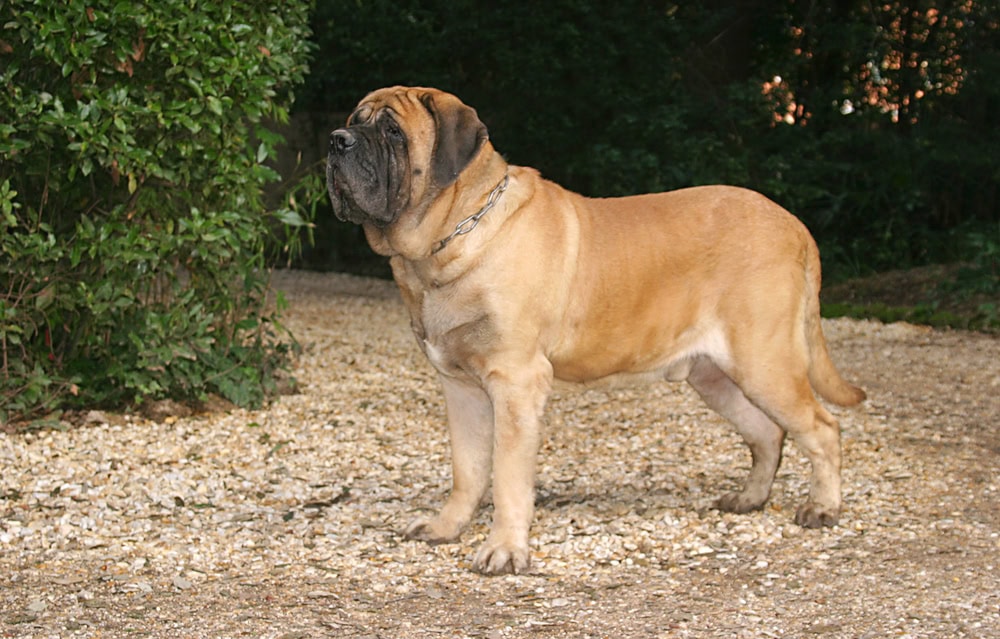
With its staggering size and regal appearance, the English Mastiff is a colossus among canines. The Mastiff is a calm and docile giant with a sociable and loving personality, in addition to a rich history tracing back all the way to ancient times.
The English Mastiff was discovered by the Romans when they first invaded Britain, and were utilized as guardians for sheep and people. Because of the Mastiff’s courage and loyalty, this breed of dog was well loved by the Romans, and particularly by Julius Caesar. Mastiffs were also initially used as fighting dogs against gladiators and other animals, but they were preferred by Caesar as family pets due to their affection and loyalty.
Today, the Mastiff is still utilized in police and military work because of both their history and personality, but they are generally preferred as loving companions to families.
Size
The Mastiff is a giant among giants, standing at 23 to 27 inches, with a weight of 120 to 130 pounds. With their towering height and muscular build, the Mastiff easily towers over the Cane Corso in both size and weight.
Mastiffs are large muscular dogs with incredible strength and may need a lot of room to move around.
Personality and Temperament
The Mastiff, like the Cane Corso, still exhibits a protective nature that may manifest around strangers and other animals. In contrast with the Cane Corso, however, they are calmer and less susceptible to barking and aggressive tendencies.
Though intimidating in appearance, Mastiffs are good natured and affectionate towards their family. They are loving and friendly, making them excellent family dogs. Their calm demeanor also makes them good with children and even other pets.
While they are gentler than the Cane Corso, they are still courageous and will protect their loved ones if they sense a threat.
Training
Mastiffs are highly intelligent and prefer a gentler approach to training. They are fast learners and very eager to please, responding well to lots of praise and rewards. Because of their intelligence and ability to pick things up quickly, they can get bored easily. Different training approaches are recommended, which can be overwhelming for first-time owners—making professional training something to consider.
While they are friendly and good-natured, Mastiffs do have a tendency to be overzealous and easily excited. Early socialization and training are recommended to manage this and expose them to different people, animals, and situations. Because of their loyalty and affection toward their owners, communication and respect is crucial when training your Mastiff.
Health & Lifespan
Like most large breed dogs, Mastiffs have an average lifespan of 6 to 10 years. They are a generally docile breed and can become couch potatoes if left alone to their own devices, so 30 minutes to one hour of exercise per day and a healthy diet are recommended to keep them fit and happy.
A healthy lifestyle also prevents a variety of health complications that the breed is susceptible to, such as obesity, hip dysplasia, osteosarcoma, and gastric torsion. Routine check-ups are also vital to monitor your Mastiff’s health.
Grooming Requirements
Like the Cane Corso, Mastiffs are low maintenance and easy to groom. They have short coats that only require weekly brushes to manage their light shedding. They also have their shedding seasons during the transition period from cold to warm seasons and vice versa. During this period, they may require more frequent brushing.
Mastiffs are droolers and have deep wrinkles on their faces that can accumulate dirt. Regular inspection and cleaning of their ears, wrinkles, eyes, and muzzle are recommended to prevent any skin conditions due to the accumulated dirt. Their nails can also be naturally worn down with regular walks, but they must also be inspected and trimmed to prevent any discomfort while walking.
Suitable for:
The Mastiff is best for dog owners looking for a large family dog for households with children and multiple pets. They are also suited for experienced owners who will take the time to train, groom, and exercise their Mastiff.
Pros and Cons:
Pros
- Protective and loyal
- Calm and friendly
- Good with children and other pets
Cons
- Risk of developing musculoskeletal problems
- Lifespan of only 6 to 10 years
Which Breed is Right for You?
The Mastiff and Cane Corso are two large breeds of dog that are each very dependable and full of character. The Mastiff is a calmer breed that works well with children and other pets, while the Cane Corso is slightly smaller in size but makes excellent guard dogs. They are both recommended for more experienced owners due to their personalities and temperaments when it comes to training. Depending on your needs and what you are looking for in a dog, both of these giants make a perfect family dog and one-of-a-kind companion!
See also:
Featured Image Credits: (L) Babeshkin, Shutterstock | (R) Michelle Cavanagh, Shutterstock
Get Hepper In Your Inbox


Pet care tips from our vets and experts, straight to your inbox.
You may opt-out at any time. View our Privacy Policy for more information.

Nicole is a lover of animals of all sizes but is especially fascinated with the feline variety. She’s the proud mom of Baby, a Burmese, and works every day so he can relax in the sunshine or by the fire. She’s always had a cat in her home and has spent countless days with others, observing behaviors and softening up even the grouchiest of the lot. Nicole wants to share her kitty expertise with you so you and your cat can live happy, healthy, and care-free.
Join the conversation
Ask a question, share your story, or send private feedback.