Hepper is reader-supported. When you buy via links on our site, we may earn an affiliate commission at no cost to you. Learn more.
Crowntail Betta Fish: Care Guide, Pictures, Varieties, Lifespan & More
In this article
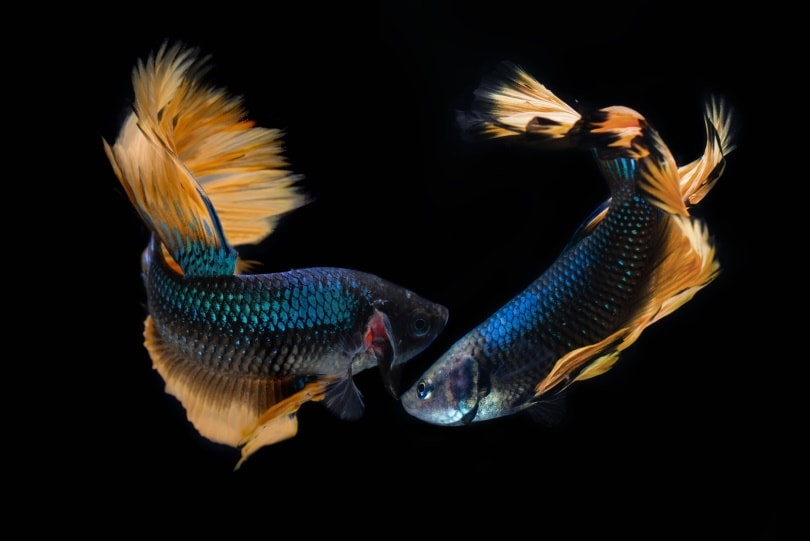
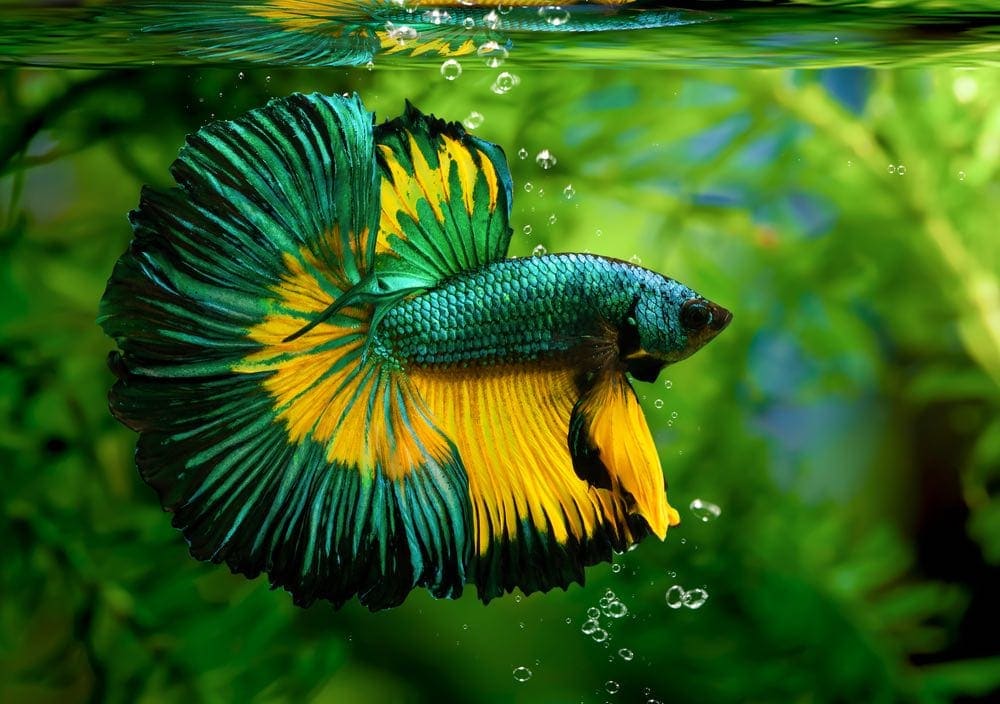
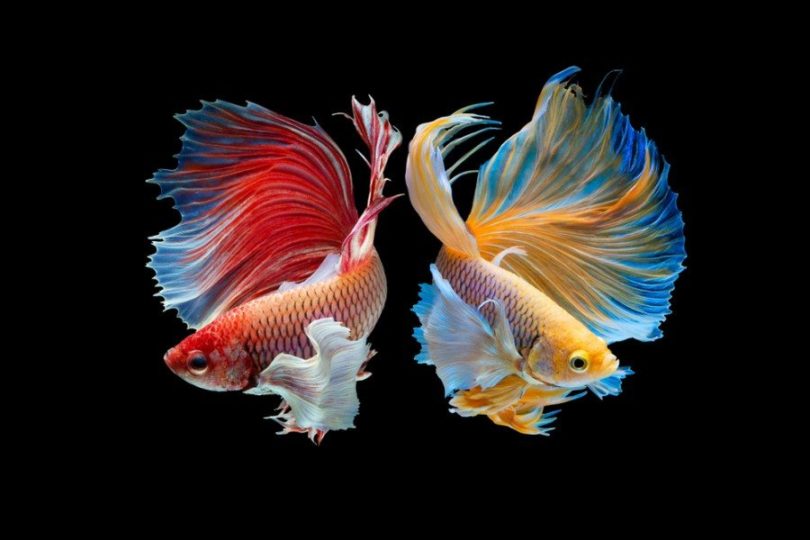
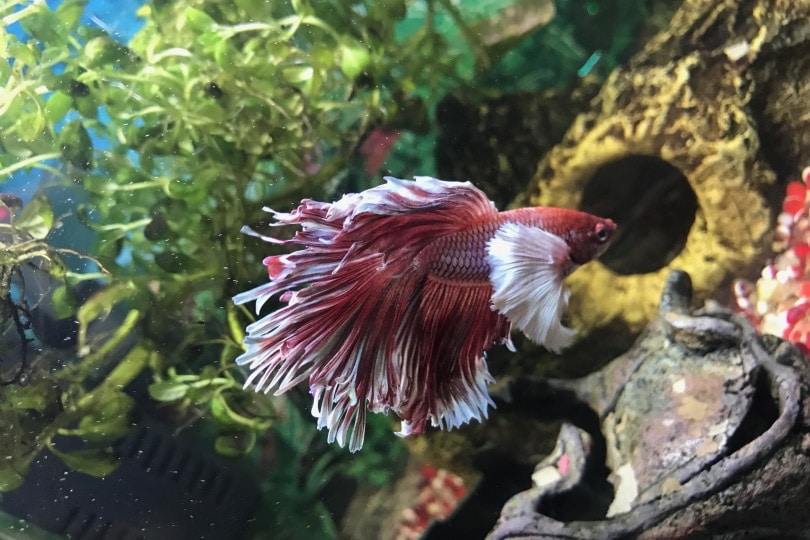
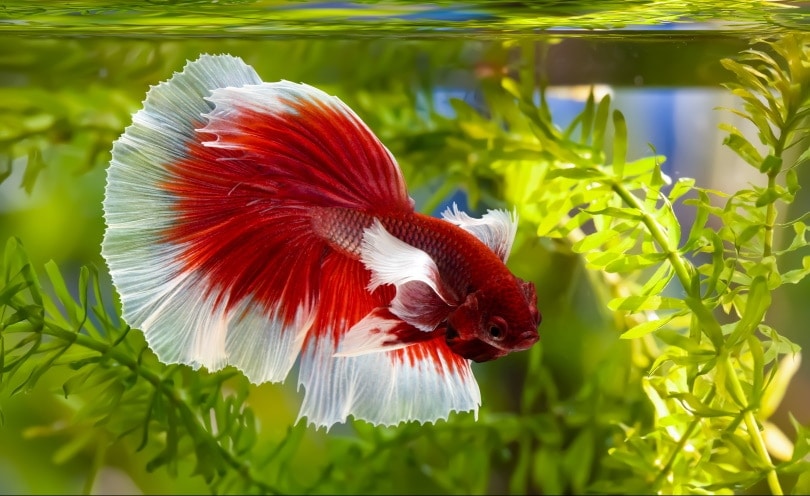
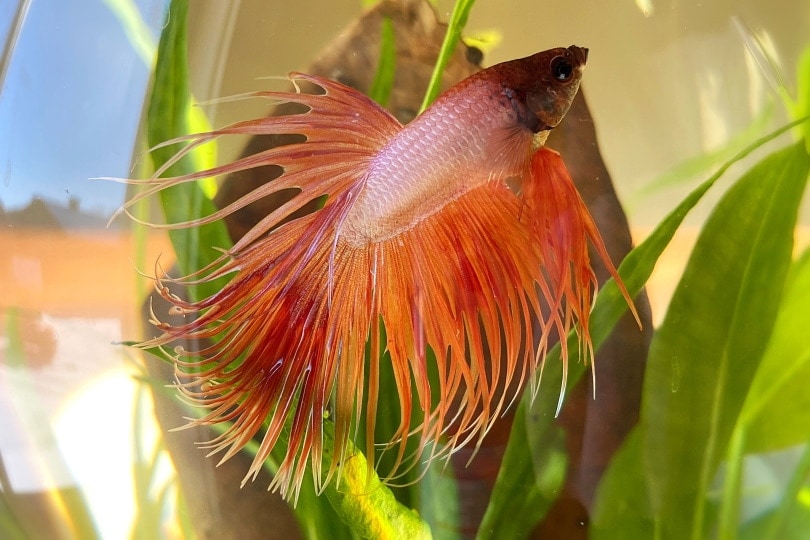
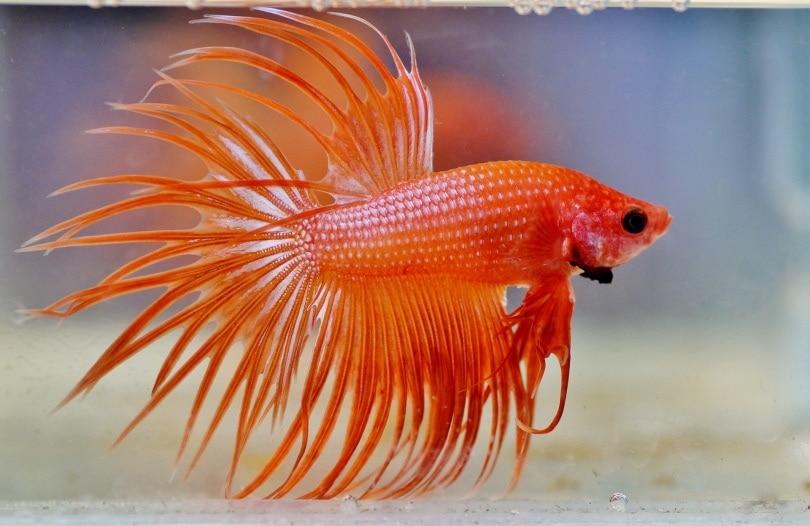
Crowntail bettas are tropical, freshwater fish that has a striking and elaborate tail that stands out amongst other types of betta fish. The tail somewhat resembles a crown which is where this betta got its unique name because the tips tail is coined from a visibly spiked tail and similar claudel fins. They come in a wide range of colors and patterns and have a quirky personality that captivates the heart of many fish keepers.
This article is a complete care guide that will inform you of everything you need to know when you get a Crowntail betta.

Quick Facts about Crowntail Bettas
| Species Name: | B. splendens |
| Family: | Gourami |
| Care Level: | Moderate |
| Temperature: | 75°F–82°F |
| Temperament: | Aggressive |
| Color Form: | Blue, red, white, orange, marble, opal, yellow, green |
| Lifespan: | 2–3 years |
| Size: | 3 inches |
| Diet: | Carnivorous |
| Minimum Tank Size: | 5 gallons |
| Tank Set-Up: | Freshwater: heated, filtered & heavily planted |
| Compatibility: | Aggressive needs own tank |
Crowntail Betta Overview
The Crowntail betta originates from South Asian rice paddies and streams. They are small, freshwater fish that inhabit stagnant streams with heavy vegetation. The Crowntail betta is commonly referred to as a 'fighter fish' due to its aggressive nature. Crowntail bettas are dedicated loners and will fight other types of fish, especially other bettas. They are territorial by nature and do not enjoy the company of incompatible fish. The Crowntail was first developed by the Indonesian breeder Achmad Yusuf back in 1997 and then displayed at the International Betta Congress, where they quickly became popular fish to own. They have huge Claudel fins, which makes them easy to identify.
The ancestors of the Crowntail betta fish are native to Thailand (Siam) and other parts of East Asia (Malaysia, Vietnam, Indonesia). Due to their aggressive nature, they are unsuitable for beginners who want to keep them with other fish or invertebrates. Even experts struggle to house bettas with other fish without any fighting occurring. You also need skill in growing live plants for the Crowntail betta to make them feel closer to nature.
How Much Do Crowntail Bettas Cost?
Crowntail bettas can vary in price according to their age, colors, or patterns. Pet stores will typically sell bettas for the cheapest out of the adoption centers or betta breeders. In terms of cost, you should expect to pay between $5 to $25 for one betta fish. Breeders will charge more due to the quality color and genetics of the fish being bred. Betta fish adoption centers will charge an adoption fee between $10 to $40, and the fish may or may not come with a tank and equipment included in the cost.
Typical Behavior & Temperament
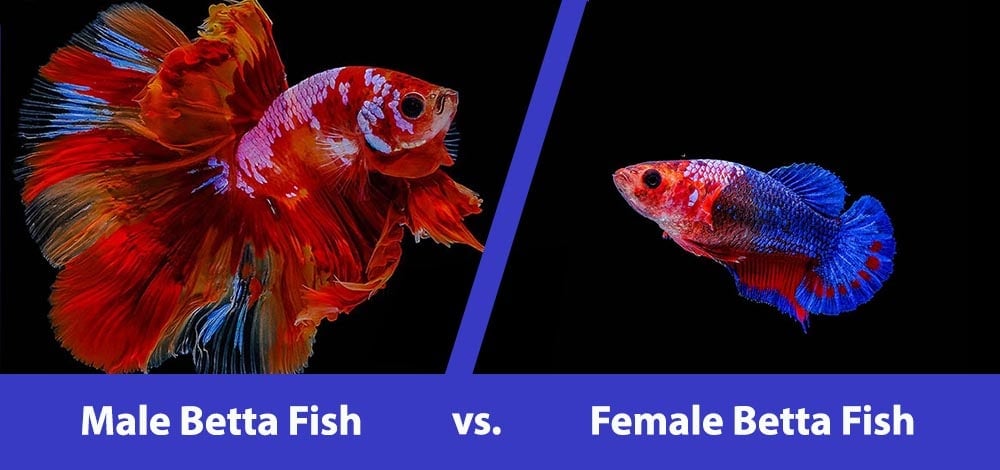
In their native country, the Crowntail betta fish was used for fighting. This small and colorful fish may surprise many due to its aggressive and territorial nature. They are also called Siamese fighting fish because of their origin in Thailand, Siam. Bettas are bred for their fighting tendencies and can easily bite and tear away at the fins and bodies of other male betta fish. In an aquarium, they are usually calm when kept with compatible tank mates or by themselves. They commonly flare at their reflections in the glass or their owners when they are startled.
Appearance & Varieties
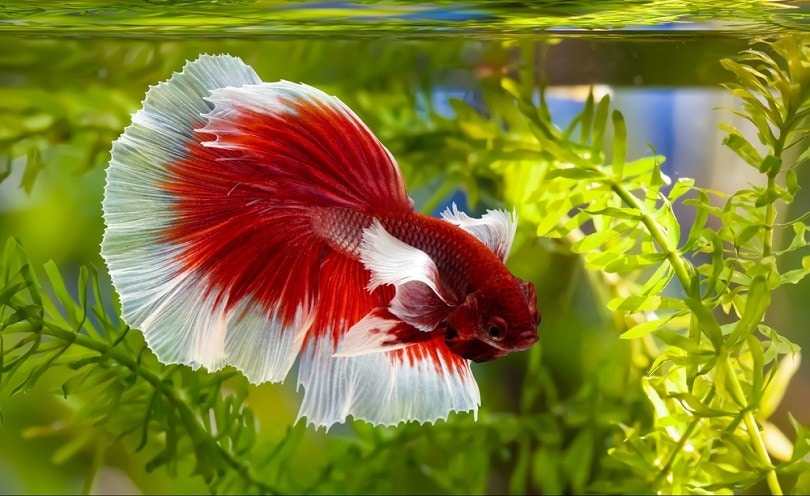
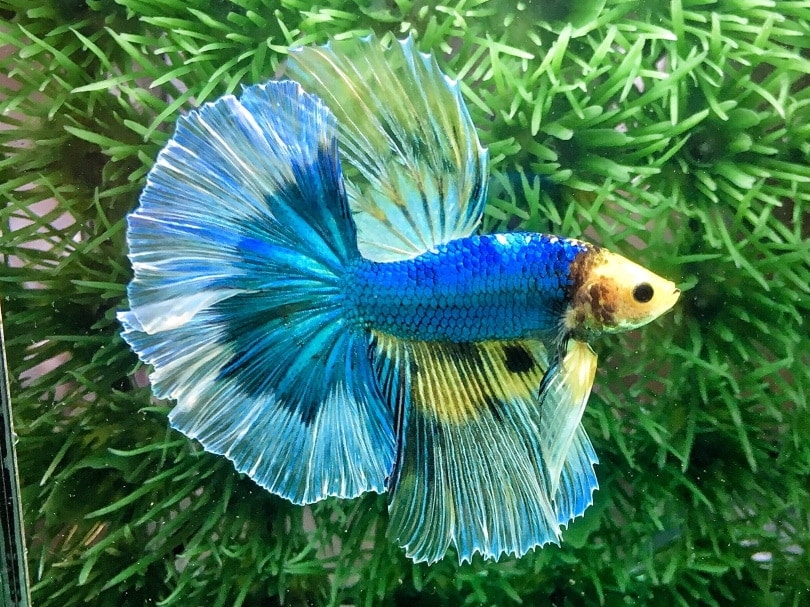
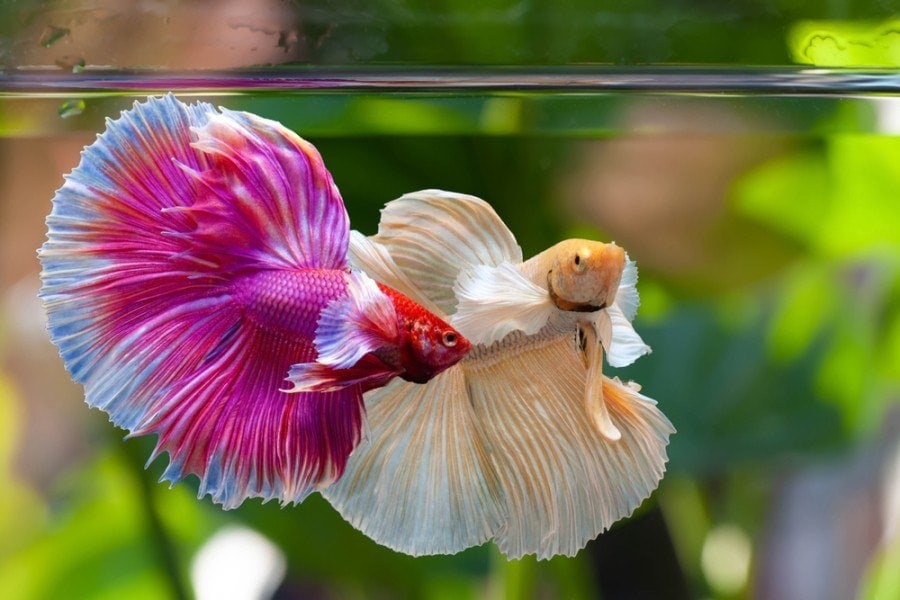
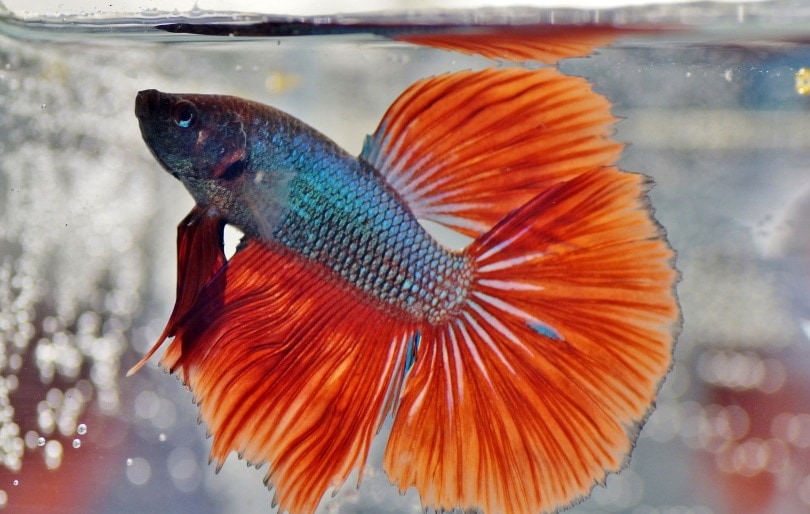
The Crowntail betta proudly displays a vibrant tail fin. They can come in a range of colors and patterns such are red and blue which are most common, to rare patterns like opal or marble. Marbling is a term used in betta coloration because of the constantly changing intensity of the color in certain lighting. Marble bettas will typically have a dominant blue color that changes under different lighting conditions or when viewed from certain angles. Their caudal fins extend and can reach up to 6 inches in length. Although this size tail is predominantly seen in showcase quality bred betta fish. There is minimal webbing between the Crowntail betta's rays on the caudal fin which is how it gives off a crown appearance.
A Crowntail betta fish can grow between 2.5 to 3 inches and live between 2 to 3 years. However, it is not uncommon for them to live to 5 years with proper care.

How to Take Care of Crowntail Bettas
Habitat, Tank Conditions & Setup
Tank/aquarium size
Betta fish are poorly suited to bowls, vases, bioorbs, and other small containers of water. A Crowntail betta fish requires a tank with a bare minimum of 5 gallons. They do best in a tank over 10 gallons in size. Bettas do not require an excessively large tank because they are poor swimmers, but they still require as much space as possible. A 15- or 20-gallon tank works well for young Crowntail bettas. It is a strict rule to keep one male Crowntail betta, or betta fish in general, in a tank by itself. Blackout tank dividers that have been built into the tank are recommended if you want to keep two males in the same tank space. Each section should have a filter and heater and the two bettas should never meet. Bettas also do poorly in tall tanks, and much prefer tanks that focus on length and width.
Water Temperature & pH
All betta fish require a heater and filter. They are tropical fish that get ill when kept in water that is too cold or too warm. A comfortable temperature range is between 75°F to 84°, but a good stable temperature is 78°F. The crowntail's metabolism depends on the temperature of the water and an accurate thermometer should be placed in the tank to ensure the water is warm enough for them to digest their food. The pH should be between 6.4 to 7.0.
Substrate
Bettas are not picky when it comes to the substrate, and they can do well on a mixture of different substrates. The substrate is typically more important for live plants, and they require the substrate to grow and establish a root system. Sand, soil, gravel, quartz sand, and blasting sand works well with betta fish. Never use colored gravel that comes in unnatural colors like pink, green, blue, or red. These colors leach into the water and will slowly poison your fish. The same applies to cheaply crafted decorations or fake plants.
Plants
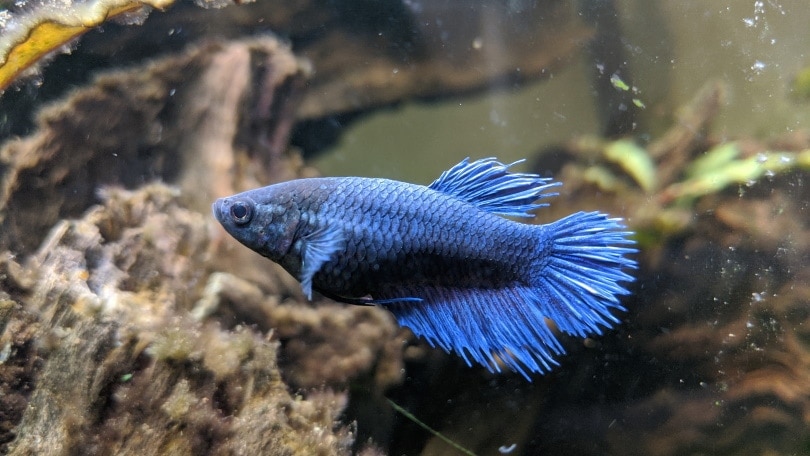
Live plants are a good option for betta fish and are the most recommended by expert betta keepers. Bettas appreciate living in a large tank with plenty of live plants, rocks, and driftwood. If you absolutely cannot maintain a planted tank, silicone aquatic plants are the next best option. Normal fake decorations are sharp or rough and can tear up your Crowntail betta's fins.
Lighting
If you have live plants in your betta's tank, then light is essential for their growth. A quality plant growth-stimulating light will keep the plants growing lush and vibrant while still giving you a clearer view of your Crowntail betta in their tank. Bettas should not be kept in highly lit conditions or darkness for long periods. A day and night cycle is important, and they should have between 8 to 12 hours of complete darkness to sleep.
Filtration
Sponge and cartridge filters work best for small betta tanks. You want to ensure that the filter can turn over a lot of gallons per hour, but not produce a strong current. Bettas have no current in their native waters and will struggle to swim against even the mildest current. An air stone is ideal to cause surface movements and stimulate oxygenation.

Are Crowntail Bettas Good Tank Mates?
All male bettas make poor tank mates. This is due to their aggressive behavior and ability to fight and kill other males or even female bettas. There are few species of fish that can be kept with male Crowntail betta fish, and they do not do well in community tanks. Keep in mind that you will have to increase the size of the tank if you plan to add in more fish or invertebrates. The tank mates should be carefully chosen and the pros and cons of each tank mate should be considered.
Suitable Tank Mates:
Unsuitable Tank Mates:
What to Feed Your Crowntail Betta
Crowntail bettas are strict carnivores and cannot digest plant-based material. This means it is essential to choose a commercial food that is tailored towards a betta’s dietary requirements. The food should be low in fillers and consist of meat-based protein. In the wild bettas will consume insects and their larvae and they do not eat algae. Algae-based foods will cause bloating and constipation in bettas which can lead to buoyancy problems. Look for betta-specific commercial food, and live foods like brine shrimp, mosquito larvae, blood worms, tubifex worms, and other aquatic live foods.
Keeping Your Crowntail Betta Healthy
Keeping your Crowntail betta fish healthy is quite easy if you meet their basic requirements. Bettas have the reputation for being undemanding and simple pets for both children and adults. These are some tips to keep your Crowntail fish healthy and happy:
Breeding
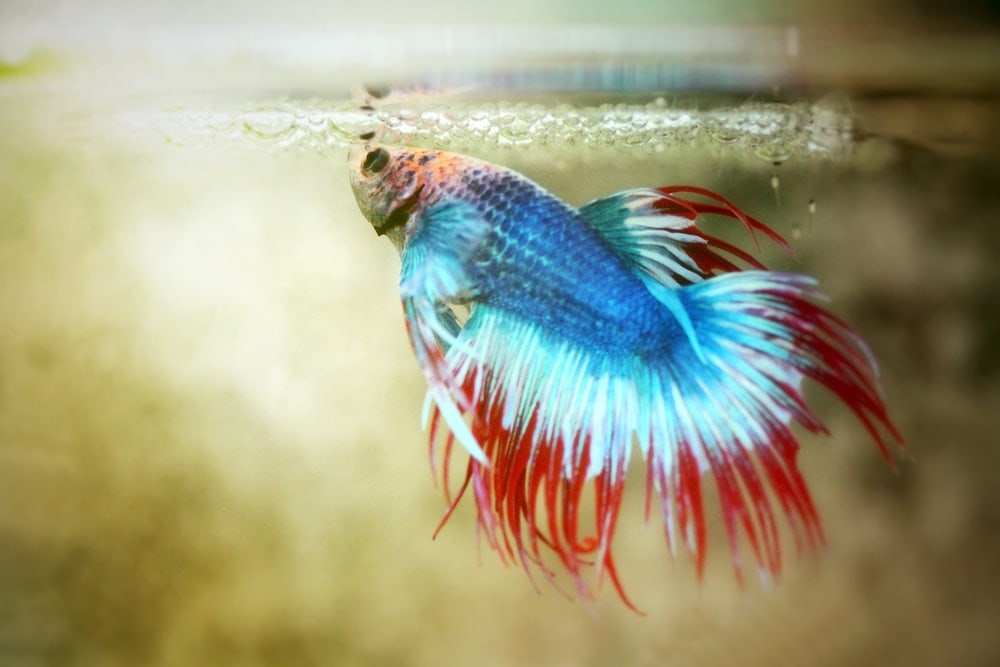
Male Crowntail bettas will regularly create a cluster of bubbles at the surface of the tank called a bubble nest. This is a sign that the fish is sexually mature and ready to breed. The bubble nest will be constructed near floating plants or objects, and they should be over 6 months of age before breeding. The aggressive behavior of Crowntail bettas makes it challenging to breed them in captivity and breeding should be left to the experts.
The female should only be placed inside the breeding tank for the breeding ritual. After which she will deposit fertilized eggs that the male will then place in the bubble and nest and protect. The female should be removed immediately after.

Are Crowntail Bettas Suitable for Your Aquarium?
Since it is easy to find a Crowntail betta fish in stores or from breeders, the main choice and final decision on purchasing one is ensuring that you have the appropriate conditions and the time to care for them. Keep in mind you will have to do water changes weekly and feed them small portions of food up to three times a day. If you are ready to take on an aggressive fish that should be housed alone and have all the appropriate supplies and tank size, then a Crowntail betta is a great option for you.
Featured Image Credit: Arvilla, Shutterstock
Get Hepper In Your Inbox


Pet care tips from our vets and experts, straight to your inbox.
You may opt-out at any time. View our Privacy Policy for more information.

Sarah is residing in South Africa with her partner and pets. She currently is interested in veterinary science and ichthyology, which she wants to study alongside her main passion: pet content writing. Sarah has over 60 fish including goldfish, tropicals, shrimp, and snails. She also keeps hamsters and a tarantula and wishes to provide quality content for readers and allow others to learn from her knowledge and experience. Sarah has much experience in all aspects of pet care, and providing the world with knowledge on ethical pet ownership is her lifelong dream.
Join the conversation
Ask a question, share your story, or send private feedback.