Hepper is reader-supported. When you buy via links on our site, we may earn an affiliate commission at no cost to you. Learn more.
5 Vet-Approved Homemade Diabetic Dog Food Recipes


In this article
There is no universal diet for diabetic dogs, but several ingredients are recommended for pets with this condition. To ensure that your pet consumes a proper diet, you must consider the following:
- The food that they consume should not contain simple carbohydrates like sugar, bread, potatoes, etc.
- The diet should be nutritionally balanced and contain all the nutrients that your dog needs.
- The food should be administered at regular time intervals and in predetermined amounts.
- The diet should be tasty enough that your dog will consume it regularly.
It is also crucial for your diabetic dog to consume the same amount of food at the same time every day. This is the only way that you can control their blood sugar and adjust the insulin dose if your dog has type I diabetes (insulin dependent). Moreover, a balanced, complete, and regular diet will optimize your dog's body weight and control the level of fats in the blood.
In short, a diabetic dog should be fed a low-fat, high-fiber diet. Here are five homemade diabetic dog food recipes to try.

The 5 Vet-Approved Homemade Diabetic Dog Food Recipes
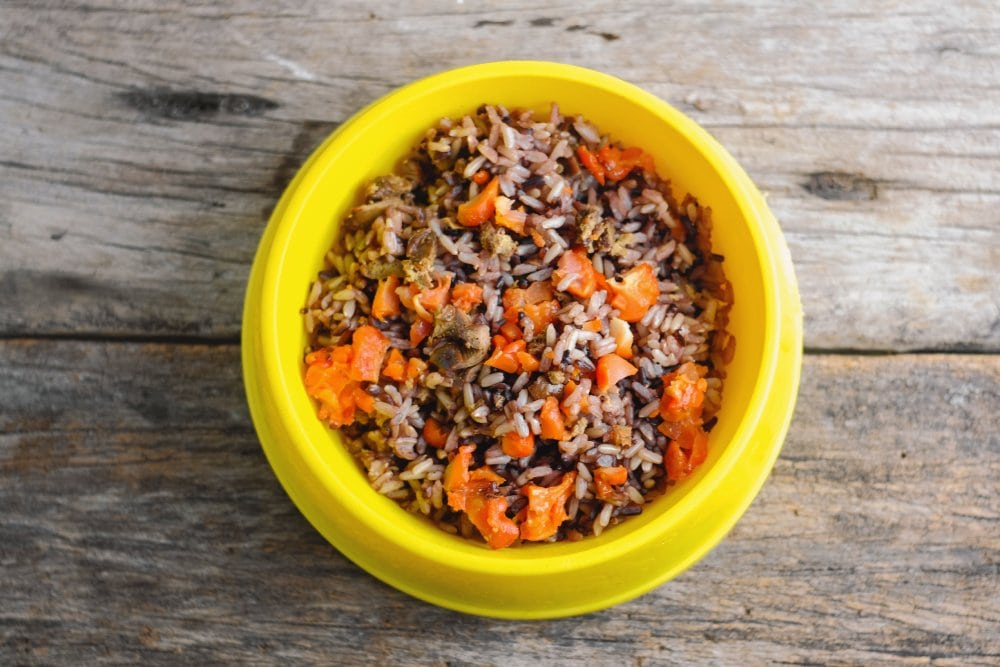
1. Chicken With Brown Rice and Vegetables
Chicken With Brown Rice and Vegetables
For this delicious and healthy dog food recipe, you will need the following ingredients (per serving for 20–25 pounds of body weight):
Prep time
5 min
Cook time
30 min
Total time
35 min
Equipment
- 1 Pot
- 1 Sauté pan
Ingredients
- 1/2 cup Ground chicken or turkey
- 1/2 cup Brown rice
- 1/2 cup Green beans
- 1/2 cup Chopped carrots
- 1/2 tbsp Coconut oil
- 1 pinch Salt
Instructions
- Cook the rice according to the instructions on the package, adding coconut oil and salt to the water.
- Add the carrots and green beans, and cook for another 10 minutes.
- Meanwhile, cook the ground chicken in a pan for 6–10 minutes.
- Mix all the ingredients, and leave them on low heat for another 10 minutes.
Notes
If you don’t have green beans, you can use broccoli or spinach.
If you are worried about your dog's diet, we suggest speaking to a vet online.
2. Lean Ground Beef and No-Fat Cottage Cheese
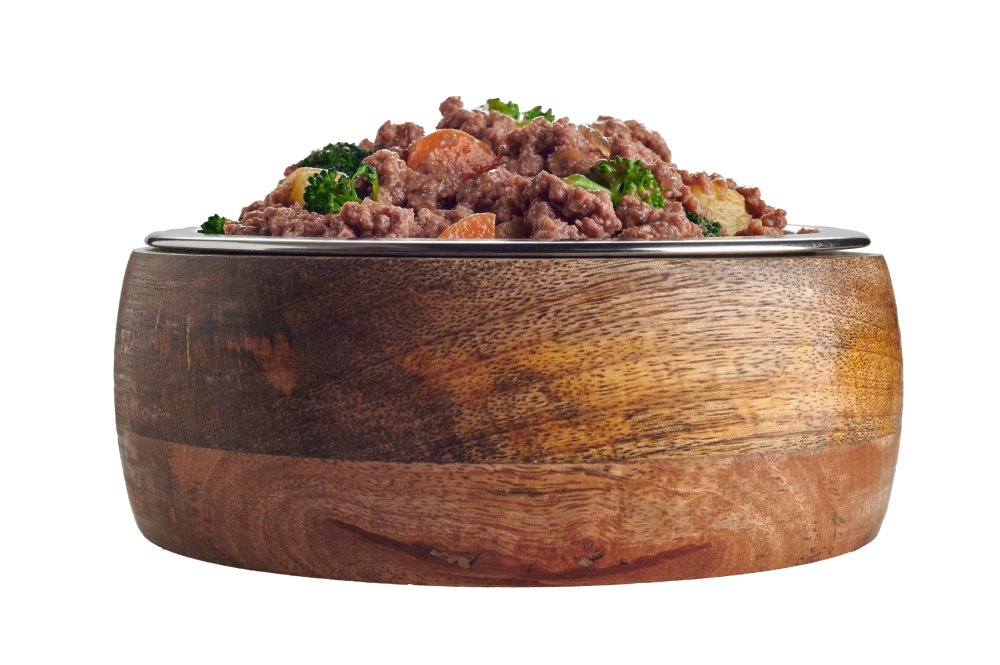
You can give beef to your diabetic dog, but make sure it's lean.
Ingredients
Here are the ingredients that you will need to make a delicious recipe with cottage cheese for your diabetic dog:
- Lean ground beef, ¼ lb.
- No-fat plain cottage cheese, ½ cup
- Green beans, 2 cups
- Carrots, 2 cups
The serving for a 20-lb. dog is about ½ a cup.
Instructions
Cook the meat in a pan (drain the fat).
In the meantime, boil or steam the carrots and green beans separately.
After these ingredients have cooled, mix them in a bowl, and add the no-fat cottage cheese.
3. Beef and Barley
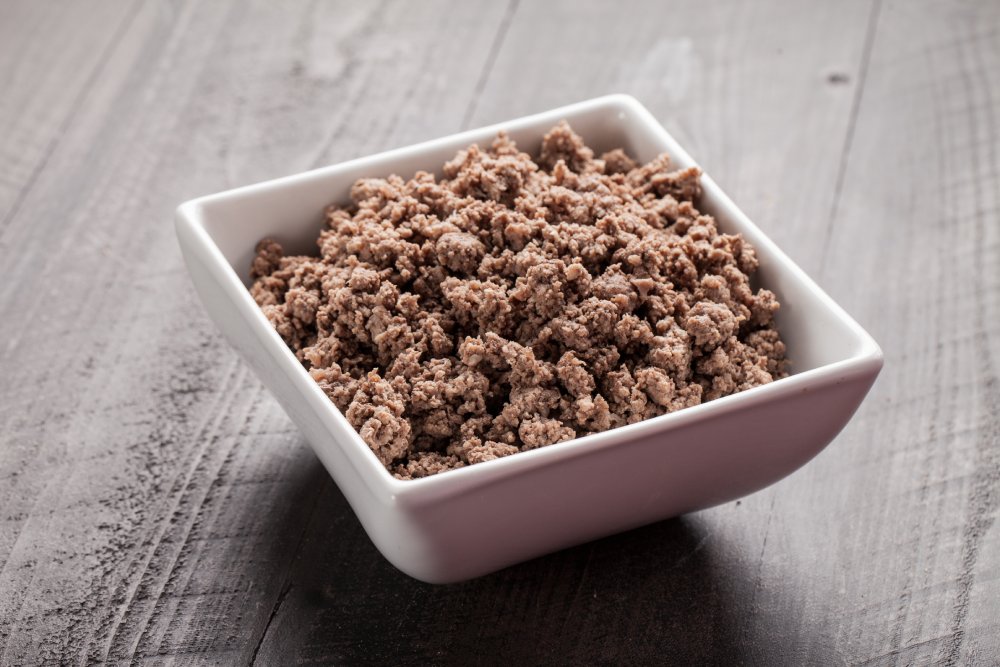
Barley is an ingredient that is full of fiber and has a low starch content. It can reduce cholesterol and improve glucose metabolism. Also, studies have shown that a diet based on barley leads to a lower average mean interstitial glucose compared to one in which corn was used.1
Ingredients
Here are the ingredients that you need to prepare a delicious meal for your diabetic dog for a week (at one serving per day):
- Carrots, 2 lbs.
- Green beans or zucchini, 1 lb.
- Lean ground beef, 2–3 lbs.
- Dried pearl barley, 1 lb.
- Celery, ½ bunch
- Water, 12–14 cups
- A pinch of salt
Instructions
Cut the carrots, celery, and green beans or zucchini, and add them to a large pot with 12–14 cups of water. Cook them to the boiling point.
Meanwhile, cook the lean ground beef separately in a pan.
If you do not use ground meat, add the beef pieces to the pot with the other ingredients.
When the ingredients reach the boiling point, add the barley. Cook for another 30 minutes (or as suggested on the package).
If you use ground meat, mix the vegetables and barley with the beef.
Portion it and keep it in the freezer.
4. Chicken, Asparagus, and Broccoli
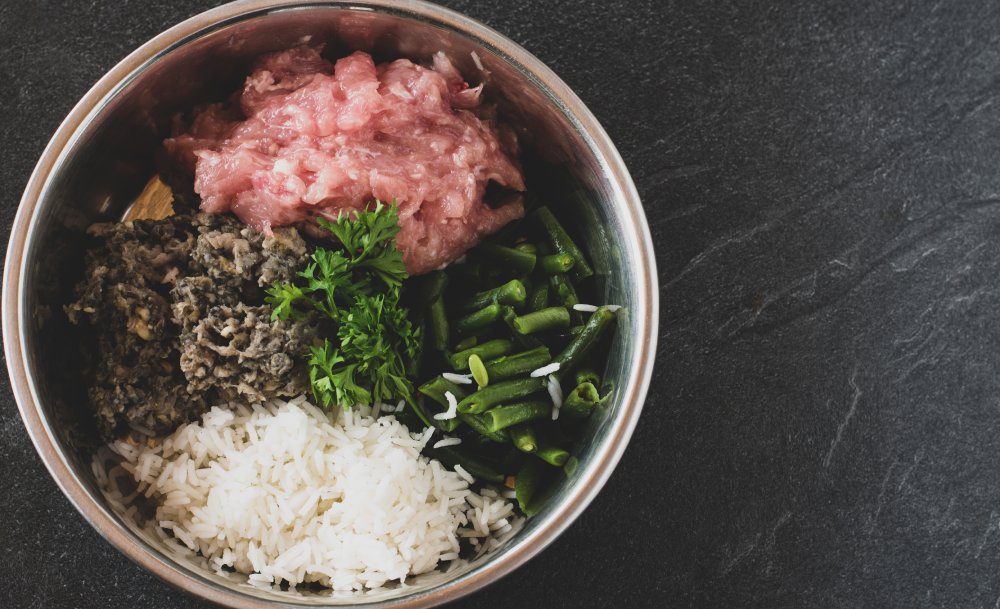
Asparagus is a good veggie for diabetic dogs because it is low in sugar, fat, and calories. It is also full of fiber and contains various vitamins and minerals.
Ingredients
Here are the ingredients that you need to prepare a delicious asparagus recipe for your dog:
- Chicken breast, two 3-oz. pieces
- Asparagus, 1 cup
- Broccoli, 1 cup
- Brown rice, 2 cups
- Chicken soup (with low-salt concentration), 3 cups
- Fresh curly parsley (the other types are toxic to dogs), 1 tbs.
Instructions
Cut the chicken breast into cubes, and chop the asparagus and broccoli.
Add these ingredients and the chicken soup to a pot.
Boil until the ingredients become tender.
Meanwhile, separately prepare the brown rice according to the instructions on the package.
Mix all the ingredients when they are cooked.
Let it cool and serve a portion to your dog.
5. Beef and Pumpkin
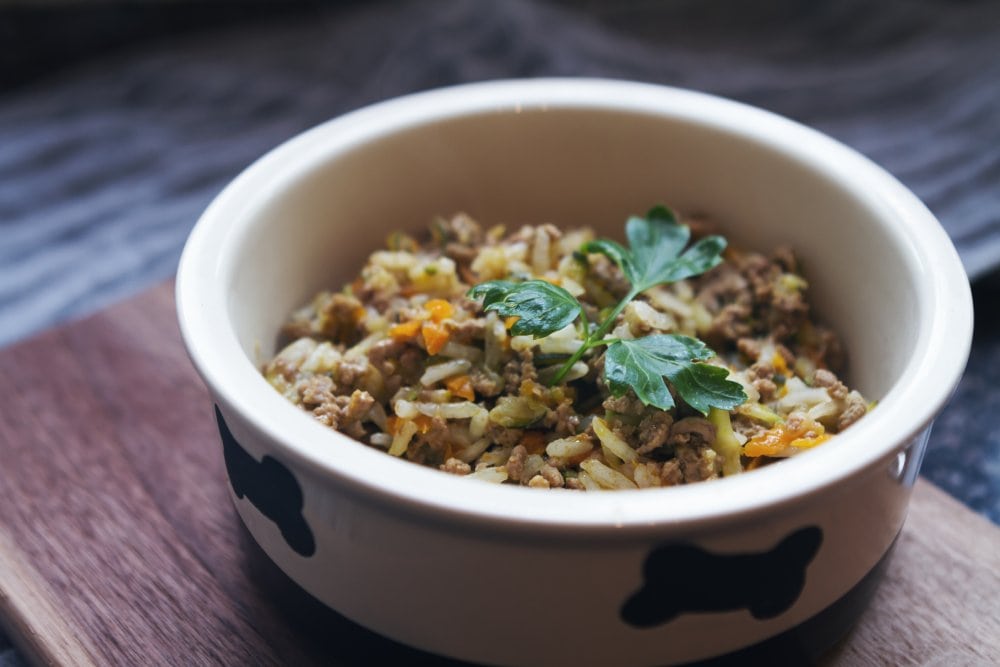
From the point of view of botanists, pumpkin is a fruit. It’s rich in vitamins (A, C, and E) and fiber and is healthy for dogs with diabetes or digestive problems.
Ingredients
Here are the ingredients that you need for a delicious beef-and-pumpkin recipe:
- Ground beef, 2 ½ cups
- Brown rice, 2 ½ cups
- Green beans, ½ cup
- Peas, ½ cup
- Carrot, 1 ½ cups
- Pumpkin, 1 ½ cups
- Water, 4 cups
If you don't have fresh vegetables, you can use frozen ones (e.g., peas, green beans, etc.).
Instructions
Chop the vegetables.
Add all the ingredients to a large pot.
Leave the pot on medium heat until the water is gone (this may take several hours).
Let it cool, and serve a portion to your dog.
Store the rest in the fridge or freezer.

How Dangerous Is Diabetes in Dogs?
Diabetes is the most common hormonal metabolic disease in dogs. Diabetes in dogs (and cats) is caused by a lack of insulin. When your dog's body produces little or no insulin or if the glucose (sugar) cannot be absorbed properly, it builds up in the blood instead of being used as an energy source. Breeds like the Samoyed, Cocker Spaniel, Labrador Retriever, Pomeranian, Toy Poodle, or Miniature Schnauzer have an increased risk of developing diabetes.
This chronic disorder is often associated with high water consumption (polydipsia) and frequent urination (polyuria). Other clinical signs include:
- Weight loss despite increased appetite
- Lack of energy
- Fatigue
- Cataract with sudden blindness
- Matted fur
- Improper wound healing
In the case of incorrect treatment or undetected diabetes, it is possible that the cells of the body no longer receive enough sugar as a source of energy. As a result, the body produces excessive numbers of ketone bodies through the breakdown of fats. The increased concentration of ketone bodies (ketosis) leads to metabolic acidosis (hyperacidity of the body fluids). These changes can lead to vomiting, weakness, and life-threatening conditions.
Diabetes requires precise control of both therapy and nutrition. If it is not treated properly, it can lead to the death of your pet.
The initial clinical signs are usually unnoticeable and non-specific. As a result, it is important to monitor your dog and check their weight regularly.


Conclusion
Diabetes is a chronic condition that can be kept under control with proper treatment and diet. For this reason, it is vital to prepare homemade food for your dog that meets their nutritional requirements or buy special veterinary diets for diabetic dogs. Diabetic dogs need diets that contain no sugar, low fat, and restricted carbohydrates. If your dog has been diagnosed with diabetes, follow the advice of the veterinarian to make sure your pet has a long and healthy life.
See also:
Sources
Featured Image Credit: Audreycmk, Shutterstock
Get Hepper In Your Inbox


Pet care tips from our vets and experts, straight to your inbox.
You may opt-out at any time. View our Privacy Policy for more information.
Iulia Mihai is a veterinarian with more than 13 years of experience in pet pathology, laboratory, and cancer. She studied at the University of Agronomical Sciences and Veterinary Medicine of Bucharest, Romania Iulia earned a master’s degree in equine and pet pathology and studied epithelial cancer for her Ph.D. Dr. Mihai's passions for internal medicine and parasitology inspired her to volunteer at the faculty’s clinic in her third year of college. She has worked in a couple of veterinary clinics over the years as an internal medicine specialist, and loves to write and educate pet parents about pet nutrition, behavior, and diseases.
Iulia is a passionate veterinarian with a strong affinity for veterinary parasitology, internal medicine, and laboratory. She is excited to share her experience and knowledge with pet owners around the world through her writing and hopes to educate people on pet nutrition, diseases, and behavior.
Education
Iulia graduated from the University of Agronomical Sciences and Veterinary Medicine, Bucharest, Romania, in 2012 and has a Master’s degree in Small Animals and Equines Pathology and is certified in HAACP food safety system implementation. Iulia started her Ph.D. in epithelial cancer in dogs and cats in 2013. Her research is published in national and international veterinary journals.
Experience
Dr. Iulia has been a veterinarian for more than 14 years. She is experienced in animal pathology and laboratory and has experience with exotic animals, such as pet rats and ferrets. She also has skills in the field of clinical pathology, laboratory, microscopy, cancer, and imaging.
Join the conversation
Ask a question, share your story, or send private feedback.