Hepper is reader-supported. When you buy via links on our site, we may earn an affiliate commission at no cost to you. Learn more.
Do Cats Like Head Massages? Treat Your Cat to One!
In this article
Cats are not shy about sharing how they feel when we do something that they don’t appreciate. They let us know in no uncertain terms when we scratch them the wrong way, as well as where the right place is for a good petting session.
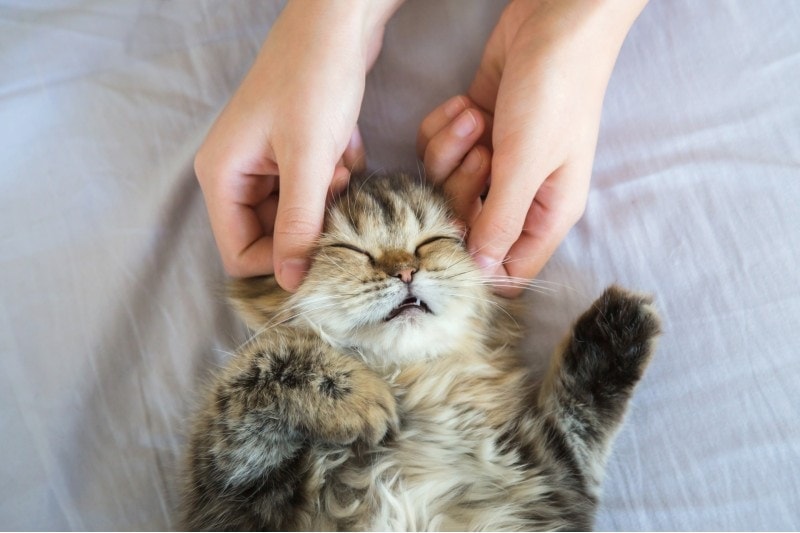
But have you ever considered giving your cat a head massage? Most cats will enjoy it, though it depends on your cat and if you’re doing it correctly.
Here, we get into how massaging your cat can be beneficial and provide tips on the right way to do it.

Do Cats Like Head Massages?
All cats seek attention and affection to a certain degree. Some cats can be quite needy and expect a great deal of devotion, while others might love their owners less expressively.
Grooming
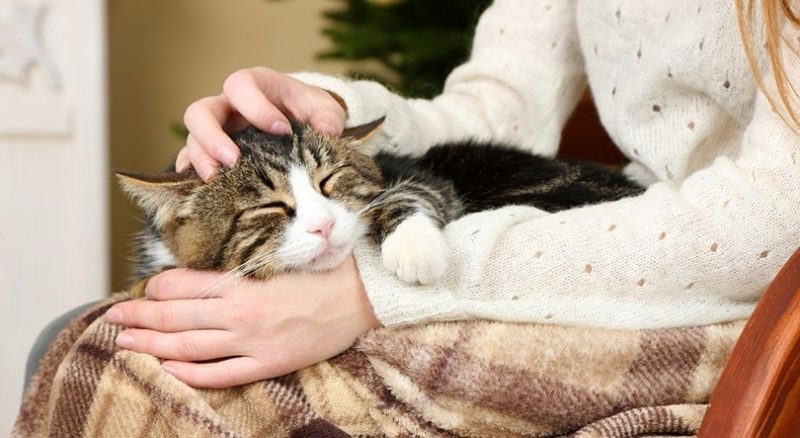
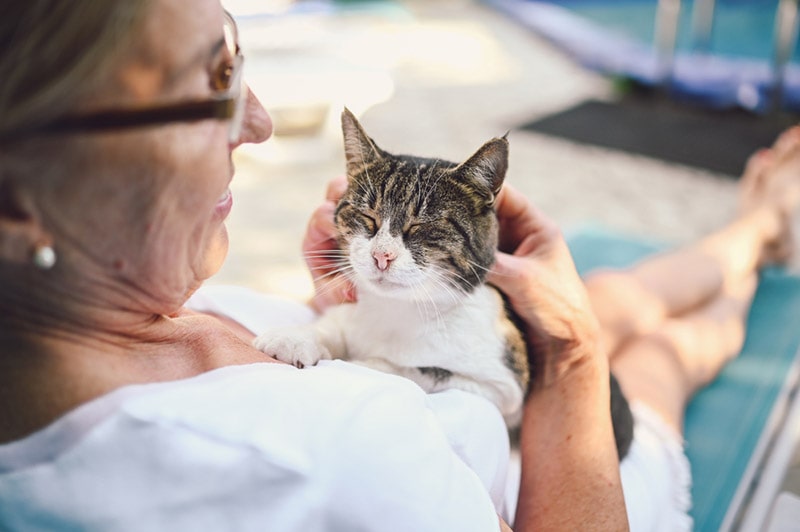
Many cats will enjoy a head massage simply because it feels good. After all, your cat likely enjoys a nice long head scratch! Cats can’t reach parts of their heads with their tongues, so we (or another cat or dog) provide them with that service with a head rub.
Many cats see their owners as guardians and caretakers, so when we scratch or rub their heads, we are essentially taking over the grooming that they would receive from their mothers.
Scent Glands
Cats have scent glands on their bodies, but most are concentrated on their heads. The glands are located on their chin, forehead, and cheeks, which is why you will often see your cat rubbing their face on surfaces around your house (including your leg). This is done as a means to mark their territory, which can make a cat feel calmer and safer.
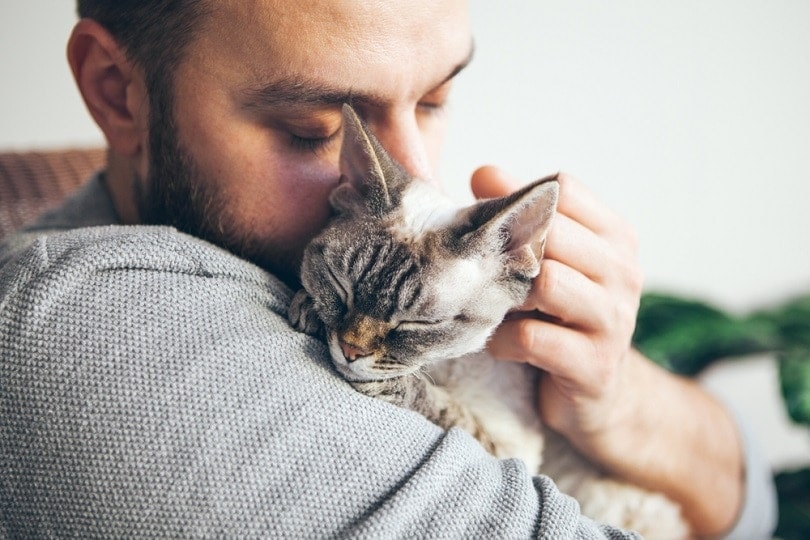
Also, when your cat bumps their forehead against you, also known as head bunting, they are not only marking their territory but also expressing their affection for you.
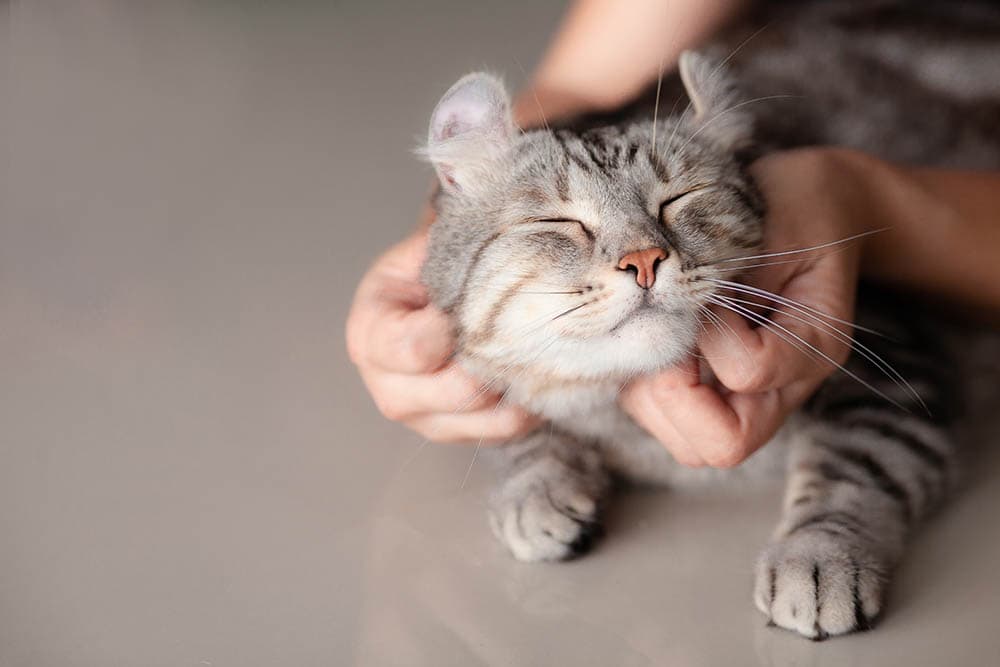
Scratching and rubbing your cat’s cheeks and the top of their head is an effective way for your cat to leave their scent on you. This way, they feel good, and you get a dose of their scent, which makes them feel safe. It’s a win/win all around!
Why Massage Your Cat?
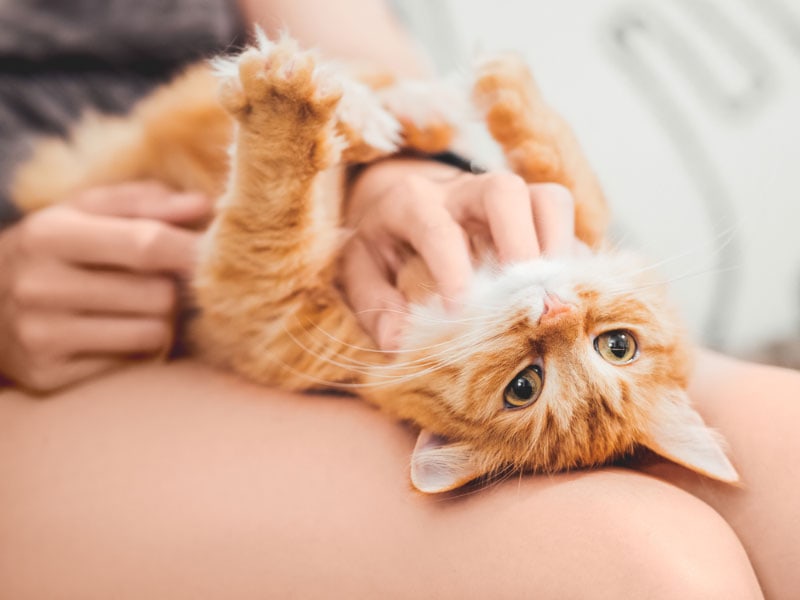
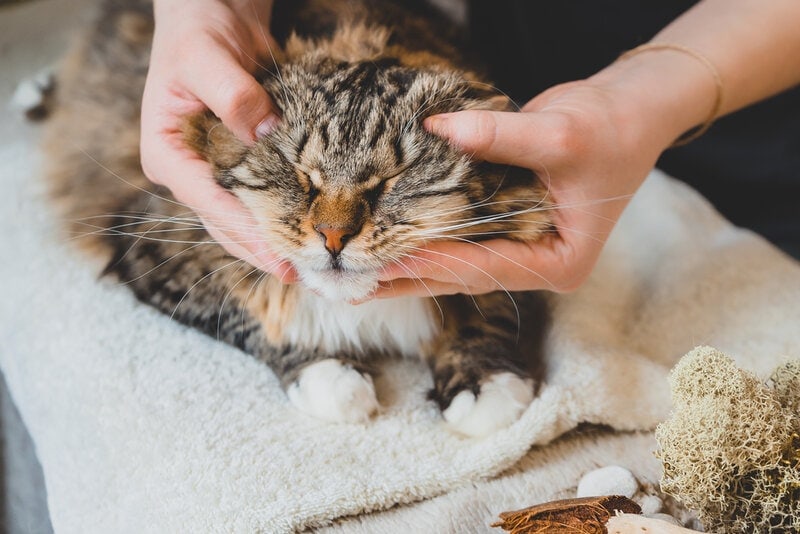
Most veterinary experts believe that massaging your pet can be quite beneficial. Many of the benefits that we humans get from massages can have the same positive outcomes for cats.
- Improves circulation: Massage is known to help improve blood flow in the area being massaged and throughout the entire body. Healthy circulation can supply adequate nutrients and oxygen and eliminate carbon dioxide from body tissues.
- Stimulates nerves: This is particularly helpful when an animal’s limbs are numb, whether from disease or due to sitting or lying in the same position for too long. Massage helps increase sensitivity by stimulating the nerves.
- Reduces muscle pain: If your cat is experiencing any kind of spasms or muscle pain, massage can help ease the discomfort.
- Reduces stress: Massage is proven to help the physical body and mental health. If your cat suffers from stress and anxiety, a massage can enable them to feel relaxed and have an improved sense of well-being. It also helps lower blood pressure.
- Enables you to learn more about your cat: When you spend time massaging your cat, you’ll get to know their body, which means you’ll notice if something doesn’t feel right, like lumps that seem to appear overnight.
- Is a bonding experience: Spending time massaging your cat will make them feel great, and a trusting bond will be formed between the two of you. This is particularly valuable if your cat is newly adopted.
Before You Get Started
Before you start massaging your cat, be sure that they are in a receptive mood for it. Some cats will enjoy the massage regardless, but for others, you’ll need to ease your way into it.
Be in a Positive Mood
Both you and your cat need to be in the right mood before you begin. Ensure that the environment is quiet, with no distractions. You should be feeling calm and relaxed, as should your cat. Pay attention to your cat’s body language. Slow blinking is the best sign that your cat will be receptive to a head massage. Deliberately and slowly blinking their eyes at you while holding eye contact is a cat’s way of letting you know that they trust you.
Your Cat Should Come to You
The best method is to wait until your cat comes to you seeking attention rather than just grabbing them whenever you want. Try to wait until a few hours after their meal. When your cat approaches you looking for lap time, you’re golden!
Use a Soothing Voice
Keep your voice as soothing as the massage. Try humming or singing — if your cat doesn’t mind it!
Massaging Your Cat’s Head
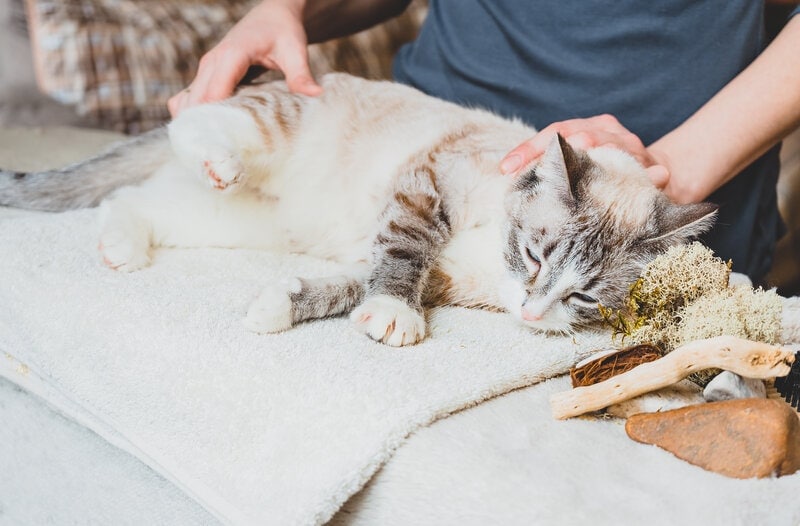
Once the mood seems right, it’s time to try massaging your cat’s head. Remember not to rush it — everything should be done slowly and gently, so make sure there isn’t anything else that you need to do.
You know your cat best, so you’ll know when you should stop doing something and when you should keep going. Each massage movement, or stroke, should be done at least three times or more, particularly if your cat seems to be enjoying it.
You can use one or both hands; just do whatever makes sense and feels comfortable for you.
Throughout the entire process, always be aware of how your cat seems to be reacting. Keep going if your cat is still relaxed, but if they ever seem uncomfortable or ready to leave, just let them go or try a different area on the head that they seem to respond to.
What You Should Avoid

Conclusion
Massaging a cat’s head might not go over well with all cats. You know yours best, so you are the best judge about whether this is something that you should try.
But if your cat seems to be a fan, once you’ve got the hang of it, you can think about moving on to other parts of the body. If you’re looking for more of a therapeutic massage, speak to your vet and look into visiting a cat massage therapist, especially if your cat has a health condition.
See also:
Featured Image Credit: Gumpanat, Shutterstock
Get Hepper In Your Inbox


Pet care tips from our vets and experts, straight to your inbox.
You may opt-out at any time. View our Privacy Policy for more information.

Kathryn was a librarian in a previous lifetime and is currently a writer about all things animals. When she was a child, she hoped to work in zoos or with wildlife in some way, thanks to her strong love for animals. Unfortunately, she's not strong in the sciences, so she fills her days with researching and writing about all kinds of animals and spends time playing with her adorable but terribly mischievous tabby cat, Bella. Kathryn is hoping to add to her family in the near future – maybe another cat and a dog.
Join the conversation
Ask a question, share your story, or send private feedback.