Hepper is reader-supported. When you buy via links on our site, we may earn an affiliate commission at no cost to you. Learn more.
Do Dog Whistles Work? Types, Best Uses & FAQ

In this article
Dog whistles are popular training tools that most people have heard about, even if they don’t have a pet. Since humans can’t hear them, many people wonder if they work. The short answer is yes, they do work, and they can be quite effective. Keep reading as we explain how they work and how to use them so you can train your dog faster. We also discuss the different types and the pros and cons of dog whistles, so you can be better informed.

What Does a Dog Whistle Do? How Does It Work?
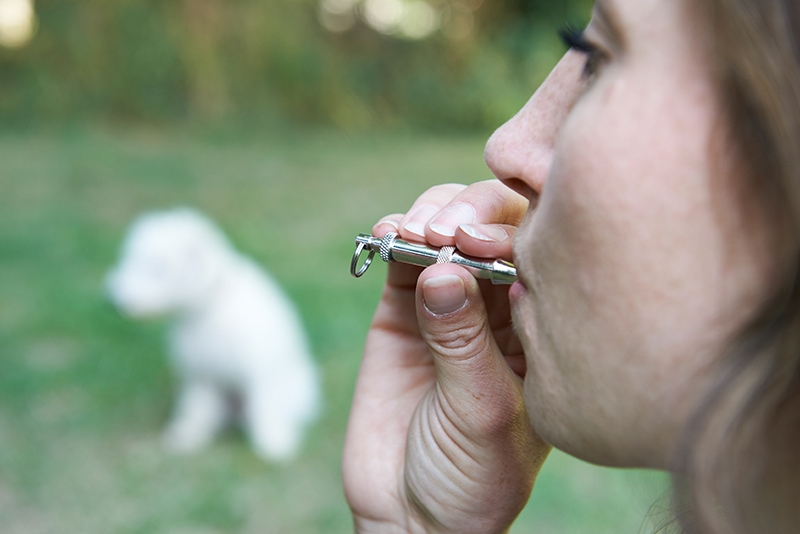
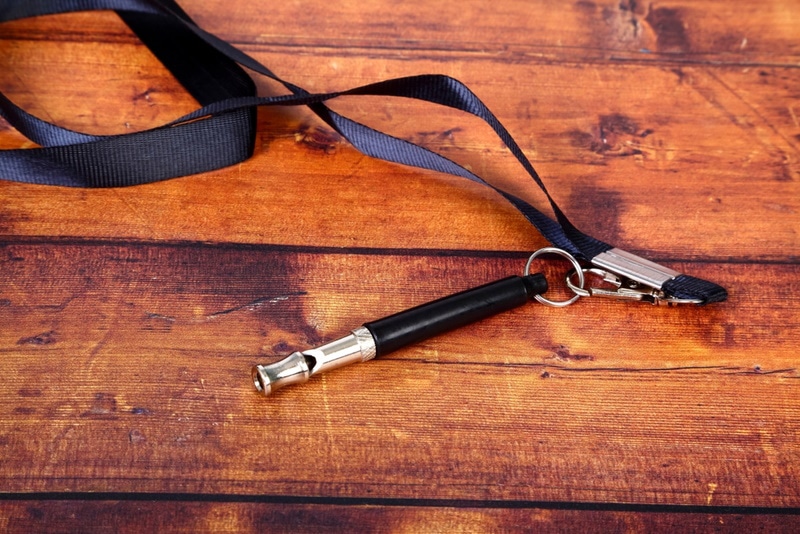
A dog whistle is a specialized device that emits high-frequency sounds in the ultrasonic range, beyond human hearing. Dogs can detect these sounds due to their superior hearing abilities. The primary purpose of a dog whistle is to serve as a communication and training tool. When you blow into or activate it, it produces a whistle that captures your dog’s attention. By using a dog whistle consistently and in conjunction with appropriate commands, a dog owner or trainer can establish a clear and consistent means of communication. Over time, the dog learns to associate the sound of the whistle with a particular action or behavior, allowing for effective training and control in various situations.

What Are the Different Types of Dog Whistles?
Audible Whistles
An audible dog whistle is one that humans can hear, and it’s essentially a regular whistle. While not silent, it can still be an effective tool for capturing your dog’s attention, making it a great training tool.
Silent Whistles
Silent whistles, also known as ultrasonic whistles, emit high-frequency sounds that are inaudible to humans. These whistles are adjustable, enabling you to change the frequency until you find the one that your dog responds to. Silent whistles are good for recall training and behavior modification.

Whistle Clickers
Whistle clickers combine the features of a whistle and a clicker, which is a device that produces a distinct clicking sound. It provides an auditory cue and a reward signal, helping to reinforce desired behaviors in dogs.
Electronic Whistles
Electronic dog whistles are battery-powered devices that produce a range of high-frequency sounds. They often have adjustable settings, so you can fine-tune the frequency to suit your dog’s preferences. Electronic whistles are convenient for long-distance training or situations where manual blowing may be challenging.

Whistle Apps
With the advancement of smartphone technology, various dog whistle apps are now available for download. These apps utilize the device’s speaker to produce high-frequency sounds that dogs can hear. They often come with adjustable frequencies and features like sound patterns or recording capabilities to help make training easier.

Where Is It Used?
Obedience Training
Trainers often use dog whistles during obedience training sessions because they provide clear and consistent auditory cues that your dog can associate with specific commands or behaviors. The whistle’s sound can help reinforce desired actions, such as sitting, staying, or coming when called.
Recall Training
Dog whistles are particularly useful for recall training, where the goal is to train a dog to return when you call them. The high-frequency sound of the whistle can carry over long distances, making it an effective tool for calling back a dog in open spaces or outdoor environments.

Behavior Modification
Dog whistles can aid in behavior modification by providing a distinct sound that interrupts unwanted behaviors. For example, if a dog is barking excessively, you can use the whistle to redirect their attention and discourage the behavior.
Hunting & Sporting Activities
People often use dog whistles in hunting and sporting activities to signal specific actions, such as indicating a change in direction, stopping, or retrieving. The dog can easily distinguish the whistle’s sound even in noisy or outdoor environments.
Service Dog Training
Service dogs assist individuals with disabilities or specific needs, and trainers can use dog whistles to teach dogs various tasks and commands, such as guiding visually impaired individuals or providing medical assistance.
Advantages of a Dog Whistle
Unlike verbal cues, which can vary in tone or clarity depending on the trainer, a dog whistle produces a consistent sound every time you use it. This consistency helps in creating clear communication and reducing confusion for the dog. They are also useful for long-distance communication. The high-frequency sounds that they emit can carry over considerable distances, making them ideal for situations where the dog needs to be called back or given instructions in open spaces or outdoor environments. Many whistles also enable you to adjust the frequency, which can help make it more effective on your pet and can even provide multiple tones that you can use for different things.
Pros
Disadvantages of a Dog Whistle
Unfortunately, not all dogs are equally responsive to the sound of a dog whistle. Some dogs may be more attuned to high-frequency sounds and will readily associate them with commands or behaviors, while others may not show the same level of sensitivity. Wind, ambient noise, or other competing sounds in the environment may reduce the audibility of the whistle, and some dogs might even find the sound distressing. Another problem is that using only the whistle without incorporating other training methods and positive reinforcement techniques may limit the overall effectiveness of the program. Most experts recommend training your dog using a combination of verbal cues, hand signals, rewards, and consistent positive reinforcement.
Cons
How Do I Use a Dog Whistle Effectively?
FAQ
How Do I Choose the Right Frequency for My Dog Whistle?
The right frequency can vary depending on your dog’s hearing sensitivity. Start with a mid-range frequency and observe your dog’s response. If they don’t react, gradually adjust the frequency up or down until you find the frequency that elicits a response from your dog.
How Long Does It Take for a Dog to Learn to Respond to a Dog Whistle?
The time that it takes for a dog to learn to respond to a dog whistle can vary. Some dogs may quickly associate the whistle with a specific command or behavior, while others may require more time and repetition. Consistency, positive reinforcement, and patience are essential during the training process.

How Often Should I Practice With the Dog Whistle?
Regular practice is vital for effective dog whistle training. Conduct several short training sessions throughout the week to strengthen commands, behaviors, and responses.

Conclusion
While we can’t hear them, dog whistles work and can be an effective training tool that enables you to communicate with your pet over long distances. Trainers find them effective at obedience and recall training, and you can also use them for behavior modification. Several kinds are available, and you can often adjust the frequency to make them more effective with your pet. However, the high-pitched sound can disturb some dogs, so you must observe your pet and make adjustments as necessary. Also, not all dogs will respond to the whistle.
Featured Image Credit: SpeedKingz, Shutterstock
Get Hepper In Your Inbox


Pet care tips from our vets and experts, straight to your inbox.
You may opt-out at any time. View our Privacy Policy for more information.
Ed Malaker is a veteran writer who has contributed to a wide range of blogs that cover pets, tools, guitars, fitness, and computer programming. When he’s not writing, Ed is usually performing DIY projects around the house or working in the garden. He’s also a musician and spends a lot of time helping people fix their guitars and composing music for independent films.
Join the conversation
Ask a question, share your story, or send private feedback.