Hepper is reader-supported. When you buy via links on our site, we may earn an affiliate commission at no cost to you. Learn more.
Do Dogs Heal Faster than Humans? Vet Answer


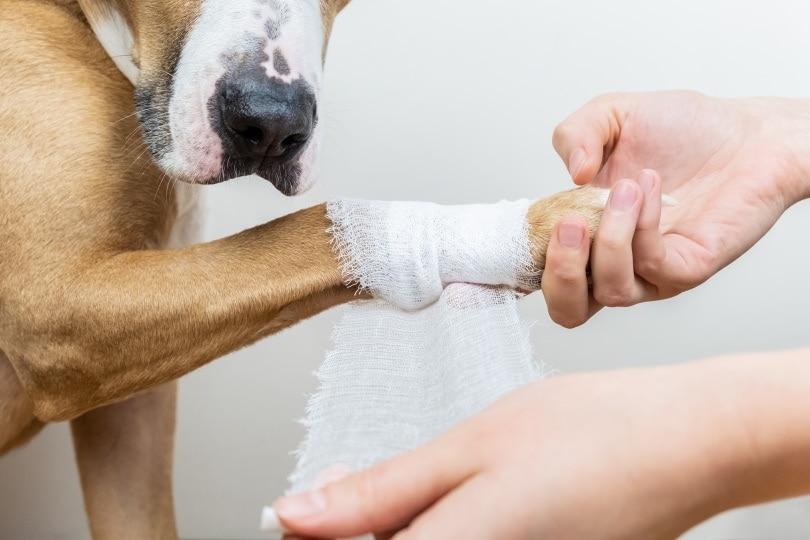
If your dog has an injury, you want to do everything in your power to help them heal as quickly as possible. But how long will the healing process actually take? And is it true that dogs heal faster than humans?
The short answer is that, as much as we would like for it to be true, dogs, unfortunately, do not heal significantly faster than their human counterparts.
The following article will detail wound healing in canines, types of wound healing, the general time frame for healing to occur, and the reasons why canines may seem to heal faster than humans.

The 3 Stages of Wound Healing in Dogs
In general, wound healing throughout the body proceeds in three major stages: inflammation, proliferation, and remodeling.
1. Inflammation
Inflammation is the first stage in wound healing, and it begins immediately following an injury. Initially, blood vessels in the body will constrict to help stop bleeding. This is shortly followed by vasodilation and swelling. Next, white blood cells begin to migrate to the wound to control infection and begin debridement (removal of damaged tissue).
2. Proliferation
Proliferation is the second stage of wound healing, in which small blood vessels and specialized cells called fibroblasts travel to the wound and create a framework for rebuilding damaged tissue. Skin cells are then able to migrate across the wound and can cover a surgically closed wound within 48 hours. Larger, open wounds need to fill with granulation tissue (a new, fragile type of tissue rich in blood vessels) before skin cell coverage can begin.
3. Remodeling
Remodeling is the last stage of wound healing. During this stage, collagen fibers produced by fibroblasts reorganize and strengthen. Remodeling occurs for a long period of time, and the wound will gradually increase in strength for up to 2 years. Once healed, most wounds remain at only 80–85% strength of the original tissue.

The 2 Types of Wound Healing in Dogs
There are two main types of wound healing in dogs:
1. Primary intention
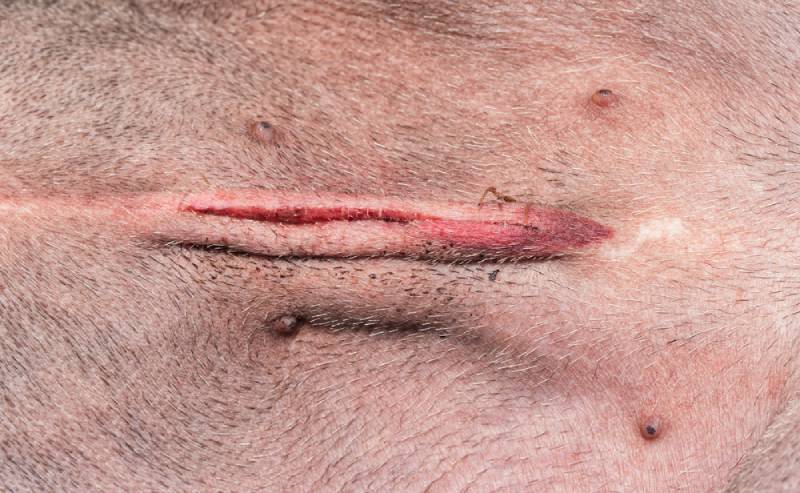
This type of wound healing occurs when the edges of a wound are held closely together, commonly from stitches or skin staples. For primary intention healing to occur, the edges of a wound must be sharp, clean, and free from bacteria. An example of this type of healing is an incision from a spay or neuter surgery.
2. Secondary intention
Secondary intention healing occurs when a wound cannot be closed. This is often the case when a wound is very large, there is not enough skin to cover the wound, or the wound is dirty or infected. Before skin can grow across this type of wound, granulation tissue must first form. Once granulation tissue has grown, the wound will begin to contract, getting smaller as time goes on.
Time Frame for Wound Healing in Dogs
In general, you can expect wounds healing by primary intention (such as surgical incisions) to heal within 10–14 days. Wounds healing by secondary intention will take longer to heal due to a longer and more widespread inflammatory phase, the need for granulation tissue to form, and contraction of the wound.
While a time frame for the healing of second intention wounds can vary, a 2014 clinical study found that 93.5% of dogs with wounds left to heal by secondary intention experienced complete healing after a median time of 53 days (with a range of 25–179 days).
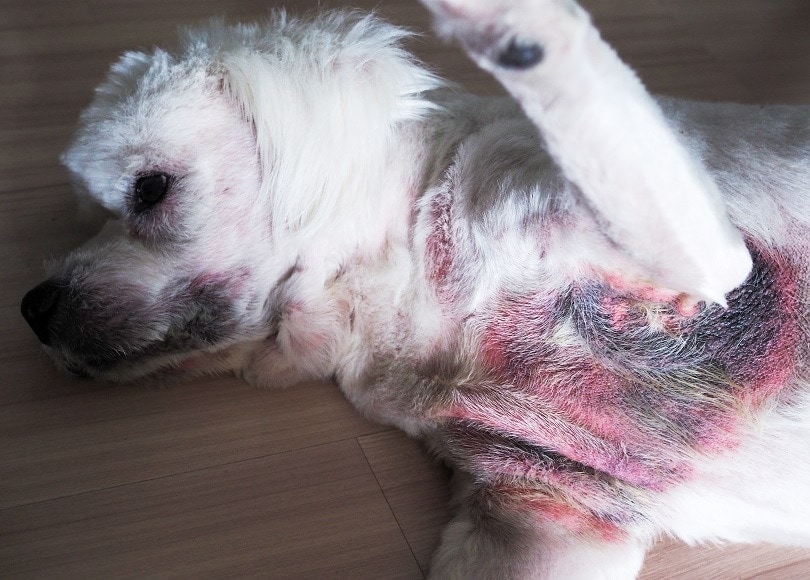
In small animal patients, such as dogs, multiple factors can affect the time it takes a wound to heal. The following conditions may lead to delayed wound healing:
- A suppressed immune system
- Endocrine disease, including diabetes or hypothyroidism
- Oncology treatments
- Surgical site infection

How Does Healing in Dogs Compare to in Humans?
In general, dogs undergo the same general processes and follow the same stages of healing as their human counterparts. Differences in healing may occur, however, due to differences in skin type—humans have tight skin, whereas dogs have loose skin on their body, or trunk and tight skin on their extremities.
Despite these differences, in most cases, an uncomplicated human surgical incision should heal in about 2 weeks, which is similar to the time it takes for one (such as that from a spay or neuter) to heal in canines.
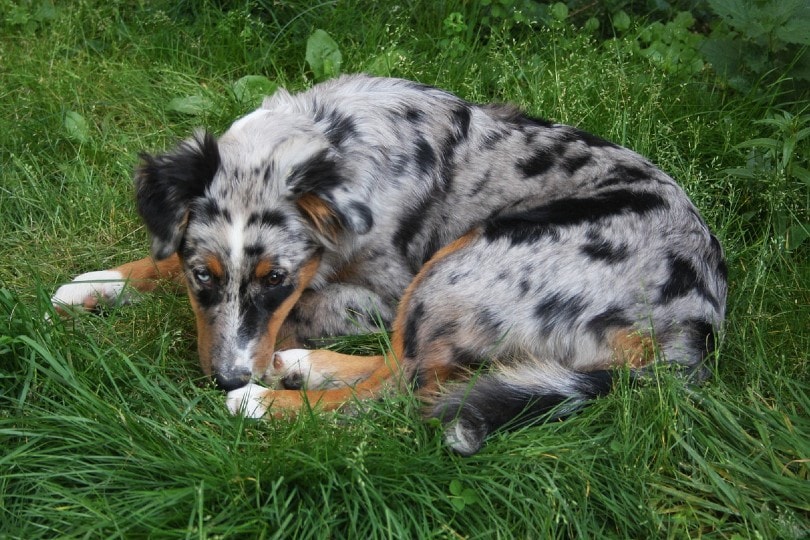
Why Do Dogs Appear to Heal Faster Than Humans?
Despite healing in a similar fashion to humans, dogs may appear to “bounce back” after surgery relatively rapidly compared to people. Reasons for this observation may include the following:
- Pain recognition in dogs is not always straightforward or instinctual. While dogs may appear to be back to their normal selves relatively quickly following an injury or surgical procedure, they may be still experiencing pain without our knowledge. Even within the veterinary field, methods used to evaluate pain are subject to variability, and somewhat prone to either over- or underestimation of the discomfort a dog may be feeling.
- Subtle signs of pain in canines may be hidden by behaviors typical of their species. For example, a dog may wag its tail and greet its owner despite not feeling well. A dog’s instinct to hide its pain may contribute to the perception of rapid healing.
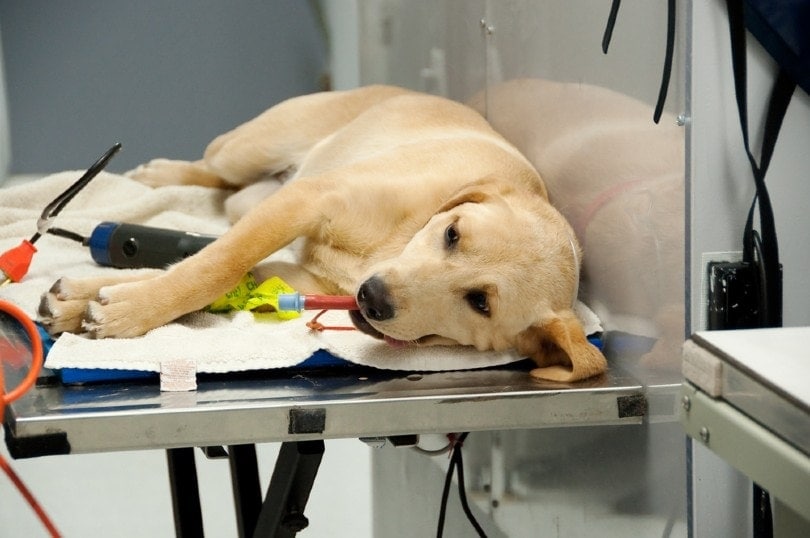
Even if your dog seems back to its normal self within a few days of a surgical procedure or injury, following your veterinarian’s instructions for postoperative care is very important.
Recommendations such as the use of an Elizabethan collar (also known as an E-collar or cone), administration of postoperative medications, and daily monitoring of their incision or wound will help to keep your pet safe and will go a long way towards the prevention of delayed wound healing.
Conclusion
In summary, the healing process that dogs experience is remarkably similar to that experienced by humans. While differences attributable to skin structure are evident, in general, you can expect similar healing times between humans and dogs. While your frisky Fido may seem back to normal within a short time frame following surgery, continued TLC as they heal will go a long way to ensure a safe and speedy recovery.
Sources
Featured Image Credit: Igor Normann, Shutterstock
Get Hepper In Your Inbox


Pet care tips from our vets and experts, straight to your inbox.
You may opt-out at any time. View our Privacy Policy for more information.
Dr. Leigh is a US-based veterinarian with over 9 years of experience. She is a lifelong animal lover who grew up with all kinds of pets, including dogs, hamsters, and fish. Leigh received her Doctor of Veterinary Medicine degree from the University of Minnesota and has specialized in shelter medicine and small animal clinical practice ever since. She enjoys small animal preventative medicine and surgery and loves helping pet owners by sharing her knowledge on a wide variety of veterinary topics. Leigh lives with her husband, two young children, and Hershey, her elderly pug mix. Outside of work Leigh likes traveling, reading, and hanging out with her family.
When Dr. Leigh was a child, her passion for animals started. She grew up tending to hamsters, guinea pigs, rats, fish, and dogs. She now shares her home with her husband, her two young children, and Hershey, her geriatric pug mix. When she's not working, Leigh loves spending time with her family, reading, and traveling.
Education
Leigh graduated from the University of Minnesota, where she received her Doctor of Veterinary Medicine degree. She has worked in both small animal clinical practice and shelter medicine since graduation.
Experience
Dr. Leigh has over 9 years of veterinary experience. She enjoys small animal preventative medicine and surgery and is passionate about helping pet owners through sharing her knowledge on a wide variety of veterinary topics.
Check out some of our top posts written by our veterinarian team:
Can I Put Vaseline on My Cat’s Paws? Is It Safe?
Join the conversation
Ask a question, share your story, or send private feedback.