Hepper is reader-supported. When you buy via links on our site, we may earn an affiliate commission at no cost to you. Learn more.
My Dog’s Spay Incision Broke Open: Causes & Vet-Approved Care Tips


In this article
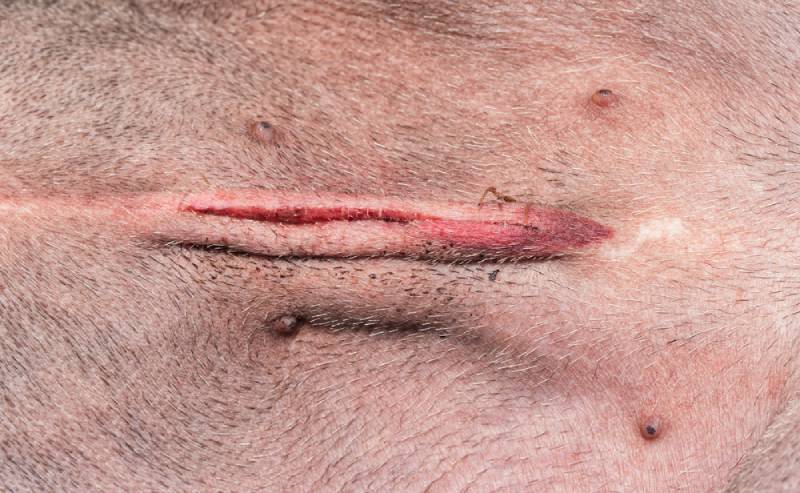
Spaying female dogs is a common procedure that typically heals without any issues. But occasionally, complications can arise. It is not normal for a spay incision to break open, but it is not uncommon.
If you notice that the incision on your dog’s abdomen looks like it’s opened, you must contact your veterinarian immediately! There’s a risk of infection or worse, so your first action should be to call your vet.
In this article, we discuss what might cause the incision to open, what the surgical site should look like, and the best ways to take care of it.

What Should the Incision Look Like?
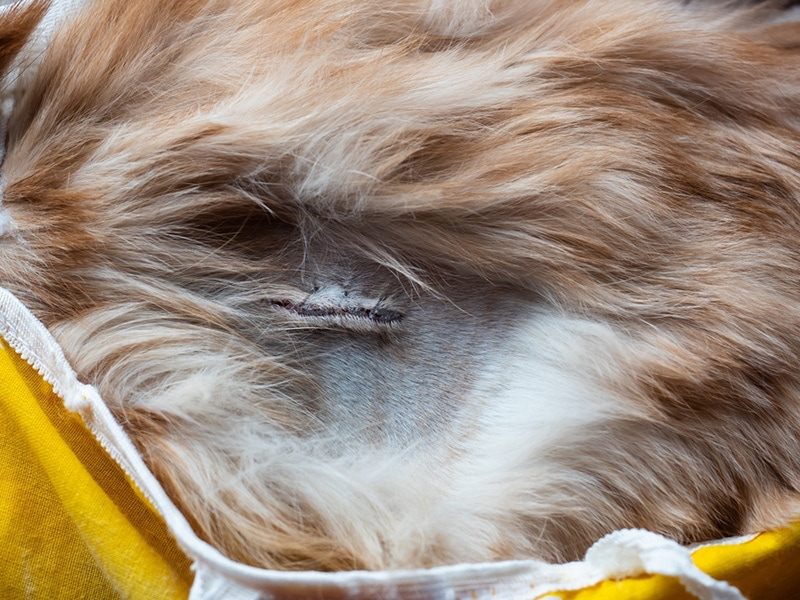
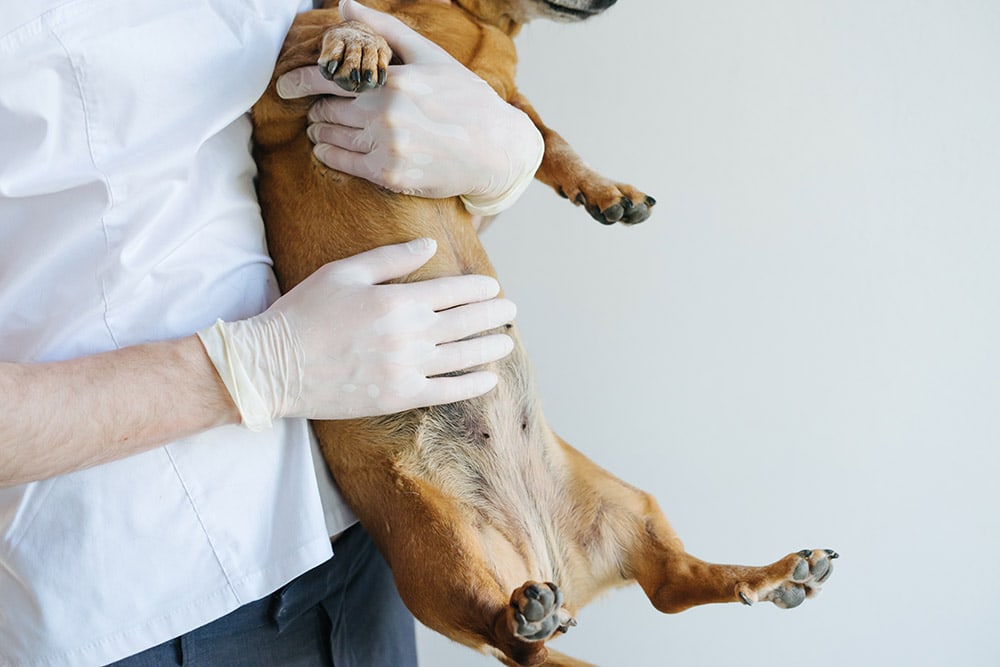
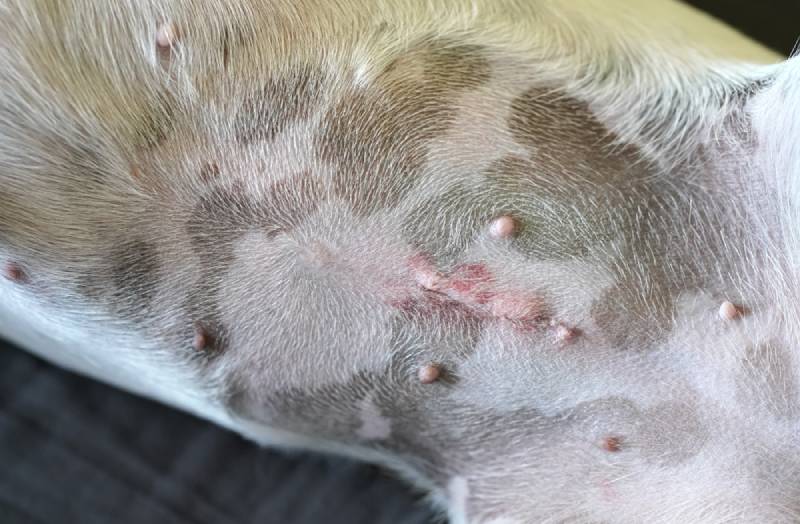
The skin edges of the incision should be touching, and it should look clean. The skin should be a normal color or a bit of a reddish pink. During the early stages of healing, it will be slightly redder, which should gradually lessen as the healing continues.
If your dog is pale-skinned, you might also notice a bit of bruising, which might not appear until after a few days. The bruising can also look quite expansive, but this is often a normal part of healing. Again, check with your veterinarian if you see bruising.
What Can Cause a Spay Incision to Open?
Several things can lead to your dog’s incision to open unexpectedly.
1. Licking and Biting the Incision
The most common cause of a dog’s spay incision breaking open is licking or biting at it. If your dog can reach the incision and has been licking and biting it, this can lead to the stitches breaking and the incision opening.
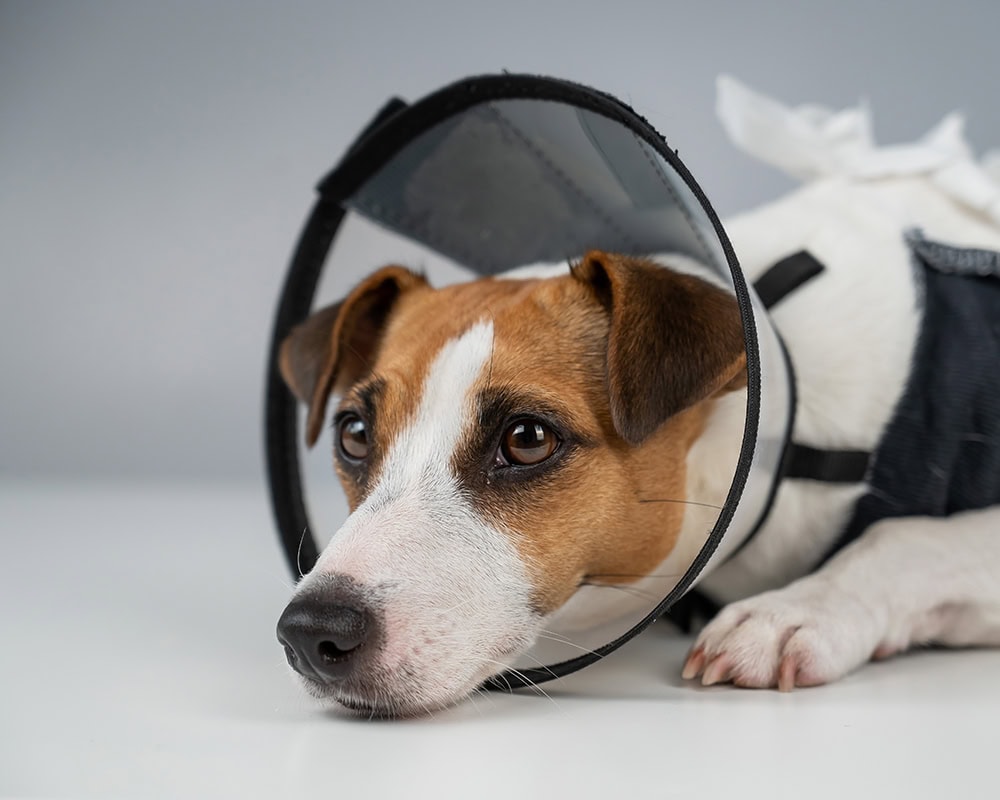
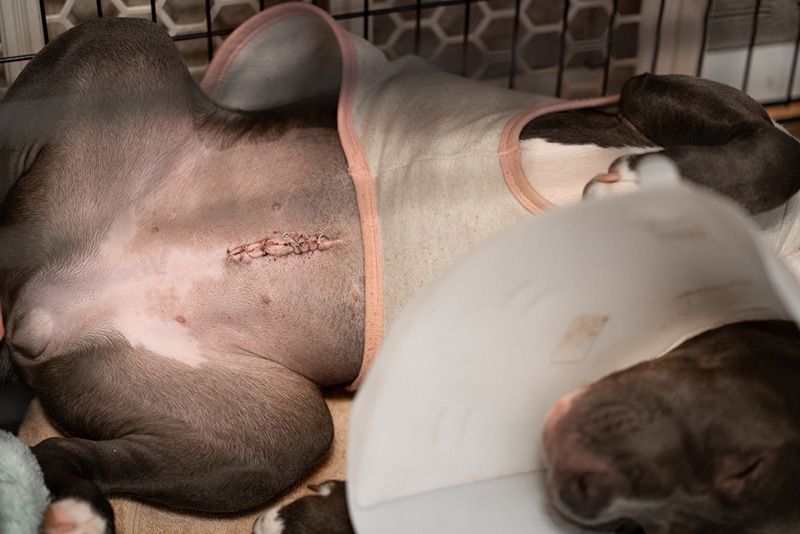
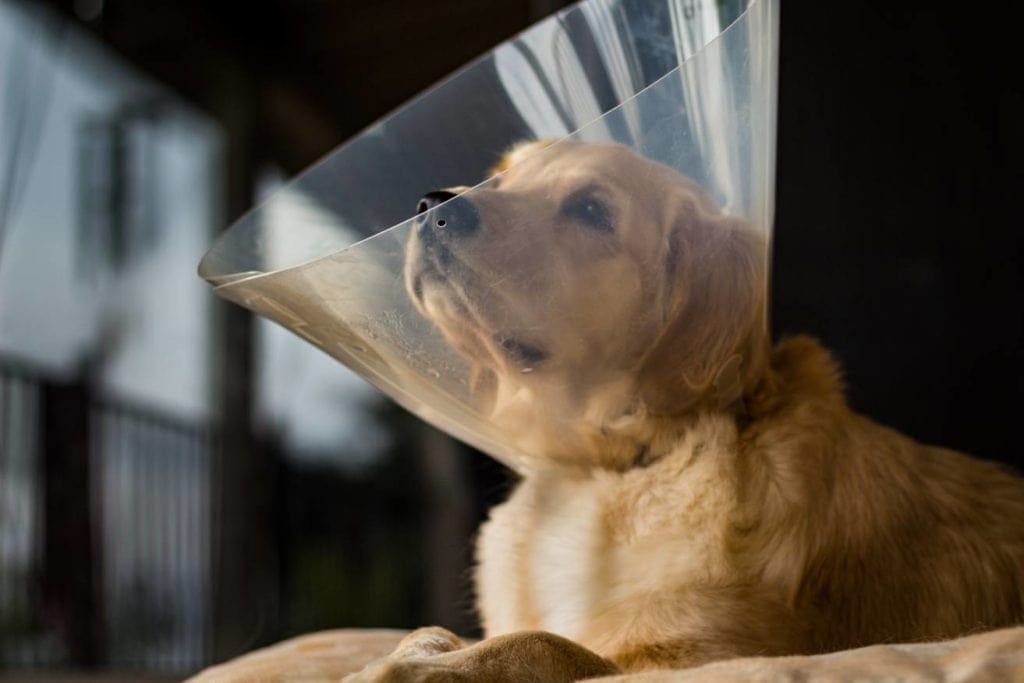
It’s for this reason that your vet will likely give you an e-collar (also called an Elizabethan collar and “cone of shame”) to place on your dog. If your dog can still scratch the incision or hates the e-collar, you can try a onesie. This is like a bodysuit, and it can cover the incision and effectively prevent your dog from biting or scratching at it.
2. Too Much Activity
This can be a challenge when a young dog or puppy has been spayed since they still have an abundance of energy. But your dog mustn’t run, jump, or engage in excessive play for 10 to 14 days. Too much strenuous activity will put stress on the incision, which may make it more likely to open.
3. Infection
An infected wound can be one of the more common causes that will lead to stitches breaking. The following signs can indicate an infection:
- Heat around the incision area
- Swelling
- Redness or other discoloration
- Pain
- Discharge that’s bloody or pussy with a foul odor
- Lethargy
- Fever
- Vomiting
- Diarrhea
If your dog’s incision is leaking, swollen, red, and warm to the touch, and your dog is not feeling well, this necessitates an immediate trip to your vet or closest emergency clinic.
How Your Vet Will Treat the Incision
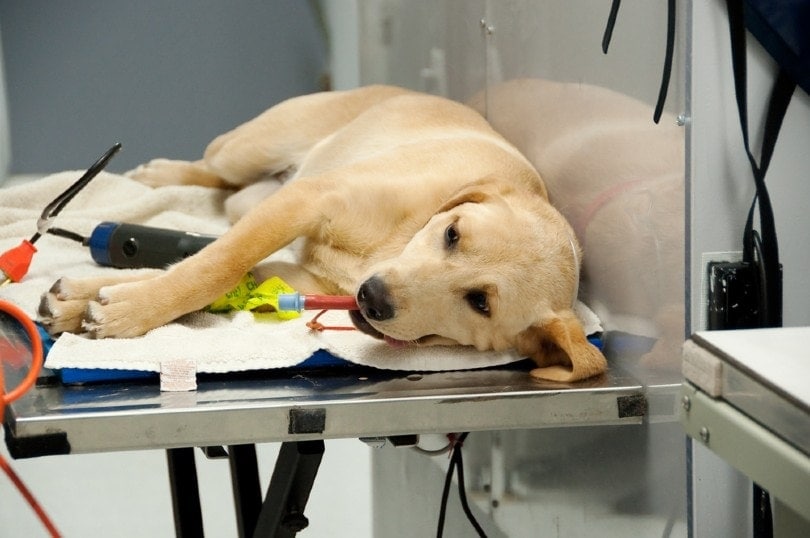
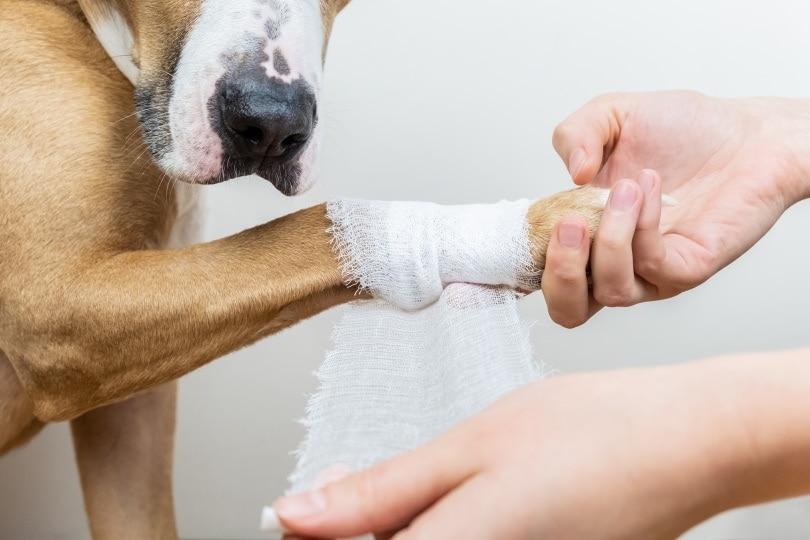
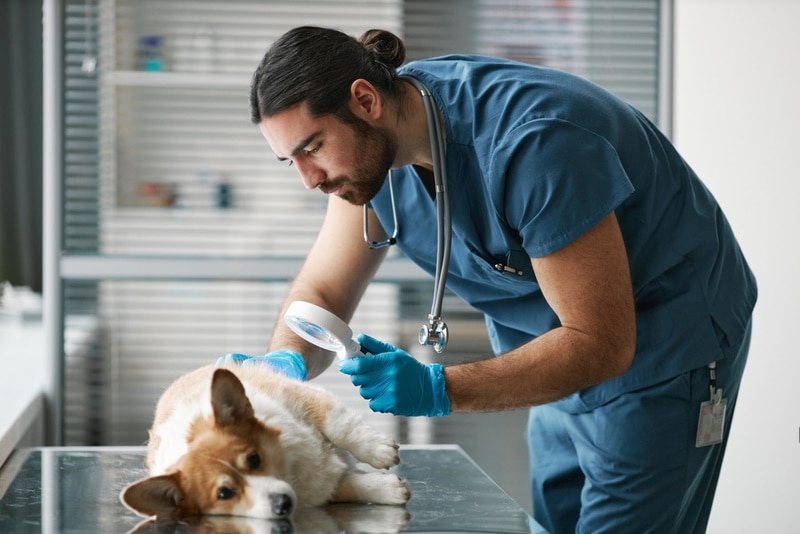
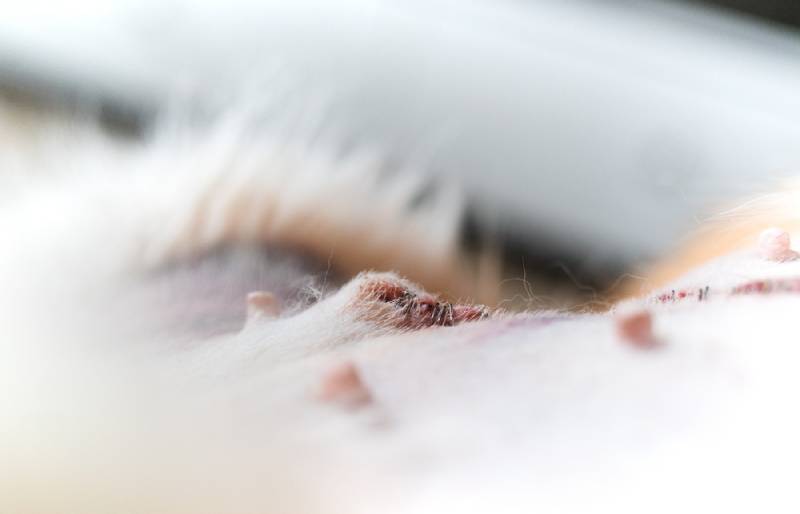
Your veterinarian will start by examining the incision to determine the severity of the situation and the degree of healing. They might need to operate on your dog to clean and close the wound, and you’ll likely take your dog home with pain medication and antibiotics.
But the vet might remove the rest of the stitches if the incision has healed for the most part and there isn’t swelling or redness.
Taking Care of a Spay Incision
Taking care of your dog's incision is more about checking it daily than taking any specific action. Your vet will give you instructions on caring for your dog’s incision when you take her home after being spayed.
1. Follow Instructions
The veterinary staff will let you know how the incision should look, how long you need to restrict your dog’s activity, and when the stitches need to be removed (if they aren’t dissolvable).
If your dog needs to take any medication for pain or other anti-inflammatories prescribed by your vet, you need to ensure that you follow your vet's instructions.
2. Take Pictures
Take a picture of your dog’s incision on the first day and continue to do so, which will allow you to track the healing process visually.
3. Restrict Activity
You need to restrict your dog’s activity levels so she isn’t exerting too much stress on the sutures. This includes not letting your dog run off-leash and keeping her on a short leash for walks. Prevent running, jumping, and playing. In some cases, you might need to keep your dog crated for a while.
Other tips, particularly for energetic dogs, include:
- Barricade the stairs. If your dog is small enough, carry them up and down the stairs if necessary.
- Keep your dog away from other dogs to prevent roughhousing.
- Keep your dog off the furniture and from jumping.
- Use chew toys and dog puzzles as a way to engage them.
4. Keep the Collar On
Your dog should wear an e-collar, a soft recovery collar, or a onesie at all times until the site has healed.
5. Don’t Apply Anything
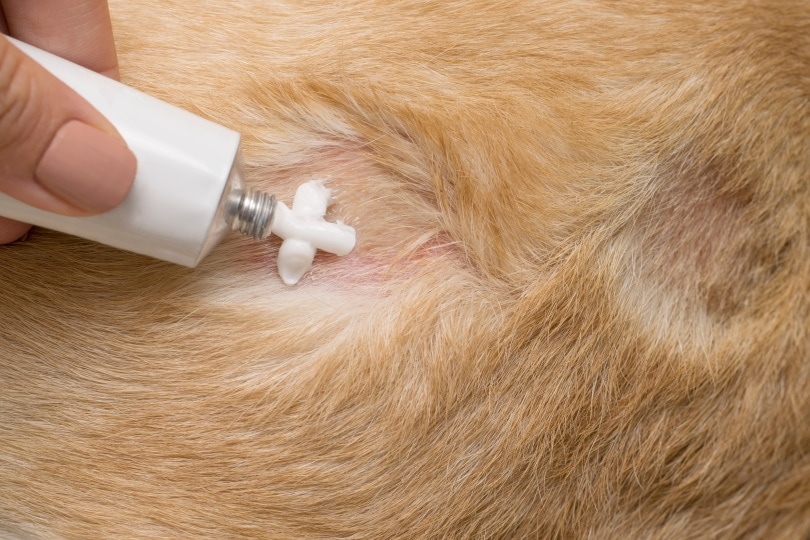
Unless your vet gives you something to put on the incision, you usually don’t need to do anything but keep it clean and dry.
Conclusion
The most important message that you can take away from this article is that you must contact your veterinarian the moment that you notice that anything is wrong with your dog’s spay incision.
A good rule of thumb is if it looks like something is wrong, particularly if it looks infected, don’t hesitate to call your vet, and certainly don’t attempt to fix it yourself without talking with your vet first. You want your dog to remain healthy and recover fully after the surgery.
Sources
Featured Image Credit: Sari ONeal, Shutterstock
Get Hepper In Your Inbox


Pet care tips from our vets and experts, straight to your inbox.
You may opt-out at any time. View our Privacy Policy for more information.
Kathryn was a librarian in a previous lifetime and is currently a writer about all things animals. When she was a child, she hoped to work in zoos or with wildlife in some way, thanks to her strong love for animals. Unfortunately, she's not strong in the sciences, so she fills her days with researching and writing about all kinds of animals and spends time playing with her adorable but terribly mischievous tabby cat, Bella. Kathryn is hoping to add to her family in the near future – maybe another cat and a dog.
Join the conversation
Ask a question, share your story, or send private feedback.